


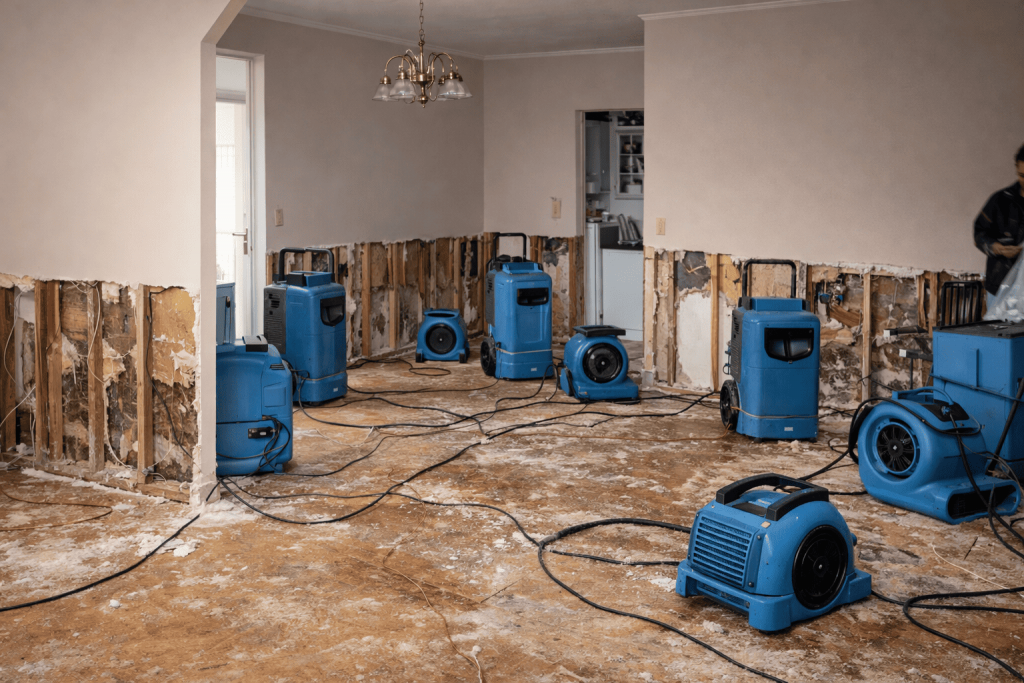
What Newer Construction Homeowners Need to Know Before the Clean Up Starts
Rancho Cucamonga’s residential growth over the past three decades has produced some of the most well-maintained master-planned communities in San Bernardino County. Terra Vista, Victoria, Etiwanda Estates, these neighborhoods represent a specific era of Southern California residential development built largely around stucco exterior construction, shared infrastructure, and HOA management structures that affect what happens when water damage occurs.
That last part is where things get complicated.
Water damage clean up in a newer Rancho Cucamonga stucco home is not simply a matter of extracting water and drying walls. The building materials, the shared utility systems, and the HOA liability landscape all shape what the clean up process requires and who is responsible for what. Understanding this before the water event happens, or at minimum before clean up begins, protects both the homeowner and their claim.
What Stucco Exterior Construction Does With Water
Stucco is one of the most common exterior finishes in Inland Empire residential construction and one of the most misunderstood in the context of water damage. It looks impermeable. In properly installed, well-maintained condition it largely is. The problem is what happens when the moisture barrier behind it fails.
Stucco systems are designed as drainage systems, not waterproof barriers. They rely on a correctly installed weather-resistant barrier behind the stucco layer to manage any water that penetrates the exterior finish. When that barrier degrades, is improperly installed, or is compromised by cracks in the stucco surface, water enters the wall assembly and becomes trapped between the stucco and the interior drywall with very limited ability to drain or evaporate.
In Rancho Cucamonga’s climate, where stucco surfaces experience significant thermal cycling between hot dry summers and cooler wet winters, hairline cracks in the exterior finish are common and often dismissed as cosmetic. During an atmospheric river event or even a sustained period of wind-driven rain, those cracks become active water entry points that saturate wall assemblies from the outside in, sometimes without any interior indication until the damage is extensive.
Water damage clean up in a stucco home requires opening wall assemblies to assess the full extent of moisture penetration, not just treating what is visible from the interior.
The HOA Dimension: Who Is Responsible for What

Many of Rancho Cucamonga’s newer communities include attached or semi-detached homes where plumbing, roofing, and structural systems are shared between units or where HOA-maintained infrastructure serves multiple properties. When a water event originates in or affects shared systems, the clean up responsibility question becomes genuinely complex.
Common HOA-related water damage scenarios in Rancho Cucamonga include:
- Shared wall plumbing failures where a supply or drain line serves multiple units and a failure affects neighbors on both sides
- HOA-maintained irrigation system failures where over-saturation of shared landscaping areas drives moisture into adjacent foundation assemblies
- Common area roof or drainage failures that allow water entry into individual units below
- Shared garage or parking structure drainage failures that back water into attached living spaces
In each of these scenarios, the clean up process cannot begin in isolation. The moisture source may be on the other side of a shared wall or under a common area that the homeowner does not control. Beginning water damage clean up without identifying and stopping the source, or without notifying the HOA of a shared system failure, can create liability complications and insurance claim disputes that are far more difficult to resolve than the water damage itself.
Our team documents the water source, the affected zones, and the relationship between individual unit damage and any shared systems from the first visit, providing the written record both the homeowner and the HOA need to manage their respective responsibilities.
Water Damage Clean Up in Rancho Cucamonga: What the Process Covers
Effective water damage clean up in a newer Rancho Cucamonga home addresses the full building assembly, not just the visible wet surfaces:
- Stucco exterior assessment to identify any active entry points before interior clean up begins
- Thermal imaging of all affected walls to map moisture behind stucco and drywall assemblies
- Controlled wall opening where thermal imaging indicates moisture in concealed cavities, using the minimum access necessary to introduce drying airflow
- Commercial extraction of any standing water in flooring systems, including the mortar beds beneath tile that are common in Inland Empire construction
- Structural drying calibrated for Rancho Cucamonga’s climate, accounting for the rapid ambient drying that occurs in the Inland Empire’s low-humidity conditions and the risk of surface-dry but structurally wet materials
- Daily moisture monitoring until all readings return to acceptable levels for the specific materials involved
- Complete documentation for both homeowner insurance and any HOA claim that may run parallel to the individual property claim
A Note on Rancho Cucamonga’s Hard Water and Aging Supply Lines
One water damage source specific to the Inland Empire that does not get enough attention is the interaction between the region’s notoriously hard water and residential supply line infrastructure. San Bernardino County groundwater has some of the highest mineral content in Southern California, and over years of use, that mineral buildup accumulates inside supply lines, accelerating corrosion and reducing pipe wall integrity.
In Rancho Cucamonga homes built in the 1980s and 1990s, original supply lines in some neighborhoods are approaching or past their expected service life under normal conditions. Hard water accelerates that timeline. Supply line failures in these properties produce acute water events that require immediate clean up, and the failure mode is often sudden rather than gradual, meaning there is no warning before significant water volume is released inside the wall or under the floor.
Water Got In. Let’s Get It Out the Right Way.
Water damage clean up that looks finished on day three and reveals a mold problem in month two is not clean up. It is delay with extra steps.
PuroClean of Rancho Cucamonga handles water damage clean up across Rancho Cucamonga, Ontario, Fontana, Upland, Claremont, and throughout San Bernardino and western Riverside counties. We know the construction, we know the HOA landscape, and we know what Inland Empire homes actually need when water gets where it should not be.
Call (909) 481-4399 any time, day or night. We will assess the full picture, handle the HOA documentation if needed, and make sure the clean up is actually complete before we close the job.