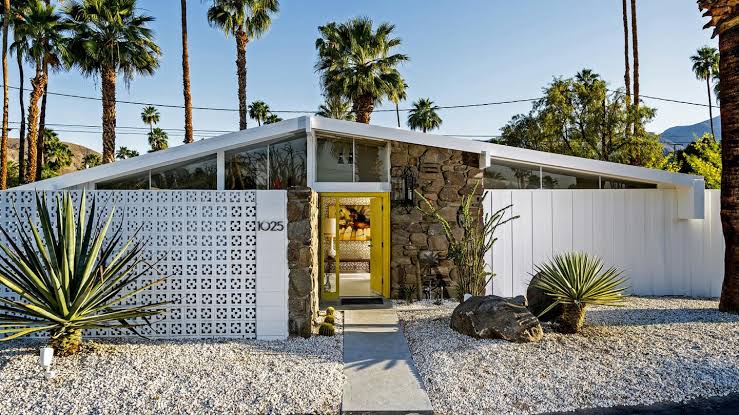
The Neighborhood With Character and Aging Pipes
College Heights is one of Rancho Cucamonga’s established residential neighborhoods, developed in the mid-twentieth century when the Inland Empire’s postwar growth was pushing east from Los Angeles and the area’s citrus groves were giving way to tract home subdivisions. The homes in College Heights carry the character of that era: wider lots, mature trees, and a neighborhood scale that newer master-planned developments do not replicate.
They also carry the plumbing of that era, and that is where water damage restoration in College Heights becomes a conversation about infrastructure that is decades past its designed service life.
Homes built in the 1950s, 1960s, and 1970s in Rancho Cucamonga’s older neighborhoods were typically constructed with galvanized steel supply piping and cast-iron drain lines. Both materials were the standard of their time. Both have a finite service life that most College Heights homes have either reached or significantly exceeded. When galvanized supply lines and cast-iron drains begin to fail, they do so in ways that produce water damage restoration events ranging from slow hidden leaks that saturate wall and floor assemblies over months to sudden catastrophic failures that deliver significant water volume in a short time.
What Galvanized Pipe Failure Looks Like in a Water Damage Restoration Event
Galvanized steel supply piping corrodes from the inside out. The zinc coating that gives galvanized pipe its corrosion resistance depletes over decades of water contact, and as the zinc layer thins, rust and mineral deposits accumulate on the interior pipe wall, progressively reducing flow and creating pitting that eventually breaches the pipe wall. The failure mode is not typically a sudden dramatic rupture. It is a pinhole or hairline failure that begins as a slow drip inside the wall cavity, where it is invisible to the homeowner until the surrounding framing, insulation, and drywall have absorbed significant moisture.
The water damage restoration scope for a galvanized pipe failure in a College Heights home depends largely on how long the failure was producing moisture before it was discovered. A slow leak that has been running for two to four weeks inside a wall cavity saturates not just the immediately adjacent drywall but also the bottom plate, the subfloor, and potentially the slab surface below the wall, since water follows gravity through every available pathway before it produces a visible indicator.
Water damage restoration in these situations requires moisture assessment that goes beyond the visible damage. The wall cavity that shows staining on the drywall surface is the indication, not the full extent. Thermal imaging and deep moisture meter readings into the wall framing and floor assembly reveal the actual scope of saturation that determines what must be removed versus what can be dried in place.
Cast-Iron Drain Line Failures and the Water Damage Restoration They Produce
Cast-iron drain lines in College Heights homes from the mid-century era are approaching or past seventy years of service. Cast iron in residential drain applications deteriorates through a process called graphitization, where the iron component of the pipe corrodes while the graphite structure remains, leaving the pipe wall thin, brittle, and prone to crack failures at joints and along straight runs where the pipe bears the weight of soil above it.
When cast-iron drain lines crack, they do not produce the pressurized water intrusion of a supply line failure. Instead, they leak drain water — which is category 2 or category 3 contaminated water — into the soil beneath the slab. In slab-on-grade construction, this subslab moisture migration eventually finds its way upward through the slab, producing moisture at floor level that appears to be condensation or a slow slab leak but is actually contaminated drain water rising through concrete porosity.
Water damage restoration for subslab cast-iron drain failures in College Heights homes involves contaminated water protocols throughout, because the water that has migrated upward through the slab is not clean water. All floor coverings in affected areas require removal. Slab surfaces require decontamination. And the water damage restoration scope must account for the contamination category of the intrusion rather than treating the event as a clean water leak.
Why College Heights Homeowners Should Act on Small Signs
The consistently most expensive water damage restoration jobs we handle in Rancho Cucamonga’s older neighborhoods are the ones where a small sign of a problem went unaddressed. A soft spot in the floor. A musty smell in a closet against an exterior wall. A water stain at the base of drywall that appeared once and then seemed to stop. These are the indicators of slow-developing plumbing failures in aging infrastructure, and in almost every case the discovery that follows professional moisture assessment reveals that the event has been developing far longer than the visible sign suggested.
Calling for a professional moisture assessment when a small sign appears costs a fraction of the water damage restoration scope that the same problem produces if it continues unaddressed for another season.
Water Damage Restoration Process for College Heights Older Homes
- Full thermal imaging and moisture meter assessment of all walls, floors, and ceilings in the affected area, with specific attention to the floor assembly and slab surface where subslab leaks are suspected
- Water category determination before any crew contact and material handling protocols are established
- Scope documentation distinguishing what can be dried in place from what requires controlled demolition based on moisture readings, not visual assessment alone
- Decontamination of all surfaces that contacted category 2 or higher water
- Commercial extraction and drying equipment deployment calibrated for slab-on-grade construction’s longer drying timeline
- Daily moisture monitoring throughout the drying cycle
- Complete insurance documentation including source identification, moisture mapping, and scope of all work performed
College Heights Has History. Its Pipes Have History Too.
PuroClean of Rancho Cucamonga serves College Heights and all of Rancho Cucamonga’s established neighborhoods with 24/7 water damage restoration response. We understand the specific plumbing infrastructure that older Inland Empire homes carry and we assess accordingly. Call (909) 481-4399 the moment you see a sign of water damage in your College Heights home. Earlier is always less expensive than later.