


What This Historic Inland Empire Community Needs When Water Damage Strikes
Grapeland is one of Rancho Cucamonga’s oldest and most distinctive residential communities. Sitting within the historic Cucamonga Valley wine country corridor, this neighborhood carries a character rooted in the region’s agricultural past, with older homes, mature landscaping, and a residential density that reflects development patterns from decades before Rancho Cucamonga became the master-planned community it is today.
That history is part of what makes Grapeland a genuinely special place to live. It is also part of what makes water restoration in this neighborhood a different proposition from a job in a newer Rancho Cucamonga subdivision. The homes are older, the infrastructure is aging, and the specific water damage risks that come with this part of the Inland Empire are shaped by the terrain, the soil, and the construction characteristics of an earlier era of residential development.
At PuroClean of Rancho Cucamonga, we serve Grapeland and every corner of the Inland Empire. Here is what water restoration in this community specifically involves.
Older Homes, Older Plumbing: The Water Restoration Risk in Grapeland
Grapeland’s housing stock includes a significant proportion of homes built before modern plumbing standards became universal in San Bernardino County residential construction. Galvanized steel supply lines, cast iron drain stacks, and original fixture connections that have been in continuous service for forty, fifty, or sixty years represent the most consistent water restoration risk our team encounters in this neighborhood.
These materials do not fail dramatically. They fail quietly, through pinhole corrosion in supply line walls, through joint separation in aging drain connections, and through gradual deterioration of fixture seals that allows slow intrusion into wall cavities and subfloor assemblies over weeks before any surface indication appears.
By the time a Grapeland homeowner notices something is wrong, the water has often been present in the building assembly long enough to saturate structural materials deeply and in some cases establish the moisture conditions that support mold development. Water restoration in these situations requires more than extraction and surface drying. It requires thorough assessment of what the aging infrastructure allowed to happen inside the walls before the event was discovered.
For a detailed explanation of how moisture mapping identifies the true extent of saturation in an older home’s wall assemblies, our blog on The Role of Residential Moisture Mapping in Water Damage Restoration explains exactly what thermal imaging reveals that visual inspection consistently misses in properties with aging plumbing infrastructure.
The Soil Factor: What Grapeland’s Agricultural Heritage Means for Water Restoration
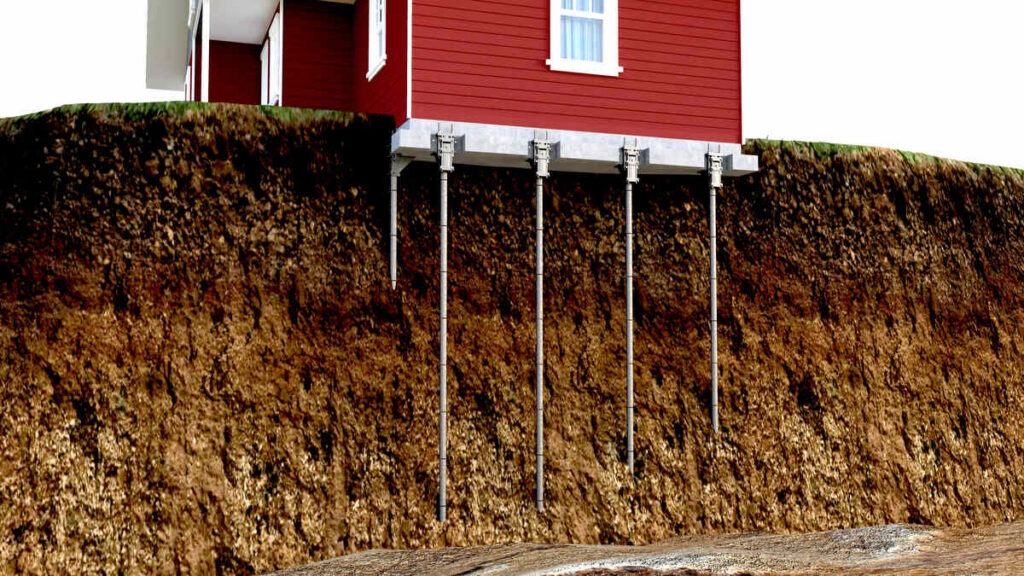
Grapeland sits within the historic Cucamonga Valley vineyard corridor, where the soil composition reflects centuries of agricultural use rather than the engineered fill and compacted base that underlies newer Rancho Cucamonga subdivisions. This soil history has practical implications for water restoration in the neighborhood.
The clay-heavy soils common in the Cucamonga Valley’s historic agricultural zones expand significantly when wet and contract when dry. This expansion and contraction cycle, repeated over decades, exerts pressure on foundation systems that produces cracking and joint separation in older slab and foundation perimeter assemblies. Those cracks become active water intrusion pathways during heavy rainfall events, allowing ground-level water entry that homeowners often mistake for plumbing failures because the entry point is not immediately obvious.
During Rancho Cucamonga’s atmospheric river events, which deliver high-volume rainfall in compressed timeframes, these foundation vulnerabilities activate simultaneously across multiple entry points, producing water intrusion that appears sudden and acute but actually reflects years of gradual foundation movement driven by the neighborhood’s distinctive soil conditions.
Water restoration in Grapeland homes with this foundation intrusion pattern requires assessment that identifies and documents all active entry points before extraction begins, because drying a structure that still has active intrusion pathways produces results that reverse as soon as the next rainfall event arrives.
What Water Restoration Covers in a Grapeland Home
Professional water restoration in Grapeland’s older residential stock addresses the specific characteristics of this neighborhood’s homes and soil conditions:
- Aging infrastructure assessment to identify whether the water source involves original plumbing components that require replacement as part of the restoration scope
- Foundation entry point mapping using thermal imaging to locate all active and historical intrusion pathways in homes with clay soil foundation movement history
- Deep material moisture assessment calibrated for the dense older construction materials common in Grapeland’s housing stock, including original plaster walls and solid wood subfloor assemblies that retain moisture longer than modern materials
- Extended drying timelines that account for the slower moisture release characteristics of older dense building materials versus modern drywall and engineered wood
- Mold assessment as a concurrent step where water exposure duration or prior intrusion history suggests established growth in concealed assemblies
- Complete insurance documentation supporting claims that accurately characterize failure modes in aging infrastructure
Hard Water and Aging Pipes: A Grapeland-Specific Combination
The Inland Empire’s notoriously hard water supply creates a specific accelerant for plumbing deterioration in Grapeland’s older homes. San Bernardino County groundwater carries mineral concentrations that deposit inside supply lines over time, progressively narrowing the interior diameter and accelerating corrosion at points of stress including joints, fittings, and bends.
In a newer home, this mineral buildup is an inconvenience managed through water softener systems and periodic maintenance. In a Grapeland home where the original galvanized supply lines have been accumulating mineral deposits for fifty years, it is an active water restoration risk that manifests as sudden supply line failures that carriers may attempt to characterize as gradual deterioration.
Professional water restoration documentation that characterizes these failures accurately, distinguishing between the sudden mechanical failure event and the long-term mineral accumulation that contributed to it, is important for maintaining coverage under a California homeowner’s policy. For context on how water damage restoration claim documentation protects against carrier arguments of gradual deterioration in older Inland Empire homes, our blog on Water Damage Restoration When Your Insurance Claim Gets Denied covers the specific documentation standards that support your position with California carriers.
Grapeland’s Character Is Worth Protecting
The homes in Grapeland carry a sense of place that Rancho Cucamonga’s newer developments are still working to build. Original hardwood floors, solid construction, mature trees, and a neighborhood rhythm shaped by decades of community life are worth protecting when water damage threatens them.
Water restoration that treats a Grapeland home like a generic Inland Empire residential job misses what makes these properties distinctive and what makes getting the restoration right particularly important. The materials are different, the infrastructure is different, and the approach needs to reflect that.
PuroClean of Rancho Cucamonga serves Grapeland and every neighborhood across Rancho Cucamonga, Ontario, Fontana, Upland, Claremont, and throughout San Bernardino and western Riverside counties around the clock. When water damage hits your Grapeland home, call (909) 481-4399. We will assess the full picture, account for what your home is actually built from, and handle the restoration with the care that a property with real history deserves. For additional context on how we approach water restoration in homes with aging infrastructure throughout the Inland Empire, our blog on Water Damage Restoration Service in Rancho Cucamonga covers the full scope of what professional restoration involves from first response through completed reconstruction.