


Property stability in the Inland Empire depends on a building’s capacity to withstand rapid environmental transitions. Rancho Cucamonga sits in a geographic zone where intense heat waves break into sudden downpours or heavy seasonal winds. When a building experiences these rapid shifts, the building materials expand and contract at different rates. This movement stresses structural joints and breaks down external seals, allowing moisture or smoke residues to penetrate deep into building envelopes.
Neglecting these microscopic structural shifts leads to a rapid decline in structural integrity. A small opening in a stucco wall or an unsealed roof joint allows moisture from seasonal storms to settle inside wall cavities. When this moisture remains trapped without rapid intervention, the wood begins to rot, and structural elements weaken, creating an unstable environment for residents.
How Does Trapped Moisture Trigger Secondary Structural Destruction?
When liquid enters an indoor environment, the immediate reaction of building materials determines the long-term survival of the structure. Porous materials like drywall, baseboards, and subflooring absorb moisture like a sponge, spreading the contamination far beyond the initial point of entry. If the liquid contains contaminants from a broken pipe or local flooding, the porous elements become breeding grounds for structural pathogens. Utilizing immediate water damage mitigation halts this absorption cycle before the liquid alters the physical composition of the wood and drywall.

When standing liquid remains in place for more than twenty-four hours, the relative humidity inside the property spikes. This airborne moisture settles on unaffected surfaces, warping cabinetry and destroying ceiling tiles. The effect of delayed extraction is a compounding cycle of degradation where a simple leak transforms into a widespread structural issue affecting multiple rooms simultaneously.
Why Does Post-Fire Carbon Residue Require Specialized Extraction?
Fire events cause immediate structural losses, but the lingering chemical residues introduce an ongoing degradation process that persists long after the flames die out. Complete combustion produces soot, ash, and highly acidic smoke particles that travel through HVAC systems and settle on cool surfaces. Because these particles are microscopic, they penetrate deep into wall cavities, insulation, and porous building materials. Initiating professional fire and smoke damage restoration removes these corrosive agents before they permanently alter the indoor environment.
When acidic soot sits on surfaces for days, a chemical reaction occurs that tarnishes metals, discolors plastics, and permanently stains drywall. If these residues are left on structural beams, the chemical composition of the wood degrades, weakening the load-bearing capacity of the property. Addressing the smoke penetration directly stops the chemical corrosion cycle from destroying salvageable building components.
What Mechanisms Allow Airborne Fungi to Populate Indoor Spaces?
Fungal spores exist naturally in the outdoor atmosphere, but they require specific conditions to colonize an indoor space. When water intrusion goes unnoticed behind vanities or inside crawl spaces, the relative humidity creates a perfect microclimate for these spores to root. Once a spore lands on a wet, carbon-rich surface like drywall or wooden studs, it germinates within forty-eight hours, spreading microscopic roots into the material. Implementing targeted mold removal and remediation eliminates the hidden root networks that feed these fungal colonies.
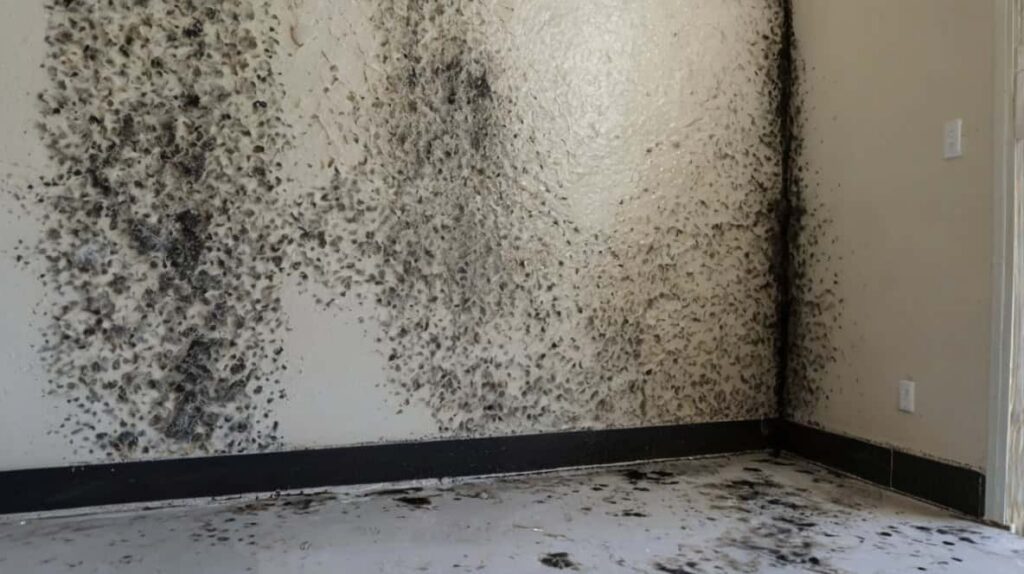
As the fungal colony matures, it releases millions of new spores into the indoor air current, which then travel to other areas of the building. The effect of an unaddressed fungal colony is twofold: the physical destruction of the host material as the fungus feeds on the wood, and the contamination of the indoor air supply. Removing the visible growth without neutralizing the hidden moisture source results in a recurrence of the infestation.
How Do Biological Contaminants Compromise Property Safety?
Biological hazards, such as sewage backups or chemical trauma scenes, introduce severe pathogens into a structure that standard cleaning solutions cannot neutralize. Raw sewage carries viruses, parasites, and hazardous bacteria that immediately saturate porous flooring and drywall. When these fluids contact a surface, the organic matter binds to the structure, turning the building into a biohazard zone. Executing certified Biohazard cleanup protocol isolates the contamination and removes the biohazards according to strict sanitization metrics.
Ignoring a biological spill allows the pathogens to sink into the structural concrete or subflooring beneath the carpet. As the organic material decays, it releases hazardous gases and foul odors that penetrate neighboring rooms, rendering the entire property uninhabitable. Removing the saturated materials and applying targeted sanitizing agents prevents the spread of infectious pathogens throughout the building.
When Does a Structure Require Full Component Replacement?
When property degradation passes the point where drying or cleaning is effective, the physical stability of the building components is lost. Saturated hardwood that has buckled, charred framing members, or structurally compromised drywall cannot support the necessary weight loads of a building. Leaving these compromised materials in place threatens the safety of the entire property. Engaging professional reconstruction services replaces the ruined framework with fresh, structurally sound materials that match the original building specifications.
Replacing these elements requires a methodical approach to ensure the new components integrate perfectly with the existing structure. When a team removes a damaged load-bearing stud or a ruined section of flooring, they must support the surrounding framework to prevent shifting. This precise replacement process restores the structural integrity of the property, returning the building to a safe condition.
Supporting the Inland Empire with Expert Restoration Solutions
PuroClean of Rancho Cucamonga delivers the specialized technical expertise needed to restore properties across the Riverside-San Bernardino-Ontario region. Overcoming unexpected property damage requires partnering with local specialists who prioritize structural stability and efficient timelines, assessing every affected element to address local environmental demands. Reaching out to a dedicated regional team streamlines the recovery process and immediately restores security to the property.