Water damage restoration tools used in Emerson NJ basements: moisture meters, extractors, dehumidifiers and more. Call PuroClean 551 751 1288.
Best Water Damage Restoration Tools: Proven Professional Methods That Work
The truck pulls up, the crew starts carrying in machines you’ve never seen, and within an hour your basement sounds like a small airport.
If you’ve ever wondered what all that gear is for, you’re not alone. This guide explains the water damage restoration tools professionals use, what each one does and why a rented fan and a shop vacuum usually can’t match them.
We’re writing this with Emerson in mind. The town’s saturated ground and stormwater drainage concerns mean basements here often face water from several directions, and that shapes which tools matter most. Let’s walk through them in the order they usually come out of the truck.
Water Damage Restoration Tools: The Short Answer
Professional crews use four groups of tools: detection tools that find the water, extraction tools that remove it, drying tools that pull out the rest and protection tools that keep people and the building safe. Each group answers a different question.
Detection asks where the water went. Extraction asks how to remove the bulk quickly. Drying asks how to bring materials back to normal moisture levels. Protection asks how to keep spores, contaminants and workers out of harm’s way. The industry works from the ANSI/IICRC S500 standard for professional water damage restoration, which you can read about on the IICRC S500 page.
Detection Tools: Finding Water You Can’t See
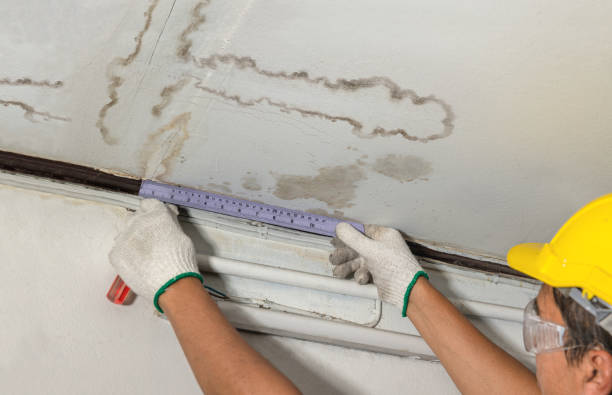
Moisture meters, thermal imaging cameras and hygrometers show where water has gone and how much moisture remains. Without them, a crew is guessing.
A moisture meter reads the dampness of drywall, wood and concrete, either by pressing pins into a material or by scanning with a pinless sensor. A thermal imaging camera shows temperature differences that can point to wet areas behind walls and under floors. Neither one detects mold, but together they build a moisture map. A thermo hygrometer measures temperature and humidity in the air, which tells the crew how well the drying environment is working.
Why Detection Matters for Water Damage Restoration Tools in Emerson
When groundwater seeps through a foundation, the wet area can be larger than the visible stain. Water wicks up drywall, soaks into the bottom of wall studs and settles under flooring. Mapping it first means crews dry the whole problem, not just the part you can see.
Extraction Tools: Removing the Bulk of the Water
Pumps and extractors remove standing water and water held in carpet, which is the fastest way to reduce the drying load. The more water pulled out early, the less the dehumidifiers have to handle later.
Submersible pumps move standing water out of a basement, and truck mounted or portable extractors pull water out of carpet and padding. Wet vacuums handle smaller areas and corners. For floors, crews may use specialized extraction tools that press on carpet while pulling water through. We follow the rule that you remove liquid water as a liquid whenever possible, because evaporating it is much slower.
If the water may be contaminated, crews also use sealed containers and disposal methods suited to the material. The EPA says to call professionals when water is caused by sewage or other contaminated water, and our guide to sewage cleanup in Emerson explains that process.
Drying Tools: Air Movers, Dehumidifiers and Specialty Systems
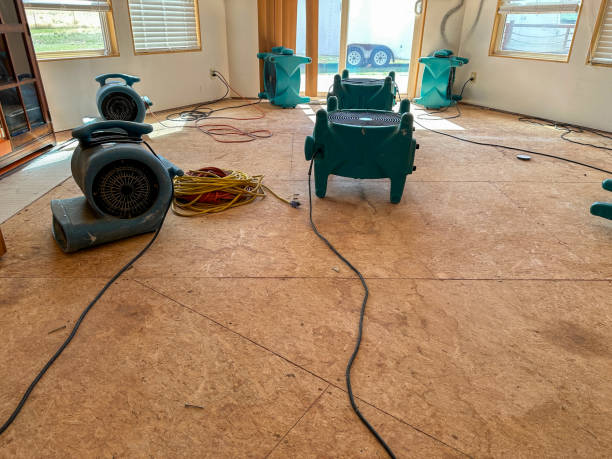
Drying equipment works as a system: air movers push air across wet surfaces, dehumidifiers remove the moisture from that air, and specialty tools reach cavities that open air can’t. Used together and adjusted over several days, they dry a structure to measured levels.
Air movers are powerful fans that direct a steady flow across floors and walls. Dehumidifiers, often a low grain refrigerant type, pull water out of the air so it doesn’t settle back onto materials. Professional units move much more air and water than a household model. For wall cavities and floors, specialty systems can push dry air into hidden spaces, and drying mats can pull moisture from hardwood and other flooring. Crews place equipment based on the room layout and the moisture readings, and then adjust it as the readings change.
How the Standard Shapes Drying
The S500 standard organizes losses by category, which describes how contaminated the water is, and by class, which describes how much and how fast the water spread. Clean water from a supply line is treated differently from sewage or flood water. Classes run from a small, limited area to a loss with deeply saturated materials. Those distinctions decide how many machines go where.
The EPA advises drying a flooded home and everything in it within 24 to 48 hours if you can, and its text version of the flooded home tour explains why. Professional tools make that window realistic.
Protection Tools: Keeping People and the Building Safe
Protective gear, containment barriers and HEPA air scrubbers protect workers, your family and the parts of the house that weren’t wet. They matter most when contaminated water or mold is involved.
Crews wear gloves, respirators and eye protection. The EPA says at a minimum to use protective gloves, an N95 respirator and goggles without holes for flooded home cleanup.
Plastic sheeting and zipper doors contain dust, and HEPA air scrubbers pull very small particles out of the air. If mold is already present, our mold removal service adds containment and HEPA filtration to the drying work.

Cleaning and Treatment Tools
Once the structure is dry, crews clean and sanitize surfaces with products suited to the material and the water category. Tools include sprayers, scrubbing equipment, wet vacuums and, where appropriate, antimicrobial products used according to their labels.
The EPA doesn’t recommend routine use of biocides for mold cleanup, so a good crew uses them thoughtfully and never mixes products. Most of the work is physical: removing wet materials, scrubbing hard surfaces and drying thoroughly.
Can You Rent Tools Instead of Buying?
You can rent some of them, such as extractors and dehumidifiers, and for a very small, clean water problem that may work. For anything bigger, the gap is usually knowledge, not hardware.
Renting gets you equipment but not a moisture map, a drying plan or daily readings. It’s easy to run a fan for two days and still leave water inside a wall. Rented machines also can’t make sewage safe or tell you when a building is dry. We won’t tell you never to rent. We’ll tell you to be honest about the size of the problem, and to call if you’re unsure.
Nobody can quote your total before seeing the damage, because cost depends on how much water entered, how long it sat and how many days of equipment the job needs. We don’t publish prices. You can request an on site estimate.
Emerson Basements: What We Look For
Emerson’s saturated ground and stormwater drainage concerns mean we often check sump pumps, floor drains, window wells and foundation cracks along with the wet areas. A tool is only as useful as the questions it answers.
We also look for the source. If water is coming from groundwater, a failed pipe or a drain line, the fix is different. A plumber or contractor handles the source, and we handle the water. See our water damage restoration page and our Emerson service area page.
Water Damage Restoration Tools FAQ
What tools are used in water damage restoration?
Moisture meters, thermal cameras, pumps and extractors, air movers, dehumidifiers, HEPA air scrubbers, containment barriers and protective gear.
What is the most important tool for drying a flooded basement?
No single tool does the job. Extraction, air movers and dehumidifiers work together, guided by moisture readings.
Can I rent professional water damage restoration tools?
Some, yes. But a rental doesn’t give you a drying plan or moisture readings, so larger jobs usually need a professional.
What does the IICRC S500 standard cover?
It describes professional practices for water damage restoration, including water categories and classes.
How long does the equipment stay in my home?
It depends on how wet the materials are. We monitor readings over several days and remove equipment once the structure returns to normal.
Also Serving Nearby: PuroClean in Hackensack
If you’re closer to Teaneck, Paramus, Englewood or Fort Lee, our neighbors at PuroClean Mitigation and Restoration Services in Hackensack may be nearer. They handle water, fire, mold and biohazard emergencies. Call them at (201) 261 0162 or visit their Hackensack page.
Call PuroClean of Ridgewood Today
When the water is in, the right tools make the difference. PuroClean of Ridgewood is here 24/7 for Emerson and nearby towns. Call (551) 751 1288 or contact us online, and we’ll bring the equipment.