


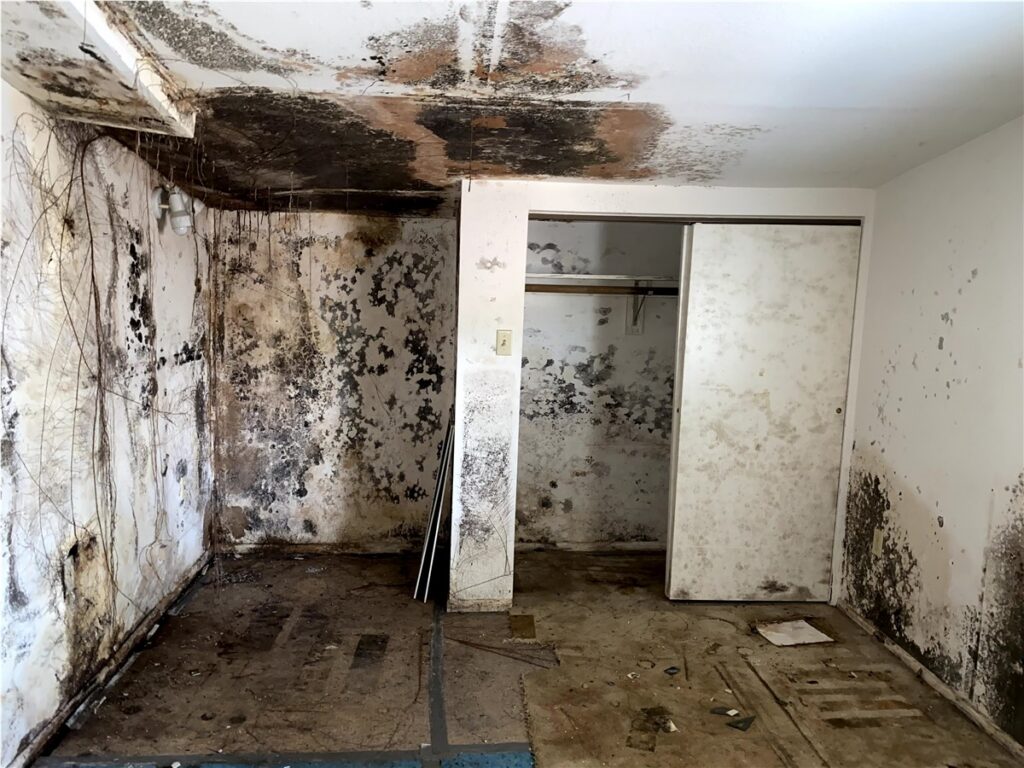
Why Renovated Basements in Bergen County Are One of the Most Common Places Mold Hides
The finished basement is one of the most common home improvement projects in Ridgewood. Extra bedroom, home office, playroom, it adds usable square footage and real value to the property. It also, when done without proper moisture management, creates one of the most reliable mold environments we encounter across Bergen County.
The issue is not the renovation itself. It is what gets covered up during the renovation without being addressed first.
Why Finished Basements Develop Mold
Concrete foundation walls in older Ridgewood homes are permeable. Moisture from the surrounding soil passes through them continuously, at levels too low to notice as a leak but high enough to sustain mold growth when trapped against organic materials.
When a basement is finished with fiberglass insulation and drywall installed directly against those walls, those materials sit in a permanently damp zone. The drywall faces the living space and looks fine. What is happening on the other side, against the concrete, is a different story entirely.
Common scenarios that accelerate the problem:
- Vapor barrier installed incorrectly or skipped entirely during the renovation
- Fiberglass batts used against foundation walls instead of rigid foam insulation
- HVAC supply without adequate return air, creating humidity imbalances in the finished space
- Minor basement seepage that was present before the renovation and simply got enclosed
By the time a homeowner notices a musty smell or visible spotting on the baseboard, mold has usually been developing behind the finished wall for months.
What Mold Remediation in a Finished Basement Actually Involves
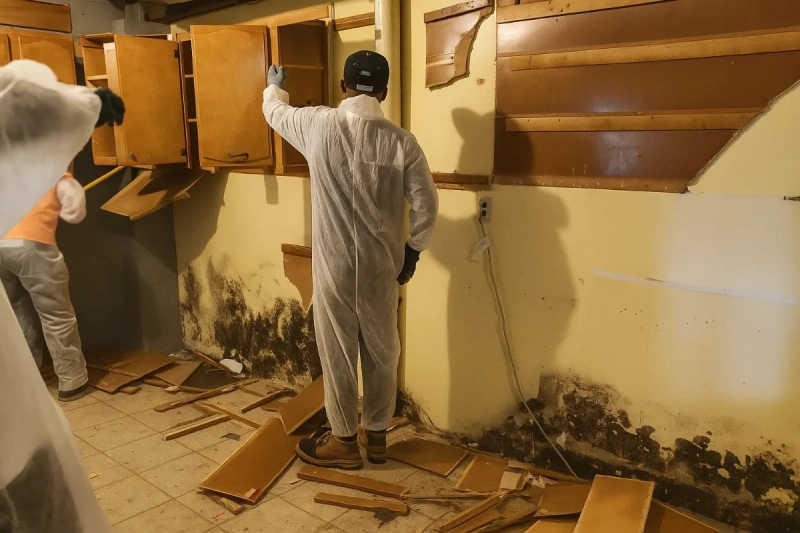
This is the part homeowners find most frustrating: effective mold remediation in a finished basement almost always requires opening the walls. There is no shortcut that produces a result you can trust.
Here is what the process looks like:
- Moisture mapping to identify the full extent of contamination before any material is removed
- Containment setup to prevent spores from spreading to the rest of the home during remediation
- Controlled demolition of affected drywall, insulation, and in some cases flooring
- HEPA vacuuming and antimicrobial treatment of all exposed framing and foundation surfaces
- Moisture source correction before any reconstruction begins, because rebuilding over an unresolved moisture problem produces the same result again
- Air scrubbing and clearance testing to confirm the space is safe before it is closed back up
Skipping the moisture source correction step is the most common reason mold returns after a remediation job. We do not skip it.
The Renovation Trap: When a Finished Basement Fails a Home Inspection
Mold behind finished basement walls is one of the most common surprises discovered during home inspections in Bergen County. For homeowners looking to sell, it can delay closing, reduce sale price, or in some cases kill a deal entirely.
Addressing it proactively, before a property goes to market, is almost always less expensive than negotiating a price reduction after an inspector finds it. If your finished basement has a persistent smell, visible staining near the base of walls, or a history of any moisture, it is worth having it assessed before it becomes someone else’s leverage.
A Musty Smell Is Not Normal. It Is a Signal.
Basements in older homes do not have to smell like basements. That familiar damp, musty odor is mold producing microbial volatile organic compounds, not just “how old houses smell.”
If your finished basement has that smell, something is growing somewhere you cannot see it yet. The sooner it is found, the less material needs to come out.
Reach out to PuroClean of Ridgewood online or call (551) 751-1288. We serve Ridgewood, Fair Lawn, Paramus, Mahwah, and throughout Bergen County, and we will tell you exactly what is happening down there before it becomes a much bigger conversation.