


What Bergen County Homeowners Need to Know About Aging Plumbing and the Water Damage It Leaves Behind
Most water damage in Ridgewood’s older homes does not announce itself dramatically. There is no explosion, no obvious flood. There is just a morning when something feels wrong, a ceiling that looks slightly different, a cabinet under the sink that smells off, a utility bill that does not add up.
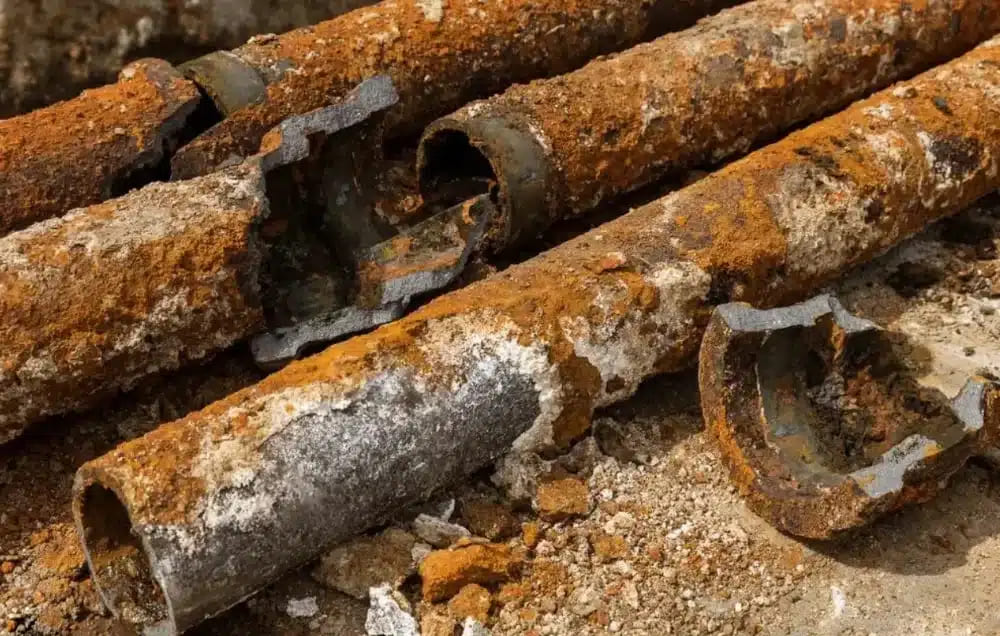
Then a plumber opens a wall and shows you what galvanized steel looks like after sixty years inside a Bergen County home. And suddenly everything makes sense.
Aging plumbing is one of the most common and most underestimated sources of water damage in Ridgewood’s pre-war and mid-century housing stock. Here is what you need to know.
The Two Pipe Types Most Likely Failing in Your Home Right Now
Galvanized steel supply lines, standard in homes built before the 1960s, corrode from the inside out. The exterior of the pipe looks intact while the interior is progressively narrowing with rust buildup and developing pinhole leaks at joints and fittings. By the time water appears on a surface, the pipe has usually been leaking slowly into the wall cavity for weeks or longer.
Cast iron drain lines, common in Bergen County homes through the mid-20th century, crack and separate at joints as the metal corrodes and shifts over decades. Slow drain line leaks saturate subfloor assemblies and basement ceilings with gray water, which carries a contamination risk that clean water events do not.
Both pipe types fail gradually and invisibly. That is what makes the water damage they produce so extensive by the time it is discovered.
What Water Damage From a Slow Pipe Leak Actually Looks Like
Slow leaks behind walls behave very differently from acute flooding events. Because the volume of water is low and consistent over a long period, it saturates materials deeply rather than spreading widely across floor surfaces. This means:
- Subfloor sheathing and floor joists absorb moisture for weeks before any surface indication appears
- Wall cavity insulation becomes a saturated reservoir held against structural framing
- Mold can establish itself well before the moisture source is even identified
- The affected zone is often significantly larger than the visible damage suggests
By the time a homeowner notices something is wrong, the restoration scope is almost always more involved than a visible wet patch implies.
Why Water Damage Restoration After a Pipe Failure Is Not Just Drying
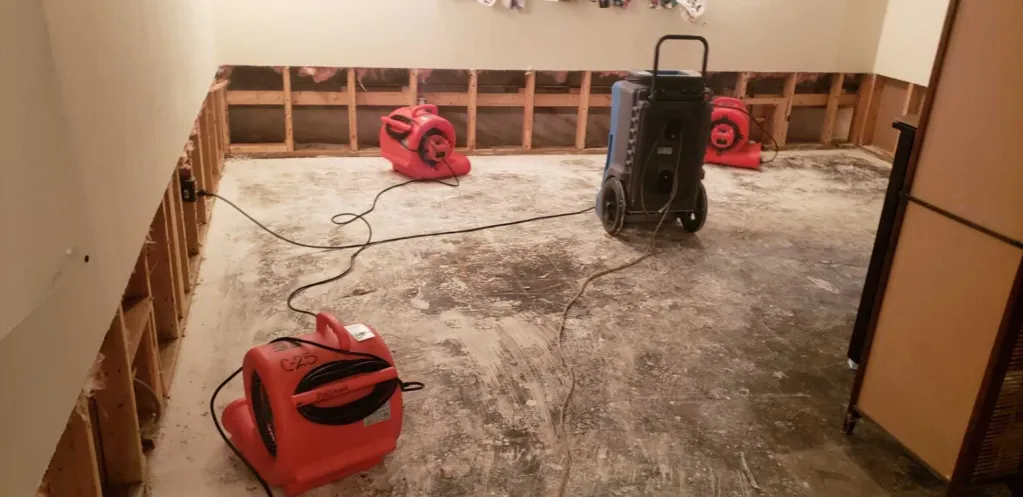
When water has been present inside a wall or floor assembly for an extended period, extraction and drying are only part of the job. Effective restoration also requires:
- Thermal imaging assessment to map the true extent of saturation beyond the visible area
- Contamination evaluation to determine whether the leak involved drain line gray water, which requires antimicrobial treatment in addition to drying
- Mold assessment for any material that has been wet for more than 48 hours
- Structural evaluation of subfloor and framing components that absorbed moisture over an extended period
- Documentation for the insurance claim, including moisture readings, photographs, and a written scope that accurately reflects what was affected
Skipping any of these steps in an older home with a slow leak history produces incomplete results that show up as secondary damage months later.
A Word on Insurance and Pipe Leak Claims in New Jersey
New Jersey homeowner’s policies generally cover sudden and accidental water damage but exclude damage attributed to gradual leaks or deferred maintenance. The distinction matters enormously for your claim outcome, and it often comes down to how the restoration documentation describes the event.
A professional restoration file that accurately characterizes the failure mode, documents the full scope of affected material, and establishes a clear timeline supports your claim and reduces the risk of a coverage dispute. We build that documentation into every job from day one.
That Smell Under Your Sink Is Not Nothing
Old houses develop a library of smells over the decades. Most of them are harmless. A persistent damp or musty smell near plumbing fixtures, inside cabinets under sinks, or along basement ceiling lines is not one of them.
If something smells off and you cannot find a reason, there is a reason. You just have not found it yet.
Call PuroClean of Ridgewood at (551) 751-1288 or contact us online. We will come take a look, tell you exactly what is going on, and give you a clear picture of what it takes to fix it properly. We serve Ridgewood, Fair Lawn, Paramus, Hackensack, and throughout Bergen County, any hour, any day.