


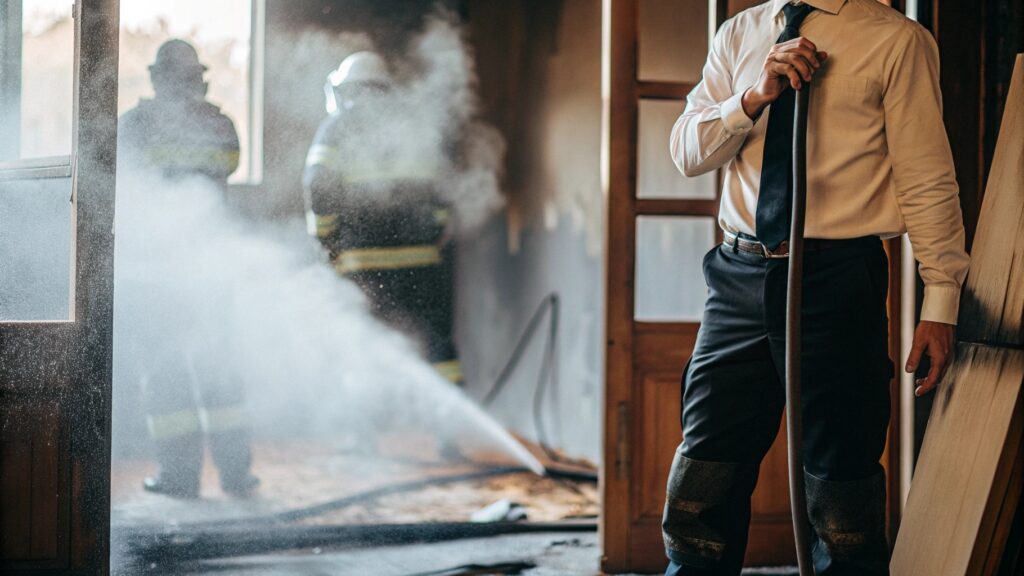
When the flames are finally gone and the noise fades, many property owners expect relief. Instead, what often follows is a quiet moment of shock. Walls look different, the air smells unfamiliar, and even untouched rooms feel altered. A fire doesn’t end when it’s extinguished; it changes the entire environment.
Understanding what comes next helps people regain a sense of control and clarity during an overwhelming time. In this blog, we will explore what actually happens after a fire is out, how damage continues to develop, and what fire damage cleaning involves beyond what the eye can see.
The Immediate Reality After a Fire Is Extinguished
Once emergency crews leave, the property enters a fragile phase where damage can quietly worsen. Firefighting efforts often involve heavy water use, which mixes with ash and burned materials, creating corrosive residue on surfaces. This situation is more common than many realize. According to data from the National Centers for Environmental Information (NCEI), in December 2025 alone, the U.S. recorded 10,541 wildfires, burning over 111,241 acres, with an average of 10.55 acres affected per fire.
These numbers highlight how frequently properties are exposed to post-fire conditions that extend beyond visible burn marks. Even smaller fires can leave widespread residue and environmental changes that require careful attention once the flames are out.
What Fire Really Leaves Behind
Fire doesn’t just burn materials; it releases particles, chemicals, and residues that spread far beyond the origin point. Soot can settle into vents, fabrics, and cracks, while heat alters surfaces at a molecular level. This is why fire damage cleaning focuses on what can’t be seen just as much as what can. Even areas that appear unharmed may already be affected.
Why the Damage Doesn’t Stop When the Flames Do
After a fire, chemical reactions continue. Smoke residue can corrode metal, discolor walls, and weaken structural components over time. Moisture left behind accelerates this process. Without timely fire damage cleaning, secondary damage often becomes more costly than the initial fire itself.
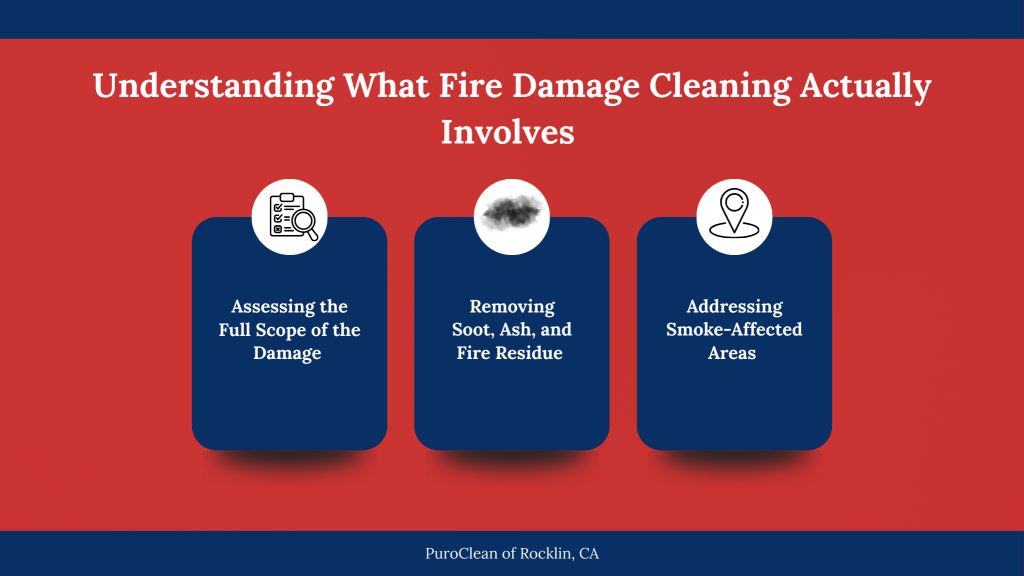
Understanding What Fire Damage Cleaning Actually Involves
Many people assume cleanup simply means removing debris, but the process is far more complex. It’s a layered approach that addresses surfaces, air quality, and material stability all at once. A closer look at professional fire damage services can help clarify how this type of cleanup is typically approached in real-world situations.
Assessing the Full Scope of the Damage
Before any cleaning begins, professionals evaluate how far residue and heat effects have traveled. This includes checking insulation, framing, and air systems. Fire damage cleaning starts with understanding how the fire behaved, not just where it burned, which helps prevent long-term issues from being overlooked.
Removing Soot, Ash, and Fire Residue
Soot behaves differently depending on the materials it contacts. On painted walls, it may smear, while on glass, it can etch permanently. Improper handling can worsen the damage. This is why fire damage cleaning uses controlled techniques designed to lift residue without embedding it further.
Addressing Smoke-Affected Areas
Smoke moves quickly and unpredictably, often reaching rooms that never saw flames. In Rocklin homes, this is a common reason people seek smoke damage cleanup Rocklin services, especially when odors appear days later. Smoke particles cling to surfaces and fabrics, making thorough treatment essential.
What Happens to Furniture, Walls, and Personal Belongings
Fire alters how materials behave. Some items can be restored, while others deteriorate even if they look intact at first glance.
Hard Surfaces vs Porous Materials
Non-porous surfaces like tile or metal are often easier to stabilize, while porous materials absorb smoke and residue deeply. Fire damage cleaning evaluates each item individually, which helps determine whether restoration is possible or if removal is safer.
Odor Penetration and Long-Term Effects
Odors are not just unpleasant; they indicate lingering particles. Without proper treatment, smells can resurface during warm weather or high humidity. In many cases, smoke damage cleanup Rocklin processes target odor sources rather than masking them, which reduces the chance of recurrence.
Air Quality Concerns After a Fire
Even when surfaces look clean, the air may still carry contaminants. This often surprises property owners, especially when irritation or discomfort persists.
What’s Floating in the Air After the Fire
After a fire, fine smoke particles can remain suspended indoors. The U.S. Environmental Protection Agency (EPA) explains that these particles can enter and linger inside buildings, especially without proper ventilation, affecting indoor air even after flames are gone.
Ventilation, Filtration, and Neutralization
Simply opening windows rarely solves the problem. Specialized filtration systems are used to capture airborne residue. In Rocklin properties, smoke damage cleanup Rocklin approaches often focus on stabilizing air quality before deeper restoration begins.
The Role of Professional Equipment and Techniques
Household tools are not designed to handle post-fire conditions. Specialized equipment allows for precise control and safer results.
Specialized Tools Used in Fire Cleanup
High-efficiency vacuums, air scrubbers, and residue-specific solutions are commonly used during fire damage cleaning. These tools prevent cross-contamination and help preserve materials that might otherwise degrade.
Safety Measures During the Cleaning Process
Protective barriers and containment strategies prevent particles from spreading during cleanup. Smoke damage cleanup Rocklin procedures often include isolating affected zones to protect unaffected areas of the property.
How Timing Impacts Recovery After a Fire
Time plays a critical role in how much damage can be reversed. Delays often increase restoration challenges.
What Happens If Cleaning Is Delayed
Soot becomes more acidic over time, increasing corrosion and staining. Fire damage cleaning performed early reduces permanent discoloration and structural weakening, especially in enclosed spaces.
Stabilizing the Property Early
Early intervention helps prevent secondary issues like mold growth or material warping. In many Rocklin cases, smoke damage cleanup Rocklin efforts begin with stabilization to stop damage from spreading further.
Conclusion
A fire changes more than what’s visible. Understanding what happens after the flames are out helps property owners navigate the aftermath with greater clarity. Fire damage cleaning is not about rushing repairs; it’s about carefully addressing residue, air quality, and material stability to make spaces safe and usable again. Knowing what to expect can make an overwhelming situation feel more manageable.
FAQs
Q1. Is it safe to stay in a home after a fire?
A: Safety depends on air quality and residue presence. Even small fires can leave harmful particles behind, so professional evaluation is recommended.
Q2. Can smoke damage spread to rooms that weren’t burned?
A: Yes. Smoke travels through air systems and open spaces, affecting areas far from the fire’s origin.
Q3. How long does fire damage cleaning usually take?
A: The timeline varies based on severity, but most initial cleaning and stabilization occur within days rather than weeks.