


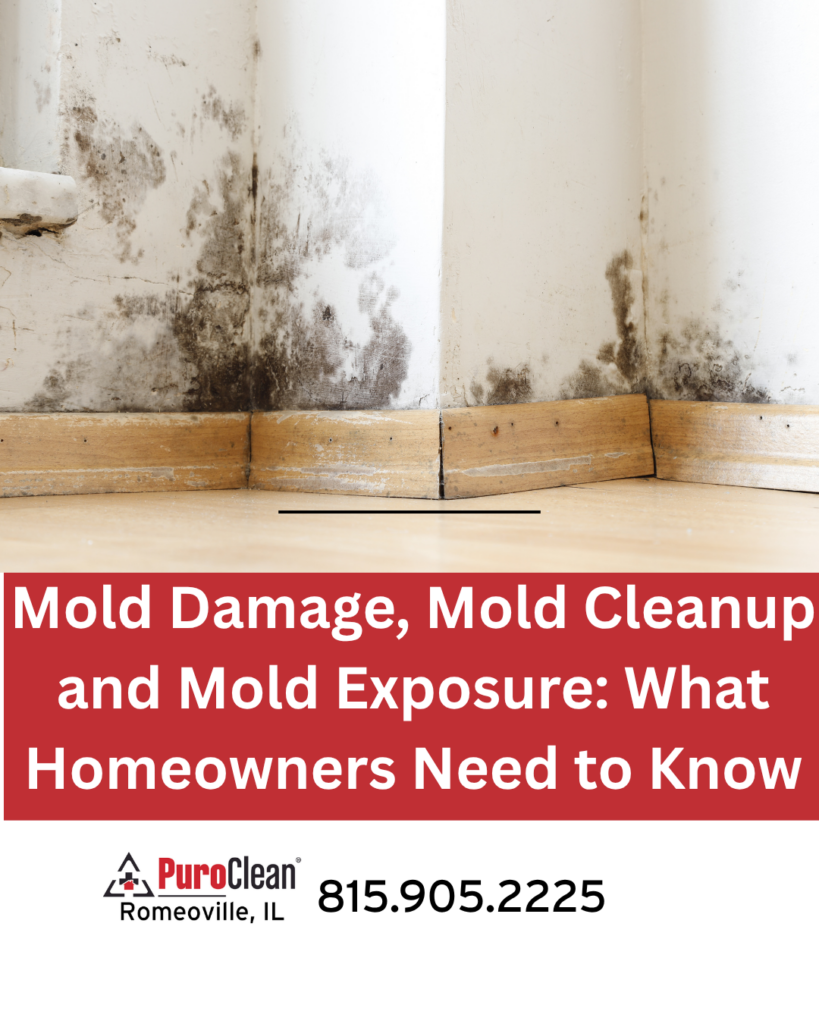
Mold can damage your home, especially when it grows after a leak, flooding, high humidity or another moisture problem. It can also affect indoor air quality and cause health symptoms in some people.
If you’ve discovered mold in your home, you may be wondering: Is mold bad for you? What are the symptoms of mold exposure? And how do I clean up mold safely?
The answers depend on the amount of mold, where it is growing, the underlying moisture problem and the health of the people exposed to it.
The good news is that you don’t need to identify the exact type of mold before taking action. The most important steps are to address the moisture source, safely remove the mold and prevent it from returning.
If you have significant mold damage or water damage in your Romeoville-area home or business, PuroClean Romeoville can help assess the situation and determine the appropriate cleanup and remediation steps.
What Is Mold and Why Does It Grow?
Mold is a type of fungus that naturally exists both indoors and outdoors. Mold spores are microscopic and can enter a home through doors, windows, ventilation systems, clothing, shoes and other pathways.
Mold becomes a problem when spores land on a damp surface and have enough moisture to grow.
Common causes of indoor mold growth include:
- Leaking pipes or plumbing fixtures
- Roof leaks
- Flooding or water intrusion
- Water-damaged drywall
- Leaking appliances
- Condensation around windows and doors
- High indoor humidity
- Damp basements or crawl spaces
- Poor ventilation in bathrooms and kitchens
- Moisture inside walls or other hidden areas
Moisture control is the key to mold control. Cleaning visible mold without correcting the source of the moisture can allow the mold problem to return.
Where Can Mold Hide?
Mold isn’t always easy to see.
It can grow behind drywall, wallpaper and paneling, underneath carpeting and carpet padding, inside wall cavities, around leaking pipes, behind furniture and in other areas where moisture becomes trapped. A persistent musty odor can also be a warning sign of hidden mold.
If you’ve had recent water damage and notice a musty smell, staining, peeling paint or other signs of moisture, don’t assume the problem is limited to what you can see.
Is Mold Bad for You?
It can be, particularly for people who are sensitive to mold, have allergies or have certain respiratory conditions.
Mold exposure does not affect everyone the same way. Some people may experience no noticeable symptoms, while others can develop allergy-like or respiratory symptoms.
According to the CDC, exposure to damp and moldy environments can be associated with:
- Stuffy or runny nose
- Sneezing
- Sore throat
- Coughing
- Wheezing
- Red, itchy or watery eyes
- Skin irritation or rash
- Worsening asthma symptoms
- Other respiratory irritation
People with asthma or mold allergies may experience more significant reactions. People with weakened immune systems or certain chronic lung conditions may also be at greater risk for serious complications.
That doesn’t mean every symptom someone experiences is caused by mold. Many mold-related symptoms can look similar to allergies, colds and other respiratory conditions.
If you are concerned about your health or symptoms, talk with your doctor or another qualified healthcare professional.
What Are the Symptoms of Mold Exposure?
The symptoms of mold exposure can vary from person to person.
Some of the more commonly reported symptoms associated with mold and damp indoor environments include:
1. Sneezing and Runny Nose
Mold can trigger an allergic response in people who are sensitive to it. Frequent sneezing, nasal congestion or a runny nose may occur.
2. Coughing
A persistent cough can occur when the respiratory system is irritated.
3. Wheezing or Breathing Difficulty
People with asthma or other respiratory conditions may notice worsening symptoms around mold or damp environments.
Seek prompt medical attention for significant or worsening breathing problems.
4. Itchy or Watery Eyes
Red, itchy or watery eyes can occur as part of an allergic response to mold.
5. Skin Irritation
Some people may experience skin irritation or a rash after exposure to mold.
6. Sore Throat or Nasal Irritation
Mold and other airborne particles can irritate the nose and throat.
7. Worsening Asthma Symptoms
For people with asthma, exposure to mold can contribute to increased respiratory symptoms or asthma attacks. It’s important to remember that these symptoms aren’t proof that mold is present in your home. They can have many different causes. If symptoms are persistent, severe or concerning, consult a healthcare professional.
How Do I Know If I Have Mold in My House?
Visible mold is an obvious warning sign, but you don’t always have to see mold to have a moisture problem.
Look for:
- Musty or moldy odors
- Water stains
- Discoloration on walls or ceilings
- Peeling or bubbling paint
- Warped drywall
- Damp carpeting or flooring
- Condensation around windows
- Persistent humidity
- Previous flooding or water damage
- Leaking plumbing
- Mold growth around bathrooms or other moisture-prone areas
Mold can come in many colors, including black, green, white, brown and gray. The color of mold alone does not tell you whether it is more dangerous.
How Do I Clean Up Mold?
If you’re searching “how do I clean up mold?”, the first step is not simply spraying the visible mold.
You need to address the moisture problem that allowed the mold to grow.
For a small amount of mold on an appropriate hard surface, homeowners may be able to perform cleanup themselves. The EPA generally considers an area of less than approximately 10 square feet to be a situation that can often be handled by a homeowner, provided there aren’t other complicating factors.
For larger areas, extensive water damage, contaminated materials, sewage-related damage or suspected hidden mold, professional help may be appropriate.
If You Are Cleaning a Small Area Yourself
Take appropriate precautions:
- Stop the moisture source. Repair leaks and address water intrusion.
- Protect yourself. Wear appropriate gloves, eye protection and at least an N95 respirator when cleaning mold.
- Ventilate the area when appropriate.
- Clean hard surfaces using appropriate household cleaning methods.
- Dry the area completely.
- Remove materials that cannot be adequately cleaned and dried.
- Do not simply paint or caulk over mold.
- Never mix bleach with ammonia or other cleaning products.
CDC guidance recommends protective equipment including an N95 respirator, gloves and goggles for mold cleanup.
When Should You Call a Professional for Mold Cleanup?
DIY cleanup isn’t appropriate for every mold problem.
Consider contacting a professional mold remediation company when:
- Mold covers more than approximately 10 square feet.
- There has been significant water damage.
- Mold has returned after cleaning.
- Mold may be growing behind walls or ceilings.
- Drywall, insulation or other porous materials are heavily affected.
- Sewage or contaminated water caused the damage.
- Your HVAC system may be contaminated.
- You are unsure how extensive the mold problem is.
- Someone in the home has significant mold allergies, asthma or another condition that makes exposure particularly concerning.
The EPA recommends professional assistance for larger mold problems and certain situations involving extensive water damage, contaminated water or potentially contaminated HVAC systems.
Why Mold Damage Needs More Than Surface Cleaning
One of the biggest mistakes homeowners make is treating only the mold they can see.
For example, if a plumbing leak has saturated drywall, simply wiping the surface may not address moisture or mold inside the wall cavity.
That’s why professional mold remediation focuses on determining the extent of the damage, identifying moisture sources and preventing contamination from spreading during cleanup.
A professional remediation process may include:
- Inspecting the affected area
- Identifying moisture sources
- Determining the scope of the mold damage
- Establishing appropriate containment
- Using air filtration equipment
- Removing affected materials when necessary
- Cleaning affected surfaces
- Drying remaining materials
- Addressing the underlying moisture problem
- Restoring damaged areas when appropriate
PuroClean Romeoville’s local property restoration team uses moisture meters and thermal imaging as part of its property-damage assessment process and provides mold remediation services for homes and businesses.
What About Black Mold?
The term “black mold” often causes homeowners to worry, but the color of mold isn’t enough to determine its health risk.
There are many species of indoor mold, and different molds can appear black, green, brown, white or other colors.
Rather than trying to determine whether mold is “toxic” based on its appearance, the practical priority is to remove the mold, correct the moisture problem and prevent it from coming back.
If you discover extensive dark-colored mold after water damage, avoid disturbing it unnecessarily and consider contacting a professional.
How Quickly Can Mold Grow After Water Damage?
Mold growth is closely tied to moisture.
Water-damaged areas and materials should be dried as quickly as possible. EPA and CDC guidance recommends drying wet materials within approximately 24–48 hours when possible to help prevent mold growth.
This is one reason it’s important to act quickly after:
- A burst pipe
- Basement flooding
- Roof leaks
- Appliance leaks
- Sewer backups
- Storm damage
- HVAC or air-conditioning leaks
The longer moisture remains, the greater the opportunity for mold growth and additional property damage.
Can You Prevent Mold From Coming Back?
Yes. Preventing mold starts with controlling moisture.
Helpful steps include:
- Fix plumbing and roof leaks promptly.
- Keep indoor humidity below 60%, with EPA recommending approximately 30–50% when possible.
- Use bathroom exhaust fans.
- Make sure clothes dryers vent outdoors.
- Use air conditioning or a dehumidifier when needed.
- Address condensation on windows, walls and pipes.
- Dry wet materials as quickly as possible.
- Don’t install carpeting in areas that regularly experience moisture.
Inspect areas that have previously experienced water damage.
Does Mold Testing Tell You If Your Home Is Safe?
Not necessarily.
The CDC does not recommend routine mold testing because there are no established standards for determining whether a particular amount of indoor mold is “safe” or “unsafe,” and testing does not tell you whether someone will become sick.
In many situations, identifying the moisture source and removing visible mold is more useful than trying to determine the exact species.
For complicated or extensive mold problems, an experienced professional can help determine the appropriate remediation approach.
When to Call PuroClean Romeoville for Mold Damage
If you’ve discovered mold damage, water damage or suspected mold growth in your home or business, don’t wait for the problem to become more extensive.
PuroClean Romeoville provides mold remediation and property restoration services throughout Romeoville and surrounding communities, including Bolingbrook, Lockport and Northern Will County. The local team offers 24/7 emergency assistance and can be reached at 815.905.2225.
When you call, the team can help assess the situation, identify moisture-related problems and determine what steps are needed to address the mold damage.
Suspect Mold Damage?
Call PuroClean Romeoville at 815.905.2225 for professional mold cleanup and remediation assistance.
Don’t ignore a musty odor, visible mold or water damage. The sooner a moisture problem is addressed, the better the opportunity to limit additional property damage and mold growth.
Frequently Asked Questions About Mold
Is mold bad for you?
Mold can cause health effects in some people, particularly people with mold allergies, asthma or certain respiratory or immune conditions. Common symptoms can include sneezing, congestion, coughing, wheezing, irritated eyes and skin irritation. Not everyone exposed to mold will experience symptoms.
What are the symptoms of mold exposure?
Common symptoms associated with mold exposure include sneezing, stuffy or runny nose, coughing, wheezing, sore throat, irritated or watery eyes and skin rash. Mold can also worsen asthma symptoms in people with asthma.
How do I clean up mold?
Small areas of mold on appropriate surfaces can sometimes be cleaned by homeowners using proper protective equipment and safe cleaning methods. Larger areas, extensive water damage, contaminated materials, hidden mold or HVAC contamination may require professional mold remediation.
Can mold grow after water damage?
Yes. Mold can grow when water-damaged materials remain wet or damp. Drying affected areas within approximately 24–48 hours can help reduce the likelihood of mold growth.
Should I worry about black mold?
The color of mold does not by itself determine how dangerous it is. Any significant indoor mold growth should be addressed, and the underlying moisture problem should be corrected to help prevent it from returning.
When should I call a mold remediation professional?
Professional help is especially appropriate when mold covers a large area, there has been significant water damage, mold may be hidden inside walls or HVAC systems, contaminated water is involved, or you’re unsure how to safely address the problem.
Call PuroClean Romeoville
Mold damage doesn’t have to become a bigger problem.
If you suspect mold in your home or business, contact PuroClean Romeoville at 815.905.2225 for help with mold remediation and property restoration.