


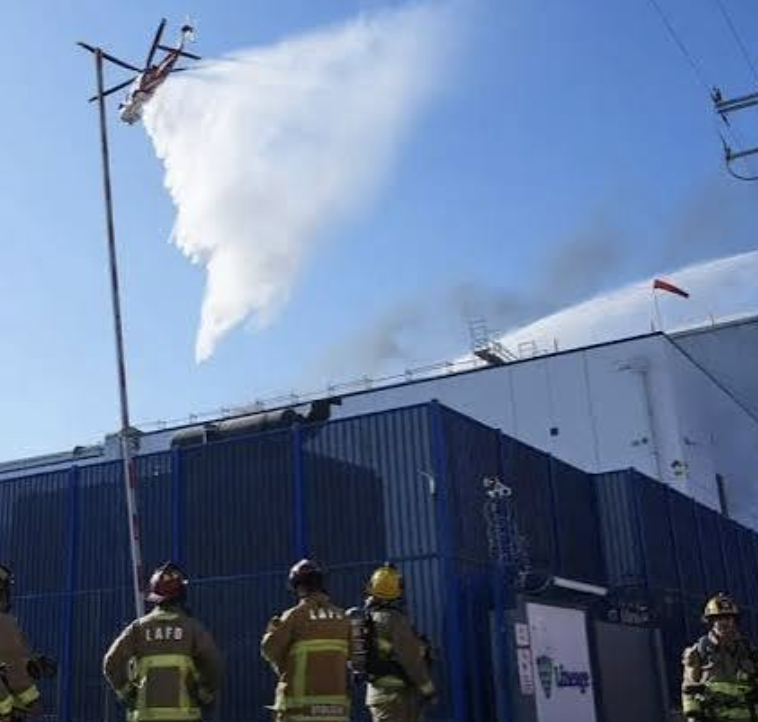
Boyle Heights Warehouse Fire Update: Cleanup Continues as Health Concerns and Smoke Odors Persist
Cleanup efforts continue following the massive warehouse fire in Boyle Heights that filled the surrounding neighborhoods with thick smoke, airborne debris, and persistent odors. Although the fire itself has been extinguished, recovery efforts remain ongoing as city agencies, public health officials, contractors, and residents work through the long-term effects of one of the area’s most significant recent industrial fires. For many nearby homeowners, the biggest concern is no longer the flames—it is the lingering smoke odor and hidden smoke contamination that may remain inside homes.
Warehouse Fire Overview
The Boyle Heights warehouse fire quickly became one of the largest industrial fire responses in the Los Angeles area this year. The fire generated a massive smoke plume that was visible for miles across East Los Angeles and surrounding communities. Firefighters worked for hours to contain the blaze while nearby residents were advised to avoid outdoor activity due to deteriorating air quality.
As emergency crews battled the fire, thousands of residents experienced heavy smoke drifting through neighborhoods surrounding the warehouse. Depending on wind direction, smoke entered homes, apartment buildings, schools, and businesses located well beyond the immediate fire scene. While many residents initially believed the effects would disappear once the flames were extinguished, recovery experts note that smoke contamination often continues affecting nearby properties long after visible smoke has cleared.
Unlike flames, smoke does not remain confined to the structure where the fire originated. Fine smoke particles can travel through the atmosphere before entering neighboring homes through attic vents, open windows, HVAC systems, crawl space vents, door gaps, and other small building openings. Once inside, those particles can settle onto structural materials, insulation, furniture, electronics, fabrics, carpeting, and household contents.
Homeowners who continue noticing persistent odors may benefit from learning more about Smoke Odor Removal in Boyle Heights, which explains how professional restoration targets embedded smoke particles rather than simply masking unpleasant odors.
Cleanup Efforts Continue
Although the active firefighting operation has concluded, cleanup work remains underway. Crews have continued removing debris, damaged materials, and fire-related waste while evaluating the structural condition of the warehouse. According to multiple local news reports, cleanup activities include demolition planning, debris removal, environmental monitoring, pest mitigation, and odor reduction efforts surrounding the damaged facility.
Residents living nearby have expressed concern about the length of the cleanup process and the ongoing presence of smoke-related odors in surrounding neighborhoods. As demolition and debris removal continue, some homeowners have reported occasional smoke smells returning depending on weather conditions and wind patterns.
Cleanup of a large commercial warehouse is significantly different from extinguishing the fire itself. Once the flames are out, crews must safely remove unstable building materials, damaged inventory, contaminated debris, and fire-related waste while minimizing additional environmental impacts. Depending on the condition of the structure, this process may take weeks or even months.
Large warehouse fires often involve numerous construction materials that produce different types of smoke during combustion. Depending on what was stored inside the warehouse, smoke may contain residue from wood products, cardboard packaging, plastics, insulation materials, textiles, rubber products, electrical components, and other industrial materials. While most smoke disperses naturally outdoors, some particles may remain inside nearby buildings after entering during the fire.
Because smoke particles are extremely small, homeowners often do not realize how much contamination entered the property until lingering odors begin appearing days or weeks later. Warm temperatures, increased humidity, or operating the home’s HVAC system may cause previously unnoticed smoke odors to become much more noticeable.
Health Concerns Reported During the Fire
Public health agencies also monitored the impact of the warehouse fire while it was actively burning. Local reporting indicated that emergency room visits increased during the incident as smoke spread throughout surrounding communities. Individuals experiencing asthma, respiratory conditions, or other underlying health concerns were among those most affected by deteriorating air quality during the fire.
Public officials encouraged residents to limit outdoor activity while smoke remained heavy and advised people to keep doors and windows closed whenever possible. Air quality recommendations emphasized reducing exposure until smoke conditions improved.
While outdoor air quality generally improves once the fire has been extinguished, indoor conditions can vary from one property to another. Homes that drew smoke indoors during the event may continue experiencing smoke odor or light smoke contamination even after outdoor air has returned to normal.
Microscopic smoke particles may remain inside carpeting, insulation, upholstered furniture, curtains, clothing, mattresses, drywall, wood framing, and HVAC systems. Because these particles are often invisible, many homeowners assume the problem has disappeared when the visible haze clears. In reality, smoke residue can continue releasing odor for weeks or months if it is not properly removed.
If smoke residue entered your property during the warehouse fire, professional Smoke Damage Cleanup in Boyle Heights can help identify hidden contamination affecting indoor air quality and household surfaces.
How Nearby Homes May Still Be Affected
One of the biggest misconceptions following a major warehouse fire is that only properties touched by flames experience damage. In reality, smoke frequently affects a much larger geographic area than the fire itself.
Depending on weather conditions, nearby homes may experience:
- Lingering smoke odors
- Fine soot around windows and vents
- Smoke residue on outdoor furniture
- Particles inside HVAC systems
- Smoke contamination inside attics
- Odors trapped inside carpets and upholstery
- Residue on walls and ceilings
- Reduced indoor air quality
Some homeowners notice these issues immediately, while others discover them gradually over the following days as odors begin returning whenever air conditioning systems cycle on or temperatures increase. Because smoke particles settle differently throughout each home, every property experiences slightly different conditions following a large nearby fire.
Lingering Smoke Odors After the Fire
For many residents, the most frustrating reminder of the warehouse fire is the persistent smell of smoke inside the home. Air fresheners, candles, open windows, and household cleaning products may temporarily reduce the smell, but they rarely eliminate the microscopic particles responsible for the odor.
Professional restoration focuses on locating where smoke particles settled throughout the property before applying cleaning methods designed to remove contamination from affected materials. This often includes evaluating HVAC systems, insulation, porous building materials, household contents, and structural surfaces that absorbed smoke during the fire.
Because smoke behaves differently depending on airflow, temperature, humidity, and building construction, every property requires its own inspection before determining the most appropriate restoration approach.
What Homeowners Should Do After Smoke Exposure
If your home was exposed to smoke during or after the Boyle Heights warehouse fire, taking the right steps early can help minimize additional damage. Many homeowners naturally want to begin cleaning immediately, but smoke and soot require specialized cleaning methods. Wiping soot with household cleaners or using standard vacuums can spread contamination, permanently stain surfaces, or force smoke particles deeper into porous materials.
If you believe smoke entered your home during the fire, consider the following steps:
- Keep windows and doors closed if outdoor smoke is still present.
- Replace HVAC filters if they were operating during the fire.
- Avoid scrubbing visible soot with household cleaning products.
- Photograph visible smoke or soot damage for insurance purposes.
- Inspect attic spaces, HVAC vents, and return air registers.
- Wash clothing exposed to smoke separately.
- Schedule a professional inspection if odors continue returning.
Even if the smell seems minor, hidden smoke contamination can remain inside insulation, ductwork, carpeting, upholstery, and drywall. Professional restoration helps identify contamination before it becomes a long-term problem.
Professional Smoke Restoration After a Warehouse Fire
Every property responds differently to smoke exposure. Homes closest to the warehouse may experience visible soot deposits, while properties farther away may only notice lingering smoke odors or indoor air quality concerns. Professional restoration begins with determining how smoke entered the structure, where it settled, and which materials have been affected.
A comprehensive smoke restoration project may include:
- Detailed smoke damage inspection
- HEPA air filtration
- Smoke residue removal
- Soot cleaning
- HVAC inspection and cleaning recommendations
- Professional deodorization
- Contents cleaning
- Structural surface cleaning
The goal is not simply to make the home smell better, but to remove the microscopic smoke particles responsible for lingering odors and residue. Depending on the extent of contamination, restoration may involve multiple cleaning methods tailored to different building materials and household contents.
Homes with visible soot deposits may also require professional Soot Removal in Boyle Heights before deodorization can be fully effective.
Will Insurance Cover Smoke Damage?
Many homeowners have questions about insurance following a nearby warehouse fire. Whether smoke damage is covered depends on the specific policy, the source of the damage, and the circumstances surrounding the loss. Every insurance policy is different, making documentation especially important if smoke entered the home.
Visible soot, persistent smoke odors, photographs, inspection reports, and professional restoration documentation may all assist during the claims process. Homeowners should notify their insurance carrier if they believe smoke from the warehouse fire affected their property.
Additional guidance is available in our article on Does Homeowners Insurance Cover Smoke Odor Removal in Boyle Heights?
A Community Focused on Recovery
The Boyle Heights warehouse fire has affected far more than a single commercial property. Residents, local businesses, emergency responders, public health agencies, cleanup contractors, and city officials continue working toward recovery while addressing concerns about demolition, environmental impacts, and neighborhood safety.
Although the emergency response has largely transitioned into cleanup and recovery, many residents continue asking questions about lingering smoke odors, indoor air quality, and whether their homes may still have hidden smoke contamination. As additional cleanup work continues around the warehouse, homeowners may continue noticing occasional smoke odors depending on weather conditions and ongoing debris removal activities.
Fortunately, most homes affected by smoke exposure can be professionally evaluated, cleaned, and restored using established smoke restoration techniques.
Frequently Asked Questions
Can smoke from the warehouse fire affect homes that never caught fire?
Yes. Smoke can travel well beyond the fire scene and enter neighboring homes through HVAC systems, attic vents, windows, doors, and other building openings.
Why does my home still smell like smoke even though the fire is out?
Smoke particles may still be trapped inside porous materials such as drywall, insulation, carpeting, furniture, and HVAC systems. These particles can continue producing odors long after the visible smoke has disappeared.
Can I remove smoke odor myself?
Household cleaning products may temporarily reduce odors but usually do not remove the microscopic particles responsible for lingering smoke smells. Professional restoration focuses on eliminating the source of the odor.
Should I replace my HVAC filter after smoke exposure?
Replacing the filter is generally a good first step if your HVAC system operated during the smoke event. Additional inspection may be appropriate if smoke odors continue when the system runs.
How long can smoke odors last?
Without proper restoration, smoke odors can persist for weeks, months, or even longer depending on how deeply smoke particles penetrated the home.
Can smoke residue damage electronics?
Yes. Fine soot and smoke particles can settle inside electronics and sensitive equipment, potentially affecting performance over time.
Questions About Smoke Odor After the Boyle Heights Warehouse Fire?
If your home still smells like smoke following the Boyle Heights warehouse fire, PuroClean of Rowland Heights is here to help. Our team provides professional smoke odor removal, smoke damage cleanup, soot removal, fire damage cleanup, and house fire restoration throughout Boyle Heights and surrounding communities. We can inspect your property, identify hidden smoke contamination, and recommend the appropriate restoration plan to help return your home to a cleaner, healthier condition.


