 PuroClean of San Clemente
After an accident, crime, or sewage leak, it’s natural to want things back to normal quickly. Many homeowners grab gloves, cleaning sprays, and trash bags, hoping to clean up the mess themselves. But what looks like a simple job can become dangerous fast.
Biohazards, such as blood, bodily fluids, and contaminated waste, carry invisible threats that common household cleaners can’t eliminate. Attempting to handle them without training exposes you to infection, emotional trauma, and even legal consequences. In this blog, we’ll explore the real DIY biohazard cleanup dangers, why professional help is essential, and how the right approach can protect both your health and your home.
Understanding What Counts as a Biohazard
A biohazard refers to any biological substance that poses a risk to human health or the environment. This includes blood, bodily fluids, animal waste, chemical residues, and medical waste. These materials can carry harmful pathogens, viruses, and bacteria that cause diseases ranging from hepatitis to respiratory infections.
What makes biohazards particularly risky is that contamination isn’t always visible. A small droplet or trace left behind can harbor infectious microorganisms for days. Using typical cleaning products or paper towels can make the problem worse, spreading contaminants instead of removing them.
That’s why professional biohazard cleanup is essential. Experts are trained to identify, isolate, and decontaminate affected areas safely using methods approved by OSHA and the EPA.
The Hidden Dangers of DIY Biohazard Cleanup
Many people underestimate how hazardous biohazard cleanup can be, assuming gloves and bleach are enough. In reality, exposure risks are far greater and often invisible. We’ve addressed some of the most common misconceptions about safety and cleanup methods in our blog on Top Biohazard Cleanup Myths Debunked: What San Clemente Residents Should Really Know.
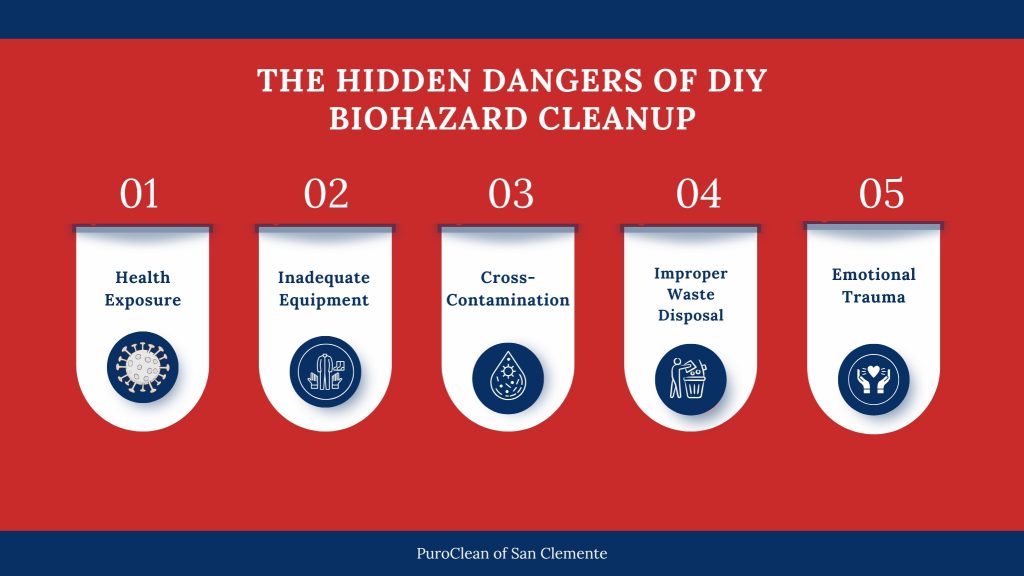
Here’s what makes DIY cleanup dangerous:
- Health Exposure: Bloodborne pathogens like HIV, Hepatitis B, and Hepatitis C can survive on surfaces for days, posing infection risks even after a spill looks clean.
- Inadequate Equipment: Home cleaning supplies cannot neutralize biohazard-level contamination. Industrial-grade disinfectants and PPE are required for safety.
- Cross-Contamination: Improper cleaning often spreads contaminants to other rooms or air ducts.
- Improper Waste Disposal: Biohazard waste cannot be thrown away with regular trash; it must be handled under regulated disposal laws.
- Emotional Trauma: Cleaning a scene involving injury, death, or illness can intensify grief, anxiety, or shock for those involved.
These DIY biohazard cleanup dangers highlight why even small incidents need a professional response. What appears clean to the eye may still harbor harmful bacteria and pathogens invisible to the naked eye.
Why Professional Help Is Non-Negotiable
Cleaning up biohazards requires more than courage; it requires precision, certification, and care. Professional cleanup ensures safety, compliance, and peace of mind that your home or business is truly safe.
According to the Centers for Disease Control and Prevention (CDC), proper disinfection and sterilization are critical to eliminating infectious materials, something that household cleaners and untrained individuals simply can’t achieve safely. These strict safety standards highlight why DIY biohazard cleanup dangers should never be underestimated, as even small mistakes can expose you to serious health and legal risks.
Here’s what sets professionals apart:
- Certified Technicians: Trained and licensed to follow OSHA and EPA standards for biohazard handling.
- Advanced Equipment: Use of hospital-grade disinfectants, air filtration systems, and full-body protective gear.
- Legal Waste Disposal: Waste is safely packaged, labeled, and transported to licensed facilities for proper disposal.
- Thorough Decontamination: Every surface, vent, and object is disinfected and tested for safety.
- Compassionate Approach: Professionals handle sensitive situations with discretion and empathy.
When you call for professional biohazard cleanup, you’re ensuring not only a clean environment but one that’s certified safe for re-entry.
What Can Go Wrong Without Professional Cleanup
DIY cleanup may seem faster or cheaper, but it often leads to costly mistakes and health hazards later. In many cases, homeowners unknowingly leave behind bio-residues that continue to release bacteria and unpleasant odors. This can lead to mold, corrosion, or pest infestations.
In others, insurance companies deny claims because cleanup wasn’t done by certified professionals, leaving property owners to bear the full cost of remediation. Even worse, improper disposal of biohazard materials can result in fines or violations under local health and safety laws. These outcomes illustrate just how serious DIY biohazard cleanup dangers can become, and why prevention starts with proper professional intervention.
How Professionals Handle Biohazard Cleanup Safely
Professional technicians don’t just clean; they restore environments to safe, livable conditions. Their process is precise, structured, and backed by industry regulation.
Here’s how a certified team handles cleanup:
- Initial Assessment: Identifies contamination zones, risks, and material types.
- Containment Setup: Seals off affected areas to prevent cross-contamination.
- Removal of Waste: Safely collects and isolates contaminated materials for disposal.
- Deep Disinfection: Uses industrial-strength cleaning agents to kill bacteria, viruses, and odors.
- Verification and Clearance: Final inspection ensures complete decontamination and compliance.
Every step of professional biohazard cleanup follows strict safety protocols, protecting both technicians and property owners from harm. The result is a fully restored environment free of contaminants and hidden dangers.
How to Get the Right Professional Biohazard Cleanup
Choosing the right cleanup team is about more than just availability; it’s about trust, safety, and proven expertise. The right professionals ensure your property is not only cleaned but fully decontaminated and restored with care, something that helps you avoid the costly and risky DIY biohazard cleanup dangers many homeowners face.
Here’s how to find the right team:
- Check certifications: Look for companies trained under OSHA and EPA standards.
- Confirm experience: Choose specialists with a track record in trauma, sewage, or hazardous waste cleanup.
- Ask about safety protocols: Ensure they use proper PPE, containment methods, and hospital-grade disinfectants.
- Review responsiveness: Opt for providers offering 24/7 emergency services for fast, secure handling.
- Verify disposal practices: Licensed professionals follow legal waste transport and disposal procedures.
The right biohazard cleanup service not only restores your space but also restores your confidence in its safety. Acting fast and choosing qualified experts can make all the difference in your recovery process.
Conclusion
Cleaning biohazards isn’t just another chore; it’s a health and safety responsibility. DIY efforts, though well-intentioned, often create more harm than good by spreading pathogens or violating waste regulations.
Choosing professional biohazard cleanup means protecting your health, your family, and your property from unseen threats. Certified experts have the training, technology, and empathy to handle even the most difficult situations safely and respectfully.
If you’re facing a biohazard situation, no matter how small, don’t take chances. Call trained professionals who can eliminate risk at its source and restore your peace of mind.
FAQs
Q1: What are the biggest risks of DIY biohazard cleanup?
A: The main risks include exposure to infectious diseases, spreading contamination to clean areas, and violating local waste disposal regulations. These DIY biohazard cleanup dangers make professional help the safer option.
Q2: How do professionals handle hazardous waste?
A: Certified technicians use sealed containers and follow strict disposal regulations to transport and eliminate biohazard waste safely, ensuring full compliance with OSHA and EPA standards.
Q3: Is biohazard cleanup covered by insurance?
A: In most cases, yes. Many property insurance policies include coverage for cleanup services when incidents involve accidental contamination, trauma scenes, or property damage. It’s best to check your specific policy and speak with your provider to confirm what’s included.
 PuroClean of San Clemente