 PuroClean of San Clemente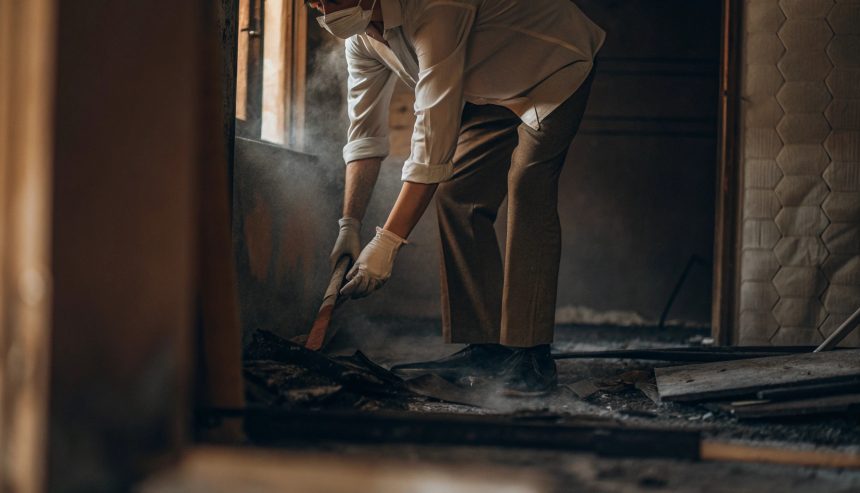
After a fire, the silence can feel overwhelming. The flames are gone, but the damage remains: blackened walls, lingering smoke, and a strong urge to act fast. Many homeowners jump into cleanup mode immediately, believing that handling the mess themselves will save time and money. What often goes unseen is that fire damage is far more complex than it appears, and rushing in without proper knowledge can quietly create serious problems.
Fire doesn’t just burn what you see. It alters air quality, weakens materials, and leaves behind residues that are not always obvious. Understanding what really happens after a fire is the first step toward recognizing why cleanup can be risky when handled without proper preparation.
Understanding the Reality of Fire Damage
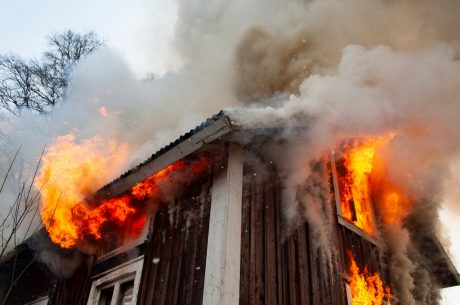
Fire damage goes far beyond burned furniture or visible soot. Heat, smoke, and water used to control the flames can affect an entire structure, including areas that appear untouched. The U.S. Environmental Protection Agency (EPA) explains that smoke particles can penetrate homes, lowering indoor air quality and lingering in walls, carpets, and ventilation systems long after the fire is out.
This makes cleanup far more complex than it seems and increases DIY Fire Cleanup Risks when contaminants are disturbed without proper control.
What Fire Damage Really Leaves Behind
Once the flames are extinguished, microscopic particles remain suspended in the air and embedded in materials. Soot, ash, and chemical residues can cling to ceilings, seep into upholstery, and coat wiring. Many people underestimate how far these contaminants travel.
This is where DIY Fire Cleanup Risks often begin to surface. Without specialized equipment, these particles are easily stirred up and redistributed, increasing exposure rather than reducing it. Fire residue doesn’t behave like ordinary dust, and treating it as such can lead to unintended consequences.
Why Fire Damage Is More Complex Than It Looks
Fire burns unevenly, creating pockets of intense heat that compromise building materials in unpredictable ways. Wooden beams may look intact, but lose internal strength. Metal fixtures can warp subtly, affecting stability over time.
Attempting to clean without understanding these changes introduces more DIY Fire Cleanup Risks, especially when homeowners lean on visual cues alone. What seems safe to touch or move may already be compromised, making physical injury more likely during cleanup.
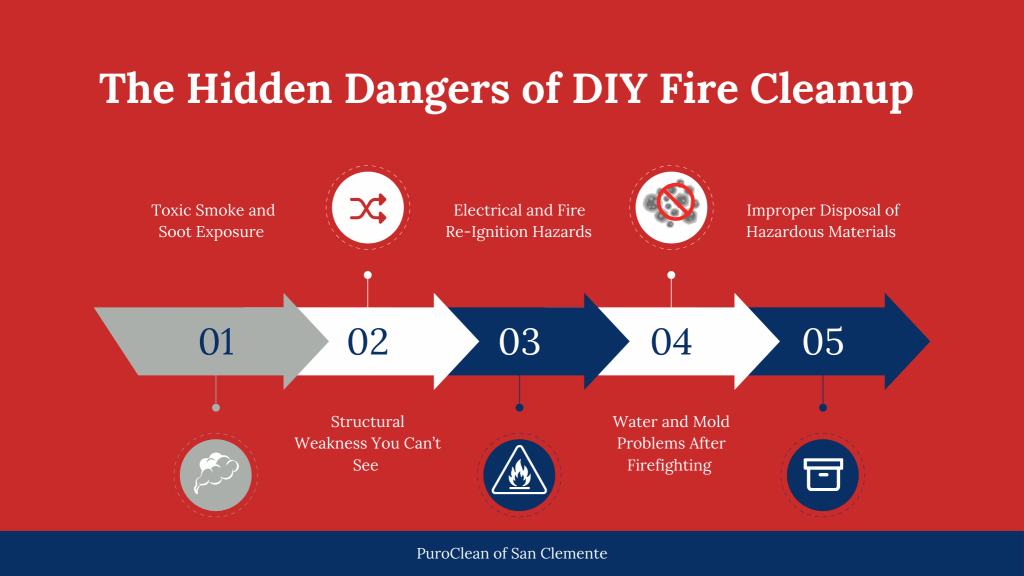
The Hidden Dangers of DIY Fire Cleanup
Fire cleanup involves more than removing debris. It exposes individuals to environmental, structural, and chemical hazards that are easy to overlook when emotions are running high.
Toxic Smoke and Soot Exposure
Soot is made up of fine carbon particles combined with chemicals released from burned plastics, fabrics, and appliances. When disturbed, these particles can enter the lungs or settle on skin, increasing the chance of irritation and breathing discomfort.
These health concerns are a central part of DIY Fire Cleanup Risks, particularly when masks and ventilation are inadequate. Ordinary household cleaners do little to neutralize these toxins.
Structural Weakness You Can’t See
High heat can weaken floors, walls, and ceilings without obvious visual damage. Stepping on a fire-affected floor or leaning against a wall during cleanup can be dangerous if the structure has been compromised.
Many DIY Fire Cleanup Risks involve physical injury caused by collapsing materials or unstable debris. Without professional assessment tools, it’s nearly impossible to know which areas are safe to access.
Electrical and Fire Re-Ignition Hazards
Fire often damages wiring behind walls, melting insulation or exposing live wires. Even if the power is turned off, residual heat and compromised circuits can pose serious threats.
Trying to clean near outlets or light fixtures adds to DIY Fire Cleanup Risks, especially when moisture from firefighting efforts is involved. Electrical hazards remain one of the most underestimated dangers after a fire.
Water and Mold Problems After Firefighting
Water used to put out a fire doesn’t simply evaporate. It soaks into floors, drywall, insulation, and other porous surfaces. When moisture lingers, mold spores, which are present almost everywhere, can begin growing within 24 to 48 hours after water exposure if the area isn’t dried quickly.
The CDC explains that mold growth often begins where excessive moisture remains and can trigger respiratory irritation and other health-related symptoms for occupants. This creates additional DIY Fire Cleanup Risks because mold problems frequently develop in hidden spots, like inside walls or beneath flooring, long before they are seen or smelled.
Improper Disposal of Hazardous Materials
Burned items are not always safe to throw away with regular household waste. Electronics, insulation, and chemically treated materials may require special disposal methods. Handling these materials incorrectly increases DIY Fire Cleanup Risks, including environmental harm and potential legal issues related to improper waste handling.
Why DIY Methods Often Make the Damage Worse
Good intentions don’t always lead to good outcomes. Many cleanup mistakes happen simply because fire residue behaves differently from everyday household messes.
Using the Wrong Cleaning Products
Standard cleaning agents can react with soot and smoke residue, causing stains to set permanently or releasing additional fumes. Scrubbing aggressively may push contaminants deeper into surfaces. These missteps amplify DIY Fire Cleanup Risks by turning repairable damage into permanent loss. What looks like progress can quietly reduce restoration options.
Spreading Contamination Instead of Removing It
Without proper containment, soot particles can travel through air ducts and settle in previously unaffected rooms. Vacuuming without HEPA filters can worsen the spread. As explained in our blog on professionals removing smoke odor, these airborne particles often carry odor-causing residues, adding another layer of DIY Fire Cleanup Risks, where cleanup efforts unintentionally increase the affected area rather than limiting it.
Delayed Recovery and Increased Costs
Mistakes made early often lead to extended repair timelines and higher expenses later. Re-cleaning, mold remediation, and structural repairs add up quickly. In many cases, homeowners discover that Professional Fire Restoration could have reduced long-term costs by addressing damage correctly from the start.
When Expertise Makes the Difference
Fire damage requires a structured approach that balances safety, health, and preservation. This is where trained specialists play a critical role.
What Professional Fire Restoration Actually Does
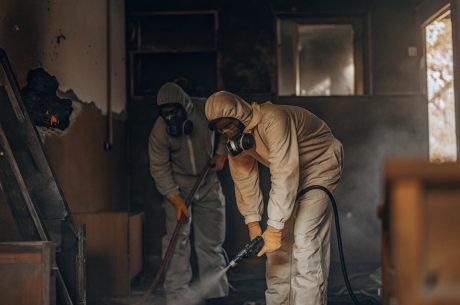
Specialists begin with a thorough assessment, identifying hidden damage and safety hazards. Advanced equipment is used to remove soot, filter air, and stabilize structures. Professional Fire Restoration focuses on addressing both visible and invisible damage, ensuring that cleanup does not create new problems along the way.
Health, Safety, and Long-Term Property Protection
By using proper containment and protective measures, experts reduce exposure to harmful residues. They also ensure moisture is fully removed to prevent mold growth. Choosing Professional Fire Restoration helps protect not just the building, but the people who live in it, supporting a safer return to normal life.
Why Knowledge Matters After a Fire
Experience allows professionals to anticipate complications that homeowners may not recognize. From material-specific cleaning methods to safe disposal practices, expertise matters. Relying on Professional Fire Restoration ensures that recovery is guided by understanding rather than guesswork, reducing stress during an already difficult time.
Conclusion
Fire damage cleanup is far more than a cosmetic task. Hidden toxins, weakened structures, and lingering moisture turn recovery into a complex process. While the urge to act quickly is natural, understanding the full scope of the danger is essential. Awareness of these risks allows homeowners to make informed decisions that prioritize safety, health, and the long-term stability of their property.
FAQs
Q1. Is it safe to clean fire damage on my own?
A: In most cases, it can be unsafe due to toxic residues, structural instability, and electrical hazards that are not easily detected.
Q2. Can fire damage cause long-term health problems?
A: Yes, lingering smoke particles and mold growth can affect breathing and overall health if not properly addressed.
Q3. When should I seek professional help after a fire?
A: If there is visible soot, water damage, or uncertainty about structural safety, it’s best to seek help immediately to prevent further harm.

 PuroClean of San Clemente