


When fire strikes, the damage it leaves behind is more than physical—it’s emotional and financial too. For San Clemente residents, where dry winds and warm weather increase wildfire risks, knowing how home insurance handles a fire damage insurance claim isn’t just smart; it’s essential. Understanding what’s covered, how to file correctly, and how to avoid common pitfalls can make the difference between a smooth recovery and a frustrating ordeal.
This blog breaks down what local homeowners need to know about coverage, claims, and how to make sure you’re protected before disaster hits.
Understanding How Fire Insurance Works in San Clemente
San Clemente’s proximity to coastal winds and Southern California’s wildfire zones means that homeowners face a higher-than-average fire risk. Most standard homeowners’ policies include protection against fire, but not all cover the same situations or damage types.
When you file a fire damage insurance claim, your insurer assesses what’s causing the loss, the extent of damage, and whether your current coverage applies. Some policies cover replacement costs, while others only pay the depreciated value of damaged property. Reviewing these details before an incident helps ensure you’re not caught off guard when you need help most.
What’s Actually Covered in a Fire Coverage Homeowners Policy
It is designed to protect your home and belongings from the financial impact of fire-related destruction. However, what’s covered can vary based on your insurer and policy type.
Typically covered under fire protection:
- Dwelling coverage: Repairs or rebuilding costs for structural damage to your home.
- Detached structures: Garages, sheds, or fences affected by the fire.
- Personal property: Furniture, clothing, and personal belongings lost or damaged.
- Temporary living expenses: Hotel stays or rentals if your home becomes uninhabitable.
- Smoke and soot damage: Cleanup and odor removal related to the fire event.
- Firefighting-related damage: Water and chemical residue cleanup from suppression efforts.
Even with solid coverage, policy limits and exclusions can apply. Always read the fine print of your fire coverage homeowners policy to understand exactly how much protection you have before an emergency happens.
The Hidden Challenges of Filing an Insurance Claim for Fire Damage
Filing a fire damage insurance claim can be overwhelming, especially when you’re already coping with loss. Between gathering proof, coordinating with adjusters, and following up with the insurer, there are plenty of places where errors can delay or reduce your payout.
Common challenges homeowners face:
- Incomplete documentation: Missing photos, receipts, or inventory lists.
- Underestimating damage: Overlooking hidden structural or smoke-related issues.
- Delayed filing: Waiting too long to report damage can limit eligibility.
- Low initial estimates: Insurance adjusters may undervalue restoration costs.
- Policy confusion: Misunderstanding exclusions or limits that affect your claim.
Staying organized, asking detailed questions, and reviewing every part of your policy before filing can help you avoid these issues. When in doubt, professional assistance ensures your insurance claim for fire damage is processed accurately and fairly.
Common Reasons Fire Damage Insurance Claims Get Denied
Even legitimate claims can be denied if certain requirements aren’t met. Knowing what insurers look for helps you avoid costly mistakes.
Frequent denial reasons include:
- Late reporting: Filing after the deadline specified in your policy.
- Lack of maintenance: Poor electrical or heating upkeep leading to accidental fires.
- Policy exclusions: Intentional acts or unlisted structures are not covered.
- Insufficient evidence: Missing documentation or unclear proof of loss.
- Unauthorized repairs: Starting restoration before the adjuster’s inspection.
Careful recordkeeping and prompt communication with your insurer can prevent these setbacks. Before any cleanup begins, confirm coverage details and get written approval to protect your fire damage insurance claim.
How to Strengthen Your Fire Damage Insurance Claim
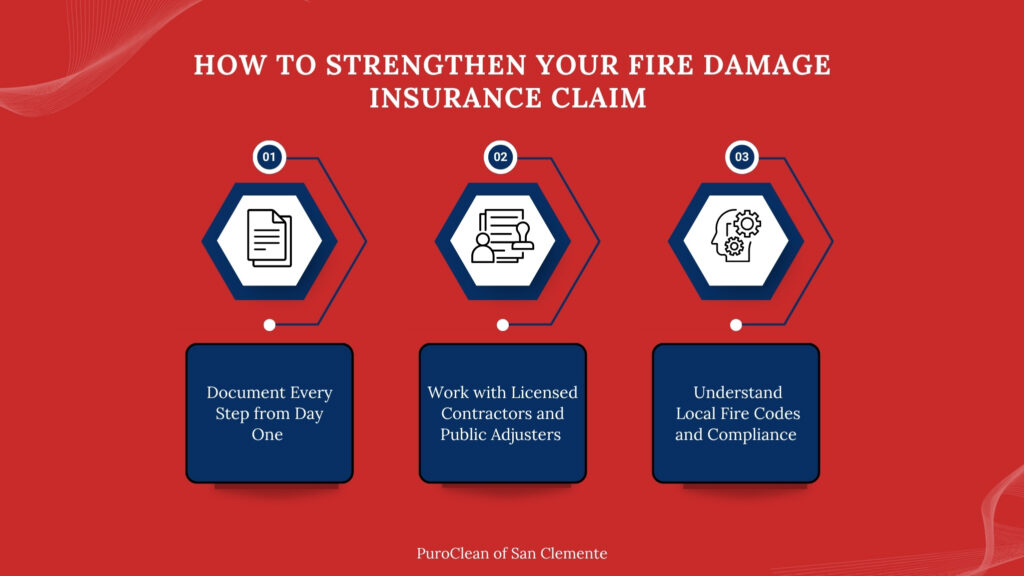
A strong insurance claim for fire damage begins long before a disaster occurs. Preparation and documentation ensure your case is solid when it’s time to recover. By focusing on clear records, professional assessments, and compliance with regulations, homeowners can avoid unnecessary disputes with insurers. The U.S. Fire Administration’s guide, after the fire, also provides valuable recovery steps to help streamline this process.
Document Every Step from Day One
Start taking photos and videos immediately after the fire, before any cleaning or repairs. Keep receipts for emergency expenses like temporary lodging or clothing. Organize your home inventory digitally so it’s easy to update. This evidence supports the value of your belongings and proves the scope of your loss when submitting your fire damage insurance claim.
Work with Licensed Contractors and Public Adjusters
Professionals familiar with fire restoration can provide accurate repair estimates that align with insurance requirements. Public adjusters, who represent the homeowner rather than the insurance company, can negotiate on your behalf and ensure your settlement reflects true replacement costs.
Working with verified experts can also confirm that the damage aligns with what’s covered under your fire coverage homeowners policy. For a clearer idea of what this inspection involves, see our guide on what to expect during a fire damage assessment.
Understand Local Fire Codes and Compliance
San Clemente follows strict fire safety regulations, especially for properties near wildfire-prone areas. Insurance companies may require that repairs and upgrades meet local building codes. Ensuring compliance not only speeds up claim approval but may also qualify you for lower premiums in the future. Familiarity with local fire codes gives your fire damage insurance claim a stronger foundation during assessment.
Why San Clemente’s Fire Risk Makes Coverage Understanding Crucial
Living in San Clemente comes with undeniable beauty, but also increased fire exposure due to coastal winds, dry vegetation, and rising temperatures. Local homeowners must go beyond basic policy assumptions. A fire coverage homeowners policy should not only protect property value but also reflect local risk realities.
By reviewing your policy annually and updating coverage as property values change, you’ll ensure protection aligns with current conditions. In high-risk regions, even small gaps in coverage can result in significant out-of-pocket expenses. Discussing optional endorsements, like additional smoke damage coverage or wildfire protection, can make your insurance claim for fire damage process far less stressful if an incident occurs.
Conclusion
Recovering from fire damage is a complex process, but the right preparation and understanding can make it manageable. For San Clemente residents, where wildfire potential is part of daily life, knowing how your fire coverage homeowners policy functions is as vital as having it.
A well-documented, timely, and properly guided fire damage insurance claim can restore your home faster and with fewer disputes. Take time now to review your coverage, consult your insurance agent, and strengthen your readiness before you ever need to make that call.
FAQs
Q1: How long do I have to file a fire damage insurance claim in California?
A: Most insurers require you to file within 12 months of the fire, but deadlines vary. Check your policy’s specific terms to ensure your fire damage insurance claim is valid.
Q2: Does my fire coverage homeowner’s policy include smoke and soot damage?
A: Yes, most policies do, but coverage may be limited or require additional documentation. Review your fire coverage homeowners policy details to confirm.
Q3: Should I hire a professional to handle my fire damage insurance claim?
A4: It’s often beneficial. Professionals like public adjusters or restoration experts help document accurately and negotiate fairly, increasing your chances of a full payout.