


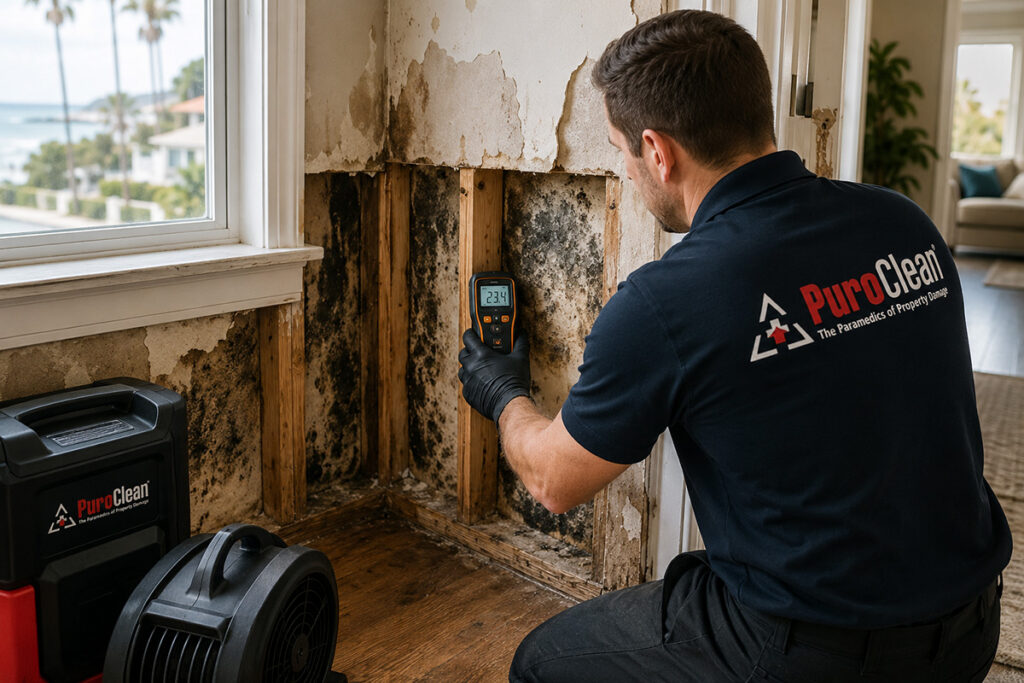
Mold can begin growing within 24 to 48 hours after water damage occurs. In Orange County homes, especially in coastal communities such as San Clemente, Dana Point, and Laguna Beach, elevated humidity can accelerate mold growth when moisture is not removed quickly.
Water damage is one of the most common property emergencies homeowners face. Whether caused by a slab leak, burst pipe, water heater failure, roof leak, overflowing appliance, or storm intrusion, excess moisture can create ideal conditions for mold growth. Unfortunately, many homeowners underestimate how quickly mold can develop.
The good news is that mold is often preventable when water damage is addressed quickly. The key is understanding the timeline and knowing when professional intervention is necessary.
THE MOLD GROWTH TIMELINE
0–24 HOURS
During the first day after a water loss, moisture begins soaking into drywall, insulation, cabinetry, flooring, and framing materials. Water also migrates into hidden areas where it may not be visible.
24–48 HOURS
This is the critical period. Mold spores already exist naturally in the environment. Once moisture is introduced, spores can begin colonizing surfaces and organic building materials.
3–7 DAYS
Musty odors may begin appearing. Homeowners may notice staining, discoloration, warped materials, or increased allergy symptoms. Hidden mold colonies may already be spreading behind walls and beneath flooring.
1–2 WEEKS
Extensive mold contamination can occur if moisture remains unresolved. At this point remediation costs often increase significantly.
WHY MOLD GROWS SO QUICKLY
Mold only needs three things to thrive:
• Moisture
• Organic material
• Suitable temperatures
Most homes provide all three. Drywall paper, wood, dust, carpet backing, and insulation all serve as food sources. When moisture is present, mold can establish itself rapidly.
COMMON CAUSES OF WATER DAMAGE IN SOUTH ORANGE COUNTY
Slab Leaks
Older homes throughout San Clemente, San Juan Capistrano, and Mission Viejo commonly experience slab leaks. Because these leaks occur beneath foundations, they can remain undetected for weeks.
Water Heater Failures
A failed water heater can release dozens of gallons of water into a home in a short period of time.
Appliance Leaks
Dishwashers, washing machines, refrigerators, and ice maker lines are common sources of hidden water damage.
Roof Leaks
Small roof leaks frequently lead to attic mold because moisture enters insulation and framing before becoming visible.
Plumbing Failures
Burst supply lines and damaged plumbing fittings can quickly saturate building materials.
WHERE MOLD COMMONLY HIDES
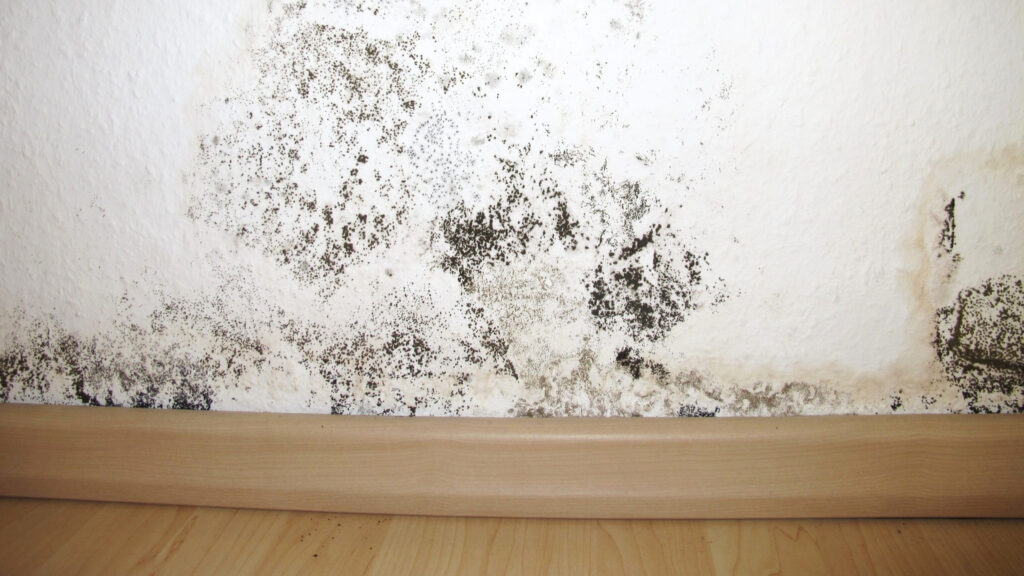
One of the biggest challenges with mold is that it often develops where homeowners cannot see it.
Common hiding places include:
• Behind drywall
• Beneath laminate flooring
• Under carpet padding
• Inside insulation
• Behind cabinets
• Around windows
• In attics
• Within HVAC systems
Because mold often develops out of sight, professional moisture inspections are frequently necessary after significant water damage.
HEALTH RISKS OF MOLD EXPOSURE
While not every mold situation creates serious health concerns, mold exposure can contribute to:
• Sneezing
• Nasal congestion
• Eye irritation
• Coughing
• Respiratory discomfort
• Worsening asthma symptoms
Individuals with allergies, asthma, compromised immune systems, and young children may be particularly sensitive.
ORANGE COUNTY’S UNIQUE MOLD CHALLENGES
Many homeowners assume mold is primarily a problem in humid climates such as Florida or the Gulf Coast. However, coastal Orange County presents unique challenges.
Communities such as Dana Point, Laguna Beach, and San Clemente frequently experience marine layer moisture and elevated humidity levels. When combined with hidden leaks, these conditions can create an environment where mold flourishes.
CAN YOU PREVENT MOLD AFTER WATER DAMAGE?
In many cases, yes.
The most effective steps include:
1. Stop the source of water.
2. Remove standing water immediately.
3. Increase airflow.
4. Begin drying affected materials.
5. Remove unsalvageable materials.
6. Monitor moisture levels.
The sooner these actions are taken, the lower the risk of mold growth.
DIY DRYING VS PROFESSIONAL DRYING
Many homeowners attempt to dry affected areas using fans and open windows. While these measures can help, they often fail to address hidden moisture trapped within building materials.
Professional restoration companies utilize:
• Moisture meters
• Thermal imaging cameras
• Commercial dehumidifiers
• High-velocity air movers
• Moisture mapping procedures
These tools help ensure moisture is removed from both visible and hidden areas.
WHEN SHOULD YOU CALL PUROCLEAN OF SAN CLEMENTE?
Professional help is recommended when:
• Water has been present for more than 24 hours
• Drywall is affected
• Flooring is saturated
• Mold is visible
• Musty odors are present
• The source involved contaminated water
Rapid response can dramatically reduce damage and lower restoration costs.
WHAT DOES THE PUROCLEAN PROCESS LOOK LIKE?
A typical mitigation project includes:
• Inspection and assessment
• Moisture mapping
• Water extraction
• Structural drying
• Monitoring and documentation
• Final verification
The goal is not simply to dry visible surfaces but to remove moisture from the entire affected structure.
THE COST OF WAITING
One of the most expensive decisions a homeowner can make is delaying action.
A minor leak that could have been resolved through drying may eventually require:
• Mold remediation
• Drywall replacement
• Flooring replacement
• Cabinet repairs
• Air quality treatment
Prompt action almost always saves money.
FREQUENTLY ASKED QUESTIONS
Q. Can mold really start growing within 24 hours?
A. Mold growth can begin within 24 to 48 hours under favorable conditions.
Q. Can mold grow under flooring?
A. Yes. Flooring systems frequently trap moisture.
Q. Is mold always visible?
A. No. Hidden mold is extremely common.
Q. Does every leak cause mold?
A. Not necessarily. Rapid drying significantly reduces risk.
Q. What does mold smell like?
A. Most homeowners describe it as musty, earthy, or damp.
FINAL THOUGHTS
The first 24 to 48 hours after water damage are often the most important. Quick response, proper drying, and professional moisture detection can help prevent mold growth and avoid costly repairs.
If your home or business in San Clemente, Dana Point, San Juan Capistrano, Laguna Niguel, Mission Viejo, or the surrounding Orange County area has experienced water damage, taking action immediately can help protect both your property and your health.