


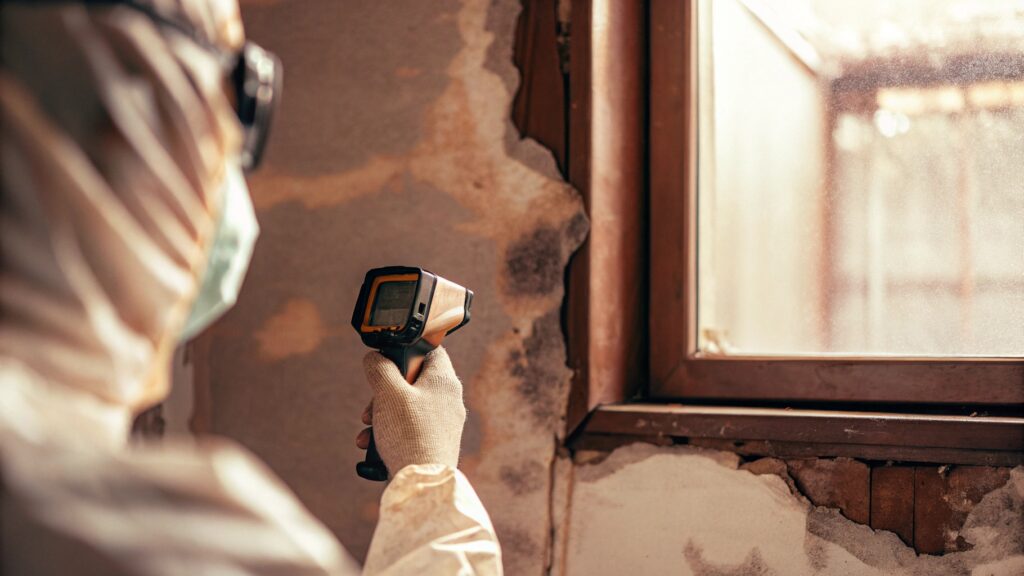
Water damage often begins quietly. It seeps behind walls, under flooring, and above ceilings long before stains or odors appear. By the time visible signs emerge, repairs can be costly and disruptive. This is where professional inspection methods stand apart. Instead of relying on guesswork or surface clues, specialists use advanced imaging tools to uncover what the eye cannot see.
Infrared cameras have become one of the most trusted ways to identify hidden moisture early, helping property owners understand what is happening beneath the surface before serious damage develops. In this blog, we explore how professionals use infrared cameras, what these tools actually detect, and why they play such a critical role in identifying water-related issues before they escalate.
Understanding Infrared Camera-Based Water Detection
Infrared inspection works by identifying temperature differences caused by moisture intrusion. When water enters building materials, it changes how heat moves through those materials. Professionals interpret these subtle variations using specialized cameras designed for diagnostic purposes. Infrared water leak detection allows experts to scan large areas efficiently while keeping walls, floors, and ceilings intact.
Rather than searching randomly, inspectors can focus on specific zones that show unusual thermal behavior. This approach also helps establish a clearer starting point for further evaluation, ensuring attention is directed where conditions truly differ from normal. It provides context that supports more informed judgments during inspections, especially in complex building layouts.
What Infrared Cameras Actually See
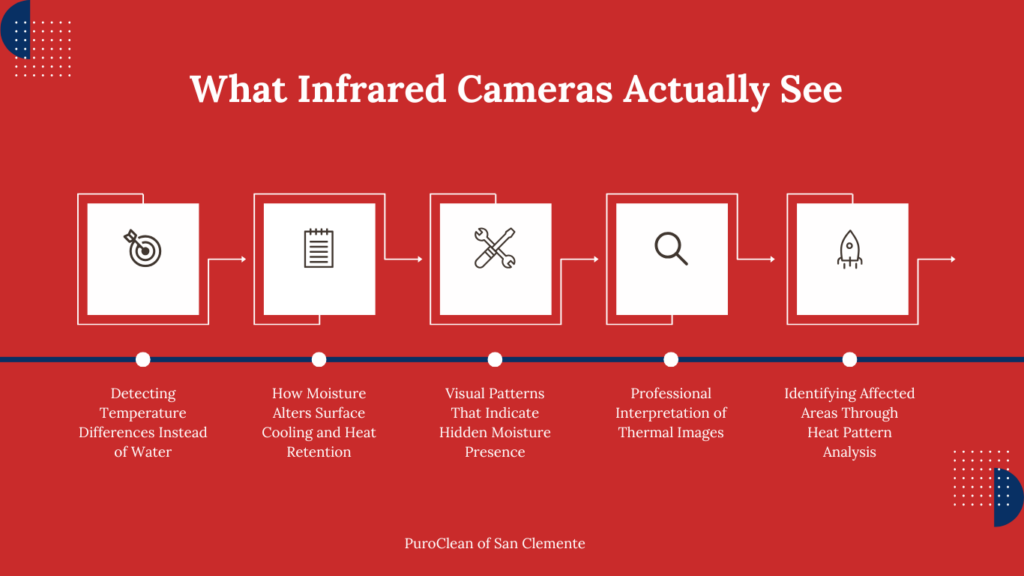
Infrared cameras do not see water itself. Instead, they detect differences in surface temperature that occur when moisture is present. Wet materials often cool more slowly than dry ones due to evaporation and heat retention. This creates a visual pattern on the camera display, highlighting areas that behave differently from surrounding surfaces.
Professionals trained in infrared water leak detection understand how to interpret these patterns accurately, avoiding confusion with shadows, sunlight exposure, or airflow changes. As discussed in our blog on ceiling water damage safety, surface changes don’t always reveal the full extent of moisture, making careful evaluation especially important.
Heat Patterns and Temperature Differences
Every building material responds to moisture in a slightly different way. Wood, drywall, concrete, and insulation all show unique thermal reactions when wet. By observing temperature contrasts, professionals can identify the likely boundaries of affected areas. This approach helps pinpoint the source of moisture without unnecessary removal of finishes.
Over time, infrared water leak detection has proven especially effective in locating slow leaks that would otherwise remain unnoticed for months.
Why Professionals Rely on Infrared Technology
Traditional inspection methods often involve drilling, cutting, or removing sections of walls to confirm the presence of water. Infrared cameras reduce the need for such invasive steps. Professionals use this technology to assess conditions quickly while minimizing disruption. The ability to scan wide surfaces in minutes makes infrared water leak detection a practical choice for homes, commercial buildings, and industrial facilities alike.
Speed and Accuracy in Modern Inspections
Speed matters when water damage is suspected. The U.S. Environmental Protection Agency notes that unresolved household leaks can lead to the loss of almost 10,000 gallons of water annually. Infrared inspections allow professionals to act fast by narrowing down problem areas efficiently. When combined with experience, this method improves accuracy and helps prioritize repairs before conditions worsen.
The Role of Infrared Water Leak Detection in Property Assessments
During property assessments, professionals use infrared scanning to evaluate areas that are prone to moisture exposure, such as bathrooms, kitchens, basements, and roofing systems. Infrared water leak detection supports informed decision-making by revealing hidden concerns that may not appear during a visual walkthrough.
This is particularly valuable during real estate transactions or post-storm evaluations, where unseen moisture can affect long-term property performance.
Identifying Issues Before Structural Impact
Early identification is key to preventing long-term complications. Moisture left untreated can weaken materials, encourage microbial growth, and compromise insulation effectiveness. By identifying thermal anomalies early, professionals help property owners address problems before they spread. Infrared water leak detection plays a preventive role, allowing targeted repairs that reduce both time and expense.
How Moisture Mapping Technology Supports Infrared Findings
While infrared cameras show temperature variations, professionals often use moisture mapping technology to confirm and document their findings. This approach involves creating a visual map that outlines moisture levels across different areas of a structure. Moisture mapping technology adds clarity by correlating thermal patterns with actual moisture readings, improving confidence in the assessment.
Creating a Clear Moisture Profile
A moisture profile helps professionals understand how far water has traveled and which materials are affected. Using moisture mapping technology, inspectors can mark zones of concern and track changes over time. This is especially useful during drying and restoration processes, where progress needs to be measured accurately. The combination of infrared imaging and moisture mapping technology provides a more complete picture than either method alone.
What Infrared Detection Can and Cannot Do
Although infrared tools are powerful, they are not a standalone solution for every situation. They indicate temperature differences, not the exact volume of water present. Skilled interpretation is essential to avoid false conclusions. Professionals rely on experience, environmental awareness, and supporting tools to validate what infrared images suggest.
When Additional Tools Are Needed
In some cases, inspectors may use moisture meters, borescopes, or pressure testing alongside infrared scanning. Moisture mapping technology often works in tandem with these tools to verify results and document conditions. Infrared water leak detection serves as a guide, helping professionals decide where further investigation is necessary rather than replacing all other methods.
Conclusion
Infrared cameras have transformed how professionals approach hidden water damage. By revealing temperature differences caused by moisture, these tools allow for faster, more precise assessments without unnecessary disruption. When combined with moisture mapping technology and professional expertise, infrared water leak detection helps identify problems early, supports effective repairs, and reduces the risk of long-term damage.
Understanding what this technology does and how experts use it offers valuable insight into modern water damage assessment practices. For property owners, being aware of these methods can help support informed decisions when evaluating potential water-related concerns.
FAQs
Q1. Can infrared cameras see water directly?
A: No, they detect temperature changes caused by moisture rather than water itself. This allows professionals to identify affected areas without opening walls or floors.
Q2. Is infrared inspection safe for occupied buildings?
A: Yes, it is a non-invasive process that does not affect people or property. The inspection can be completed without interrupting daily activities.
Q3. Does infrared detection eliminate the need for repairs?
A: It helps locate issues accurately, but repairs are still required to resolve the problem. The findings simply guide targeted and efficient repair work.