


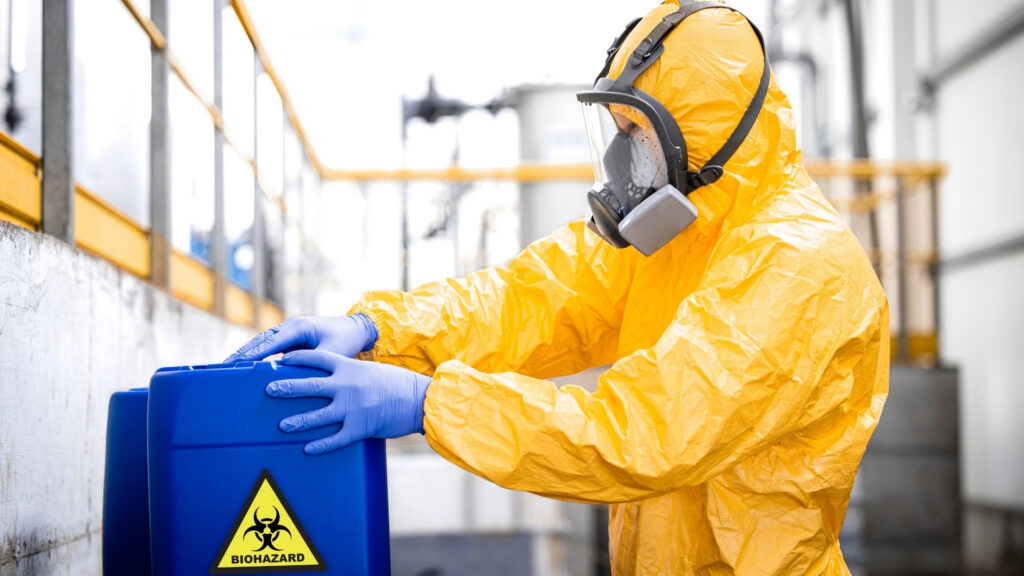
When a crime, accident, or hoarding situation occurs, families are often left with challenges that go beyond grief. These situations can also create serious health risks, as blood, bodily fluids, and other contaminants may carry harmful pathogens. Without the right training and equipment, attempting to clean on your own can be overwhelming and even unsafe. Professional care ensures that the space is restored with both safety and dignity in mind.
Because these hazards don’t disappear with regular cleaning, a specialized system is required to handle them correctly. This is where the biohazard cleanup process comes in, combining strict safety measures, advanced cleaning methods, and detailed inspections to restore an environment to safe, livable conditions.
For property owners and managers, understanding how this process works offers clarity and reassurance during an otherwise overwhelming experience.
Why Understanding the Biohazard Cleanup Process Matters
Most people rarely think about what happens after emergency responders leave a scene. Yet what remains behind can pose serious risks to anyone entering without proper precautions.
These situations call for more than just mopping and wiping down surfaces; they demand a structured response that meets both health and legal standards. The professional sanitization process plays a key role in addressing these hazards, ensuring that dangerous materials are removed in a safe and regulated way.
Without it, contaminated environments may continue to harbor hidden threats long after the event has passed. Knowing how professionals approach this work helps families, businesses, and property owners prepare for what’s ahead.
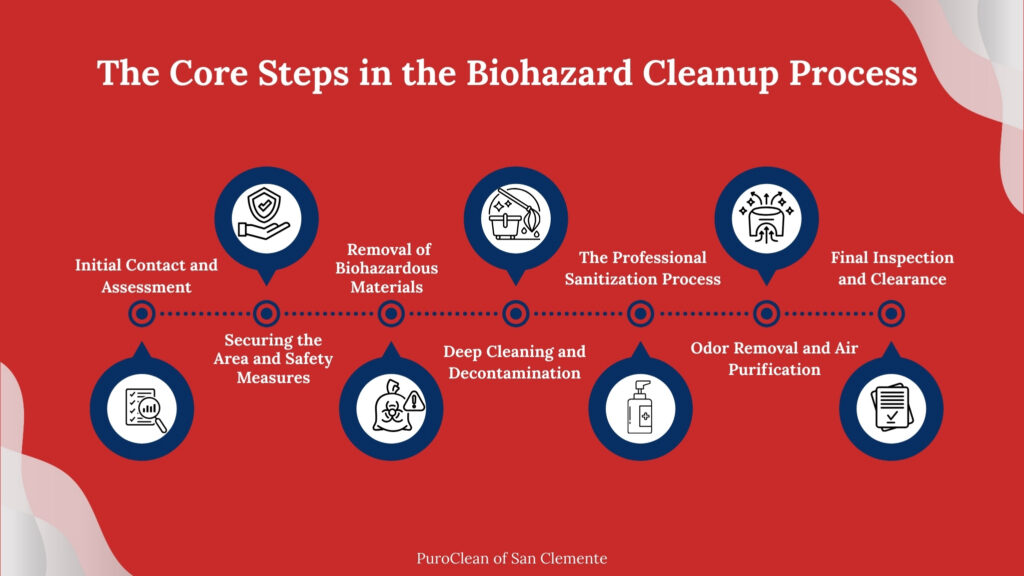
The Core Steps in the Biohazard Cleanup Process
Handling a scene affected by biological hazards requires precision. Each stage builds upon the last, moving from control of the environment to complete restoration. The biohazard cleanup process follows this sequence not only to remove contaminants but also to guarantee that the property is safe for future use.
For those wanting a deeper understanding of how hidden health risks from accidents, illness, or contamination can persist long after the mess is gone, our blog on Biohazard Cleanup explains how professional teams safeguard homes by managing situations such as crime scenes, unattended deaths, hoarding, and infectious outbreaks.
Step 1 – Initial Contact and Assessment
When professionals arrive at a scene, their first priority is to understand what they’re dealing with. This involves identifying the sources of contamination, noting how far they’ve spread, and outlining the equipment that will be needed.
By the time the evaluation is complete, the team has crafted a plan that forms the foundation of the professional sanitization process. This roadmap ensures the response is both efficient and thorough.
Step 2 – Securing the Area and Safety Measures
Before anyone begins cleaning, the site must be stabilized. Crews establish clear boundaries, restricting entry to only trained personnel. Signs, barriers, and protective coverings are set up to prevent accidental exposure.
With the area contained, workers suit up in specialized gear designed to shield them from harmful substances. These measures allow the biohazard cleanup process to proceed under controlled and safe conditions.
Step 3 – Removal of Biohazardous Materials
The next step focuses on removing items that cannot be recovered. Carpeting, furniture, and personal belongings often absorb contaminants beyond repair, making disposal the only safe option.
Every item is sealed and transported through approved waste channels. By carefully following this procedure, the biohazard cleanup process eliminates the most visible and immediate dangers within the property.
Step 4 – Deep Cleaning and Decontamination
After contaminated objects are removed, attention shifts to surfaces and structures. Specialized cleaning agents are applied to dissolve organic matter and disinfect affected zones. It is at this point that the biohazard cleanup process digs deeper, addressing areas that may not show obvious signs of contamination but still carry risks. Thorough decontamination prepares the space for advanced treatment.
Step 5 – The Professional Sanitization Process
Surfaces that appear clean can still harbor microscopic threats, which is why the professional sanitization process is critical. Using fogging devices or hospital-grade sprays, technicians apply disinfectants that neutralize bacteria, viruses, and other pathogens.
By layering this level of treatment onto the earlier cleaning efforts, professionals ensure that the property is no longer a hazard. This stage of the cleanup provides confidence that space is truly safe.
Step 6 – Odor Removal and Air Purification
One of the lingering challenges after contamination is the presence of strong odors. These smells are not just unpleasant; they often signal deeper issues within the air and materials of the property.
Specialized tools like ozone generators and HEPA filters are used to clean the air itself. Integrated into the biohazard cleanup process, this step restores the environment to a condition that feels normal again, free from both hazards and unpleasant reminders.
Step 7 – Final Inspection and Clearance
When all cleaning and sanitization steps are finished, the site undergoes one last review. Supervisors or senior technicians walk through each area to ensure nothing has been overlooked. Only after this detailed inspection is the biohazard cleanup process considered complete. Many providers also offer formal documentation confirming that the property has been restored to a safe standard.
How to Choose a Reliable Biohazard Cleaner
Finding a trustworthy biohazard cleaning company is crucial to ensure safety, compliance, and thorough cleanup. The right professionals will protect both people and property while carrying out the professional sanitization process to handle hazardous materials responsibly. Some of the checklists are:
- Verify proper licensing and certifications, including state biohazard approvals, and ensure the team follows guidelines like OSHA’s Bloodborne Pathogens Standard to handle contaminated materials safely and reduce exposure risk.
- Check experience and specialization in biohazard cleanup, not just general cleaning services.
- Confirm use of industry-standard safety equipment and protective gear.
- Ask about protocols for the disposal of contaminated materials and adherence to environmental regulations.
- Look for positive reviews, testimonials, and references from previous clients.
- Ensure they provide a detailed cleanup plan and final inspection documentation.
Choosing a certified and experienced team gives you confidence that the job will be handled safely and professionally. Always prioritize companies that follow strict safety standards and maintain a transparent process.
Conclusion
Incidents involving biological hazards can leave behind more than what meets the eye. The biohazard cleanup process provides a structured path from chaos to restoration, addressing everything from safety protocols to sanitization and final inspection. Each step plays a critical role in returning the environment to a state where it can be used again without risk.
For those facing such situations, professional help is not just useful, it is essential. By trusting experts who follow proven methods, property owners can be confident that the hazards are gone and that the space has been made safe once more.
FAQs
Q1: How long does the biohazard cleanup process usually take?
A: Timelines vary based on the size of the property and the extent of contamination. In some cases, the process may take only a few hours, while larger or more complex sites can require multiple days.
Q2: Is the professional sanitization process safe for pets and children?
A: Yes, the products used are carefully chosen to be effective yet safe once the area has dried. During the sanitization process, pets and children should remain outside the affected space, but they can safely return once clearance is given.
Q3: Who pays for biohazard cleanup services, insurance or the property owner?
A: Coverage often depends on the details of the insurance policy. Many companies assist clients in filing claims to help ensure that the process is covered by their plan whenever possible.