 PuroClean of San Clemente
A house fire is one of the most unsettling experiences a homeowner can face. Even after the flames are gone, the real story often continues beneath the surface. What looks like minor burn marks or repairable damage may actually hide deeper risks within the bones of the home. Structural fire damage can compromise strength, stability, and long-term safety in ways that aren’t always obvious right away.
Understanding the Hidden Effects of Fire on a Home’s Core
Fire doesn’t simply destroy what it touches; it alters materials, weakens support systems, and creates invisible hazards. Homes are designed to hold weight evenly across beams, walls, and foundations, but intense heat disrupts that balance. A proper Fire restoration inspection is often the first step in understanding how much of the home structure has been affected.
Why Fire Damage Is More Than Just Surface Destruction
Fire damage is often misunderstood as something purely cosmetic, like soot stains or charred wood. In reality, burning changes the internal makeup of building materials. Structural fire damage can exist even in parts of the home that were never directly reached by flames, simply because heat spreads rapidly through framing and supports.
Home fires are also more common than many people assume. Recent data shows that heating equipment incidents, especially those involving space heaters, remain a frequent cause of serious residential fires and major property loss. This is one reason even smaller-looking fire events should always be treated as a potential structural concern.
Heat Weakens Key Building Materials
High temperatures can cause wood to dry out, crack, or lose its load-bearing ability. Steel components may warp or bend when exposed to extreme heat. Over time, this hidden weakness may lead to sagging ceilings, shifting floors, or unsafe walls. Early evaluation through a fire restoration inspection helps determine which materials can be saved and which must be replaced.
Smoke and Soot Add Another Layer of Harm
Smoke travels fast, seeping into insulation, drywall, and even ventilation systems. Soot contains acidic particles that continue damaging surfaces long after the fire ends. Structural fire damage can worsen when these residues interact with moisture and create slow breakdown in building interiors.
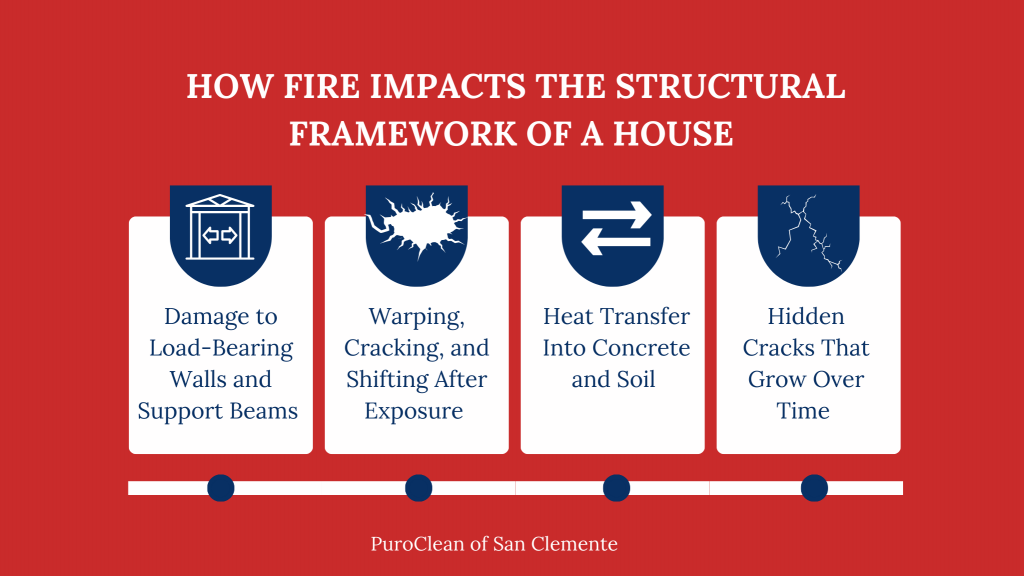
How Fire Impacts the Structural Framework of a House
The framework of a home is what keeps everything standing. Even partial exposure to fire can disturb this delicate system. The effects often reach far beyond the room where the fire started. Hidden Structural fire damage can place stress on areas that still appear intact.
Damage to Load-Bearing Walls and Support Beams
Support beams and load-bearing walls carry the weight of the roof and upper floors. When fire weakens these elements, the home’s stability becomes uncertain. Even small shifts can become dangerous over time. This is why professionals rely on Fire restoration inspection practices to test the integrity of critical support.
Warping, Cracking, and Shifting After Exposure
Fire causes rapid expansion followed by cooling, which leads to warping and cracking. Wood can twist, and concrete can fracture under stress. Structural fire damage isn’t always immediate; it may develop slowly as materials settle into their weakened state.
Heat Transfer Into Concrete and Soil
Concrete may seem solid, but intense heat changes its internal composition. It can cause cracking, flaking, or loss of strength, especially when combined with rapid cooling from firefighting water. A complete Fire restoration inspection helps detect these issues before they become major structural hazards.
Hidden Cracks That Grow Over Time
Small foundation cracks may not seem urgent, but fire-related stress can make them expand. When the foundation begins to shift, doors may no longer close properly, floors can slope, and walls may separate. Structural fire damage becomes especially dangerous when foundation movement goes unnoticed.
Long-Term Structural Concerns Homeowners Often Miss
The aftermath of a fire isn’t limited to what happened during the event. Some of the most serious effects show up weeks or months later. Lingering damage can quietly reduce the safety of the home. Structural fire damage must be approached with long-term awareness, not just short-term cleanup.
Moisture and Mold After Firefighting Efforts
Water used to stop a fire often saturates walls, floors, and insulation. If drying is incomplete, moisture becomes trapped, creating mold and weakening wood framing. Fire restoration inspection teams also look for moisture pockets to prevent future decay.
Delayed Instability in Floors and Roofing Systems
Roofs and upper floors may remain standing after a fire, but their strength may be compromised. Over time, weakened joints and framing can result in sagging or collapse risks. Structural fire damage in these areas should never be underestimated, even if the surface looks repaired.
The Importance of Professional Evaluation After a Fire
After a fire, it is natural to want to restore normal life quickly. But rebuilding without proper assessment can be unsafe. Professionals use tools and structural knowledge to identify risks that homeowners cannot easily see. Structural fire damage requires more than visual inspection; it demands trained evaluation.
Many homeowners are tempted to handle cleanup on their own, but the hidden dangers of DIY fire damage cleanup can lead to missed hazards, deeper contamination, or long-term structural issues that are not immediately obvious.
Why Inspection Goes Beyond What You Can See
Some of the most serious damage occurs behind walls or under floors. Professionals check for weakened supports, compromised framing, and unsafe foundation conditions. A detailed Fire restoration inspection provides clarity on what is safe to repair and what needs replacement.
Safety Steps Before Repair or Rebuilding
Before reconstruction begins, the home must be stabilized. Unsafe areas may need temporary supports, and damaged materials must be removed carefully. Ignoring Structural fire damage during rebuilding can lead to future failures that cost far more to fix later.
Conclusion
Recovering from a fire is emotional, overwhelming, and deeply personal. Beyond the visible loss, the hidden risks to a home’s structure can be just as serious. Structural fire damage affects framing, supports, and even foundation stability, often in ways that unfold over time. With the help of a thorough Fire Restoration Inspection, homeowners can better understand what their home needs to become safe again and move forward with greater peace of mind.
FAQs
Q1. Can fire damage weaken a home even if it looks fine?
A: Yes. Structural fire damage can exist inside walls, beams, and foundations even when the surface appears untouched.
Q2. How soon should an inspection happen after a fire?
A: A Fire restoration inspection should happen as soon as the property is accessible to prevent hidden risks from worsening.
Q3. Is foundation damage common after house fires?
A: It can be. Heat stress and shifting weight loads may cause cracks and long-term Structural fire damage in the foundation.

 PuroClean of San Clemente