


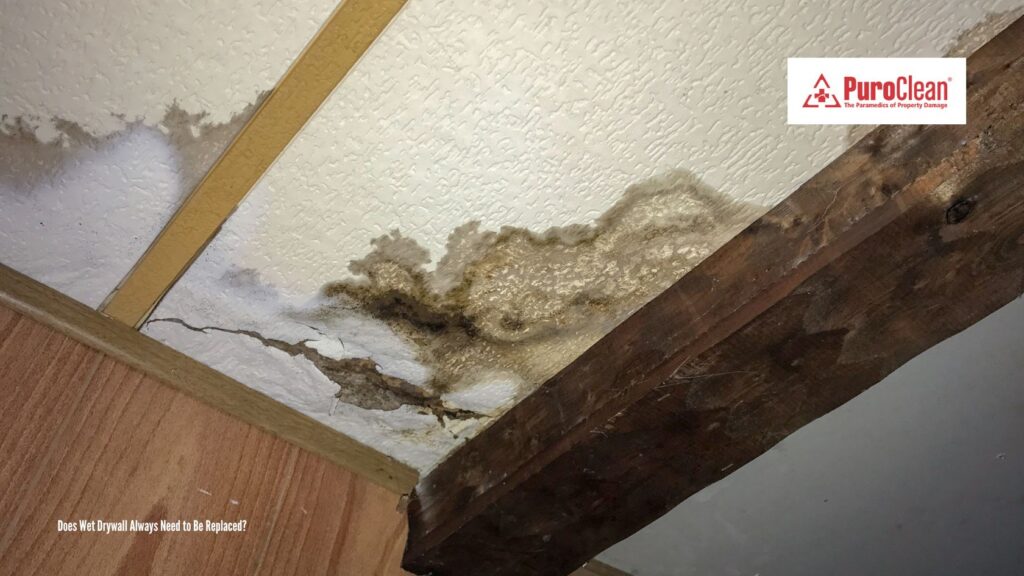
Table of Contents
At PuroClean of San Fernando, we often get asked whether wet drywall always needs to be replaced following water damage. The answer depends on several factors, including the extent of the water exposure, the type of water, and how long the drywall has been wet. Drywall, also known as plasterboard or sheetrock, is a common building material used in homes and commercial properties. When exposed to moisture, drywall can suffer from various levels of damage depending on the extent and duration of water exposure. A common question property owners ask after water damage is: Does wet drywall always need to be replaced?
Factors That Determine Whether Wet Drywall Always Need To Be Replaced?
- Extent of Water Exposure
- If drywall has been exposed to a small amount of water for a brief period, it may not need to be replaced. Minor exposure can be remedied through proper drying techniques.
- However, if the drywall has been soaked or submerged, especially for a prolonged period, replacement is often the best option. Prolonged water exposure can weaken the structural integrity of the drywall.
- Type of Water
- The type of water that caused the damage plays a critical role. Clean water (from rain or a burst pipe) might allow for drying and saving the drywall.
- On the other hand, if the water is contaminated, such as from sewage backups or flooding, the drywall will need to be replaced due to potential health risks, as contaminated water can lead to Mold growth or bacterial contamination.
- Duration of Exposure
- The faster the drywall is dried, the better chance it has of being salvaged. If drywall remains wet for an extended period (typically more than 48 hours), the likelihood of Mold growth increases, making replacement the safer option.
- Condition of Drywall After Drying
- Once the drywall has dried, it is important to assess its condition. Warping, sagging, or bubbling are signs that the drywall has been compromised and should be replaced.
- If the drywall appears solid and undamaged after drying, it may not require replacement. However, an inspection by a professional is recommended to ensure there is no hidden damage.
- Mold Growth
- If Mold is visible on the drywall, it must be replaced. Mold can spread rapidly in damp environments, posing serious health risks to occupants. In some cases, even if no visible Mold is present, the risk of Mold growth might necessitate replacing the drywall to avoid future problems.
People also read: How to Repair Water Damaged Drywall in San Fernando
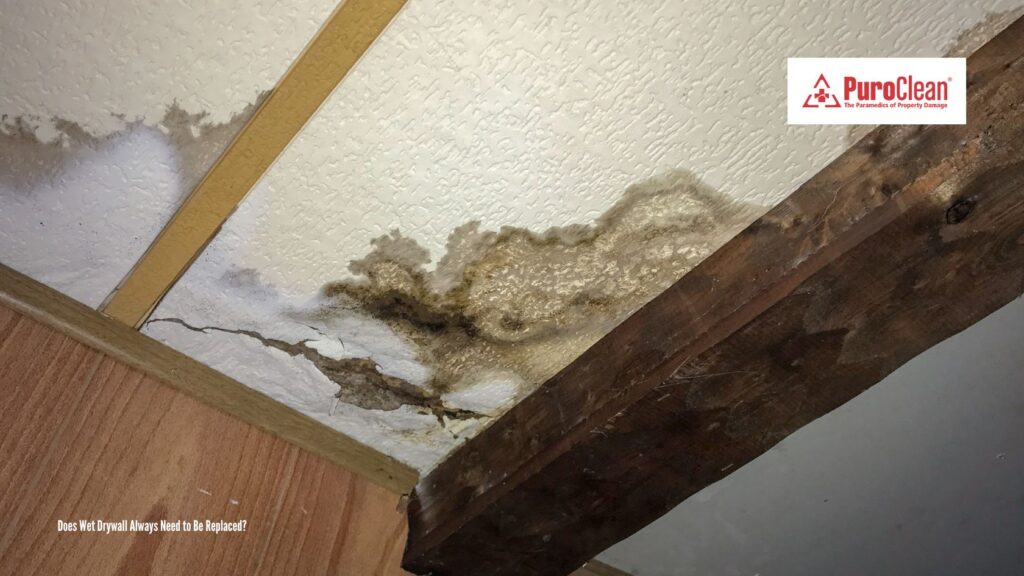
When Can Wet Drywall Be Salvaged? | Does Wet Drywall Always Need to Be Replaced?
There are scenarios where wet drywall can be dried and salvaged:
- Prompt Action: If the water damage is addressed quickly and the drywall is dried using professional equipment like industrial fans and dehumidifiers, it may not need to be replaced.
- Clean Water Exposure: Drywall exposed to clean water (like from a plumbing leak) can often be dried out and restored, provided there is no structural damage or Mold growth.
When Should Wet Drywall Be Replaced? | Does Wet Drywall Always Need to Be Replaced?
- Significant Water Damage: When drywall has been exposed to substantial amounts of water, especially if it becomes saturated, it is typically best to replace it.
- Mold or Bacterial Contamination: Any drywall exposed to contaminated water or showing signs of Mold must be replaced.
- Compromised Structural Integrity: If drywall starts to crack, crumble, or sag after drying, it is no longer structurally sound and should be removed.
How to Properly Dry Wet Drywall | Does Wet Drywall Always Need to Be Replaced?
- Step 1: Remove Baseboards: If water has seeped into the lower part of the drywall, remove any baseboards to allow for airflow and faster drying.
- Step 2: Use Dehumidifiers and Fans: Place industrial fans and dehumidifiers in the affected area to promote drying.
- Step 3: Cut Away Severely Damaged Sections: In cases of severe damage, cut out and remove affected sections to prevent further issues.
- Step 4: Inspect for Mold: After the drying process, inspect the area for any signs of Mold before replacing or repairing drywall.
PuroClean of San Fernando: Does Wet Drywall Always Need to Be Replaced?
At PuroClean of San Fernando, we specialize in water damage restoration, including wet drywall repair and replacement. We offer prompt and professional service to assess your drywall, recommend the best course of action, and restore your home to its pre-damage condition. Our team uses advanced drying equipment and techniques to minimize damage and reduce the need for replacement when possible.
If you have experienced water damage in San Fernando, do not wait, contact us at (818) 922-8330 for a thorough inspection and expert advice on whether your drywall can be saved or needs replacement.