7 Alarming Long Term Mold Exposure Symptoms You Should Never Ignore in Your Home

7 Alarming Long Term Mold Exposure Symptoms You Should Never Ignore in Your Home

Mold Restoration

Long term mold exposure symptoms are among the most misdiagnosed and misunderstood health conditions affecting Santa Maria homeowners today. Unlike acute reactions that appear immediately after a single high-level exposure, long term mold exposure symptoms develop gradually — quietly accumulating over weeks, months, and sometimes years of daily contact with mold spores and mycotoxins inside a water-damaged home. At PuroClean of Santa Maria, we have worked alongside hundreds of Central Coast families navigating exactly this situation, and we are committed to giving you the knowledge you need to recognize the warning signs, seek appropriate care, and eliminate the source before the damage goes any further.

Why Long Term Mold Exposure Symptoms Are So Difficult to Recognize

Long term mold exposure symptoms are notoriously difficult to attribute to mold because they mimic so many other common conditions — chronic fatigue syndrome, fibromyalgia, depression, recurring sinus infections, and autoimmune disorders among them. Physicians who are not specifically trained in environmental medicine frequently treat the symptoms without investigating the indoor environment as a root cause, leading to years of inconclusive diagnoses and ineffective treatments.

The National Institute of Environmental Health Sciences confirms that prolonged exposure to indoor mold — particularly in water-damaged buildings — is associated with a broad and overlapping spectrum of systemic health effects that extend far beyond the respiratory symptoms most people associate with mold. (Source: https://www.niehs.nih.gov/health/topics/agents/mold/index.cfm)

The key distinguishing feature of long term mold exposure symptoms is their behavioral pattern: symptoms that are consistently worse at home, improve during extended time away such as vacations or travel, and return upon coming back to the property are a strong clinical signal that the home environment is the source. If this pattern sounds familiar, read on — and then call PuroClean of Santa Maria.


Long Term Mold Exposure Symptom #1: Persistent Respiratory Decline

The most well-documented of all long term mold exposure symptoms is a progressive decline in respiratory function that worsens over time rather than resolving with standard treatment. Chronic cough, recurring bronchitis, persistent wheezing, and progressively worsening shortness of breath are hallmark indicators of sustained mold inhalation — and they are frequently misattributed to smoking history, seasonal allergies, or unrelated pulmonary conditions.

The American Lung Association identifies long term indoor mold exposure as a contributing cause of new-onset asthma, chronic obstructive pulmonary disease exacerbations, and hypersensitivity pneumonitis — a serious inflammatory lung condition caused by repeated inhalation of organic dusts including mold spores.

What makes this symptom particularly alarming is that respiratory damage caused by prolonged mold exposure can persist and even progress after the exposure source has been removed, making early intervention critical to preserving long term lung health. If any member of your household has experienced unexplained respiratory decline, a professional mold inspection of your Santa Maria home is a medically relevant next step alongside consultation with a pulmonologist.

Long Term Mold Exposure Symptom #1: Persistent Respiratory Decline

Long Term Mold Exposure Symptom #2: Chronic Fatigue That Does Not Resolve With Rest

Profound, unrelenting fatigue that persists regardless of sleep quality or quantity is one of the most reported and most debilitating long term mold exposure symptoms, and one of the most frequently dismissed by both patients and clinicians. This fatigue is not ordinary tiredness — it is a systemic exhaustion that interferes with daily functioning, cognitive performance, and emotional resilience, and that does not improve with rest, dietary changes, or standard fatigue management strategies.

The mechanism behind mold-related chronic fatigue involves the body’s sustained inflammatory response to mycotoxins produced by certain mold species — particularly Stachybotrys chartarum, Aspergillus, and Penicillium. Chronic systemic inflammation is metabolically expensive, and the immune system’s prolonged battle against mold antigens produces the kind of deep, whole-body exhaustion that conventional medicine struggles to explain or treat without addressing the environmental source. The World Health Organization recognizes occupant fatigue as a documented symptom cluster in buildings with confirmed dampness and mold problems.


Long Term Mold Exposure Symptom #3: Cognitive Impairment and Memory Problems

Among the most frightening long term mold exposure symptoms is the progressive cognitive impairment that sustained mycotoxin exposure can produce — commonly described by affected individuals as brain fog, difficulty concentrating, short-term memory loss, word-finding difficulty, and an overall sense of mental slowness that interferes with professional performance and daily life.

Research supported by the National Institute of Environmental Health Sciences has identified neurological effects including memory impairment, attention deficits, and processing speed reduction in individuals with confirmed long term exposure to mycotoxin-producing mold species in water-damaged buildings.

These cognitive symptoms are particularly alarming because they are frequently attributed to stress, aging, depression, or attention disorders — and because they can persist for extended periods after remediation in cases of severe or prolonged exposure. Early identification and elimination of the mold source is the single most important step in halting and reversing mold-related cognitive decline.


Long Term Mold Exposure Symptom #4: Recurring Sinus Infections and Chronic Sinusitis

Individuals experiencing four or more sinus infections per year, or chronic sinusitis that fails to resolve fully between episodes despite antibiotic treatment, should consider long term mold exposure as a potential driving factor. Mold spores that deposit in the nasal passages and sinuses during inhalation trigger persistent mucosal inflammation that impairs normal sinus drainage — creating the conditions for recurrent bacterial secondary infections.

Mayo Clinic research identified fungal organisms as a contributing factor in the overwhelming majority of chronic sinusitis cases evaluated, suggesting that mold exposure is a far more significant driver of chronic sinus disease than the medical community has historically recognized.

At PuroClean of Santa Maria, we have worked with numerous families in which one or more members had been treated for recurring sinus infections for years before a professional mold inspection revealed significant hidden mold growth in the home. Eliminating the mold source consistently produced dramatic improvement in sinus health outcomes within months of successful remediation.


Long Term Mold Exposure Symptom #5: Immune System Dysregulation

Prolonged exposure to mold and mycotoxins can produce measurable dysregulation of the immune system — manifesting as either an overactive immune response that attacks the body’s own tissues or a suppressed immune function that leaves the individual vulnerable to frequent infections. Both patterns have been documented in individuals with confirmed long term mold exposure and represent serious health consequences that extend well beyond the respiratory system.

Long term mold exposure symptoms related to immune dysregulation include frequent colds and infections that take longer than normal to resolve, new-onset autoimmune symptoms, increased sensitivity to foods and environmental chemicals previously tolerated without reaction, and a general sense that the immune system is no longer functioning reliably. The Centers for Disease Control and Prevention acknowledges that immunocompromised individuals face life-threatening health consequences from sustained mold exposure, but emerging research suggests that healthy individuals also experience measurable immune system effects from prolonged contact with mycotoxin-producing mold species.


Long Term Mold Exposure Symptom #6: Depression, Anxiety, and Mood Disturbances

The connection between long term mold exposure symptoms and mental health is one of the most underreported and underappreciated dimensions of mold-related illness. Chronic exposure to mycotoxins has been associated with neuroinflammation — inflammation of brain tissue — that directly affects mood regulation, emotional resilience, and mental health stability. Depression, anxiety, irritability, and emotional volatility that are unresponsive to standard psychiatric treatment may in some cases have a significant environmental component rooted in long term mold exposure.

Research published through environmental health institutions has identified statistically significant associations between living in damp, moldy homes and elevated rates of depression and anxiety — associations that persist even after controlling for socioeconomic factors and other variables. The World Health Organization has called for greater clinical awareness of the mental health dimensions of indoor mold exposure in its guidelines on dampness and indoor air quality.

PuroClean of Santa Maria encourages any Santa Maria homeowner whose household members are experiencing unexplained or treatment-resistant mood disturbances to include a professional mold inspection as part of a comprehensive investigation into contributing environmental factors.


Long Term Mold Exposure Symptom #7: Joint Pain, Muscle Aches, and Inflammatory Conditions

Systemic inflammation driven by long term mold exposure can manifest as musculoskeletal symptoms including joint pain, muscle aches, and inflammatory conditions that mimic arthritis or fibromyalgia. These symptoms occur as the immune system’s sustained inflammatory response to mold antigens and mycotoxins spreads beyond the respiratory system and affects connective tissues throughout the body.

Individuals experiencing joint pain and muscle aches that fluctuate with time spent at home versus away — and that have not responded conclusively to rheumatological treatment — have compelling reason to investigate their indoor environment for long term mold exposure as a contributing cause. The National Institute of Environmental Health Sciences identifies musculoskeletal symptoms as part of the documented symptom cluster associated with biotoxin illness in water-damaged building occupants.


Who Faces the Greatest Risk From Long Term Mold Exposure Symptoms

While prolonged mold exposure poses health risks for all occupants, certain populations experience more severe and more rapidly progressive long term mold exposure symptoms:

  • Children under twelve whose developing neurological and immune systems are more vulnerable to mycotoxin effects
  • Adults over sixty-five with naturally declining immune function and respiratory reserve
  • Individuals with pre-existing asthma, allergies, or chronic respiratory disease
  • Anyone with a diagnosed autoimmune condition or undergoing immunosuppressive treatment
  • Pregnant women for whom systemic inflammation carries additional fetal health implications
  • Individuals with genetic variants affecting mycotoxin detoxification — a factor increasingly recognized in environmental medicine research

How PuroClean of Santa Maria Eliminates the Source of Long Term Mold Exposure

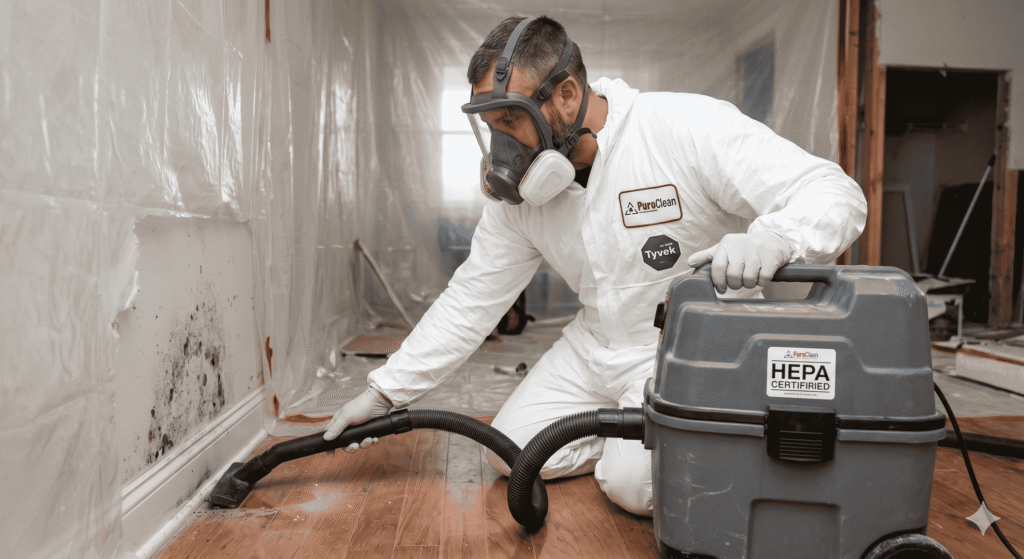
Stopping long term mold exposure symptoms begins with one step: eliminating the mold that is causing them. PuroClean of Santa Maria’s IICRC-certified remediation protocol is designed to find every source of mold growth, remove it completely, and verify the results independently:

  • Comprehensive moisture investigation using thermal imaging and advanced moisture meters
  • Professional air and surface sampling to identify mold species and concentration levels
  • Negative air pressure containment to protect unaffected areas during remediation
  • Complete physical removal of all mold-contaminated materials — no surface treatments alone
  • EPA-registered antimicrobial treatment of all structural surfaces
  • HEPA air scrubbing throughout the remediation process
  • Independent post-remediation clearance testing with full laboratory documentation
  • Detailed reporting for medical providers and insurance adjusters

Frequently Asked Questions About Long Term Mold Exposure Symptoms

How long does it take for long term mold exposure symptoms to appear? Chronic symptoms typically develop over months of sustained exposure, though sensitive individuals may begin experiencing effects within weeks. The gradual onset is precisely what makes long term mold exposure symptoms so easy to attribute to unrelated causes for so long.

Can long term mold exposure symptoms be reversed after remediation? Many symptoms — particularly respiratory, cognitive, and fatigue-related — improve significantly after the mold source is eliminated and appropriate medical treatment is pursued. Symptoms caused by severe or very prolonged mycotoxin exposure may take months to fully resolve and in some cases produce lasting effects, making early intervention critical.

Should I tell my doctor I suspect long term mold exposure? Absolutely. Inform your physician of your suspicions and request evaluation by a specialist in environmental medicine, allergy and immunology, or pulmonology as appropriate to your symptoms. Bring documentation of any mold findings in your home to your appointment.

How do I know if my home has the mold causing my symptoms? Professional air quality testing conducted by PuroClean of Santa Maria can identify and quantify mold spore concentrations in your home and determine whether levels are elevated above normal background concentrations. This testing provides objective, laboratory-verified data to share with your medical provider.

Is it safe to stay in my home while experiencing long term mold exposure symptoms? If active mold growth has been identified in your home and you or your family members are experiencing symptoms consistent with long term mold exposure, temporary relocation during professional remediation is strongly advisable — particularly for children, elderly occupants, and anyone with a compromised immune system.


Your Chronic Symptoms May Have an Environmental Answer — Call PuroClean of Santa Maria Today

Long term mold exposure symptoms do not resolve on their own as long as the mold causing them remains in your home. Every day of continued exposure adds to the cumulative health burden carried by every person living under your roof. At PuroClean of Santa Maria, we understand the toll that unexplained chronic illness takes on families — the frustration, the uncertainty, and the desperate search for answers. We are here to provide one of the most important answers of all: a professional, thorough assessment of your indoor environment that tells you definitively whether mold is contributing to your family’s health struggles.

Our IICRC-certified team is available 24 hours a day, 7 days a week. Call PuroClean of Santa Maria today and take the first step toward a healthier home and a healthier family.

📞 Call us today 🌐 Visit us online📍 Proudly serving Santa Maria, Orcutt, Santa Ynez Valley, and the greater Central Coast

PuroClean of Santa Maria — The Paramedics of Property Damage™