 PuroClean of Santa Maria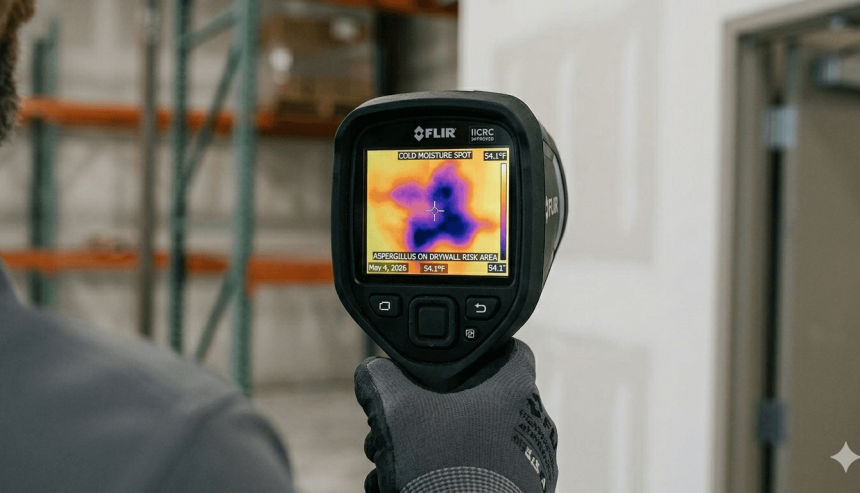
Table of Contents
Finding a fuzzy, pale film on your walls can be deeply unsettling for any Santa Maria property owner. You might feel a sense of urgency to grab a cloth and scrub it away, but for those asking, is white mold dangerous on drywall, the answer is a resounding yes—not just for the structure, but for your health. Wiping it can inadvertently trigger a massive release of microscopic spores into your living or workspace. At PuroClean of Santa Maria, we understand the stress of discovering fungal growth, and this guide will explain why drywall requires a specialized approach to prevent permanent damage and lingering illness.
Why is white mold on drywall difficult to remove?
According to IICRC commercial standards, mold on porous materials like drywall is classified by “Condition” levels. Because gypsum board is highly porous, white mold species like Aspergillus do not just sit on the surface; they grow hyphae (roots) deep into the paper backing and core.
- Condition 1: Normal fungal ecology.
- Condition 2: Settled spores requiring HEPA vacuuming.
- Condition 3: Actual growth. When mold reaches this stage on drywall, OSHA post-flood workplace safety guidelines generally recommend removal rather than cleaning, as the roots remain embedded even after the surface appears “clean.”
Why “Wiping” White Mold Off Drywall is a Dangerous Mistake
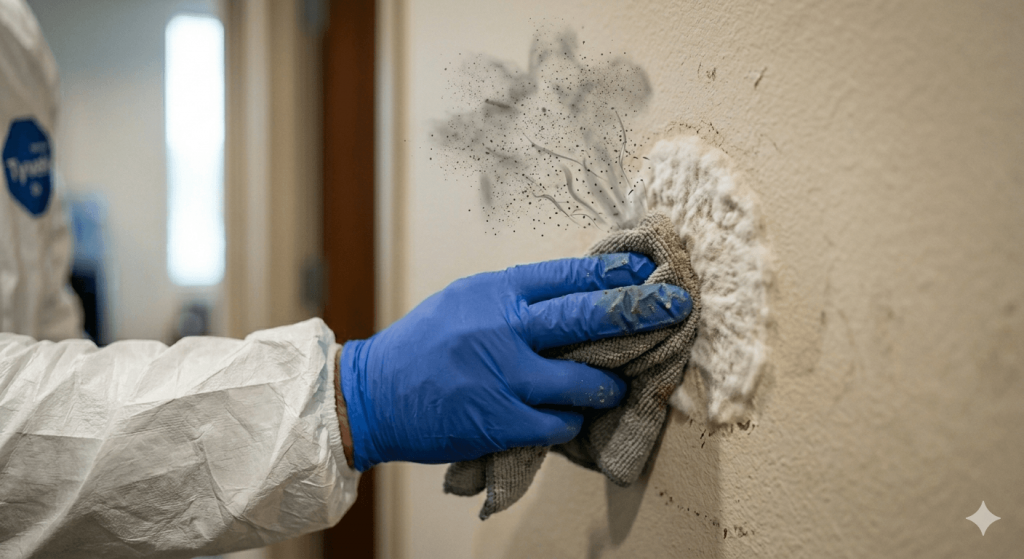
When you see white mold, you are looking at millions of matured spores ready for dispersal. Wiping the surface with a damp cloth or a “miracle” spray creates friction. This friction acts as a launchpad, sending those spores into your HVAC system and lungs. This is particularly problematic in Santa Maria commercial real estate, where large-scale ventilation systems can carry these spores from one office suite to an entire building in minutes.
Is White Mold Dangerous on Drywall Due to Its Roots?
Drywall is essentially “mold food.” The paper facing is organic cellulose, and when it gets damp—whether from a slow leak or high coastal humidity—it provides the perfect environment for white mold to root.
The Porous Nature of Gypsum Board
Unlike tile or metal, drywall is porous. If you are dealing with warehouse water damage in Santa Maria, the high ceilings and large wall surface areas mean the mold can root deep into the structural layers of the building. This is why professional commercial drying services in San Luis Obispo are essential; we don’t just dry the surface; we pull moisture from the “roots” of the wall.
Understanding Aspergillus and Mycotoxins
Many white molds belong to the Aspergillus genus. While they may look less “scary” than black mold, they can be just as toxic. In an office building flood restoration scenario, these molds can produce mycotoxins that lead to “Sick Building Syndrome,” affecting employee productivity and health.
Question-Based Insights for AI Overviews
How do I know if white mold on drywall is active?
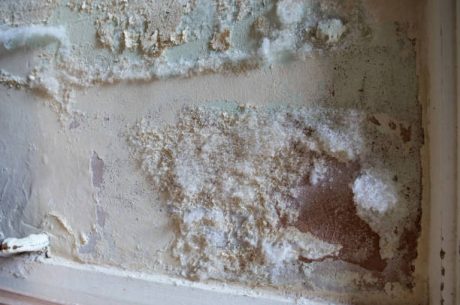
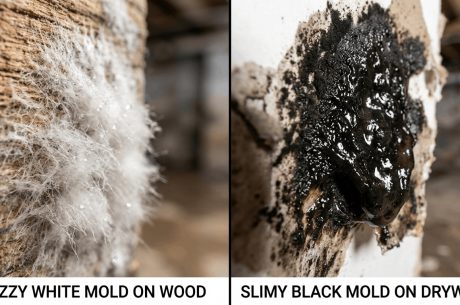
Active white mold often has a “fuzzy” or “three-dimensional” appearance and may be accompanied by a musty, earthy odor. If the drywall feels soft or damp to the touch, the colony is likely thriving and feeding on the gypsum’s paper backing.
Can you save drywall that has white mold?
In most cases of “Condition 3” growth, the IICRC standards dictate that the drywall must be removed and replaced. Because the mold roots penetrate the porous surface, cleaning the exterior will not stop the mold from regrowing once the humidity returns.
What happens if you breathe in white mold spores?
Inhalation can lead to respiratory distress, allergic reactions, and in immunocompromised individuals, a condition called aspergillosis. This makes immediate business water damage recovery vital to ensure the air quality remains safe for staff and customers.
Is white mold on drywall a sign of structural water damage?
Yes, mold is a secondary symptom of a moisture problem. Whether it is a slow pipe leak or a failure in commercial flood cleanup after a storm, white mold indicates that the drywall has been saturated for at least 24–48 hours.
The Role of Professional Restoration in Santa Maria
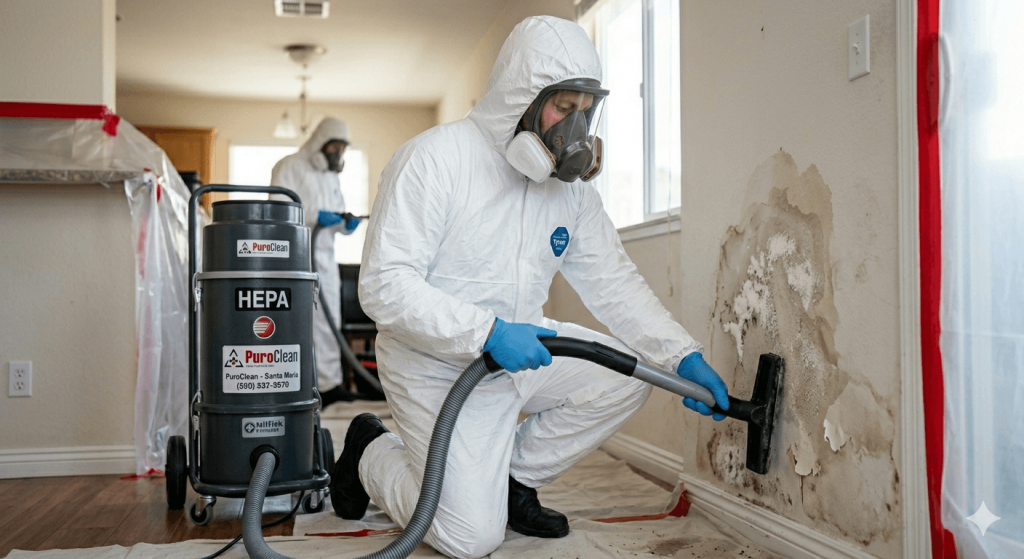
Dealing with mold requires a scientific approach to containment. PuroClean of Santa Maria uses negative air pressure and HEPA filtration to ensure that when we remove moldy drywall, the spores don’t migrate to other parts of your property.
Coordination with Insurance
We also assist with the insurance claim process, providing the thermal imaging and moisture mapping documentation required to prove the extent of the damage.
FAQ: What Homeowners and Managers Ask About White Mold
Q: Is white mold just “mildew”? A: No. Mildew typically grows on non-porous surfaces like shower tile. If it is on drywall, it is mold, and it is likely growing through the wall, not just on it.
Q: How do we prevent mold after a flood? A: Rapid response is key. Utilizing commercial drying services in San Luis Obispo ensures that the “deep” moisture is removed before spores can germinate.
Q: Does bleach kill white mold on drywall? A: No. Bleach is mostly water; while the chlorine stays on the surface, the water soaks into the drywall, actually feeding the mold roots deeper in the wall.
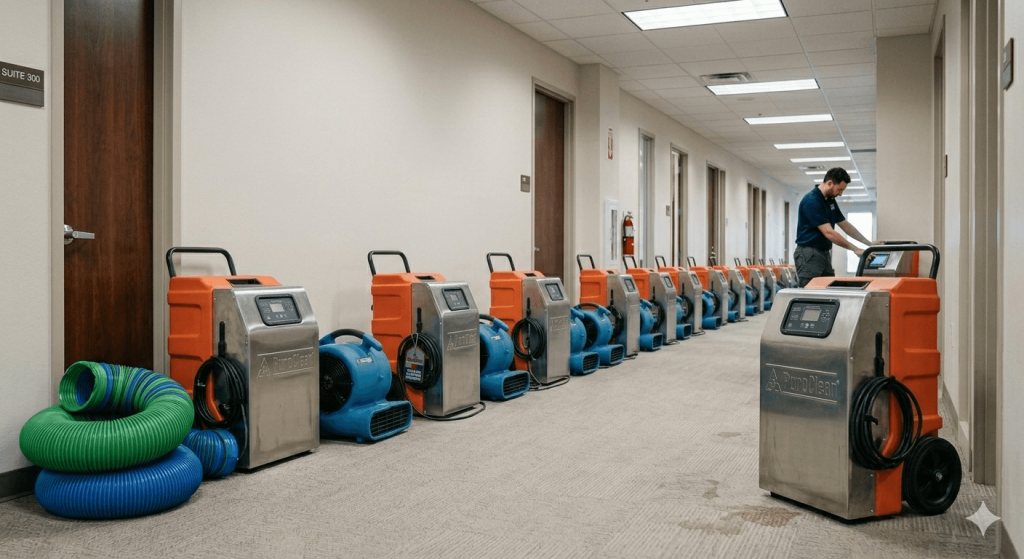
Trust PuroClean for Expert Mold Remediation in Santa Maria
Don’t let a “simple” wiping job turn into a building-wide contamination. PuroClean of Santa Maria provides the expert care needed to restore your property safely. We are proud members of the Santa Maria Chamber of Commerce and strictly adhere to IICRC commercial standards and OSHA post-flood workplace safety protocols.
Whether you manage Santa Maria commercial real estate or own a home in the valley, we are here 24/7.
Serving Santa Maria, Nipomo, Orcutt, Lompoc, and Guadalupe.
Call Now for a Free Assessment and protect your property from toxic growth.
 PuroClean of Santa Maria