
A structural repair checklist helps you spot storm damage to your home’s foundation, framing, and floors while the problems are still small. This month’s rare October storm soaked Santa Barbara County, and homeowners in Santa Maria, Nipomo, Orcutt, and Guadalupe can use this room-by-room guide to find out what the water left behind.
Quick answer:
- Inspect outside first (grade, downspouts, foundation), then inside (doors, floors, walls), then the crawl space and roof.
- Photograph and date everything. Cracks wider than about 1/8 inch, sloping floors, and wet framing deserve a professional look.
- Start drying wet materials within 24 to 48 hours, as EPA guidance recommends.

Why Check Your Home Now?
The storm that crossed Santa Barbara County on October 21 and 22 dropped 3.47 inches on San Marcos Pass and 1.12 inches in Cuyama, and Santa Barbara had reached about 412% of normal rainfall for the year to date (Noozhawk, “Santa Barbara County Doused as First Storm of Season Lives Up to Expectations,” Oct. 22, 2026). A National Weather Service meteorologist said high pressure would follow, with the earliest chance of more rain toward the end of the month.
That quiet stretch has been your inspection window, and it may be closing. A Central Coast weather report published October 24 says models increasingly agree another system could arrive as October turns to November (Santa Maria Times, “Atmospheric instability causing rain showers and thunderstorms,” Oct. 24, 2026). Check the latest National Weather Service forecast for Santa Maria before you plan your weekend.
What Is a Structural Repair Checklist, and Who Needs One?
A structural repair checklist is a step-by-step inspection of a home’s foundation, framing, walls, floors, and crawl space after storm exposure. Homeowners use it to document damage, decide whether structural repair is needed, and know when to call a restoration company or a licensed structural engineer.
The 9-Point Structural Repair Checklist for Storm-Soaked Homes
- Outside: pooling water and soil loss. Look for standing water against the foundation, soil washed away from the footing, or gaps between soil and concrete.
- Outside: downspouts and gutters. Follow every downspout. Water should discharge several feet from the house, not at a corner, and gutters should be free of debris.
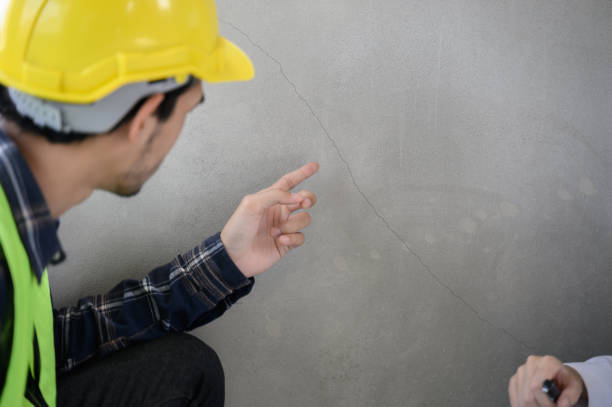
- Outside: foundation and slab cracks. Photograph each crack and mark its ends with a dated pencil line. Cracks wider than about 1/8 inch, growing, or stair-stepping deserve evaluation.
- Outside: stucco, siding, and retaining walls. Look for new cracks, bulges, separations, or walls that lean.
- Inside: doors and windows. Test every one. Binding after rain can be swollen wood that eases as the house dries. Binding that persists or worsens can signal movement.
- Inside: floors. Walk the house. Note slopes, bounce, or soft spots, and try the marble test: set one down and see which way it rolls.
- Inside: walls and ceilings. Check for stains, bubbling paint, and seams opening at corners. A stain that dries and returns points to an active leak.
- Below: the crawl space. If it is safe to look, check for standing water, damp insulation, rust, a musty smell, and soft wood. In vented crawl spaces, the dominant moisture source is usually bulk water from poor grading, missing perimeter drainage, or irrigation practices (U.S. Department of Energy Building America Solution Center, “Capillary Break: Crawlspace Floors”).
- Above: roof, eaves, and attic. Look for missing shingles, soft fascia, and water stains on the underside of the roof deck.
When Does a Finding Mean Structural Repair?
| What you find | What it may mean | Your next step |
|---|---|---|
| Hairline crack that stays the same | Normal settling or drying | Photograph and monitor for several weeks |
| Crack wider than about 1/8 inch or growing | Possible movement | Schedule a licensed structural engineer |
| Door binds, then eases as the house dries | Swollen wood | Monitor |
| Door or window keeps binding, or floor slopes | Framing or foundation movement | Professional evaluation |
| Wet insulation or standing water under the house | Active moisture intrusion | Call a restoration company within 24 to 48 hours |
| Soft or crumbling wood | Rot | Prompt professional assessment |
How PuroClean of Santa Maria Helps After a Storm
Water is usually the first step on the road to structural repair. PuroClean of Santa Maria notes that within 24 to 72 hours after storm-driven leaks, wet materials can progress toward mold and costly tear-out (PuroClean of Santa Maria, 24/7 Emergency Services). The EPA’s guidance is that in most cases mold will not grow if wet or damp items are dried within 24 to 48 hours, which is why speed matters (U.S. EPA, “Mold Remediation in Schools and Commercial Buildings,” Chapter 4).
Our team is IICRC certified, and the IICRC S500 Standard for Professional Water Damage Restoration is the industry benchmark for how water damage is dried and documented (PuroClean of Santa Maria, “Best Water Damage Company in Santa Maria”). We offer emergency board-up, structural drying with monitoring, mold remediation, and reconstruction.
Have this ready when you call: your address, when the water arrived, what is wet, dated photos, and your insurance information.

Structural Repair FAQs for Storm-Soaked Santa Maria Homes
How soon after a storm should I inspect my home?
As soon as it is safe, ideally the same day. Water that sits in framing, insulation, or carpet can start causing problems within 24 to 48 hours, so early checks protect your options.
What does structural repair involve?
Structural repair depends on the cause. Common steps include correcting drainage, drying and replacing water-damaged materials, stabilizing or underpinning a settled foundation, and sistering or replacing damaged joists and beams. A licensed structural engineer defines the scope for foundation or framing work.
Are cracks after heavy rain normal?
Thin cracks that stay the same are often cosmetic. Cracks that widen, stair-step, or appear with sticking doors and sloping floors should be evaluated.
Who should I call first, a restoration company or a structural engineer?
If water is present, call a restoration company first so drying starts inside the critical window. If the building shows movement, also schedule a licensed structural engineer.
Does homeowners insurance cover storm-related structural damage?
Coverage varies by policy and cause, and standard policies often treat flood differently from sudden water damage. Document everything with dated photos and ask your insurer before repairs begin.
Does PuroClean serve Nipomo, Orcutt, and Guadalupe?
Yes. PuroClean of Santa Maria serves Santa Maria, Nipomo, Orcutt, Guadalupe, and nearby Central Coast communities, 24/7, at (805) 975-0800.
Need Structural Repair Help in Santa Maria? Call PuroClean 24/7
If your checklist turned up wet framing, new cracks, or a crawl space that does not smell right, do not wait for the next storm to decide for you. PuroClean of Santa Maria is IICRC certified, available 24/7/365 including weekends and holidays, and proudly serving Santa Maria, Nipomo, Orcutt, Guadalupe, Lompoc, and surrounding Central Coast communities.
Our local team helps stop the water damage that leads to structural repair, then dries and restores your property so any structural repair that is needed starts from a dry, stable base. Call (805) 975-0800 now for fast, professional help.
Sources
- Noozhawk, “Santa Barbara County Doused as First Storm of Season Lives Up to Expectations,” October 22, 2026. https://www.noozhawk.com/santa-barbara-rain-storm-update/
- Santa Maria Times, “Atmospheric instability causing rain showers and thunderstorms,” Central Coast Weather Report, October 24, 2026. https://santamariatimes.com/news/local/atmospheric-instability-causing-rain-showers-and-thunderstorms-central-coast-weather-report/article_f4465d76-58c8-43da-b735-259218c4300c.html
- U.S. Department of Energy Building America Solution Center, “Capillary Break: Crawlspace Floors.” https://basc.pnnl.gov/resource-guides/capillary-break-crawlspace-floors-polyethylene-lapped-walls-and-piers-or-secured
- U.S. Environmental Protection Agency, “Mold Remediation in Schools and Commercial Buildings,” Chapter 4. https://epa.gov/mold/mold-remediation-schools-and-commercial-buildings-guide-chapter-4
- PuroClean of Santa Maria, “Best Water Damage Company in Santa Maria.” https://www.puroclean.com/santa-maria-ca-puroclean-santa-maria/blog/best-water-damage-company-in-santa-maria/
- PuroClean of Santa Maria, “24/7 Emergency Services.” https://www.puroclean.com/santa-maria-ca-puroclean-santa-maria/?p=20284
Available 24/7/365 | IICRC Certified | (805) 975-0800 | Contact Us Online | Google Business Profile