


Table of Contents
Fuzzy mold on walls is not always where you expect to find it. Most Santa Maria homeowners only discover a mold problem after they spot a visible patch on a painted surface — but by that point, the colony has typically been growing for weeks or even months in places far less obvious. At PuroClean of Santa Maria, our IICRC-certified remediation specialists have inspected thousands of Central Coast properties, and we have seen firsthand how deceptive and destructive fuzzy mold on walls can be when it goes undetected. This guide is designed to change that — giving you the knowledge to find it early, understand the risks, and take the right action before the damage becomes severe.
What Is Fuzzy Mold on Walls and Why Does It Keep Coming Back?
Fuzzy mold on walls is mold in its active, spore-producing state — that soft, fibrous texture is a dense mat of hyphae and reproductive spores clinging to your wall surface and the materials beneath it. The reason fuzzy mold on walls keeps returning after surface cleaning is simple: paint and drywall are porous, and once mold penetrates below the surface layer, wiping or spraying it with household cleaners does nothing to address the colony growing inside the wall cavity.
According to the U.S. Environmental Protection Agency, the only way to permanently address mold on walls is to identify and eliminate the underlying moisture source and physically remove contaminated materials that cannot be adequately cleaned.
In Santa Maria’s older residential neighborhoods, the most common moisture drivers behind fuzzy mold on walls include aging plumbing, inadequate bathroom ventilation, roof leaks that track water down interior wall cavities, and ground moisture migrating through foundation walls. Understanding the source is the first step to a permanent solution — and it is where every PuroClean of Santa Maria assessment begins.
Hiding Spot #1: Behind Bathroom Tiles and Grout Lines
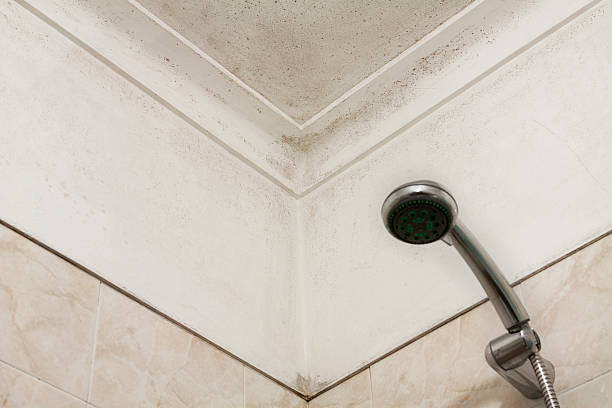
The space between your tile and the underlying drywall or cement board is one of the most active environments for fuzzy mold on walls in Santa Maria homes. When grout cracks or caulking fails, shower water seeps behind the tile surface and saturates the wall substrate — creating a warm, dark, perpetually moist environment where fuzzy mold thrives completely out of sight. By the time tiles begin to loosen or grout discolors, significant mold colonization is already established behind the wall.
Expert Tip from PuroClean of Santa Maria: If you notice soft or hollow-sounding tiles, discolored grout, or a persistent musty smell in your bathroom despite regular cleaning, do not delay — contact our team for a moisture assessment before the problem requires full bathroom demolition.
Hiding Spot #2: Inside Exterior Walls Facing Prevailing Winds
Santa Maria’s coastal winds drive moisture against exterior-facing walls during wet weather events, and older homes with degraded housewrap, failing stucco, or inadequate flashing are particularly vulnerable. Fuzzy mold on walls in these locations develops inside the insulation cavity and on the interior face of the exterior sheathing — completely invisible from inside the home until the infestation is severe enough to penetrate the drywall surface.
The California Department of Public Health notes that exterior wall moisture intrusion is among the leading causes of hidden mold growth in California residential buildings, particularly in coastal communities where wind-driven rain events are common.
Hiding Spot #3: Behind and Beneath Kitchen Cabinets
The wall surface behind your kitchen sink cabinet and beneath your dishwasher is one of the most neglected inspection points in any home. Slow leaks from supply lines, drain connections, and dishwasher door seals create persistent moisture that feeds fuzzy mold on walls and cabinet bases for months without detection. By the time a homeowner notices warping cabinetry or a musty kitchen odor, the wall behind the cabinets is often heavily colonized.
Hiding Spot #4: In Closets on Exterior Walls
Closets built against exterior walls have consistently poor air circulation, and in cooler months the wall surface temperature drops enough to cause condensation — particularly in bedrooms where occupants breathe moisture into the air overnight. Fuzzy mold on walls inside closets is extremely common in Santa Maria homes and is frequently overlooked because closets are inspected far less often than main living areas. Check the back wall and lower corners of all exterior-facing closets seasonally.
Hiding Spot #5: Around and Behind Window Frames
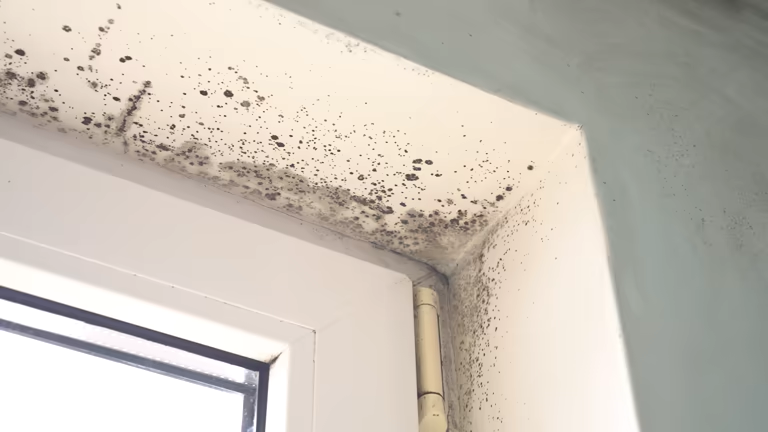
Window frames are a primary entry point for both condensation and water intrusion. When window seals fail or flashing is improperly installed, water tracks down the interior wall cavity and accumulates at the base of the window rough opening — creating an ideal environment for fuzzy mold on walls that grows outward toward the visible drywall surface over time. The American Industrial Hygiene Association identifies window-related moisture intrusion as one of the top five sources of indoor mold growth in residential buildings.
Condensation on window glass is also a warning sign of high indoor humidity that is actively supporting fuzzy mold on walls throughout the home — not just at the window itself.
Hiding Spot #6: In Basement and Crawl Space Walls
Below-grade walls in basements and the perimeter walls of crawl spaces are in constant contact with soil moisture and are among the highest-risk locations for fuzzy mold on walls in Santa Maria properties. Concrete and block foundation walls are porous and wick ground moisture inward, creating a chronically damp surface that supports mold growth across large areas. According to the Environmental Protection Agency, crawl spaces and basements account for a disproportionately high share of indoor mold cases nationwide due to the difficulty of controlling moisture in below-grade environments.
PuroClean of Santa Maria specializes in below-grade moisture control and mold remediation, including crawl space encapsulation and basement waterproofing assessments as part of a comprehensive remediation plan.
Hiding Spot #7: Inside HVAC Chases and Wall Cavities Near Ductwork
Heating and cooling ducts that run through interior wall cavities create localized condensation zones wherever warm and cool air interfaces occur — particularly around supply boots and return air grilles. These condensation points feed fuzzy mold on walls from the inside out, and because the growth is inside the wall cavity adjacent to ductwork, the HVAC system actively distributes spores to every room in the home. The Centers for Disease Control and Prevention identifies HVAC-distributed mold as a significant indoor air quality concern due to its whole-home contamination potential.
How PuroClean of Santa Maria Locates and Eliminates Hidden Fuzzy Mold on Walls
Eliminating fuzzy mold on walls permanently requires more than surface treatment — it requires identifying every affected area, including hidden growth inside wall cavities, before remediation begins. PuroClean of Santa Maria uses a combination of advanced diagnostic tools and industry-certified protocols to ensure nothing is missed:
- Thermal imaging cameras to detect temperature differentials indicating moisture behind walls
- Pin and pinless moisture meters to quantify moisture levels in drywall, framing, and insulation
- Borescope inspection cameras to visualize inside wall cavities without unnecessary demolition
- Air and surface sampling submitted to accredited third-party laboratories for species identification
- Negative air pressure containment to prevent cross-contamination during mold removal
- Full removal and disposal of mold-contaminated drywall, insulation, and framing materials
- EPA-registered antimicrobial treatment of all affected structural surfaces
- Independent post-remediation clearance testing to verify successful remediation
Our approach is built on transparency and thoroughness. We do not cut corners, and we do not consider a project complete until independent air quality testing confirms that your home meets established safety benchmarks.
Preventing Fuzzy Mold on Walls: What Santa Maria Homeowners Can Do Right Now
The most effective prevention strategy for fuzzy mold on walls is aggressive moisture control throughout the home. Here are the highest-impact steps our team recommends:
- Inspect all window caulking and weatherstripping annually and replace any cracked or missing sealant
- Run bathroom exhaust fans during every shower and for at least 20 minutes afterward
- Keep indoor humidity between 30% and 50% using a digital hygrometer and dehumidifier if needed
- Have your roof inspected after every significant storm event and repair flashing immediately
- Encapsulate crawl spaces and ensure positive drainage around your home’s foundation
- Schedule a professional moisture assessment annually in high-risk areas including bathrooms, kitchen, and basement
Frequently Asked Questions About Fuzzy Mold on Walls
What does fuzzy mold on walls look like in early stages? In early stages, fuzzy mold on walls may appear as small, circular discolored spots — white, gray, green, or black — with a slightly raised, soft texture. It is often mistaken for dirt or water staining. If the spot does not wipe away cleanly or returns after cleaning, treat it as active mold and contact a professional.
Can fuzzy mold on walls make my family sick? Yes. Fuzzy mold on walls releases airborne spores that can trigger allergic reactions, asthma attacks, respiratory infections, and chronic sinus conditions. The health risk is greatest for children, elderly individuals, and anyone with a compromised immune system or pre-existing respiratory condition.
Is fuzzy mold on walls covered by homeowners insurance? It depends on the cause. Mold resulting from a sudden covered peril such as a burst pipe is typically covered. Mold from long-term moisture neglect or maintenance failures is generally excluded. PuroClean of Santa Maria can provide thorough documentation to support your insurance claim.
How do I know if fuzzy mold on walls has spread inside the wall cavity? Surface mold that has been present for more than a few weeks has almost certainly penetrated the wall substrate. Signs of deeper colonization include soft or crumbling drywall, persistent musty odor after surface cleaning, and recurrence of visible mold within weeks of treatment. A professional moisture assessment and borescope inspection are the most reliable diagnostic tools.
How long does it take to remediate fuzzy mold on walls professionally? A single affected wall in a contained area can typically be remediated in one to two days. Widespread fuzzy mold on walls affecting multiple rooms or concealed wall cavities throughout the home may require four to seven business days. PuroClean of Santa Maria provides a detailed project timeline before work begins.
Take Back Your Walls — Call PuroClean of Santa Maria Today
Fuzzy mold on walls will not disappear on its own. The longer it grows, the deeper it penetrates, and the more expensive and disruptive the remediation becomes. At PuroClean of Santa Maria, we have the tools, the training, and the local expertise to find every hidden colony, remove it completely, and verify that your home is safe — so you can stop worrying and start living comfortably again.
Our team is available 24 hours a day, 7 days a week, because mold emergencies do not wait for business hours. Call us today for a prompt professional assessment — and let Santa Maria’s most trusted remediation specialists restore your home to the safe, healthy environment your family deserves.
📞 Call us today 🌐 Visit us online📍 Proudly serving Santa Maria, Orcutt, Santa Ynez Valley, and the greater Central Coast
PuroClean of Santa Maria — The Paramedics of Property Damage™