


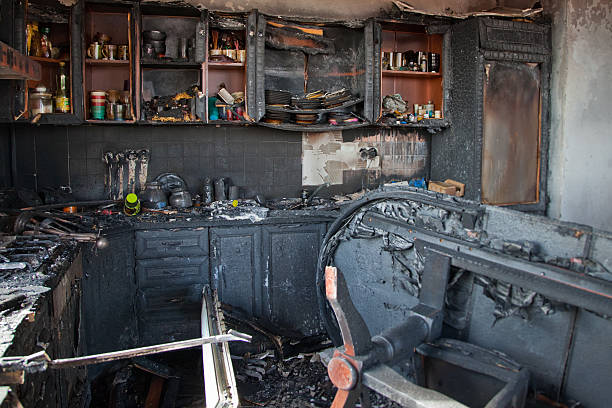
For many property owners and managers of Santa Maria commercial real estate, the urge to return home or reopen business doors immediately after a fire incident is completely natural. However, even when active flames are fully extinguished, a stubborn, toxic odor often hangs heavily in the environment. Staying inside a property that smells deeply of ash carries severe, invisible dangers. Failing to address the health implications of prolonged exposure to smoke residue can put your family or employees at serious medical risk. This comprehensive guide breaks down the physical and biological dangers of breathing contaminated air so you can prioritize a real, safe property recovery.
The Hidden Dangers of Post-Fire Indoor Air Quality
When a structure fire occurs, the materials that burn are rarely limited to natural wood. Modern residential and commercial buildings contain complex synthetic plastics, chemical adhesives, treated fabrics, and electronics. When these items combust, they transform into highly hazardous compounds that completely ruin your post-fire indoor air quality.
Failing to understand the health implications of prolonged exposure to smoke residue means ignoring how these microscopic contaminants travel. Unlike heavy dust particles that fall quickly to the floor, toxic smoke particles remain suspended in the breathing zone or settle tightly into porous building surfaces, continuously off-gassing into your living spaces.
Microscopic Culprits: PM2.5 and Corrosive Soot
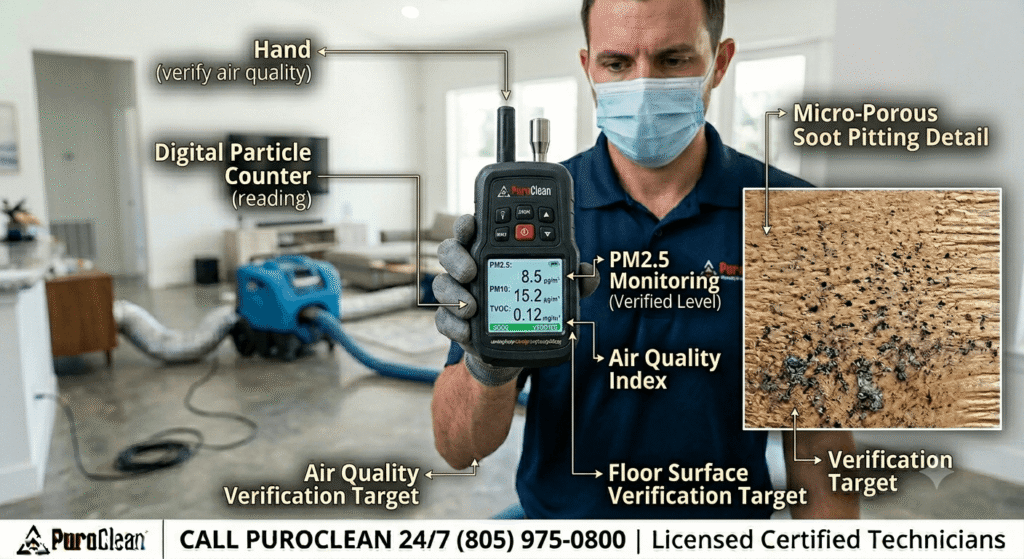
Understanding the specific health implications of prolonged exposure to smoke residue requires looking at particle size. The soot left behind after a fire is a chemically complex mixture containing carbon monoxide, formaldehyde, and heavy metals. These particles are classified as PM2.5, meaning they are less than 2.5 micrometers in diameter—invisible to the naked eye. When you are breathing soot after a fire, these tiny particles easily bypass the natural filtration defenses of your nasal passages, traveling directly into your lungs and entering the bloodstream.
Chemical Off-Gassing and VOCs
Even if you cannot see dark soot lines on a wall, the continuous chemical off-gassing from charred building skeletons presents severe chronic smoke inhalation risks. Materials continue to release toxic gasses long after the initial emergency is resolved. This prolonged contact leads to the long term effects of smoke damage, creating a hostile indoor environment that slowly damages human health.
Biological Pathways: How Smoke Toxins Affect the Human Body
To fully comprehend the health implications of prolonged exposure to smoke residue, one must look at how the body processes these environmental pollutants. Toxins infiltrate the human body through three main entry pathways:
- Inhalation: Microscopic soot particles enter deep into pulmonary tissues, causing immediate inflammation.
- Dermal Absorption: Permeable skin layers absorb acidic soot residues resting on furniture or clothing, causing severe contact dermatitis.
- Ingestion: Settled particulate matter can land on dishes, food prep areas, and toys, creating a secondary contamination path.
This systemic exposure is why local regulatory bodies and the Santa Maria Chamber of Commerce place a high emphasis on securing pristine cleaning standards before properties are reoccupied.
Is it safe to live in a house that still smells like smoke?
No, it is highly unsafe to reside in a property with a lingering smell of ash. A persistent smoke odor indicates that toxic volatile organic compounds (VOCs) and microscopic particles are actively present in the environment. Ignoring these clear warning signs exposes your family to severe chronic smoke inhalation risks, making it critical to understand the serious health implications of prolonged exposure to smoke residue.
What types of toxins are found in post-fire soot and smoke residue?
Post-fire residue contains a dangerous cocktail of chemical toxins, including formaldehyde, carbon monoxide, sulfur dioxide, and heavy metals. When synthetic materials combust in Santa Maria homes, they also release complex dioxins. Breathing soot after a fire introduces these highly carcinogenic materials directly into your respiratory tract, highlighting the severe health implications of prolonged exposure to smoke residue.
📷 Image suggestion: [Close-up of a dark, oily soot film being wiped from an electrical outlet using a specialized dry chemical sponge] Alt text: — [Removing toxic smoke residue and corrosive soot from hidden property surfaces]
How does lingering smoke residue affect indoor air quality over time?
Lingering soot and chemical ash permanently degrade post-fire indoor air quality by settling inside HVAC ductwork and porous insulation. Every time your heating or air conditioning system cycles, it redistributes trapped, toxic smoke particles back into the breathing zone, exacerbating the long-term health implications of prolonged exposure to smoke residue. This continuous cycling causes the long term effects of smoke damage to compound, driving up the risk of developing chronic bronchitis.
Can professional structural cleaning eliminate health risks from smoke damage?
Yes, specialized restoration protocols can completely neutralize the environmental hazards left behind by a fire. Certified teams use professional-grade thermal fogging, ozone treatment, and structural washing to eliminate the health implications of prolonged exposure to smoke residue. By removing the source of contamination, experts permanently restore safe EPA indoor air quality parameters.
Professional Remediation and the Long Term Effects of Smoke Damage
Attempting to wipe away soot with standard household cleaners often smears the acidic particles deeper into your walls, compounding the environmental danger. Safely managing the health implications of prolonged exposure to smoke residue requires professional, deep-cleansing protocols executed under strict industry guidelines.
True structural restoration relies on separating contaminated building materials from salvageable frameworks. To protect local businesses and comply with OSHA post-fire workplace safety guidelines, companies must invest in systematic environmental cleaning rather than superficial surface washing. Specialized neutralization is the only path to reversing the long term effects of smoke damage.
Frequently Asked Questions
How long do toxic smoke particles remain in a building if untreated?
Without intervention, toxic particles and heavy soot can remain bound to building structures indefinitely. They will continue to off-gas into the environment for months or even years, causing ongoing degradation to your post-fire indoor air quality.
What is the risk of chronic bronchitis after a fire?
Individuals exposed to continuous soot inhalation run a significantly elevated risk of developing chronic bronchitis or severe respiratory inflammation. This is one of the most prominent health implications of prolonged exposure to smoke residue recorded by medical professionals.
Does property insurance cover professional air quality restoration?
Yes, standard insurance policies generally cover professional air scrubbing, structural washing, and thermal fogging under fire mitigation terms. Working closely with certified insurance agents and property managers ensures your claim covers complete environmental decontamination.
Protect Your Health with PuroClean of Santa Maria
When a fire alters your peace of mind, you need an experienced partner who values your long-term health as much as your physical property. PuroClean of Santa Maria provides the certified, meticulous expertise required to mitigate all health implications of prolonged exposure to smoke residue safely.
Serving Santa Maria, Nipomo, Orcutt, Lompoc, and Guadalupe, our technicians operate strictly under the rigorous mandates of the IICRC S540 Standard for Professional Fire and Smoke Damage Restoration. We maintain 24/7 emergency response capacity to deploy industrial HEPA air scrubbing units and structural washing teams the moment you call. Don’t let hidden, toxic soot compromise your indoor air quality or business continuity.
Contact PuroClean of Santa Maria today to schedule a comprehensive, professional indoor air assessment and start your true post-fire property recovery.
Available 24/7/365 | IICRC Certified | (805) 975-0800 | Contact Us Online | Google Business Profile