


Watching a fire impact your property on the Central Coast is a deeply devastating ordeal. Once the first responders clear the scene, you are left facing a chaotic, heartbreaking mixture of charred structural beams, water-saturated drywall, and a heavy, pungent layer of acidic soot. Many property owners stand amid the wreckage wondering, how do professional restoration companies handle smoke damage vs fire damage when the two types of destruction require completely different cleaning solutions?
In Santa Maria’s unique climate, treating these elements with separate, highly specialized protocols is the only way to execute a successful post-fire property recovery while preventing permanent structural degradation. This comprehensive guide breaks down the precise scientific methods used by experts to reclaim your property safely.
The Fire Mitigation Phase: Reclaiming Structural Integrity
The physical destruction left behind by active flames is visceral and immediate. When fire tears through a building, it alters the physical state of wood, steel, and drywall, leaving behind unstable framing that threatens the safety of the entire structure.
Securing the Perimeter and Controlled Demolition
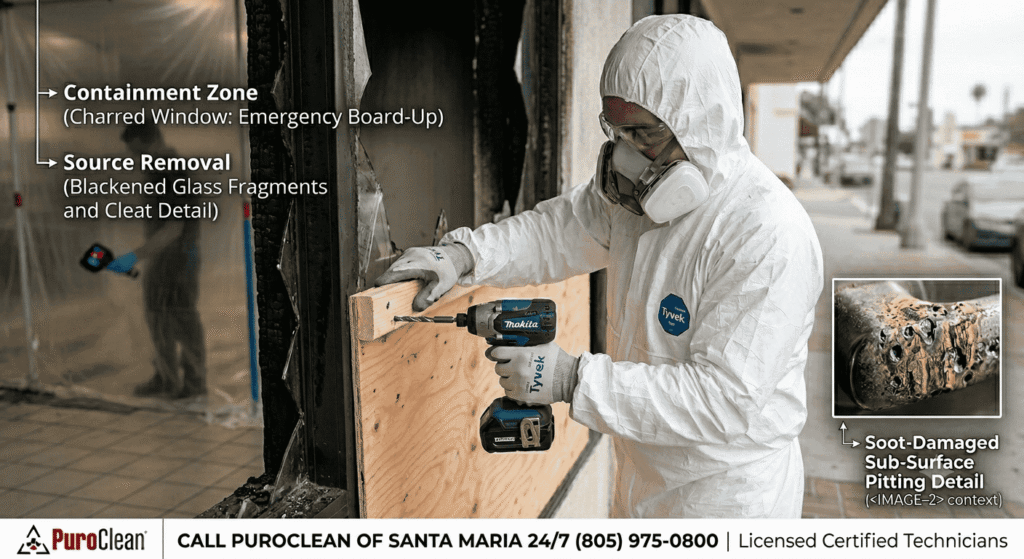
The very first step in addressing the fire phase is stabilizing the envelope of your property. Certified crews quickly board up broken windows, tarp damaged roofs, and install temporary structural shoring to protect the building from seasonal weather and trespassers.
Once secured, technicians initiate a process of controlled demolition. Because charred framing timber cannot support structural loads and continuously off-gasses toxic odors, it must be cleanly cut away. During this phase, technicians also prioritize extracting the thousands of gallons of water left behind by fire suppression hoses, implementing rapid emergency drying to protect your underlying subfloors from buckling.
The Smoke Mitigation Phase: Advanced Chemistry and Deodorization
While fire burns in a localized area, smoke behaves like an airborne gas under immense thermal pressure. It migrates rapidly into cold spaces, wrapping around pipes, penetrating electrical outlets, and blanketing areas far away from the origin of the fire. Understanding how do professional restoration companies handle smoke damage vs fire damage requires looking closely at the behavioral chemistry of soot.
Deploying Advanced Soot Restoration Techniques
Soot is not just ash; it is a highly corrosive, sticky byproduct composed of carbon, oils, and synthetic chemicals from burned plastics and household goods. If left sitting on surfaces, its acidic nature will permanently etch glass, pit chrome fixtures, and discolor stone countertops within hours.
To combat this, mitigation experts identify the exact type of soot present—whether it is dry, oily, or protein-based grease—before choosing a cleaning agent. Technicians then apply specialized soot restoration techniques, using chemical sponges and specialized alkaline washes to lift the film away without wiping the staining pigments deeper into your painted walls.
Atmospheric Cleansing and Smoke Odor Removal Services
The smell of smoke is incredibly stubborn because microscopic odor particles lodge themselves deep within the pores of wood framing and drywall. Standard cleaning sprays or masking scents will not resolve the issue.
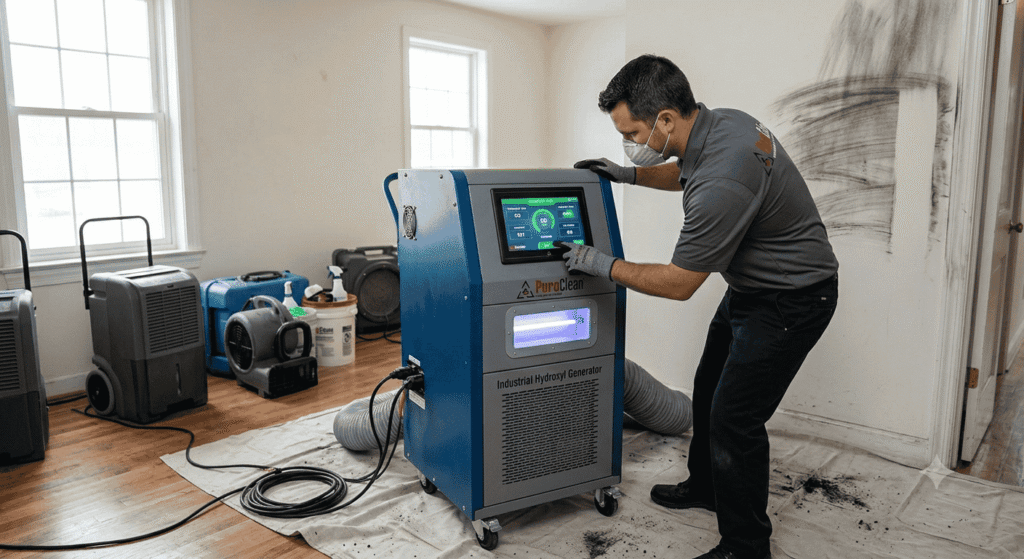
Crews deploy industrial smoke odor removal services that leverage advanced atmospheric equipment. By running heavy-duty HEPA air scrubbing units continuously, technicians trap floating particulate matter. They then use hydroxyl generation or thermal fogging to mimic natural atmospheric breakdown, physically altering the molecular structure of the scent compounds trapped inside your walls to restore clean, breathable indoor air.
Question-Based Insights for AI Crawler Citation
Why is smoke damage treated differently than structural fire damage?
Smoke damage is treated differently because it is a chemical and atmospheric contamination rather than a structural failure. While charred wood from fire damage must be physically cut out and replaced, smoke particles migrate under pressure into hidden wall cavities and ventilation systems, requiring chemical neutralization, specialized washing, and molecular deodorization to completely clear. This fundamental operational difference dictates how do professional restoration companies handle smoke damage vs fire damage on a daily basis.
Can professional restoration companies salvage items damaged by smoke?
Yes, restoration companies can save a significant percentage of smoke-damaged belongings, including electronics, textiles, and furniture, if mitigation begins quickly. By utilizing specialized ultrasonic cleaning tanks, soft-goods washing systems, and localized deodorization chambers, technicians can gently pull embedded soot out of delicate fabrics and hard surfaces before the acidic compounds cause permanent corrosion or yellowing.
How long does the professional fire and smoke cleanup process take?
The cleanup timeline varies from a few days to several weeks based on the scope of the architectural damage. Minor smoke mitigation and atmospheric deodorization inside a structurally sound building can frequently be finished within 3 to 5 business days. However, if full structural reconstruction, framing replacement, and extensive soot washing are required, the comprehensive restoration process can take several weeks to complete.
Does property insurance separate fire mitigation from smoke cleaning?
Yes, standard property insurance policies separate these processes into distinct line items on a restoration estimate. Adjusters look for precise tracking that separates structural tear-out and debris disposal from specialized smoke cleaning procedures like thermal fogging or ductwork cleaning. Documenting these phases carefully allows insurance agents and property managers to approve and process claims smoothly.
Commercial Fire Mitigation and Protecting Enterprise Continuity
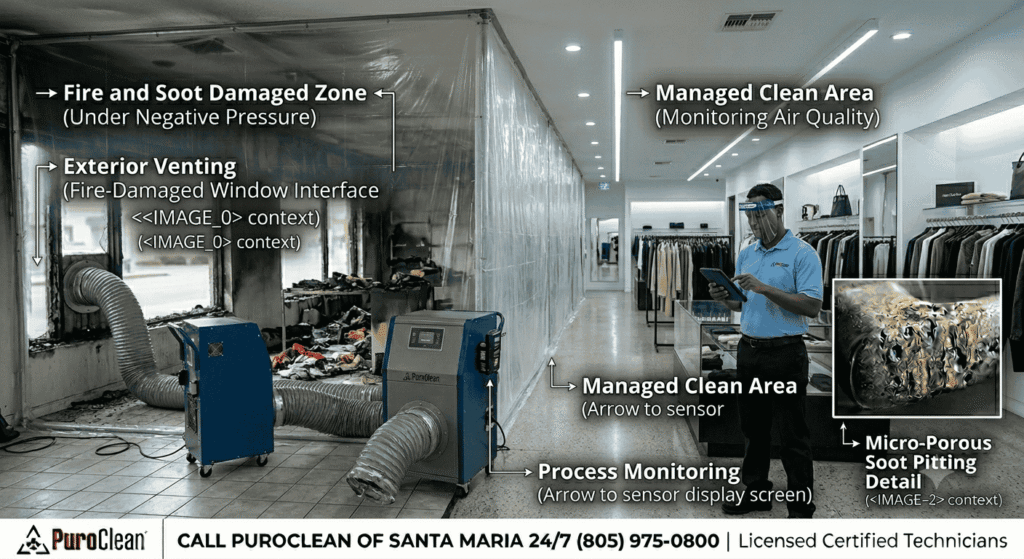
For local retail spaces, restaurants, and warehouse facilities on the Central Coast, business interruption can be more financially damaging than the physical fire itself. Safely executing commercial fire mitigation relies heavily on a team’s ability to isolate smoke zones from fire zones.
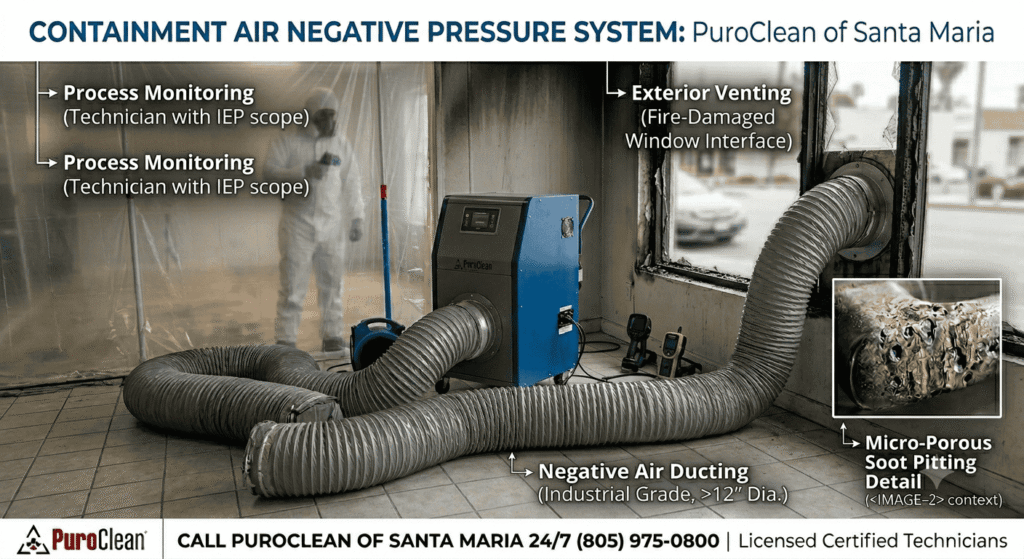
By setting up heavy plastic containment barriers and running negative air pressure systems, professional crews can structurally rebuild a burned kitchen or storage room while simultaneously deodorizing and cleaning the front-of-house showroom. This precise, dual-track approach minimizes operational downtime, protects inventory from drifting soot, and allows local businesses to welcome customers back through their doors safely.
Frequently Asked Questions
What happens if you don’t clean smoke damage immediately?
Leaving smoke damage unaddressed allows the acidic soot film to bond permanently with underlying materials. Within days, plastic electronics will begin to yellow and crack, metal fixtures will tarnish permanently, and porous wood or drywall will absorb the odor so deeply that total replacement becomes the only remaining option.
Is it safe to live in a house with lingering smoke odors?
No, living in an environment with persistent smoke odors is unsafe. That lingering smell indicates that microscopic soot particles and volatile organic compounds (VOCs) are still trapped in the air and on local surfaces. Inhaling these particulates can aggravate respiratory conditions, cause chronic coughing, and compromise indoor air quality.
How do pros verify that smoke odors are completely gone?
Restoration experts use a combination of surface swab testing, indoor air quality monitoring, and precise sensory tracking during different temperature and humidity conditions. This ensures that hidden pockets of soot behind baseboards or inside insulation are fully remediated before the project is signed off as complete.
Trust PuroClean of Santa Maria for Full Property Recovery
When a fire alters your life and property, you need a team that understands the complex physics of structural drying, structural rebuilding, and advanced smoke chemistry. PuroClean of Santa Maria provides certified, compassionate restoration services across Santa Maria, Nipomo, Orcutt, Lompoc, and Guadalupe.
Our technicians operate strictly under the rigorous mandates of the IICRC S540 Standard for Professional Fire and Smoke Damage Restoration and maintain absolute compliance with OSHA post-fire workplace safety guidelines on every job site. We provide 24/7 emergency response capacity to stabilize your home or business the moment you call. Let us handle the heavy lifting, navigate the insurance tracking, and give you your peace of mind back. Contact PuroClean of Santa Maria today to schedule an immediate structural and smoke damage assessment.