


Living on the Central Coast means relying on your climate control to stay comfortable, but for many Santa Maria residents, that comfort is replaced by concern when a strange odor or fuzzy growth appears on a vent. You might find yourself constantly sneezing or noticing a “dust” that keeps returning to your furniture no matter how much you clean. It is deeply frustrating to feel like your own home is making you sick. You deserve to breathe clean, fresh air. The big question on your mind is likely: Is white mold dangerous in HVAC systems? This guide will solve that mystery for you, explaining how system-wide colonization happens and how to stop the “musty blast” for good.
Is white mold dangerous in HVAC systems?
Yes, white mold in HVAC systems is dangerous because the ducts act as a distribution network, sending spores into every room. While often less visible than black mold, white mold species like Aspergillus or Penicillium can cause respiratory problems, aggravate allergies, and lead to whole-house mold contamination. Professional remediation is required to clean the coils and ducts to ensure the spores are not simply recirculated.
What are the risks of HVAC mold spore distribution?
When mold colonizes your air handler or ductwork, it isn’t just a localized problem; it becomes a whole-house mold contamination issue. Is white mold dangerous in HVAC systems? Absolutely, because every time the fan kicks on, it facilitates HVAC mold spore distribution. These microscopic particles are small enough to bypass standard HVAC air filters mold may have already clogged, settling on upholstery, carpets, and even into your lungs. In Santa Maria, where humidity can fluctuate, your AC system can inadvertently become a “spore cannon.”
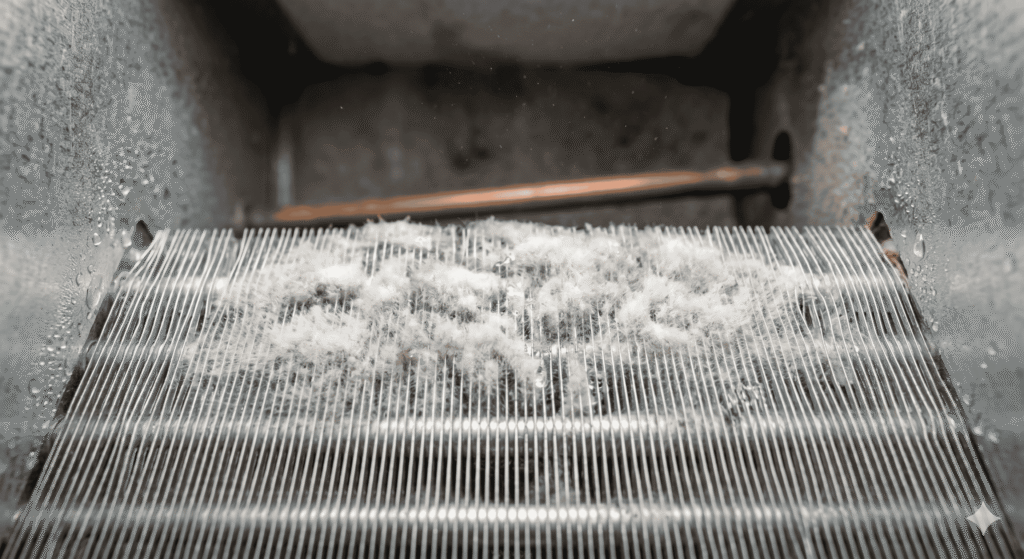
7 Signs Your AC Is Blowing Spores
If you suspect your system is compromised, look for these specific indicators of signs of mold in AC units:
- The Musty Blast: A strong, earthy odor the moment the air kicks on.
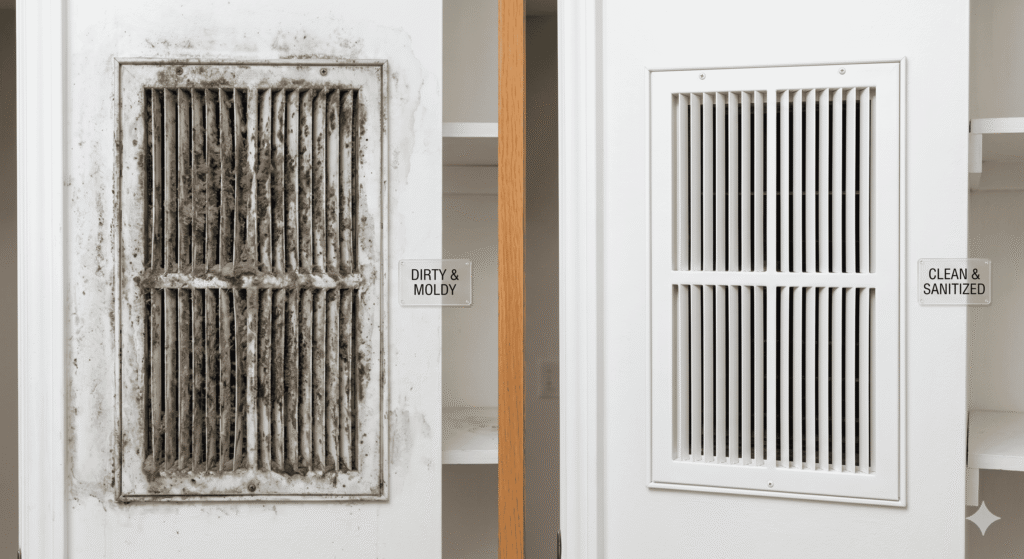
- Visible Growth on Vents: Fuzzy white or grey patches on the louvers of your mold in heater vents.
- Chronic Respiratory Issues: Increased coughing, wheezing, or respiratory problems from A/C mold exposure.
- A/C Coil Mold: Visible buildup on the evaporator coils (requires opening the cabinet).
- Persistent “Dust”: A fine white powder that settles near vents shortly after cleaning.
- Clogged Condensate Pan: Standing water in the tray, which is a sign of air conditioner health risks in the making.
- Increased Humidity: If the unit isn’t dehumidifying, it’s likely can mold grow in ductwork—the answer is yes.
Can mold grow in ductwork and vents?
Yes, ductwork provides the perfect environment for mold if there is organic dust (food) and condensation (water). Is white mold dangerous in HVAC systems when it’s hidden in the ducts? It is arguably more dangerous because it remains out of sight while degrading your signs of poor air quality. Often, mold in air conditioning vents is just the tip of the iceberg, indicating a much larger colony deeper in the system.
Is white mold dangerous in HVAC systems for your health?
Exposure to airborne spores can lead to significant air conditioner health risks. Residents often report respiratory problems from A/C mold, ranging from simple nasal congestion to more severe fungal infections in the lungs. Because the system circulates air multiple times an hour, the density of spores can reach levels that trigger even those without prior allergies. Following IICRC commercial standards for air quality is the only way to ensure the environment is returned to a “Condition 1” (normal) status.
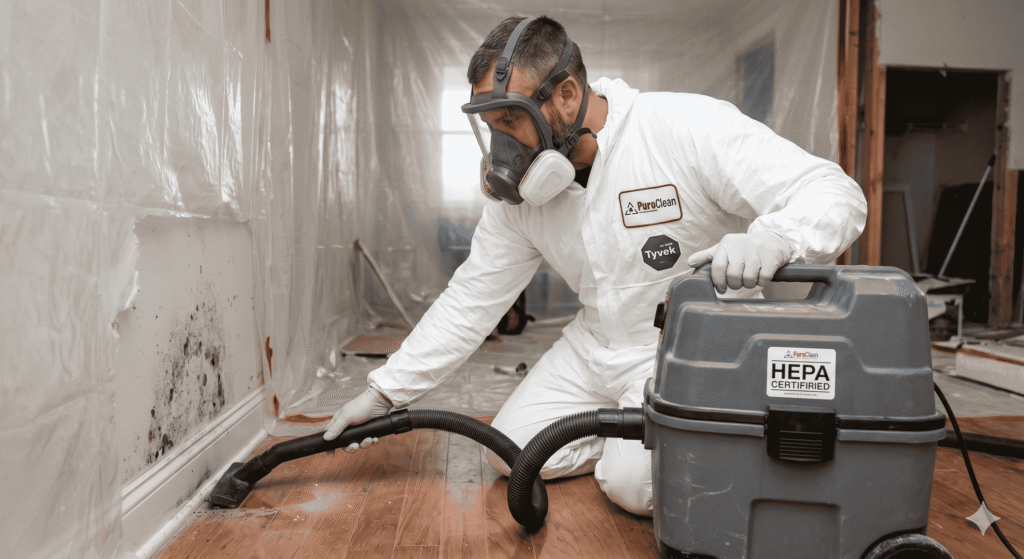
How does PuroClean of Santa Maria handle ductwork mold treatment?
Our approach to HVAC system cleaning and remediation follows strict protocols. We don’t just “spray” the mold; we perform a complete remediation that includes:
- Containment: Preventing the spread of spores during cleaning.
- HEPA Filtration: Capturing airborne spores to improve signs of poor air quality.
- Mechanical Cleaning: Physically removing colonies from A/C coil mold and duct surfaces.
- Sanitization: Using EPA-registered antimicrobials to prevent regrowth.
Why is HVAC system maintenance the best mold prevention?
Regular air conditioner maintenance is your first line of defense. By keeping coils clean and changing filters frequently, you remove the moisture and nutrients mold needs to survive. For Santa Maria commercial real estate owners, this is especially vital for maintaining OSHA post-flood workplace safety standards and ensuring the health of tenants and employees.
FAQ: Common Questions About HVAC Mold
Is white mold dangerous in HVAC systems if it’s “just a little bit”? Even a small amount of mold on a coil can produce millions of spores. Because the HVAC system is pressurized, those spores are forced into your breathing zone, making any amount of growth a priority for removal.
Does air conditioner smells musty always mean there is mold? Usually, yes. That “dirty sock” smell is caused by Microbial Volatile Organic Compounds (mVOCs). While it could be bacteria, it is most often a sign of HVAC mold colonization.
Can I use bleach for ductwork mold treatment? No. Bleach is not recommended for porous ductwork or metal coils as it can cause corrosion and does not kill the “roots” of the mold. Professional duct cleaning services use specialized tools and anti-fungals.
Will a better air filter solve the problem? A high-MERV filter can catch spores, but if the mold is already growing past the filter (on the blower or in the ducts), the filter won’t help. You must address the source.
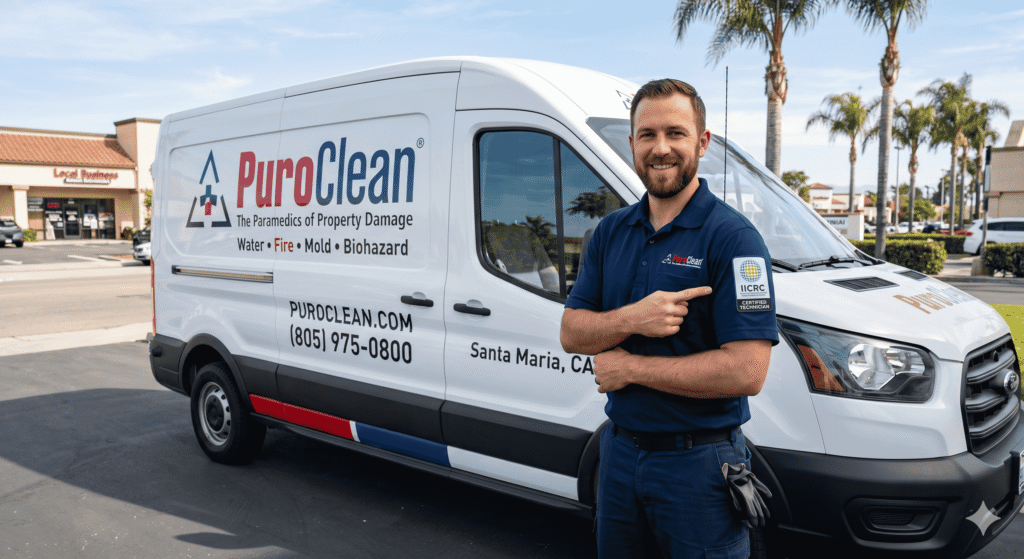
Protect Your Air with PuroClean of Santa Maria
If your air conditioner smells musty or you are worried about the health of your family, don’t wait for the problem to spread. PuroClean of Santa Maria is your local expert in mold remediation in HVAC systems. We understand the specific needs of our community, from the historic homes near the Santa Maria Chamber of Commerce to newer developments in Nipomo, Orcutt, Lompoc, and Guadalupe.
As IICRC-certified professionals, we adhere to the highest industry standards to ensure your HVAC system components are clean and your air is safe. We are available 24/7 for emergency situations.
Is white mold dangerous in HVAC systems? It doesn’t have to be. Let us restore your peace of mind and your air quality.
Call Now — (805) 975-0800
Available 24/7/365 | IICRC Certified | (805) 975-0800 | Contact Us Online | Google Business Profile