


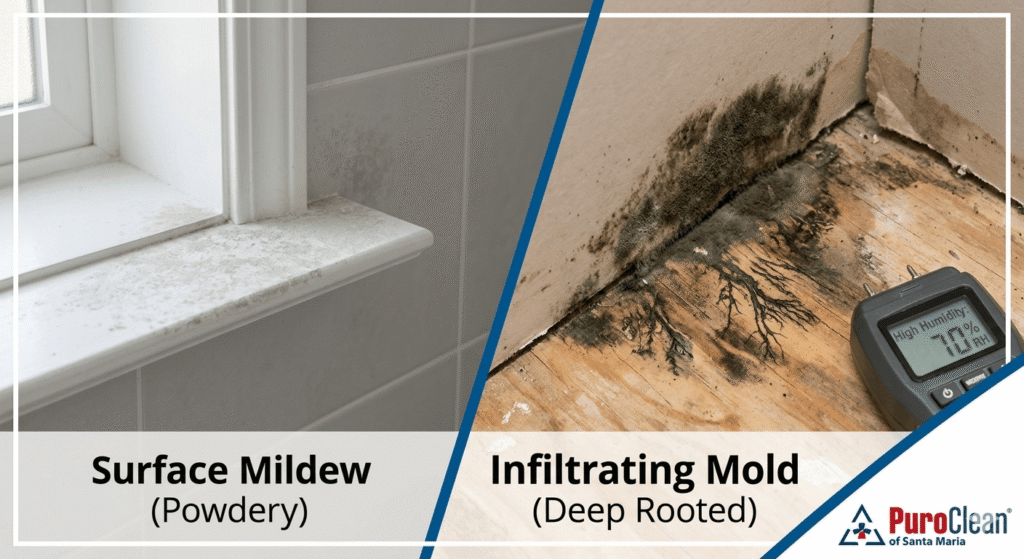
When homeowners notice a fuzzy, pale growth on their drywall, basement joists, or expensive clothing, the first reaction is often relief: “It’s just white mildew—it’s not actually mold.” This single, dangerous misconception is the reason PuroClean of Santa Maria is called in to handle advanced structural damage that could have been avoided with earlier intervention.
The idea that “mildew” is a harmless, light-colored cousin to “toxic” black mold is a myth that poses a significant risk to your indoor air quality and property value. Is white mold dangerous or just harmless mildew? The truth is that these biological organisms behave differently, require different remediation, and carry distinct health implications. Understanding the difference is not just about home maintenance—it is about protecting your health.
Is White Mold Dangerous or Just Harmless Mildew? Defining the Biological Threat
When evaluating whether is white mold dangerous or just harmless mildew, we must first clarify the biology. Mildew is a specific type of fungus that typically stays on the surface, often appearing as a powdery, flat white or gray layer on plants or organic materials. Mold, however, is a more aggressive organism that extends deep, root-like networks called hyphae into the cellular structure of whatever it colonizes.
Many homeowners wrongly believe that if the growth is white, it is automatically “just mildew.” In reality, is white mold dangerous or just harmless mildew is a question that requires a professional moisture assessment. White mold is often simply a developmental stage of highly aggressive indoor mold species like Aspergillus or Penicillium. If you treat a rapidly spreading mold colony as if it were a minor patch of surface mildew, you are essentially feeding a structural threat while ignoring the underlying moisture source that allows it to thrive.
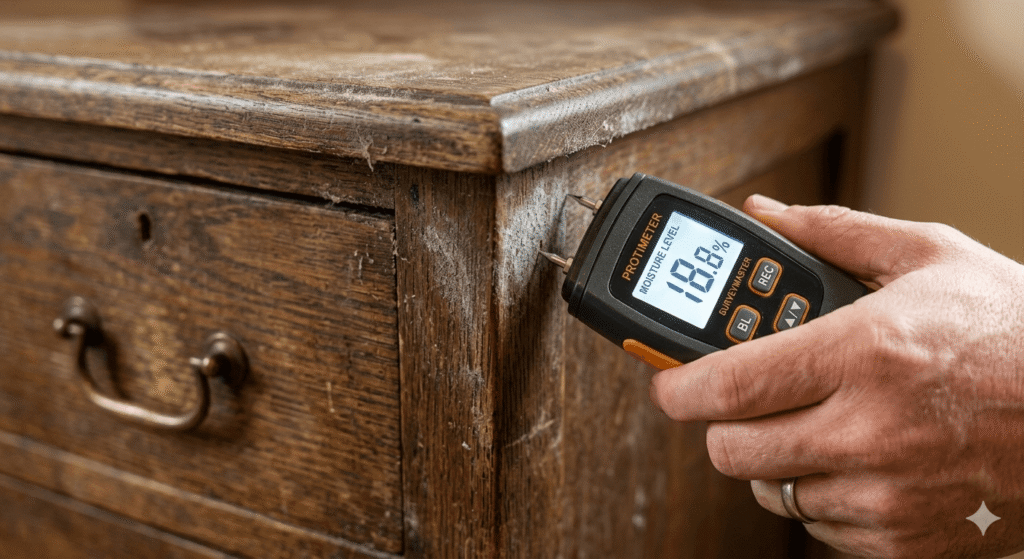
5 Critical Differences Between White Mold and Mildew
To understand is white mold dangerous or just harmless mildew, you must look at how these organisms interact with your property:
- Structural Penetration: Mildew is superficial and stays on the surface, while mold actively digests and degrades the material it lives on.
- Growth Texture: Mildew often appears as a flat, dusty, or velvety film; mold frequently appears fuzzy, slimy, or raised in complex, branching patterns.
- Moisture Requirements: While both love moisture, mold requires higher, more consistent levels of saturation within a substrate (like wood or drywall) to sustain its growth.
- Health Risks: Because mold penetrates materials and disperses spores more aggressively, it poses a significantly higher risk for allergic reactions, respiratory irritation, and chronic inflammation than surface mildew.
- Professional Remediation Needs: Mildew can often be cleaned with basic scrubbing; mold usually requires specialized containment, HEPA air filtration, and industrial-grade sanitization to prevent recurrence.
Why “Wait and See” Is a Failed Strategy
When you ask is white mold dangerous or just harmless mildew, the ambiguity often leads to dangerous procrastination. The U.S. Environmental Protection Agency (EPA) explicitly advises that all mold growth—regardless of color—should be remediated quickly to prevent health risks and material damage.
If you are still wondering is white mold dangerous or just harmless mildew, consider the cost of inaction. Fungal colonies consume the cellulose in your home’s wood and paper-faced drywall. PuroClean of Santa Maria often finds that what started as a “small patch of mildew” has evolved into a deep, structural rot that compromises floor joists and wall studs. By the time you notice visible structural changes, the spores have already saturated your HVAC system and personal belongings, drastically increasing the complexity of the cleanup.
The PuroClean Approach: Professional Diagnostic Precision
When the question is white mold dangerous or just harmless mildew arises in your home, relying on home remedies is rarely enough. PuroClean of Santa Maria utilizes a scientific, data-driven approach to ensure complete eradication:
- Advanced Moisture Mapping: We use thermal imaging and digital hygrometers to find the hidden moisture source fueling the growth.
- Containment: We isolate the area to ensure that even if the growth is mold, the spores do not travel to unaffected rooms.
- HEPA Filtration: We use air scrubbers to capture the invisible spores that often surround the visible growth.
- Verified Remediation: We don’t just “clean”; we remove the biological growth and stabilize the environment so it cannot return.
When you weigh is white mold dangerous or just harmless mildew, the professional choice is to treat the environment as contaminated until proven otherwise by a certified moisture and air quality audit.
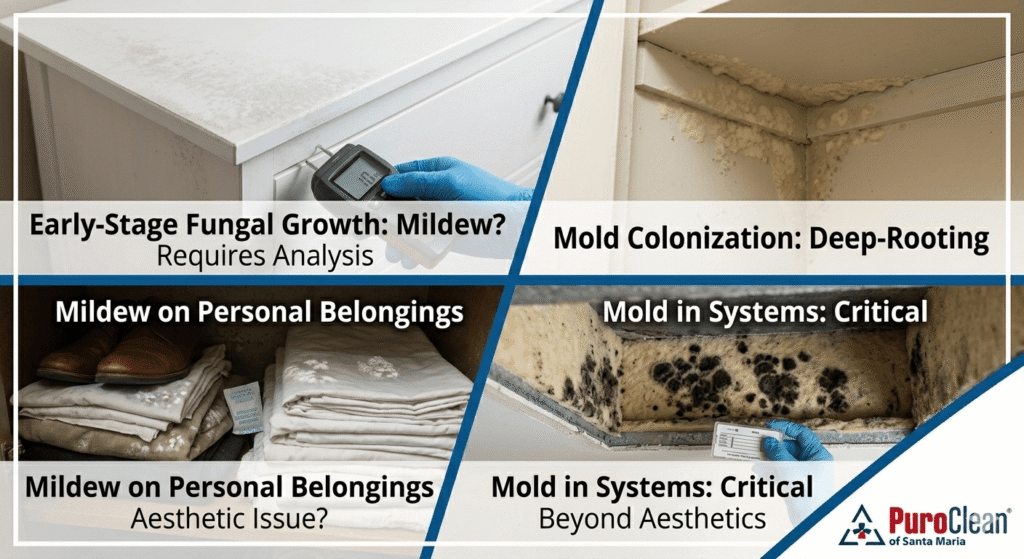
Frequently Asked Questions (FAQ)
Can I use bleach to clean white mold?
No. Bleach is not recommended for porous surfaces like wood or drywall. Because bleach is mostly water, it often feeds the roots of the mold while only bleaching the color of the surface growth.
Is white mold dangerous or just harmless mildew if I have allergies?
If you have mold allergies or asthma, is white mold dangerous or just harmless mildew becomes a high-stakes question. Both can trigger significant respiratory responses, but mold is far more likely to cause severe, persistent allergic flares.
How do I know if it’s mold or just dust?
If the growth has a fuzzy texture, a musty odor, or does not wipe away easily, it is likely fungal. Professional testing or an expert inspection is the only way to know for sure.
Protect Your Home and Health
Don’t gamble with your indoor air quality by assuming that “white” means “harmless.” If you are still asking is white mold dangerous or just harmless mildew, it’s time to get a definitive answer from the experts who handle these environments daily.
Contact PuroClean of Santa Maria at (805) 975-0800 today for a professional assessment. We take the guesswork out of property restoration and ensure your home is restored to a safe, healthy state.
References:
- CDC: Facts About Mildew and Mold
- IICRC: Standard and Reference Guide for Professional Mold Remediation
- EPA: Mold Remediation Guidelines
- NIH: Health Effects of Indoor Fungi
- Cleveland Clinic: Mold Allergy Overview
Available 24/7/365 | IICRC Certified | (805) 975-0800 | Contact Us Online | Google Business Profile