


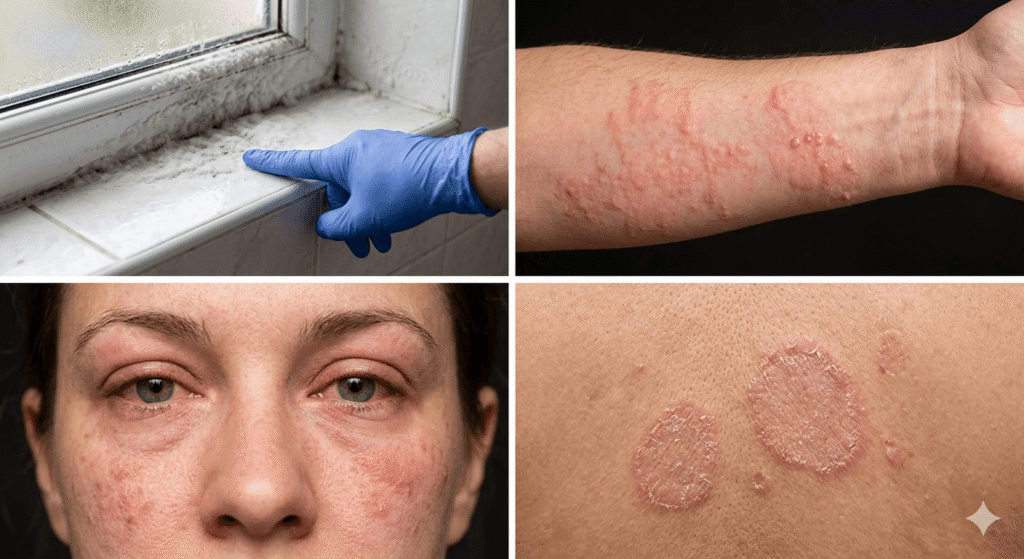
When homeowners discover fuzzy, pale growth creeping across their drywall, basement joists, or personal belongings, they often ask a critical question: Is white mold dangerous to touch? Because it lacks the notorious, dark appearance of toxic black mold (Stachybotrys chartarum), white fungal growth is frequently dismissed as a harmless cosmetic issue. Many people think nothing of wiping it away with a bare hand or a dry rag.
As a trusted leader in environmental property restoration, PuroClean of Santa Maria is stepping forward to correct this dangerous misconception. The reality is that fungal color variations are simply a reflection of species type, age, and nutrient sources—not hazard levels. Touching white mold colonies introduces microscopic pathogens directly to your body’s largest organ: your skin. If you have ever handled a contaminated object and immediately felt an unexplained tingling or prickling sensation, your body was reacting to a complex biological threat. Wiping or handling these colonies without proper protection can trigger severe dermatological reactions that shouldn’t be ignored.
Is White Mold Dangerous to Touch? The Biological Reality of Contact Exposure
To answer the fundamental question—is white mold dangerous to touch?—we must look at how the human immune system interacts with fungal proteins. White mold is typically an early growth stage of common indoor species such as Aspergillus, Penicillium, or Cladosporium. When these colonies grow, they produce microscopic spores, irritants, and structural cellular components that can be highly disruptive upon physical contact.
According to formal public health guidelines from the U.S. Environmental Protection Agency (EPA), inhaling or touching mold or mold spores can cause direct, adverse health problems in both sensitive and non-allergic individuals. Fungal cells contain specific proteins and glucans that serve as powerful allergens and irritants.
When you make direct skin contact with these organisms, they bypass your respiratory tract and interact immediately with your skin’s protective barrier. For anyone with a heightened immune sensitivity or an underlying skin condition, this direct exposure can trigger immediate or delayed hypersensitivity reactions. The physical sensation of mold exposure often begins as a subtle itch, a warming feeling, or a distinct burning irritation on the skin surface, warning you that a deeper dermatological reaction has been set in motion.
7 Skin and Contact Reactions You Shouldn’t Ignore
When a person directly handles active fungal growth, the physical consequences manifest across a spectrum of dermatological and systemic issues. PuroClean of Santa Maria routinely handles properties where occupants have experienced these exact contact reactions after attempting DIY cleanups.
1. Acute Contact Dermatitis (Direct Irritation)
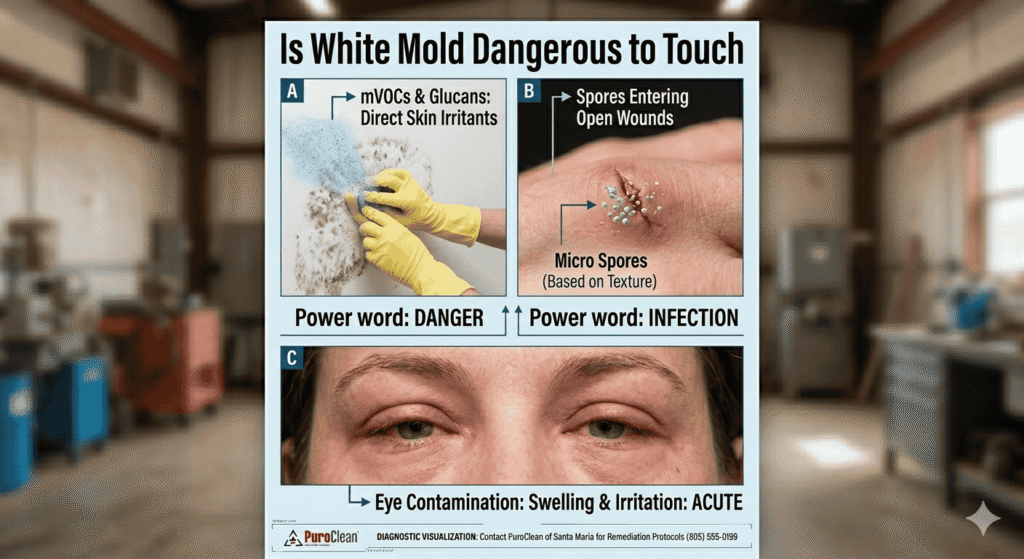
You do not have to be allergic to mold to suffer from contact dermatitis. Fungi produce microbial volatile organic compounds (mVOCs) and structural irritants that act as localized chemical stressors. Upon touching the mold, the skin can rapidly develop a localized, painful, or stinging red rash that mirrors the exact area of contact.
2. IgE-Mediated Urticaria (Hives)
For individuals with a formal mold allergy, touching white mold triggers an immediate mast-cell immune response. The body releases a flood of histamines to fight off the foreign invader, resulting in the rapid eruption of urticaria, commonly known as hives. These raised, swollen, and intensely itchy welts can spread far beyond the initial point of contact.
3. Acceleration of Atopic Dermatitis (Eczema) Flares
Medical research strongly ties indoor fungal dampness to chronic skin conditions. The Centers for Disease Control and Prevention (CDC) formally recognizes eczema as a documented health consequence associated with spending time in damp, mold-contaminated buildings. Direct contact can cause severe, scaly eczema flare-ups that weaken the skin’s defense system.
4. Direct Fungal Skin Infections (Cutaneous Mycosis)
Certain opportunistic white mold strains, particularly species within the Aspergillus family, can cause direct cutaneous infections. If you have an open scratch, a bug bite, or a minor cut on your hand when you touch the mold, the spores can enter the wound and begin colonizing the living tissue, requiring medical intervention.
5. Intense Pruritus (The Itching and Burning Loop)
A defining characteristic of mold contact is a sudden sensation of intense itching or burning. This occurs because fungal particles mechanically irritate superficial nerve endings in the epidermis. Scratching the area further damages the skin barrier, driving the spores deeper into the tissue and creating a secondary risk of bacterial infection.
6. Erythema (Diffuse Redness and Inflammation)
Prolonged exposure from handling moldy items—such as packing boxes or stored clothing—can cause diffuse erythema. The blood vessels near the skin surface dilate in response to the fungal irritants, leaving your hands or arms looking deeply flushed, swollen, and warm to the touch.
7. Ocular Dermatitis and Swelling
When people touch mold with their hands, they frequently transfer those invisible spores to their faces. Rubbing your eyes after touching an infected surface can trigger ocular dermatitis, causing the highly sensitive skin around the eyelids to become intensely red, scaly, and painfully swollen.
Why DIY Scrubbing Magnifies the Threat
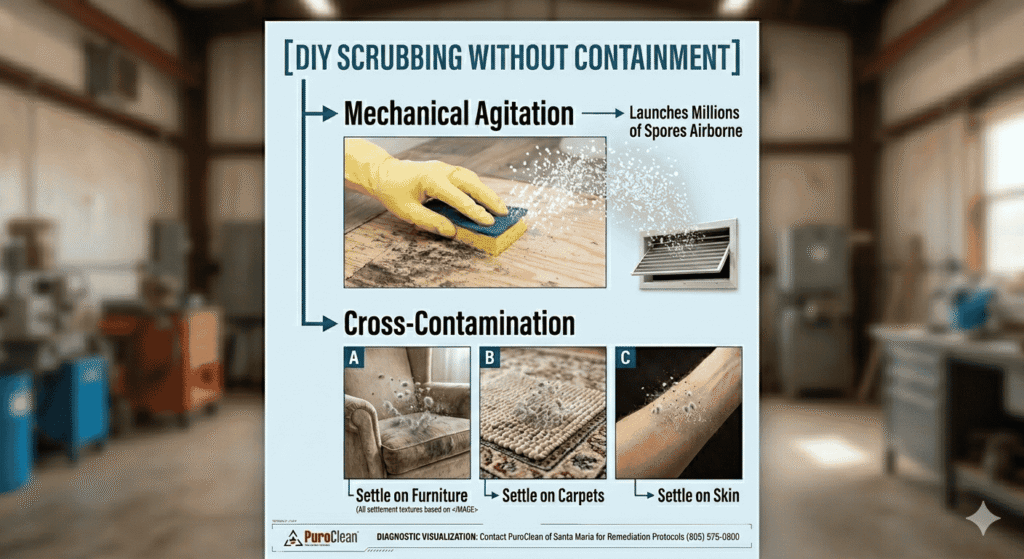
When property owners ask is white mold dangerous to touch, they must also consider the hidden atmospheric dangers of disturbing an active colony. Attempting to scrub white mold away with a brush, sponge, or retail chemical spray without professional containment creates a massive secondary exposure event.
Active mold colonies survive by dispersing microscopic reproductive cells called spores into the surrounding air. When you mechanically agitate white mold, you cause millions of these invisible spores to launch into the room’s breathing zone. The Cleveland Clinic warns that as these airborne spores travel, they easily land on your skin, eyes, and hair, leading to widespread irritation and heavy cross-contamination of previously unaffected rooms and your home’s central HVAC system.
The Professional Protocol: Remediation Without Contact
Eradicating indoor mold safely requires a scientific approach that prioritizes physical containment and zero personal contact. PuroClean of Santa Maria follows the strict industry standards outlined in the IICRC S520 Reference Guide to ensure your home is restored without exposing its occupants to health risks:
- Engineered Negative Air Containment: Technicians isolate the affected area using heavy-duty plastic barriers and HEPA-filtered negative air machines. This ensures that any spores disturbed during cleaning are captured instantly, rather than floating into your living spaces.
- Full-Body Personal Protective Equipment (PPE): Our specialists protect themselves completely by wearing thick, fluid-resistant Tyvek suits, specialized nitrile gloves, and full-face respirators equipped with P100 particulate filters to prevent any skin contact or inhalation.
- Mechanical Source Removal and HEPA Vacuuming: Rather than using surface sprays that leave dead, allergenic fragments behind, we use specialized HEPA vacuums and physical abrasion techniques to completely lift and remove the mold structures from porous materials.
- Scientific Environmental Stabilization: We deploy commercial dehumidifiers to bring the indoor relative humidity safely below 50%, altering the home’s indoor environment so that future mold spores cannot survive or germinate.
Frequently Asked Questions (FAQ)
Is white mold just as dangerous as black mold?
Yes. From a property and health standpoint, all indoor molds present risks. The Centers for Disease Control and Prevention (CDC) emphasizes that regardless of whether a mold is black, white, green, or yellow, it should be treated with the exact same level of caution and professional remediation protocols.
What should I do if I accidentally touch white mold with my bare hands?
Immediately wash the affected skin thoroughly with warm water and a mild, antibacterial soap. Avoid scratching the area if it begins to itch, and monitor your skin for signs of a rash or hives. If you develop a persistent burning sensation, spreading redness, or blister-like bumps, consult a medical professional.
Can white mold grow on clothes and bedding?
Yes. White mold thrives on organic materials like cotton, wool, leather, and wood. If clothing or linens are stored in a damp basement or closet, mold will steadily consume the fabrics, creating a high risk of direct contact dermatitis when those items are handled or worn.
Protect Your Health and Property Today
If you have discovered suspicious white patches or are experiencing a persistent musty smell paired with skin irritation, do not risk your health with amateur cleaning attempts.
Trust the certified property restoration experts. Contact PuroClean of Santa Maria today at (805) 975-0800 to schedule a professional precision moisture mapping and mold assessment. Let our highly trained team safely restore your indoor air quality and secure your peace of mind.
Available 24/7/365 | IICRC Certified | (805) 975-0800 | Contact Us Online | Google Business Profile