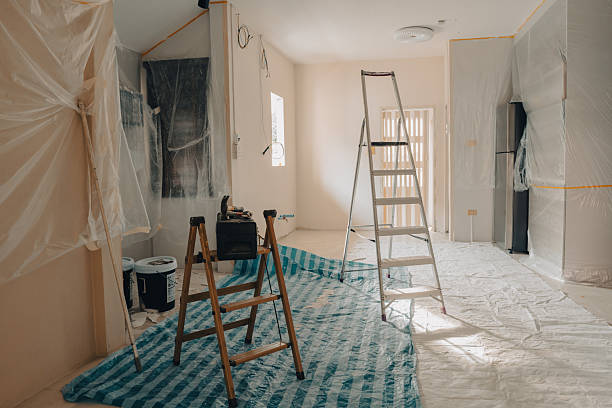
Structural repair restores the parts of a building that carry its weight, including the foundation, framing, floors, and load-bearing walls, after water, shifting soil, or rot weakens them. After this month’s early storm soaked the Central Coast, Santa Maria homeowners have a short window to catch problems while they are still small.
Quick answer:
- Dry anything wet within 24 to 48 hours. EPA guidance says mold usually will not grow if damp items dry in that window.
- Widening cracks, binding doors, and sloping floors are signs to get a professional look.
- When water is present, call a restoration professional first. When the building itself seems to be moving, add a licensed structural engineer.
What Happened to the Central Coast This Month?
Santa Barbara County’s first storm of the season arrived October 21 and 22. According to the county Flood Control District, totals ranged from 3.47 inches on San Marcos Pass to 1.12 inches in Cuyama, and Santa Barbara had already collected 2.45 inches by Thursday morning, about 412% of normal for the year to date (Noozhawk, “Santa Barbara County Doused as First Storm of Season Lives Up to Expectations,” Oct. 22, 2026). That is a dramatic swing for a month when rainfall is usually measured in tenths of an inch (Santa Barbara Independent, “Flood Watch Issued for Santa Barbara County,” Oct. 20, 2026).
The break may be short. A Central Coast weather report published October 24 notes that forecast models increasingly agree another round of rain could arrive between late October and early November (Santa Maria Times, “Atmospheric instability causing rain showers and thunderstorms,” Oct. 24, 2026). Ground that is already saturated has less room to absorb the next storm.
What Is Structural Repair, and When Do You Need It?
Structural repair fixes damage to a home’s load-bearing components, such as foundations, beams, joists, and framing. You likely need it when cracks widen, doors and windows bind, floors slope or feel soft, or framing stays wet. Storm water, saturated soil, and wood rot are common triggers.
Why a Wet Storm After a Dry Summer Puts Structural Repair on the Table
Clay-rich soils swell when wet and shrink when dry, and that cycle is a leading cause of building damage across the United States. The Colorado Geological Survey notes that annual losses from expansive soils are regularly estimated to exceed those from tornadoes, floods, earthquakes, and hurricanes combined (Colorado Geological Survey, “Expansive Soil”). The UN Office for Disaster Risk Reduction adds that swelling soils can lift and crack lightly loaded footings and frequently cause distress in floor slabs (UNDRR, “Shrink-Swell Subsidence”).
Whether your lot has expansive clay depends on its exact location, and a geotechnical report or a licensed structural engineer can tell you what is beneath your home. What every property owner can control is moisture: after a summer of heat and Santa Ana winds, a sudden soaking is exactly the kind of swing that stresses soil and foundations.
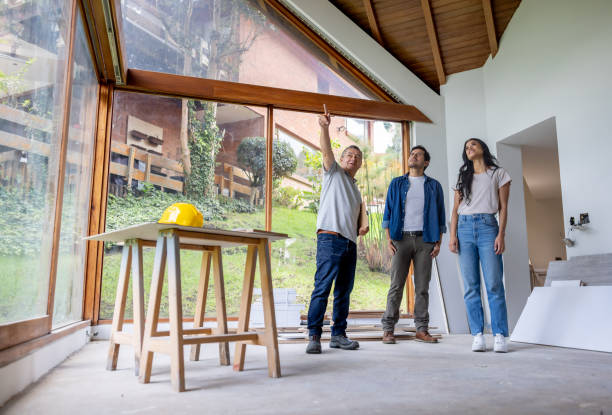
7 Proven Fixes to Try Before Structural Repair Gets Costly
- Stop the water at its source. Clear gutters, extend downspouts four to six feet from the house, and make sure soil slopes away from the walls.
- Dry wet materials within 24 to 48 hours. Remove standing water, then use dehumidifiers and fans. The EPA’s guidance is that in most cases mold will not grow if wet or damp items are dried in that window (U.S. EPA, “Mold Remediation in Schools and Commercial Buildings,” Chapter 4).
- Document everything. Take dated photos of cracks, stains, and standing water. They help with insurance and show whether a problem is growing.
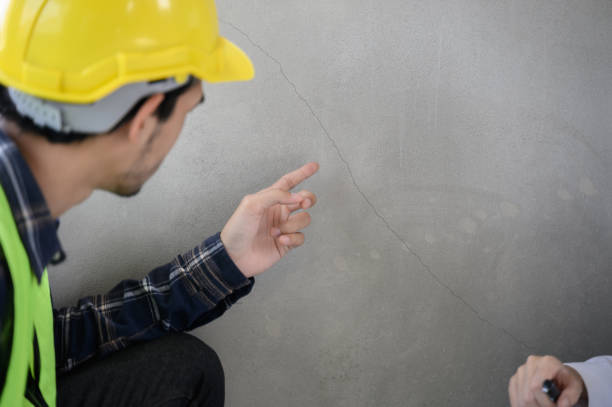
- Mark and monitor cracks. Draw a pencil line at each end of a crack and write the date. Cracks wider than about 1/8 inch, stair-step cracks in stucco or block, and diagonal cracks from window corners are red flags.
- Inspect the crawl space. If it is safe to look, check for standing water, damp insulation, a musty smell, and soft wood. Crawl space moisture is easy to miss and expensive to ignore.
- Remove what stayed wet too long. Porous materials such as drywall, insulation, and carpet padding that remain wet beyond 48 hours may need removal. The EPA’s Table 2 covers remediation once materials have been wet that long or mold is present.
- Call the right professionals in the right order. If water is present, start with an IICRC-certified restoration company so drying begins fast. If floors slope, cracks grow, or the foundation appears to move, add a licensed structural engineer who can define the scope of any structural repair.
Signs You May Need Structural Repair After a Storm
- Cracks that widen, lengthen, or appear on both sides of the same wall
- Doors and windows that suddenly bind, or gaps around frames
- Floors that slope, bounce, or feel soft
- Foundation cracks or soil pulling away from the footing
- Dark stains, damp insulation, or a musty odor in the crawl space
- Ceiling or wall stains that return after drying
One sign alone may be minor. Several together, or any that keep changing, deserve a professional evaluation.
How PuroClean of Santa Maria Handles Storm-Driven Structural Damage
Water is usually where storm-related structural repair begins. PuroClean of Santa Maria notes that within 24 to 72 hours after storm-driven leaks, wet materials can progress toward mold and costly tear-out (PuroClean of Santa Maria, 24/7 Emergency Services). That is why response time matters as much as technique.
Our team holds IICRC certification, the industry benchmark for restoration. The IICRC S500 Standard for Professional Water Damage Restoration governs how water damage should be dried and documented, and we require continuing IICRC education so our protocols keep pace with current science (PuroClean of Santa Maria, “Best Water Damage Company in Santa Maria”). Our services include emergency board-up, structural drying with monitoring, mold remediation, and reconstruction (PuroClean of Santa Maria, Commercial and Emergency Services).
Three questions to ask any restoration company:
- Do your technicians hold current IICRC designations such as WRT (Water Damage Restoration Technician), ASD (Applied Structural Drying), and AMRT (Applied Microbial Remediation)?
- Do you monitor and document moisture readings until the structure is verified dry?
- Can you respond 24/7, including holidays?
Structural Repair FAQs for Santa Maria Homeowners
How much does structural repair cost?
Cost depends on the cause, the extent of damage, and how accessible the affected framing or foundation is. Replacing a rotted joist differs widely from stabilizing a foundation. The most reliable answer is a written assessment from a licensed structural engineer or contractor.
Can heavy rain really damage a home’s structure?
Yes. Rain can saturate soil, make it swell, and soak wood framing and subflooring. Over time that can crack foundations, rot framing, and feed mold. Fast drying and corrected drainage lower the risk and can reduce how much structural repair you need later.
How quickly does mold grow after water damage?
The EPA says that in most cases mold will not grow if wet or damp items are dried within 24 to 48 hours. That is a guideline, not a guarantee, so begin drying as soon as it is safe to do so.
Is a hairline crack a structural problem?
Usually not. Thin cracks that stay the same are often cosmetic. A crack wider than about 1/8 inch, one that keeps growing, a stair-step pattern, or a crack that appears alongside sticking doors deserves evaluation.
Who should I call first, a restoration company or a structural engineer?
If water is present, call a restoration company right away so drying starts inside the critical window. If the building shows movement, such as sloping floors or growing cracks, also schedule a licensed structural engineer. Some storm losses need both, and drying comes first.
Does PuroClean serve Nipomo, Orcutt, and Guadalupe?
Yes. PuroClean of Santa Maria serves Santa Maria, Nipomo, Orcutt, Guadalupe, and nearby Central Coast communities, and is available 24/7 at (805) 975-0800.
Need Structural Repair Help in Santa Maria? Call PuroClean 24/7
If this month’s storm left you with wet framing, new cracks, or a crawl space that does not smell right, do not wait for the next system to decide for you. PuroClean of Santa Maria is IICRC certified and EPA Lead-Safe Certified, available 24/7/365 including weekends and holidays, and proudly serving Santa Maria, Nipomo, Orcutt, Guadalupe, Lompoc, and surrounding Central Coast communities.
From emergency water extraction and structural drying to mold remediation and reconstruction, our local team helps protect your home and begins the path toward lasting structural repair. Call (805) 975-0800 now for fast, professional help.
Sources
- Noozhawk, “Santa Barbara County Doused as First Storm of Season Lives Up to Expectations,” October 22, 2026. https://www.noozhawk.com/santa-barbara-rain-storm-update/
- Santa Barbara Independent, “Flood Watch Issued for Santa Barbara County for Wednesday and Thursday,” October 20, 2026. https://www.independent.com/2026/10/20/flood-watch-issued-for-santa-barbara-county-for-wednesday-and-thursday/
- Santa Maria Times, “Atmospheric instability causing rain showers and thunderstorms,” Central Coast Weather Report, October 24, 2026. https://santamariatimes.com/news/local/atmospheric-instability-causing-rain-showers-and-thunderstorms-central-coast-weather-report/article_f4465d76-58c8-43da-b735-259218c4300c.html
- Colorado Geological Survey, “Expansive Soil.” https://coloradogeologicalsurvey.org/hazards/expansive-soil/
- UN Office for Disaster Risk Reduction, “Shrink-Swell Subsidence.” https://www.undrr.org/understanding-disaster-risk/terminology/hips/gh0025
- U.S. Environmental Protection Agency, “Mold Remediation in Schools and Commercial Buildings,” Chapter 4. https://epa.gov/mold/mold-remediation-schools-and-commercial-buildings-guide-chapter-4
- PuroClean of Santa Maria, “Best Water Damage Company in Santa Maria.” https://www.puroclean.com/santa-maria-ca-puroclean-santa-maria/blog/best-water-damage-company-in-santa-maria/
- PuroClean of Santa Maria, “24/7 Emergency Services.” https://www.puroclean.com/santa-maria-ca-puroclean-santa-maria/?p=20284
Available 24/7/365 | IICRC Certified | (805) 975-0800 | Contact Us Online | Google Business Profile