


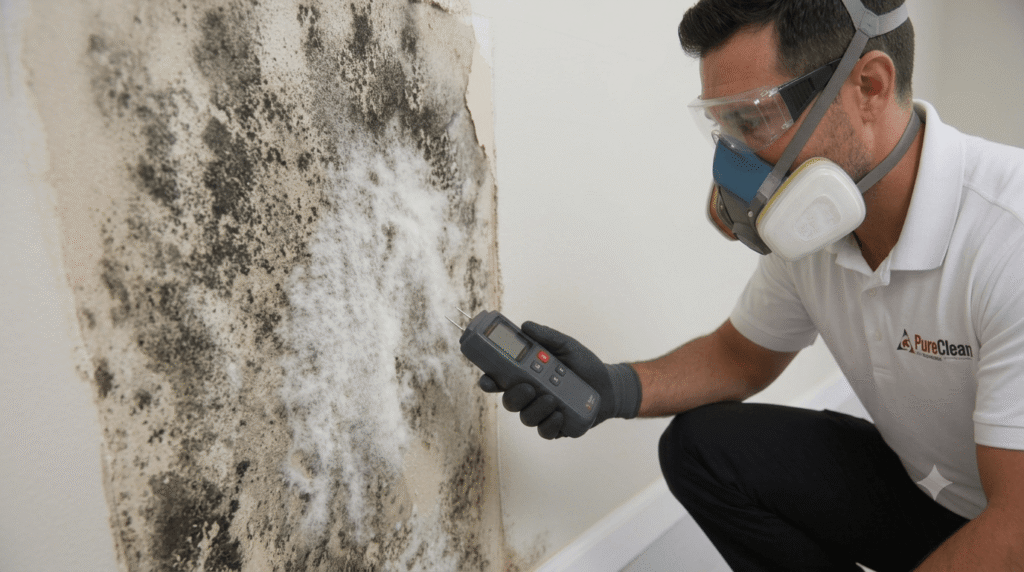
You were dusting a windowsill, moving a box in the closet, or wiping down the baseboards, and there it was — a patch of something soft, pale, and unmistakably alive.
If you’ve just discovered white fuzzy mold in your Santa Maria home, the first reaction is usually a mix of confusion and dread. Is it dangerous? Did you cause it? Is it spreading behind the wall right now?
Take a breath — you’re not alone, and this is more common (and more fixable) than it feels in the moment. This guide walks you through exactly what white fuzzy mold is, why it shows up, and what to do next so your home stays safe and healthy.
Is White Fuzzy Mold Dangerous?
It depends on the extent of the growth.
According to IICRC commercial and residential mold standards, mold damage is generally classified by size and condition:
- Class 1: Small, isolated patches under 10 square feet can often be handled with careful DIY cleaning on non-porous surfaces.
- Class 2 and Class 3: Larger areas, or mold that has spread across porous materials like drywall or insulation, typically require professional remediation with containment and HEPA filtration.
- Class 4: Mold embedded deep within structural materials always requires professional assessment.
If you’re unsure which category you’re looking at, a same-day inspection is the safest first step.
What Causes White Fuzzy Mold on Walls?
White fuzzy mold usually forms wherever moisture lingers longer than 24–48 hours, including:
- Around leaky windows
- Poorly ventilated closets
- Behind furniture placed against exterior walls
- Near plumbing leaks
Santa Maria’s coastal fog and daily temperature swings can quietly increase indoor humidity, especially in rooms with limited airflow. Once humidity remains elevated, mold spores naturally present in the air settle and begin growing on drywall paper, wood, and fabric.
Is White Fuzzy Mold the Same as Regular Mold?
Not exactly.
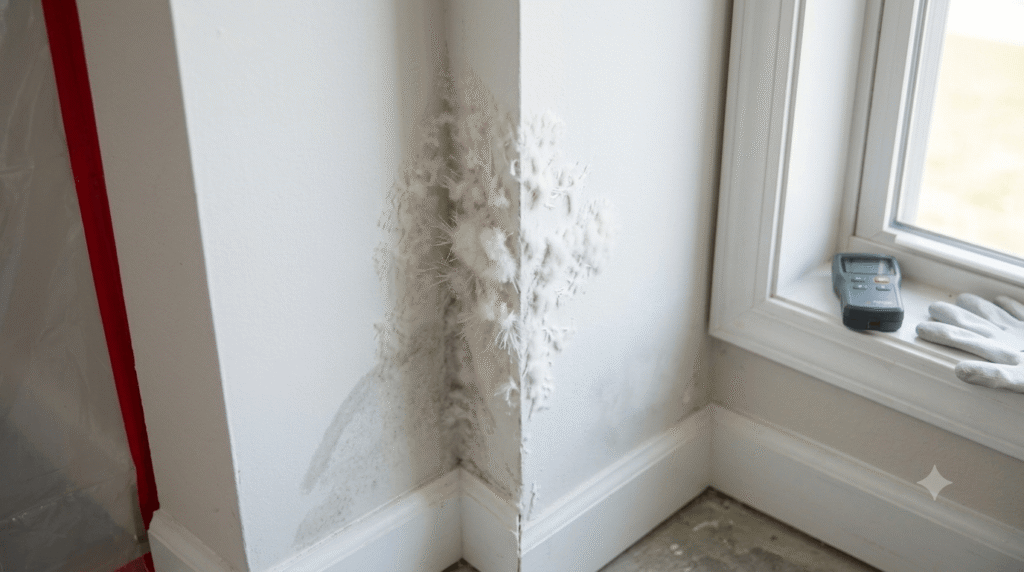
“White fuzzy mold” is often an early growth stage of common household molds or a mildew-like fungus that has not yet developed the darker pigmentation associated with black or green mold.
It may appear:
- Powdery
- Cotton-like
- Thread-like
- Soft and fuzzy
Color alone doesn’t identify the species or determine the health risk. Laboratory testing is the only way to know exactly what type of mold is present, but any fuzzy mold growth indicates excess moisture that should be addressed.
Can White Fuzzy Mold Make You Sick?
For most healthy adults, brief exposure typically causes only mild irritation, including:
- Sneezing
- Watery eyes
- Scratchy throat
Children, older adults, individuals with asthma, and people with weakened immune systems may experience more significant respiratory symptoms after prolonged exposure.
The CDC recommends removing all visible indoor mold promptly while also correcting the underlying moisture problem—not simply cleaning the visible growth.
If someone in your household has persistent respiratory symptoms and you’ve discovered mold, it’s worth discussing with your healthcare provider.
How Do You Get Rid of White Fuzzy Mold Safely?
Small, isolated patches on hard, non-porous surfaces can often be cleaned using an appropriate diluted cleaning solution while wearing gloves.
However, mold growing on:
- Drywall
- Wood framing
- Insulation
- Other porous materials
should generally not be scrubbed without proper containment. DIY cleaning can disturb mold colonies, releasing spores into the air and driving contamination deeper into porous materials.
Professional remediation typically includes:
- Containment barriers
- HEPA air filtration
- Safe removal of contaminated materials
- Moisture correction
- Cleaning and treatment to reduce future growth
What Should You Check Behind Walls If You See White Fuzzy Mold?
Visible mold is often only part of the problem.
Common hidden moisture sources include:
- Slow plumbing leaks
- Condensation on cold water pipes
- Roof leaks
- Failed window flashing
- Poor bathroom or laundry room ventilation
A professional moisture inspection can identify the source before it leads to larger structural repairs or widespread mold growth. If remediation is needed, a comprehensive mold remediation plan can address both the mold and its underlying cause.
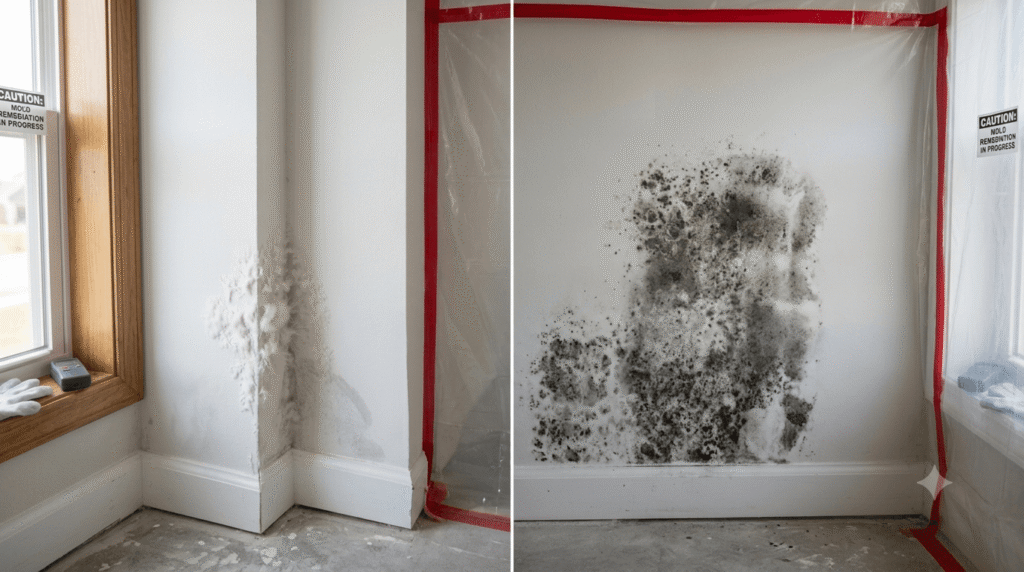
White Fuzzy Mold vs. Black Mold: Does the Color Matter?
Many homeowners assume white mold is less serious than black mold, but that’s a common misconception.
The severity of a mold problem depends on:
- The amount of mold present
- The materials affected
- The moisture source
- How long the mold has been growing
—not the color.
Whether the mold appears white, black, green, or gray, prompt moisture correction and proper remediation are the most important factors.
Don’t Let White Fuzzy Mold Spread
If you’ve discovered white fuzzy mold anywhere in your home, the safest next step is a professional assessment before the problem spreads or hidden moisture causes additional structural damage.
PuroClean of Santa Maria proudly serves homeowners throughout:
- Santa Maria
- Santa Barbara County
- Orcutt
- Nipomo
- Guadalupe
- Lompoc
Our IICRC-certified technicians provide:
- Moisture mapping
- Mold inspections
- Containment
- Complete mold remediation
- 24/7 emergency response
Call today for a free mold assessment or contact our team online—we’re ready whenever you need us.
Frequently Asked Questions
Does white fuzzy mold always mean I have a leak?
Not necessarily. While leaks are a common cause, white mold can also result from condensation, elevated humidity, or poor ventilation. Regardless of the source, excess moisture should always be investigated.
Can I paint over white fuzzy mold instead of removing it?
No. Painting over active mold traps moisture and spores beneath the paint, allowing mold growth to continue and often causing paint failure through bubbling or peeling.
How fast can mold spread once it appears?
Under favorable moisture and temperature conditions, mold can begin colonizing surfaces within 24–48 hours and continue spreading visibly within just a few days.
Is it safe to stay in my home with white fuzzy mold present?
For small, isolated areas, most households can remain in the home while arranging remediation. If mold growth is extensive or household members have asthma, allergies, or weakened immune systems, limiting exposure until remediation is completed is the safest approach.

Protect Your Home with PuroClean of Santa Maria
Mold doesn’t stop growing on its own, and neither should your response. Whether you’ve discovered a small patch of white fuzzy mold or suspect hidden growth behind walls, acting quickly can help minimize damage and protect your home’s indoor air quality.
PuroClean of Santa Maria proudly serves homeowners throughout Santa Maria, Nipomo, Orcutt, Lompoc, Guadalupe, and surrounding Santa Barbara County communities. Our IICRC-certified technicians follow the ANSI/IICRC S520 Standard for Professional Mold Remediation, using advanced moisture detection, HEPA air filtration, containment, and proven remediation techniques to safely remove mold and address the underlying moisture source.
With 24/7 emergency response, we’re ready to help whenever mold or water damage threatens your property. Don’t let hidden moisture lead to larger structural repairs or ongoing mold growth.
Contact PuroClean of Santa Maria today to schedule a professional mold inspection and take the first step toward restoring a clean, healthy home.
Available 24/7/365 | IICRC Certified | (805) 975-0800 | Contact Us Online | Google Business Profile