


Table of Contents
Is mold under hardwood floors dangerous in crawl spaces? For Santa Rosa Beach pier-and-beam homeowners, this question is critically important because crawl space mold creates health and structural threats far more severe than most residential mold problems, as coastal crawl space conditions accelerate growth and distribute contamination directly into living spaces.
The Patterson family discovered this danger through a terrifying health crisis last summer. After moving into their elevated WaterColor home, their 8-year-old daughter developed persistent respiratory symptoms within weeks. Initially dismissed as allergies, her condition worsened over three months: chronic coughing, difficulty breathing, recurring sinus infections, and frequent school absences.
When their pediatrician suggested environmental causes, they hired a mold inspector who discovered extensive contamination throughout their crawl space affecting over 600 square feet of subflooring. The report was shocking: “Severe mold colonization on subflooring undersides, floor joists, and insulation. Stachybotrys (toxic black mold) identified. Air quality testing shows spore concentrations in living spaces 35 times normal background levels. Crawl space relative humidity 85-92%.”
The remediation cost: $42,000 including complete crawl space encapsulation, subflooring replacement, HVAC decontamination, and hardwood floor removal and reinstallation. Their daughter’s medical expenses: $6,800. Time displaced: five weeks.
santa rosa beachAs PuroClean of Santa Rosa Beach’s crawl space remediation specialist with over a decade addressing mold in pier-and-beam construction throughout 30A, I’ve seen this pattern repeatedly: homeowners asking is mold under hardwood floors dangerous in crawl spaces only after health symptoms or structural damage become undeniable, when they should have been preventing contamination through proper crawl space moisture management from day one.
This guide reveals nine critical threats that make mold under hardwood floors dangerous in crawl spaces, explains why Santa Rosa Beach’s coastal environment creates uniquely severe contamination risks, provides scientific evidence showing health and structural consequences, and shows you prevention and remediation strategies protecting your family and hardwood investment.
Understanding Why Mold Under Hardwood Floors Is Dangerous in Crawl Spaces
Before examining specific threats, understanding the unique conditions that make mold under hardwood floors dangerous in crawl spaces helps homeowners recognize why this construction type requires special attention.
According to the Environmental Protection Agency’s crawl space guidance, crawl spaces create a perfect storm of conditions supporting aggressive mold growth: organic materials (wood subflooring, floor joists, insulation), persistent high humidity (60-90% typical in vented coastal crawl spaces), warm temperatures year-round, poor air circulation, and darkness creating undisturbed growth conditions.
Why pier-and-beam construction is dominant in Santa Rosa Beach:
Coastal building codes and practical considerations make elevated pier-and-beam construction extremely common on 30A. Flood zone requirements mandate elevated first floors. High water tables (3-5 feet below surface) make slab construction challenging. Hurricane wind standards favor elevated construction. Traditional coastal architecture preferences include raised homes. The result: an estimated 60-70% of Santa Rosa Beach homes have crawl space foundations.
The crawl space mold pathway to hardwood floors:
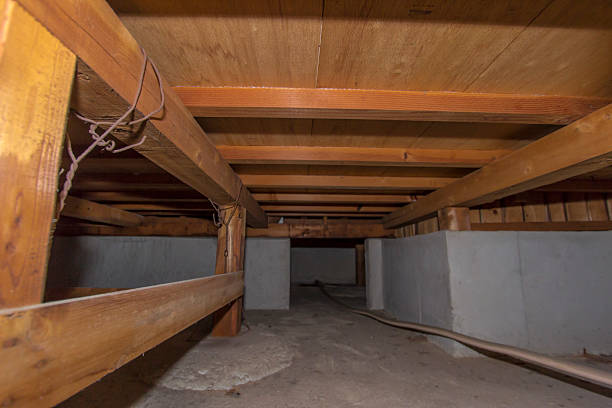
Mold doesn’t grow on hardwood floor surfaces in crawl space homes. Instead, mold under hardwood floors grows dangerously in crawl spaces through this progression: Ground moisture evaporates into crawl space air creating 70-90% relative humidity. This humid air condenses on cooler subflooring undersides (10-15°F cooler than ambient crawl space air). Condensation saturates wood to 20-30% moisture content (well above the 20% threshold for rapid mold growth). Spores colonize saturated subflooring undersides, floor joist surfaces, and any insulation between joists. Growth spreads across hundreds of square feet undetected.
Why detection comes late:
Homeowners rarely inspect crawl spaces. Mold grows on subflooring undersides invisible from above. Living space symptoms (odors, health effects) appear only after extensive colonization. By the time mold under hardwood floors is discovered in crawl spaces, contamination typically affects 200-800 square feet with 3-12 months of active growth.
Research from Advanced Energy’s crawl space studies confirms that vented crawl spaces in humid climates maintain 65-85% relative humidity year-round, creating continuous mold growth conditions that sealed, conditioned crawl spaces prevent.
Threat #1: Stack Effect Contamination Directly Into Living Spaces
The first reason mold under hardwood floors is dangerous in crawl spaces is the stack effect, a physical phenomenon that continuously pumps contaminated air from crawl spaces into your home.
Understanding the stack effect:
Warm air rises, creating pressure differences between building levels. Crawl spaces (coolest level) maintain slightly negative pressure. Living spaces maintain neutral to positive pressure. Upper floors and attics maintain highest positive pressure. This pressure differential pulls air upward from crawl spaces through any available pathways.
How contaminated air enters your home:
Air flows from crawl spaces through gaps around plumbing penetrations (every pipe entering your home), electrical conduit openings (numerous throughout floor structure), HVAC duct connections (often in crawl spaces), gaps between subflooring sections (standard construction allows small gaps), and cracks or separations in subflooring materials.
According to building science research from the Building Science Corporation, 40-50% of air in the first floor of homes with crawl spaces originates from the crawl space itself through stack effect. This means you’re breathing crawl space air constantly.
The contamination impact:
When mold under hardwood floors grows dangerously in crawl spaces, that 40-50% air infiltration carries millions of spores directly into living spaces. Air quality testing in homes with crawl space mold typically shows 10-50 times normal spore concentrations in first-floor rooms. Master bedrooms directly above contaminated areas show highest concentrations. Children sleeping in first-floor bedrooms experience continuous overnight exposure.
Why this makes crawl space mold especially dangerous:
Unlike attic mold or wall cavity mold with limited air pathways into living spaces, crawl space mold has a direct, continuous pathway pumping contaminated air into your home every minute of every day through stack effect. This creates chronic, high-level exposure that other mold locations don’t produce.
Santa Rosa Beach amplification:
Coastal homes often have higher air conditioning usage (year-round in many cases), creating stronger pressure differentials and more aggressive stack effect. Elevated construction creates taller vertical pathways amplifying pressure differences. The result: Santa Rosa Beach pier-and-beam homes experience more severe stack effect contamination than similar construction in non-coastal areas.
Threat #2: 70-80% Year-Round Crawl Space Humidity Accelerating Growth
The second threat explaining why mold under hardwood floors is dangerous in crawl spaces is Santa Rosa Beach’s persistent high humidity creating ideal year-round growth conditions.
Santa Rosa Beach’s crawl space humidity profile:
According to NOAA climate data for coastal Florida, Santa Rosa Beach maintains 70-80% average relative humidity year-round. Summer peaks reach 85-95%. Even winter months rarely drop below 65%. This ambient outdoor humidity directly affects crawl space conditions.
Traditional vented crawl spaces worsen the problem:
Old building codes required crawl space vents bringing outdoor air underneath homes. The theory: ventilation prevents moisture buildup. The reality in humid climates: vented crawl spaces introduce 75-90% humidity air into spaces that are 10-15°F cooler than outside, causing massive condensation on every surface.
The condensation cycle:
Warm, humid outdoor air (80°F, 85% humidity) enters cool crawl space (70°F). As air temperature drops, relative humidity skyrockets (same moisture content in cooler air = higher percentage humidity). Cool surfaces (subflooring, joists) act as condensation points. Water droplets form on wood surfaces continuously. Materials never dry because new humid air constantly enters. This explains why mold under hardwood floors is so dangerous in crawl spaces with traditional ventilation.
Growth rate acceleration:
In moderate climates (50-60% humidity), mold germination on saturated wood takes 48-72 hours. In Santa Rosa Beach crawl spaces (75-85% humidity), germination occurs in 24-36 hours. One week of growth in moderate climates equals 4-5 days in coastal crawl spaces. What takes two months elsewhere occurs in 5-6 weeks here. By the time homeowners discover mold under hardwood floors has grown dangerously in crawl spaces, colonization is far more extensive than similar timeframes in drier climates.
Year-round growth vs. seasonal patterns:
In climates with dry seasons, crawl space mold may go dormant during low-humidity months. Santa Rosa Beach’s 70%+ humidity year-round means mold never stops growing. Every month adds to contamination extent. Five years without proper moisture control can result in 100% crawl space coverage affecting every square foot of subflooring.
Measurement confirmation:
I’ve measured crawl space humidity in hundreds of Santa Rosa Beach homes. Vented crawl spaces average 78-88% relative humidity during summer months. Sealed but not conditioned crawl spaces average 68-75%. Only sealed crawl spaces with dehumidification consistently maintain below 60% (the threshold for effective mold prevention). This data proves why mold under hardwood floors becomes dangerous in crawl spaces without active moisture management.
Threat #3: Poor Ventilation Creating Stagnant, Undisturbed Growth Zones
The third factor making mold under hardwood floors dangerous in crawl spaces is the stagnant air environment that allows uninterrupted colonization.
Crawl space air circulation problems:
Even in “vented” crawl spaces, actual air movement is minimal. Vents positioned near foundation perimeter create edge airflow only. Central areas beneath homes receive almost no air circulation. Low clearances (18-36 inches typical) restrict natural convection. Obstructions from piers, utilities, and stored items further block airflow. The result: vast areas of completely stagnant air.
Why stagnant air promotes mold growth:
Moving air disrupts spore settlement, preventing colonization. Stagnant air allows spores to settle and remain undisturbed during germination. Airflow promotes evaporation, drying materials. Stagnant air maintains surface moisture allowing continuous growth. Temperature stratification in still air creates ideal microclimates for different mold species.
The undisturbed growth advantage:
Unlike living spaces where activity, HVAC operation, and door/window opening create air movement disrupting mold, crawl spaces remain undisturbed for months or years. Spores germinate without disturbance. Colonies expand without interruption. Multiple species establish in different zones. This undisturbed environment is why mold under hardwood floors grows more dangerously in crawl spaces than in other building areas with natural air circulation.
Central zone contamination:
The most severe contamination in crawl space mold cases occurs in central areas farthest from vents or access points. These dead air zones maintain highest humidity, coolest temperatures, and least disturbance. Subflooring in these areas often shows 80-100% coverage with mature, thick colonies indicating years of undisturbed growth.
Detection challenges from poor access:
Low clearances and poor ventilation make crawl space inspection difficult. Homeowners avoid entering uncomfortable, confined spaces. Professional inspectors may conduct only cursory reviews due to access limitations. Contamination in remote central areas goes completely undetected until extensive. This delayed discovery contributes to why mold under hardwood floors is so dangerous in crawl spaces by the time problems become obvious.
Threat #4: Organic Material Abundance Providing Unlimited Food Source
The fourth threat showing why mold under hardwood floors is dangerous in crawl spaces is the extensive organic materials providing unlimited nutrition for aggressive colonization.
Organic materials present in crawl spaces:
Wood subflooring (plywood or OSB, hundreds of square feet). Floor joists (dimensional lumber, often dozens of beams). Band boards and rim joists (perimeter framing). Piers and supports (sometimes wood). Insulation between joists (often paper-faced fiberglass). Stored items (frequently cardboard boxes, wood furniture). Each material type supports different mold species creating diverse, extensive colonization.
Why wood subflooring is especially vulnerable:
Engineered subflooring (plywood, OSB) provides layered structure with increased surface area for colonization. Paper facings on plywood and OSB provide easily digestible nutrition. Adhesives between layers often contain organic components supporting growth. Wood grain channels allow deep penetration beyond surface colonization. The result: subflooring doesn’t just support surface mold, it becomes thoroughly colonized throughout its structure.
The floor joist contribution:
Floor joists present additional concerns making mold under hardwood floors dangerous in crawl spaces. Dimensional lumber has higher moisture absorption than engineered products. Joist surfaces remain unfinished and unprotected. Multiple joist surfaces (four sides plus ends) multiply colonization area. Structural loading creates micro-cracks increasing surface area. Joist contamination threatens structural integrity beyond just health concerns.
Paper-faced insulation as amplification:
Many crawl spaces have fiberglass insulation between joists, often paper-faced. Paper facings are preferred nutrition for many mold species. Insulation creates additional surface area for colonization. Contaminated insulation acts as spore reservoir continuously releasing spores into crawl space air. Insulation removal becomes necessary during remediation, adding significant costs. The Centers for Disease Control and Prevention specifically warns that paper-faced materials in high-humidity spaces create severe mold risk.
Unlimited growth potential:
Unlike surface mold on non-porous materials (tile, glass) with limited colonization potential, organic materials in crawl spaces provide essentially unlimited food source. Given adequate moisture and time, mold can colonize 100% of available organic material. This unlimited potential explains why mold under hardwood floors becomes so dangerous in crawl spaces over extended periods without intervention.
Species diversity from varied materials:
Different organic materials support different mold species. Subflooring supports Aspergillus, Penicillium, and Stachybotrys. Floor joists often harbor Chaetomium and Serpula (rot fungi). Paper-faced insulation strongly supports Stachybotrys (toxic black mold). This diversity means crawl space contamination often involves multiple species with varied health impacts, making mold under hardwood floors dangerous in crawl spaces from both allergenic and toxigenic perspectives.
Threat #5: Proximity to Living Spaces Maximizing Exposure
The fifth critical factor explaining why mold under hardwood floors is dangerous in crawl spaces is the minimal physical separation between contamination and occupied spaces.
The thin barrier:
Typically only 3/4-inch subflooring plus 3/4-inch hardwood flooring (1.5 inches total) separates crawl space mold from your living environment. Compare this to attic mold (separated by ceiling drywall, insulation, attic floor, and often second-floor structure) or exterior wall mold (separated by sheathing, insulation, and interior drywall). Crawl space mold is literally inches from your living space.
Direct contamination pathways:
As discussed in Threat #1, numerous penetrations allow air movement. But beyond air infiltration, direct contact pathways exist: Floor registers and HVAC returns often connected to crawl spaces. Plumbing access panels creating direct openings. Crawl space access doors (often poorly sealed). Gaps at baseboards where flooring meets walls. Each pathway allows direct spore transport, making mold under hardwood floors particularly dangerous in crawl spaces compared to more isolated contamination locations.
Floor surface temperature effects:
Crawl space air temperature affects floor surface temperatures in living spaces. Cold, humid crawl spaces create cold floor surfaces above. These cold surfaces can cause condensation on flooring tops during high indoor humidity periods. This condensation can support surface mold growth on hardwood itself (not just subflooring undersides). The temperature interaction between crawl spaces and living spaces creates secondary contamination risks.
Children’s exposure amplification:
Young children spend significant time on floors during play. They’re closer to gaps and penetrations where contamination emerges. Their developing respiratory systems are more vulnerable to mold exposure. Infants crawling on floors experience maximum contact with affected surfaces. This age-specific vulnerability is a key reason why mold under hardwood floors is dangerous in crawl spaces for families with young children.
Bedroom exposure during sleep:
People spend 6-8 hours in bedrooms nightly. Master bedrooms and children’s rooms often located on first floors above crawl spaces. Sleeping involves deep breathing bringing spores deep into lungs. Overnight exposure occurs every night for years in undetected cases. This chronic overnight exposure accumulates to thousands of hours of high-level contamination, explaining severe health effects often seen when mold under hardwood floors has grown dangerously in crawl spaces for extended periods.
Pet exposure concerns:
Pets spend even more time on floors than children. Dogs and cats lying on floors breathe contaminated air at floor level continuously. Pets can develop respiratory problems, allergies, and other health issues from crawl space mold exposure. Some families only realize mold under hardwood floors is dangerous in crawl spaces after veterinary diagnoses reveal environmental causes for pet health problems.
Threat #6: Structural Damage from Wood-Destroying Organisms
The sixth threat demonstrating why mold under hardwood floors is dangerous in crawl spaces extends beyond health to structural integrity through wood deterioration.
Mold’s wood-destroying mechanisms:
Mold doesn’t just sit on wood surfaces harmlessly. Enzymes secreted during growth break down cellulose and lignin (wood’s structural components). Hyphae penetrate deep into wood fiber, creating networks of decay. Moisture retention from mold colonization promotes additional degradation. Some mold species (Chaetomium, Serpula) are particularly aggressive wood destroyers. Years of colonization can reduce wood strength by 40-70%.
Subflooring deterioration:
When mold under hardwood floors grows dangerously in crawl spaces, subflooring experiences progressive weakening. Delamination occurs in plywood as mold growth separates layers. OSB swells and crumbles as strand bonding fails. Surface layers become soft and punky. Fastener holding power decreases dramatically. In severe cases, subflooring develops soft spots, sags, or actual structural failures visible from living spaces above.
Floor joist structural compromise:
Floor joists (the beams supporting subflooring) face even more severe risks. Joists carry structural loads continuously. Mold-weakened joists lose load-bearing capacity. Rot can develop in conjunction with mold. Structural failures can occur without warning. Joist replacement requires major structural work including temporary shoring, far more complex and expensive than subflooring replacement alone.
Brown rot vs. white rot fungi:
Beyond typical molds, crawl space conditions support wood-rot fungi. Brown rot (attacks cellulose, leaving brown crumbly wood) develops in very wet conditions. White rot (attacks lignin, leaving stringy white wood) occurs in moderate moisture. These organisms cause more aggressive structural damage than common molds. Their presence definitively proves why mold under hardwood floors is dangerous in crawl spaces from structural safety perspectives requiring immediate professional intervention.
Foundation and pier impacts:
Wood piers supporting homes can develop rot from crawl space moisture. Pressure-treated lumber resists but doesn’t eliminate rot risk. Compromised piers create settlement and structural movement. Foundation sill plates (wood attached to concrete foundations) are highly vulnerable. These foundation-level failures create whole-home structural concerns far exceeding simple mold remediation.
Cost implications of structural damage:
Subflooring replacement: $15-$25 per square foot installed. Floor joist repair (sistering): $150-$400 per joist. Floor joist replacement: $300-$800 per joist. Foundation pier repair: $800-$2,500 per pier. Structural engineer consultation: $500-$2,000. Total structural repairs in severe crawl space mold cases: $15,000-$50,000+. These costs demonstrate the financial danger of why mold under hardwood floors is dangerous in crawl spaces when contamination progresses to structural deterioration.
Threat #7: Multiple Toxigenic Species in Optimal Growth Conditions
The seventh factor showing why mold under hardwood floors is dangerous in crawl spaces is the prevalence of toxigenic mold species that thrive in crawl space conditions.
Stachybotrys chartarum (toxic black mold):
Stachybotrys is the most concerning species commonly found when mold under hardwood floors grows dangerously in crawl spaces. This species produces trichothecene mycotoxins causing severe health effects. It prefers cellulose-rich materials (paper-faced subflooring, insulation) common in crawl spaces. Requires very high moisture (25%+ in materials) easily achieved in coastal crawl spaces. Appears as black, slimy colonies on subflooring undersides. Often identified in 40-60% of severe crawl space mold cases in Santa Rosa Beach.
According to the National Institute for Occupational Safety and Health (NIOSH), Stachybotrys exposure correlates with serious respiratory problems, immune suppression, and neurological effects particularly in children and immunocompromised individuals.
Aspergillus species variations:
Multiple Aspergillus species colonize crawl spaces. Aspergillus niger (black, common). Aspergillus fumigatus (greenish, highly allergenic). Aspergillus flavus and A. parasiticus (produce aflatoxins, potent carcinogens). Most Aspergillus species are allergenic. Some are pathogenic (can infect lungs, particularly in immunocompromised individuals). Toxigenic varieties produce mycotoxins with various health effects.
Chaetomium species:
Chaetomium appears as white initially, darkening to gray or black. Common on paper-faced materials and damp wood. Produces mycotoxins and volatile organic compounds. Associated with brain and nerve damage in animal studies. Often misidentified as Stachybotrys due to similar appearance. Frequently found alongside Stachybotrys in crawl spaces, compounding health risks.
Penicillium species:
While some Penicillium species are beneficial (penicillin production), environmental Penicillium causes problems. Highly allergenic for many people. Some species produce mycotoxins. Creates musty odors from volatile organic compounds. Often the first colonizer in crawl spaces, preparing surfaces for more aggressive species.
Synergistic toxicity:
Multiple species often colonize crawl spaces simultaneously. Combined exposure to allergens and mycotoxins from different species may create synergistic (amplified) health effects. Research suggests mixed-species exposure creates more severe symptoms than single-species exposure. This species diversity is another reason why mold under hardwood floors is dangerous in crawl spaces compared to single-species contamination in other locations.
Health effects from toxigenic exposure:
Respiratory effects (asthma, chronic bronchitis, hypersensitivity pneumonitis). Immune system impacts (immunosuppression, increased infection susceptibility). Neurological symptoms (headaches, cognitive impairment, memory problems, dizziness). Chronic fatigue and weakness. Skin irritation and rashes. Particularly severe effects in children, elderly, pregnant women, and immunocompromised individuals.
Threat #8: Insurance Coverage Limitations Creating Financial Risk
The eighth threat explaining why mold under hardwood floors is dangerous in crawl spaces is the financial exposure from inadequate insurance coverage for crawl space mold.
Standard homeowner policy limitations:
Most policies cap mold coverage at $10,000-$25,000 regardless of actual damage. Mold must result from covered sudden water damage (not maintenance issues or humidity). Long-term moisture problems often classified as maintenance failures. Crawl space moisture typically considered gradual, not sudden. Result: Many crawl space mold claims receive partial coverage or complete denials.
The gradual damage exclusion problem:
Insurance adjusters often argue crawl space moisture developed gradually over months or years. Gradual damage typically excluded from coverage. Proving “sudden” moisture event in crawl space environments is challenging. High water tables, seasonal flooding, plumbing leaks all potentially classified as gradual depending on adjuster interpretation. This makes mold under hardwood floors dangerous in crawl spaces from financial perspectives even when physical damage is severe.
Coverage vs. actual costs comparison:
Minor crawl space mold remediation: $8,000-$15,000. Moderate contamination with partial subflooring replacement: $18,000-$35,000. Severe contamination requiring extensive structural work: $40,000-$80,000. Typical insurance mold limit: $10,000-$25,000. Out-of-pocket exposure: Often $5,000-$60,000+ depending on severity and coverage limits.
Documentation challenges:
Homeowners must prove maintenance compliance to maximize coverage. Crawl space moisture problems often develop without obvious warning signs. Lack of documentation (humidity readings, prior inspections, maintenance records) weakens insurance claims. Delayed discovery makes establishing damage timeline difficult. These documentation issues often reduce coverage for mold under hardwood floors in crawl spaces even when policies theoretically cover the loss.
Prevention investment vs. remediation costs:
Professional crawl space encapsulation: $5,000-$12,000 typically. Crawl space dehumidification system: $1,200-$2,500 installed. Annual operating costs: $400-$800 (electricity, maintenance). Total prevention investment: $7,000-$15,000 initially plus ongoing operating costs. Remediation if prevention neglected: $20,000-$80,000+ potentially with limited insurance coverage.
Property value impacts:
Homes with disclosed mold history often sell for 5-15% less than comparable properties. Severe structural damage from crawl space mold can require disclosure. Some buyers avoid homes with any mold history regardless of remediation. Appraisal reductions possible even after professional remediation. These long-term value impacts compound the financial danger of mold under hardwood floors in crawl spaces beyond immediate remediation costs.
Threat #9: Delayed Discovery Allowing Extensive Contamination
The ninth and final threat demonstrating why mold under hardwood floors is dangerous in crawl spaces is the inevitable delayed discovery inherent to crawl space environments.
Why discovery comes late in crawl spaces:
Homeowners rarely inspect crawl spaces (uncomfortable, dark, confined). Professional home inspections occur only at purchase (often years before mold develops). Mold grows on subflooring undersides invisible from above. Health symptoms attributed to other causes initially. Structural impacts develop gradually without sudden failures. Odors may not penetrate to living spaces until contamination is extensive.
The detection timeline:
Moisture problems begin: Often goes completely unnoticed. Germination occurs (24-48 hours): No visible signs yet. Visible colonization (48-72 hours): Hidden on subflooring undersides. Extensive growth (1-3 months): May create faint musty odors. Severe contamination (3-12 months): Health symptoms begin appearing. Critical contamination (1-3+ years): Obvious odors, visible floor damage, severe health effects. This extended timeline explains why mold under hardwood floors becomes so dangerous in crawl spaces before homeowners even know problems exist.
Average discovery timing:
Based on my decade of experience with Santa Rosa Beach crawl space mold, average time from initial moisture problem to homeowner discovery is 14-22 months. During this time, contamination spreads across hundreds of square feet. Multiple species establish colonies. Structural deterioration begins. Health effects accumulate in occupants. By discovery, remediation costs typically 5-10 times what early intervention would have required.
Health symptom misattribution:
Respiratory symptoms blamed on seasonal allergies, age-related issues, stress, or unrelated medical conditions. Children’s symptoms attributed to school exposures or common childhood illnesses. Pet symptoms blamed on diet or breed predispositions. Elderly family members’ symptoms dismissed as age-related. This misattribution delays environmental investigation by months or years, allowing mold under hardwood floors to grow dangerously in crawl spaces while families seek medical solutions for environmental problems.
The catastrophic discovery pattern:
Many homeowners discover crawl space mold only through catastrophic events: Floor collapse or severe soft spots forcing investigation. HVAC system failure requiring crawl space access revealing contamination. Plumbing repair requiring crawl space entry. Home sale inspection identifying problems. Family health crisis prompting environmental testing. These late discoveries mean facing maximum remediation costs and health impacts.
Prevention through proactive monitoring:
Annual professional crawl space inspections: $200-$400. Continuous humidity monitoring systems: $150-$400 installed. Moisture meter spot-checks by homeowners: Minimal cost. These small prevention investments enable early detection preventing the severe consequences proving why mold under hardwood floors is so dangerous in crawl spaces when discovery comes late.
Santa Rosa Beach Crawl Space Conditions: Unique Amplification Factors
Understanding why mold under hardwood floors is especially dangerous in crawl spaces in Santa Rosa Beach specifically requires recognizing local environmental factors that amplify every threat discussed above.
Gulf Coast humidity persistence:
70-80% average relative humidity year-round (vs. 50-60% in moderate climates). 85-95% summer peaks (June-September). Humidity rarely drops below 65% even in winter. No dry season providing natural mold dormancy. This persistent moisture makes mold under hardwood floors more dangerous in Santa Rosa Beach crawl spaces than similar construction in less humid regions.
Shallow water tables:
Water tables 3-5 feet below surface typical in Santa Rosa Beach. Ground water constantly evaporating into crawl spaces. French drains and drainage systems partially effective but can’t eliminate ground moisture completely. During heavy rains, water tables rise to within 1-2 feet of surface. This ground moisture contribution maintains high crawl space humidity even with perimeter drainage.
Salt air hygroscopic effects:
Coastal salt air attracts and retains moisture. Materials in crawl spaces absorb atmospheric salt creating hygroscopic surfaces. These salt-laden surfaces pull moisture from air even at lower humidity levels. Wood moisture content 2-4% higher than identical wood in non-coastal environments at same humidity. This hygroscopic effect accelerates mold under hardwood floors in crawl spaces near the Gulf.
Hurricane and storm flooding:
Santa Rosa Beach faces hurricane threats June-November annually. Even near-miss storms bring flooding rain. Storm surge can inundate low-lying crawl spaces. Post-storm moisture takes weeks to fully dry in humid conditions. Recovery periods between storms often too short for complete drying. Multiple storms in one season create compounding moisture problems.
Elevated construction prevalence:
Flood zone requirements mandate elevation (often 8-12 feet above grade). Elevated construction creates tall crawl spaces (4-6 feet clearance common). Tall crawl spaces hold more humid air creating larger moisture reservoirs. Wind-driven rain enters vents more easily in elevated construction. These factors make mold under hardwood floors more dangerous in Santa Rosa Beach crawl spaces than similar climates with slab construction dominance.
Traditional vented crawl space construction:
Older building practices favored vented crawl spaces (now recognized as problematic in humid climates). Many existing homes have vented crawl spaces introducing 75-90% humidity air. Retrofit to sealed crawl spaces expensive, often deferred by homeowners. Result: Thousands of Santa Rosa Beach homes with problematic vented crawl spaces continuously battling mold under hardwood floors in crawl spaces.
Frequently Asked Questions
Is mold under hardwood floors dangerous in crawl spaces for my family’s health?
Yes, mold under hardwood floors is extremely dangerous in crawl spaces for family health. The stack effect pulls 40-50% of first-floor air from crawl spaces, continuously bringing spore-laden air into living spaces. Families with crawl space mold often experience chronic respiratory symptoms (asthma, bronchitis, sinusitis), allergic reactions, immune system impacts, and in severe cases involving toxigenic species like Stachybotrys, neurological symptoms and serious infections. Children, elderly family members, and anyone with compromised immunity face highest risks from this continuous exposure.
How can I tell if mold under hardwood floors is dangerous in my crawl space without entering it?
Warning signs suggesting mold under hardwood floors may be dangerous in your crawl space include: musty, earthy odors especially near floor vents or baseboards; unexplained respiratory symptoms in family members that improve when away from home; visible cupping, warping, or discoloration in hardwood floors; soft or spongy feeling when walking on certain floor areas; increased allergy or asthma symptoms particularly in first-floor bedrooms; and condensation or unusually cold floor surfaces. However, the only definitive way to confirm crawl space mold is professional inspection with moisture testing and air quality analysis.
Does insurance cover remediation when mold under hardwood floors is dangerous in crawl spaces?
Insurance coverage for mold under hardwood floors in crawl spaces depends on the cause and your policy terms. If mold resulted from sudden, covered water damage (burst pipes, storm flooding) and you responded promptly with professional drying, coverage is possible up to your policy’s mold limit ($10,000-$25,000 typical). However, crawl space moisture from ground water, high humidity, or gradual plumbing leaks is often classified as maintenance failure and excluded. The “gradual damage” exclusion frequently limits coverage even when contamination is severe. Always document crawl space conditions, maintain moisture control systems, and notify insurers immediately when water damage occurs to maximize coverage potential.
How long before mold under hardwood floors becomes dangerous in crawl spaces after water damage?
Mold under hardwood floors can become dangerous in crawl spaces within 24-48 hours of water intrusion in Santa Rosa Beach’s high humidity. Spores begin germinating on saturated subflooring within this timeframe. Visible colonization appears within 48-72 hours. Extensive contamination develops within 1-2 weeks. However, health dangers from spore exposure begin as soon as colonization starts, well before contamination is visible or extensive. This rapid timeline makes immediate professional response critical after any crawl space water damage to prevent mold from establishing before it becomes dangerous.
What’s the cost to fix mold under hardwood floors when it’s dangerous in crawl spaces?
Remediation costs when mold under hardwood floors is dangerous in crawl spaces vary by extent: Minor contamination (less than 100 sq ft): $8,000-$15,000 including spot treatments and crawl space moisture control. Moderate contamination (100-400 sq ft): $18,000-$35,000 including partial subflooring replacement, crawl space encapsulation, and dehumidification. Severe contamination (400+ sq ft): $40,000-$80,000+ including extensive subflooring and joist replacement, complete encapsulation, HVAC decontamination, and hardwood floor removal and reinstallation. Prevention through crawl space encapsulation and dehumidification ($7,000-$15,000) costs far less than remediation after contamination develops.
Can I prevent mold under hardwood floors from becoming dangerous in my crawl space?
Yes, you can prevent mold under hardwood floors from becoming dangerous in crawl spaces through comprehensive moisture management: Seal crawl space vents permanently (don’t just close them, seal completely), install 10-15 mil reinforced vapor barrier covering 100% of crawl space floor and extending up walls, ensure all seams and penetrations are sealed with vapor barrier tape, install crawl space dehumidifier maintaining below 55% relative humidity year-round, insulate foundation walls (not between floor joists), ensure proper exterior drainage directing water away from foundation, conduct annual professional inspections monitoring humidity and moisture levels, and respond immediately to any plumbing leaks or water intrusion. This prevention approach costs $8,000-$16,000 initially but prevents the $25,000-$80,000 remediation costs facing homeowners who neglect crawl space moisture control.
PuroClean of Santa Rosa Beach: Your Crawl Space Mold Experts
Understanding why mold under hardwood floors is dangerous in crawl spaces is only valuable when followed by professional prevention or remediation protecting your family and property.
PuroClean of Santa Rosa Beach specializes in crawl space mold assessment, remediation, and prevention for pier-and-beam homes throughout the 30A corridor.
Our crawl space services:
Comprehensive crawl space assessment: Complete moisture and contamination evaluation, thermal imaging identifying hidden moisture patterns, air quality testing measuring spore concentrations, structural inspection assessing subflooring and joist integrity, humidity mapping throughout crawl space, identification of moisture sources and entry points, detailed written report with photos and recommendations, and honest assessment of remediation necessity and scope.
Professional mold remediation: IICRC-certified technicians following S520 mold remediation standards, complete containment preventing contamination spread to living spaces, HEPA air filtration during all work, antimicrobial treatment of salvageable materials, removal and proper disposal of contaminated insulation and materials, subflooring and joist replacement when structurally necessary, HVAC system inspection and decontamination if affected, and post-remediation verification testing confirming successful elimination.
Crawl space encapsulation: Complete vapor barrier installation (12-15 mil reinforced polyethylene), sealed seams and penetrations creating continuous moisture barrier, foundation wall insulation with closed-cell spray foam or rigid foam boards, permanent vent sealing preventing humid air entry, dehumidification system installation and integration, moisture monitoring system setup, and warranty on encapsulation work (typically 10-25 years depending on system).
Why choose PuroClean for crawl space mold:
Coastal expertise: Over a decade specifically addressing crawl space mold in Santa Rosa Beach’s unique coastal environment. We understand how Gulf humidity, salt air, and high water tables create challenges other restoration companies from inland areas may not recognize.
Pier-and-beam construction specialists: Extensive experience with elevated coastal construction. We understand structural considerations, access challenges, and remediation techniques specific to pier-and-beam homes.
Comprehensive approach: We don’t just remove visible mold and leave. We identify and correct moisture sources, implement long-term prevention, and verify success through post-remediation testing. Our goal is permanent resolution, not temporary cosmetic fixes.
Insurance expertise: We work directly with insurance companies, provide detailed documentation supporting claims, explain technical aspects adjusters may not understand, and advocate for maximum coverage reducing your out-of-pocket costs.
Health-focused protocols: We prioritize occupant safety during remediation, use appropriate containment preventing cross-contamination, employ HEPA filtration protecting air quality, and conduct verification testing confirming safe reoccupancy.
Emergency response: Available 24/7/365 at (850) 399-3380. Crawl space flooding requires immediate response preventing the rapid mold growth that makes mold under hardwood floors dangerous in crawl spaces within 24-48 hours.
Don’t wait for health symptoms or structural damage.
If you have a pier-and-beam home in Santa Rosa Beach, proactive crawl space assessment can identify moisture problems before mold becomes dangerous. If you’re experiencing musty odors, unexplained health symptoms, or visible floor changes, immediate professional inspection determines whether mold under hardwood floors has become dangerous in your crawl space.
Call PuroClean of Santa Rosa Beach at (850) 399-3380 for comprehensive crawl space mold assessment. We’ll inspect your crawl space, test moisture and air quality, identify any contamination, and provide honest recommendations with detailed cost estimates for remediation and prevention.
Your family’s health and your home’s structural integrity are too important to leave crawl space moisture and mold unaddressed. The nine threats making mold under hardwood floors dangerous in crawl spaces prove that pier-and-beam construction in Santa Rosa Beach’s humid coastal environment requires active moisture management, not passive hope that problems won’t develop.
Let PuroClean of Santa Rosa Beach provide the expertise and services ensuring your crawl space remains dry, your subflooring stays mold-free, and your family breathes clean, healthy air.
Call (850) 399-3380 today for your crawl space assessment. Don’t discover how dangerous mold under hardwood floors is in crawl spaces after contamination has already affected your family’s health and your home’s value.
Available 24/7/365 | Contact Us Online | Google Business Profile | IICRC Certified | Insurance Preferred | Complete Water Damage Remediation Solutions