


This article reflects general, publicly available Florida condominium law and isn’t legal advice. Governing documents vary by association — consult a licensed real estate attorney for your specific situation.
Is Mold Under Flooring Dangerous in Your 30A Condo & the HOA’s Responsibility? What Florida Law Says
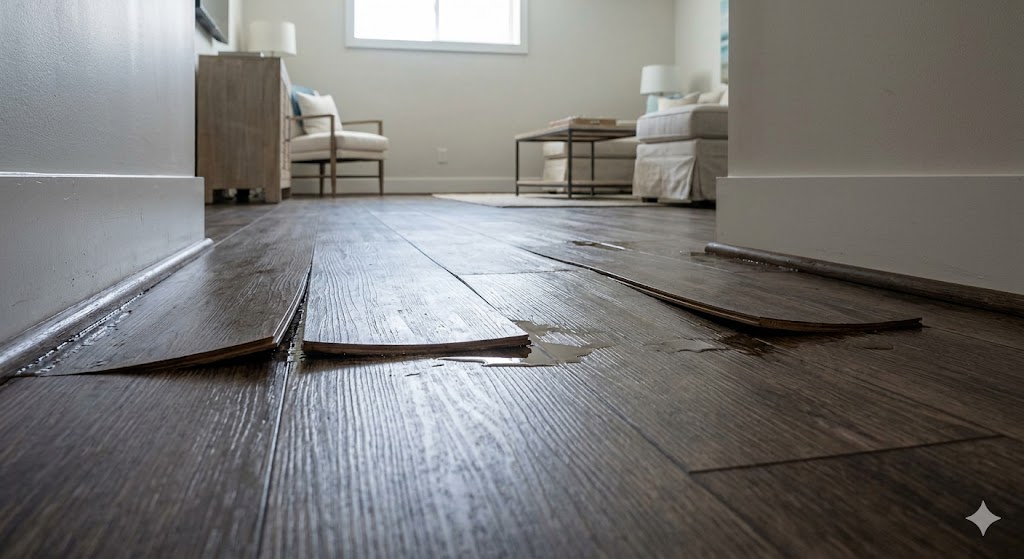
If you own a condo along 30A, mold under flooring in a condo raises a question single-family homeowners never have to ask: whose responsibility is this, actually? Florida’s Condominium Act, Chapter 718, allocates responsibility between the association and the unit owner based largely on where the moisture originated — and the honest answer is that mold under flooring in a condo often falls into genuine gray areas even experienced owners get wrong.
Here are four gray areas worth understanding before you assume the HOA has it covered — or before you assume it doesn’t.
Gray Area 1: Common Elements vs. Your Unit’s Interior
Under Florida Statute §718.113(1), maintenance of common elements — roofs, exterior walls, structural components, and plumbing that serves more than one unit — is the association’s responsibility (ilabacalaw.com). If mold under flooring in a condo traces back to a common-element failure — a burst pipe inside a shared wall, a roof leak migrating downward, or failed exterior waterproofing — the association is generally responsible for repairing the source and remediating structural components, including originally installed drywall (Perez Mayoral, P.A.).
Gray Area 2: Your Flooring Itself May Not Be Covered — Even If the Leak Wasn’t Your Fault
Here’s the detail that surprises most condo owners: even when a common-element failure caused the moisture, the association’s master insurance policy typically excludes floor coverings, wall coverings, cabinets, appliances, and personal property — those remain the unit owner’s responsibility to insure and repair (Florida Senate, Chapter 718). In other words, the association may fix the leak and remediate the structural drywall, while mold under flooring in a condo — the actual flooring material itself — can still land back on the owner’s own policy.
Gray Area 3: Self-Remediating Without Board Consent Can Void Your Coverage
If you discover mold under flooring in a condo, the instinct to call a remediation company immediately is understandable — but doing so without written board consent can backfire. Florida law generally requires unit owners to obtain written board consent before retaining a mold remediator, and unauthorized remediation may void insurance coverage and eliminate reimbursement rights entirely (Perez Mayoral, P.A.). The correct first step is typically to demand, in writing, that the association retain a licensed mold assessor to identify the source before remediation begins.
Gray Area 4: What Happens When the Association Ignores a Known Problem
If the association is aware of a common-element failure and delays action, owners may have a negligence claim — but it requires showing the association had a statutory duty, breached it, and that the breach caused the resulting mold and damages (ilabacalaw.com). A documented paper trail — written notice, photos, and a follow-up demand citing the association’s obligations — is what actually strengthens a claim if mold under flooring in a condo becomes a dispute rather than a straightforward repair.
It’s also worth knowing that some associations can vote to shift certain repair costs and deductibles to the unit owner through governing-document provisions, which can further complicate who ultimately pays (Merlin Law Group) — another reason not to assume responsibility without checking your specific declaration.
What to Do First If You Find Mold Under Flooring in Your Condo
- Don’t self-remediate yet — get written board consent first to protect your coverage
- Request an independent, licensed mold assessor (licensed under Chapter 468, Part XVI) rather than relying solely on the association’s contractor
- Document everything — photos, written notices, and communication dates
- Send a written demand citing the association’s maintenance obligations if there’s a delay
PuroClean of Santa Rosa Beach: Experience With Condo and HOA Documentation
Because 30A’s condo communities — from beachfront high-rises to smaller HOA developments — face these Chapter 718 gray areas constantly, PuroClean of Santa Rosa Beach provides the kind of documented, independent assessment that holds up whether the dispute is between an owner and their association or between an association and its insurer. Our technicians serve condo owners and HOAs across the 30A corridor and our Dothan, AL service area, following the ANSI/IICRC S520 standard of care on every job.
Frequently Asked Questions
Is mold under my condo floor the HOA’s responsibility? It depends on the moisture source. If it originated from a common element like shared plumbing or the roof, the association is generally responsible for the source and structural remediation — but your actual floor covering may still fall to you.
Does condo association insurance cover mold? Typically, association master policies cover common elements and originally installed drywall, but usually exclude floor coverings, cabinets, appliances, and personal property, which remain the unit owner’s responsibility.
What if mold is coming from the unit above me? This is usually treated as a common-element or neighboring-unit plumbing issue — document the source and notify the association in writing, since responsibility often depends on which plumbing system failed.
Can I remediate mold in my condo myself? You can for very small areas, but for anything requiring a licensed remediator, get written board consent first — unauthorized remediation can void insurance coverage and reimbursement rights.
Get an Independent Assessment From PuroClean of Santa Rosa Beach
Mold under flooring in a condo doesn’t have to turn into a dispute between you and your association. PuroClean of Santa Rosa Beach provides IICRC-certified, independent mold inspections for condo owners, HOAs, and property managers across Santa Rosa Beach, the 30A corridor, Dothan, and Enterprise, AL, with 24/7 emergency availability.
Contact PuroClean of Santa Rosa Beach today for a certified mold inspection, or call (850) 399-3380.
Available 24/7/365 | Contact Us Online | Google Business Profile | IICRC Certified | Insurance Preferred | Complete Mold Remediation Solutions