


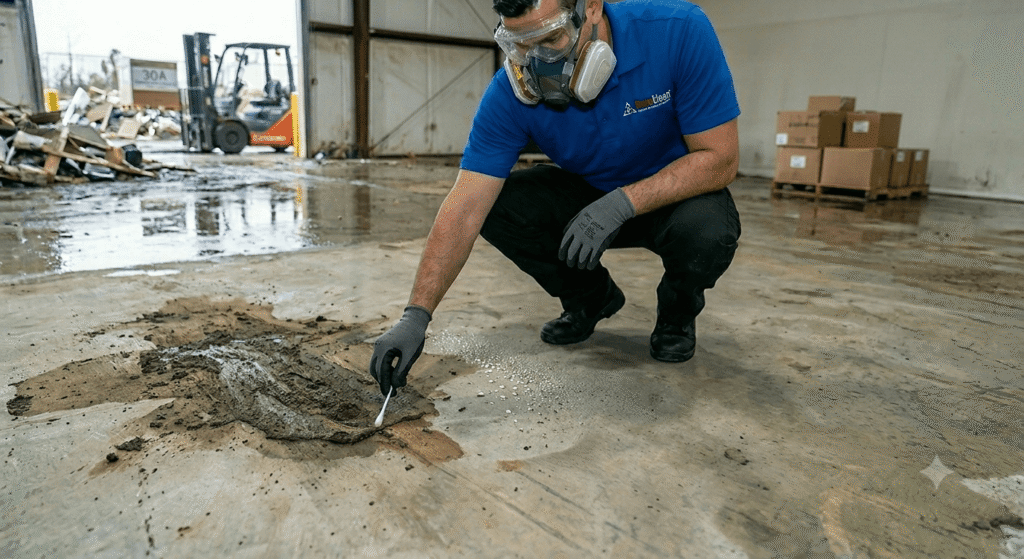
Is Mold Under Flooring Dangerous Again After Remediation? What Determines Recurrence
If you’ve already been through mold remediation, it’s fair to wonder: is mold under flooring dangerous again after remediation, or is the problem actually behind you? The honest answer is that mold after remediation can absolutely return — but whether it does has almost nothing to do with luck and everything to do with whether the original moisture source was permanently corrected.
This matters especially for vacation rental owners and property managers along 30A, where guest turnover, seasonal vacancy, and coastal humidity make ongoing vigilance different from a typical single-family home. Here are five steps to keep mold after remediation from becoming mold after remediation, again.
Step 1: Understand What Clearance Testing Actually Confirms
Post-remediation verification (PRV), often called clearance testing, confirms that a space met accepted standards at one specific point in time — not that mold after remediation can never return. The ANSI/IICRC S520 standard sets a target of 16% or lower wood moisture content for structural materials before clearance can even proceed (RestoreAdvisor). If that threshold isn’t met, sampling shouldn’t move forward at all.
Step 2: Know That Clearance Should Come From an Independent Party
A common misconception is that the remediation contractor can also perform the clearance test. The IICRC S520 standard and EPA guidance both call for third-party independence on larger projects, since a contractor certifying their own work creates an obvious conflict of interest (Mold Remediation Authority). If your remediation didn’t include this separation, it’s worth confirming before you rely on that clearance long-term.
Step 3: Recognize That Unresolved Moisture Is the Real Driver of Recurrence
Even a passing clearance result doesn’t guarantee mold after remediation won’t come back. If the moisture source that caused the original growth wasn’t permanently corrected, recurrence is likely regardless of the clearance outcome (Mold Remediation Authority). This is echoed elsewhere in the industry: mold can return after remediation specifically when the underlying moisture problem wasn’t fully resolved, since mold spores are always present in the environment and simply need moisture to reactivate (Elite Mold Services).
Step 4: Maintain Long-Term Humidity Control, Not Just Post-Job Drying
Preventing mold after remediation over the long run means keeping indoor humidity consistently between 30% and 50%, using dehumidifiers in damp-prone areas, maintaining HVAC systems, and ensuring proper ventilation in kitchens and bathrooms (PuroClean). For coastal properties along 30A, where ambient humidity is already elevated, this isn’t a one-time task — it’s an ongoing maintenance habit.
Step 5: Build Moisture Checks Into Your Rental Turnover Routine
For vacation rental owners and property managers, the biggest blind spot after remediation is often the gap between guest stays. A property sitting vacant with the thermostat set high, or a slow leak that goes unnoticed between cleanings, can undo a successful remediation without anyone realizing it until the next guest complains. Building a simple moisture check into your turnover checklist — a quick look near flooring edges, under sinks, and around HVAC vents — can catch a developing problem long before mold after remediation becomes mold after remediation, a second time.
How to Tell Recurrence From a New Problem
- Same location, similar timeline after remediation often points to an incompletely corrected moisture source
- A new location entirely, especially after a storm or new leak, usually indicates a separate issue rather than true recurrence
- Musty odor returning within weeks of remediation is a stronger signal of unresolved moisture than odor appearing many months later
- Rising indoor humidity readings above 60% are a leading indicator worth acting on before visible mold reappears
PuroClean of Santa Rosa Beach: Built for the Long Term, Not Just the Job
PuroClean of Santa Rosa Beach treats post-remediation verification as a genuine checkpoint, not a formality — using independent clearance protocols consistent with the ANSI/IICRC S520 standard, and helping property owners and managers across our 30A and Dothan, AL service areas build practical humidity-monitoring habits that outlast the initial remediation.
Frequently Asked Questions
Can mold come back after remediation? Yes, if the moisture source that caused the original growth wasn’t fully corrected — clearance testing confirms conditions at one point in time, not permanently.
What is post-remediation verification? It’s a structured inspection and testing process, sometimes called clearance testing, that confirms a remediated space meets accepted industry standards before the project is considered complete.
How do I maintain low humidity in a coastal home? Keep indoor humidity between 30% and 50% using dehumidifiers, proper HVAC maintenance, and ventilation in bathrooms and kitchens — especially important in humid 30A properties.
Should the same company that remediated my home also perform clearance testing? Ideally, no. Industry standards call for an independent third party to perform clearance testing to avoid a conflict of interest with the remediation contractor.
Keep Mold From Coming Back With PuroClean of Santa Rosa Beach
A successful remediation is only half the job — long-term prevention is what actually protects your investment. PuroClean of Santa Rosa Beach offers IICRC-certified remediation and follow-up verification for homeowners, vacation rental owners, and property managers across Santa Rosa Beach, the 30A corridor, Dothan, and Enterprise, AL, with 24/7 emergency availability.
Contact PuroClean of Santa Rosa Beach today to schedule a follow-up mold inspection, or call (850) 399-3380.
Available 24/7/365 | Contact Us Online | Google Business Profile | IICRC Certified | Insurance Preferred | Complete Mold Remediation Solutions