


Living along the Emerald Coast means dealing with gorgeous views, beautiful beaches, and intense coastal humidity that frequently leads to mold on subfloor in santa rosa beach homes.
Because your subfloor sits directly beneath your carpets, tile, or pristine hardwood floors, developing mold on subfloor in santa rosa beach properties often goes completely unnoticed until significant damage has already occurred. Left unaddressed, prolonged moisture and fungal growth causing mold on subfloor in santa rosa beach can compromise the wood, leading to structural repairs that easily cost anywhere from $25,000 to $65,000.
At PuroClean of Santa Rosa Beach, we believe the best defense against mold on subfloor on santa rosa beach is early detection. Here is your complete 2026 guide to catching, clearing, and preventing subfloor moisture problems before they threaten your home’s integrity.

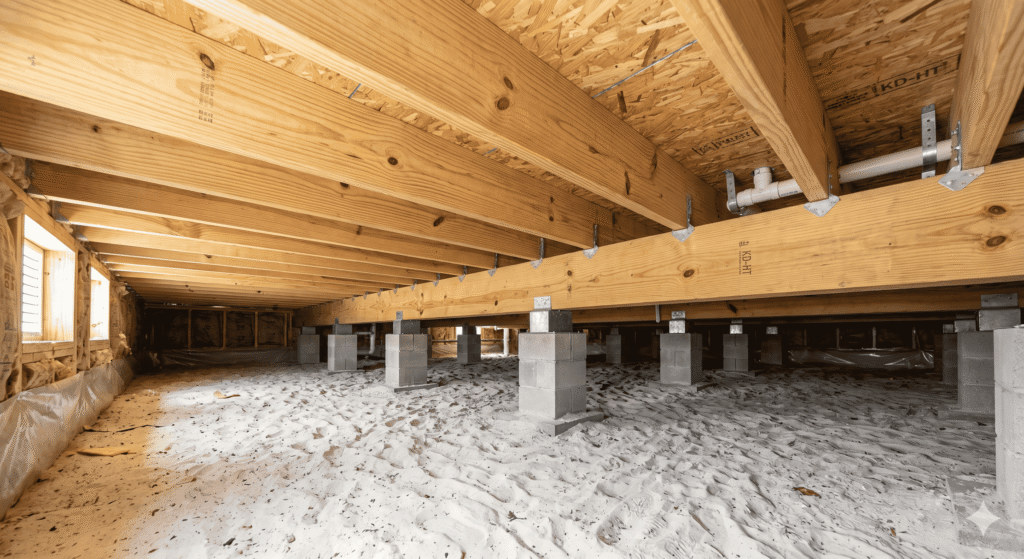
Fungal growth spreading along the wooden joists and subfloor under a home.. Source: BAY Crawl Space & Foundation Repair
1. How to Detect Subfloor Fungal Growth
Because subfloors are sandwiched out of sight, you have to rely on secondary clues to spot trouble. If you suspect a hidden leak or notice a persistent “beach house mustiness” that won’t go away, catching mold on subfloor in Santa Rosa Beach requires knowing the right signs.
To accurately pinpoint mold on subfloor in Santa Rosa Beach, restoration professionals use a combination of physical inspection and specialized technology:
| Detection Method | How It Works | What We Look For |
| Visual Crawl Space Inspection | Inspecting the home’s underbelly directly. | Dark staining, white powdery fuzz, or sagging wood panels. |
| Moisture Meters | Probing the wood to measure its relative moisture content. | Any reading above 15% indicates a high risk for wood-destroying fungi. |
| Thermal Imaging | Using infrared cameras to detect temperature differentials. | Hidden cold spots behind walls or flooring that signal active moisture traps. |
| Olfactory Tracking | Identifying localized, earthy, or damp odors. | Persistent musty smells that strengthen near baseboards or HVAC vents. |
2. The Professional Remediation Process
When dealing with severe mold on subfloor in Santa Rosa Beach, a simple DIY scrub with bleach won’t cut it. In fact, spraying bleach on porous wood can actually push moisture deeper into the grain, feeding the fungal roots.
Professional remediation requires a meticulous step-by-step containment protocol to ensure spores don’t become airborne and colonize the rest of your living space.
1.Containment & Negative Air Pressure:
We seal off the work area using heavy-duty plastic sheeting to prevent mold on subfloor in Santa Rosa Beach homes from cross-contaminating other living spaces. Negative air machines with HEPA filters keep air pulling clean.
2.Drying and Source Correction:
Before removing the mold, the source of the moisture (a pipe leak, crawl space condensation, or poor drainage) must be completely stopped. We use industrial dehumidifiers to drop the wood’s moisture content back below the safe 15% threshold.
3.Physical Fungal Removal:
Using HEPA vacuums and specialized media blasting, we physically remove mold on subfloor in Santa Rosa Beach framing without damaging the structural integrity of the wood panels.
4.Antimicrobial Treatment & Sealing:
We apply EPA-registered, hospital-grade antimicrobials to sanitize the area and kill remaining microscopic roots. Once fully dry, an encapsulated sealant is applied to the wood to protect it from future vapor intrusion.
A Note on Flooring Salvage: If the issue stems from a crawl space underneath, treating mold on subfloor in Santa Rosa Beach from below can completely save your beautiful hardwood or tile floors upstairs. However, if a top-down flood caused the damage, the upper flooring must usually be pulled back to address the subfloor directly.
3. Proactive Prevention Strategies
Preventing the recurrence of mold on subfloor in Santa Rosa Beach structures comes down to controlling one specific element: relative humidity. In our coastal Florida environment, standard outdoor air is frequently damp enough to trigger growth if left unmanaged.
- Encapsulate Your Crawl Space: Traditional vented crawl spaces allow hot, humid Gulf air to hit cooler under-floor joists, causing condensation that triggers mold on subfloor in Santa Rosa Beach. Encapsulating the space with a heavy-duty vapor barrier keeps that wet air away from your structural wood.
- Install a Dedicated Dehumidifier: If you have an enclosed crawl space or a large basement structure, a commercial-grade dehumidifier running continuously will keep subfloor moisture safely below the danger zone.
- Monitor Indoor Humidity: Keep your home’s indoor relative humidity between 30% and 50%. If your AC unit is oversized or outdated, it may not run long enough to strip moisture from the air properly.
- Routine Plumbing Inspections: Check under sinks, behind refrigerators, and around dishwashers at least twice a year. Micro-leaks traveling down through floor gaps are responsible for a massive percentage of subfloor rot.
Get Expert Guidance Today
If you suspect mold in subfloor on Santa Rosa Beach, don’t wait for structural damage to set in. Our local team lives and works right here in Walton County, and we know exactly how to protect coastal properties from the ground up. Give us a call to ensure your home stays dry, safe, and completely mold-free.
Call (850) 399-3380 now for 24/7 emergency response. Immediate professional remediation costs less than DIY attempts and prevents catastrophic complications.
Available 24/7/365 | Contact Us Online | Google Business Profile | IICRC Certified | Insurance Preferred | Complete Mold Remediation Solutions