


Mold Spore Detection in Santa Rosa Beach, FL: 5 Complete Facts for Stubborn Mold
Mold spore detection sounds like a simple pass/fail test — send a sample to a lab, get a number back, know whether your home is “clean.” The reality is more nuanced, and understanding how mold spore detection actually works helps you know when it’s a genuinely useful tool and when it’s an unnecessary expense on top of a problem you can already see.
The Four Ways Mold Spore Detection Actually Works
Professional mold spore detection uses one of four core sampling methods, and each answers a different question:
Spore trap (non-viable) sampling is the most common method. A calibrated pump draws a known volume of air across a greased slide, and a lab technician examines the slide under a microscope to extrapolate how many spores are present per cubic meter of air (Healthy Building Science). This method identifies mold at the genus level and gives a fast snapshot of what’s currently airborne.
Culturable (viable) sampling uses a petri dish with a growth medium placed under the airflow. After incubation, the lab counts colony-forming units to identify mold down to the species level — a slower process, but one that offers more specific identification than spore trap sampling alone (Healthy Building Science).
ERMI and dust-based DNA testing analyzes settled dust, typically vacuumed from carpeted areas, using DNA analysis (qPCR) to detect the genetic signature of dozens of mold species. Because it analyzes dust that’s accumulated over time, ERMI reflects historical mold presence rather than what’s airborne right now — which is useful, but it doesn’t identify where the mold is currently located (Dr. Antonucci).
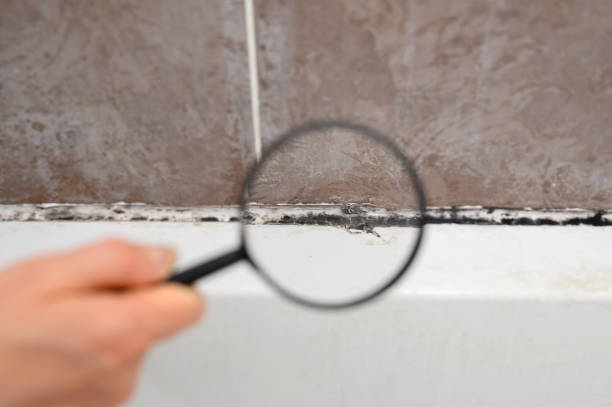
Surface and bulk sampling involves tape lifts, swabs, or physical material removed from a suspect area, used mainly to confirm visible growth rather than to detect hidden mold.
Why There’s No “Pass/Fail” Number for Mold Spore Detection
Here’s the detail that surprises most homeowners: there is currently no federal standard in the United States for acceptable indoor mold spore concentrations. Instead of comparing a result to a fixed “safe” number, mold spore detection typically relies on comparing indoor spore counts to an outdoor baseline sample taken the same day. If indoor levels are consistent with or lower than outdoor levels — and there’s no evidence of moisture intrusion — the result is generally considered congruent, or normal. If indoor levels are elevated compared to that outdoor baseline, that incongruence is the evidence that actually matters, and it’s frequently the leading data point used in insurance claims and legal disputes over mold (USPTO patent filing on air sampling methodology).
This is exactly why professional mold spore detection should always include an outdoor control sample — without one, an indoor result has no real baseline for comparison at all.
ERMI vs. Air Sampling: Different Questions, Different Answers
A common point of confusion in mold spore detection is choosing between ERMI dust testing and traditional air sampling. They’re not competing methods — they answer different questions. Air sampling gives a current, real-time view of what’s airborne, while ERMI provides a historical perspective based on accumulated dust. Many professionals recommend running both together for a fuller picture, alongside a visual inspection and moisture evaluation, since spore detection results are most useful when interpreted alongside physical evidence of the moisture source — not as a standalone number (Indoor Science).
When You Actually Need Mold Spore Detection — and When You Don’t
If mold is already visibly growing and you can identify the moisture source, mold spore detection generally isn’t necessary before remediation begins — the visible evidence is enough to act on. Mold spore detection becomes genuinely useful when:
- You’re experiencing symptoms but can’t locate visible mold
- You need documentation for an insurance claim or real estate transaction
- You’ve completed remediation and want independent verification the space is clear
- A wall cavity or enclosed space is suspected but not directly visible
Why This Matters More Along the 30A Coastline
Humid coastal environments like Santa Rosa Beach naturally carry higher outdoor background mold spore levels than drier inland regions, since warm, moisture-heavy air supports fungal activity year-round. That matters directly for mold spore detection here: interpreting an indoor-versus-outdoor comparison requires knowing what a normal outdoor baseline actually looks like along the Gulf Coast, not applying a generic national assumption. A lab technician unfamiliar with regional conditions can misread a result that would be obviously elevated in Ohio but unremarkable — or genuinely concerning — here.
PuroClean of Santa Rosa Beach: Testing With Local Context
PuroClean of Santa Rosa Beach pairs mold spore detection with the on-the-ground moisture evaluation that gives lab results actual context, following the ANSI/IICRC S520 standard of care across the 30A corridor and our Dothan, AL service area. A number on a lab report means little without someone who understands both the sampling science and the coastal conditions behind it.
Frequently Asked Questions
What does mold spore detection actually test for? It measures the type and concentration of mold spores present in air, dust, or on surfaces, using methods like spore trap sampling, culturable sampling, or ERMI dust analysis, depending on what question you’re trying to answer.
Is there a “safe” level of mold spores indoors? No federal standard exists. Results are typically evaluated by comparing indoor spore counts to an outdoor baseline sample taken the same day, rather than against a fixed number.
What’s the difference between ERMI and air sampling? ERMI analyzes settled dust to reveal historical mold presence, while air sampling captures a real-time snapshot of what’s currently airborne — many professionals recommend using both together.
Do I need mold spore detection if I can already see mold? Generally, no. If mold is visible and the moisture source is identified, remediation can typically proceed without lab testing first; spore detection is most valuable when mold is suspected but not visible, or when documentation is needed.
Get Professional Mold Spore Detection From PuroClean of Santa Rosa Beach
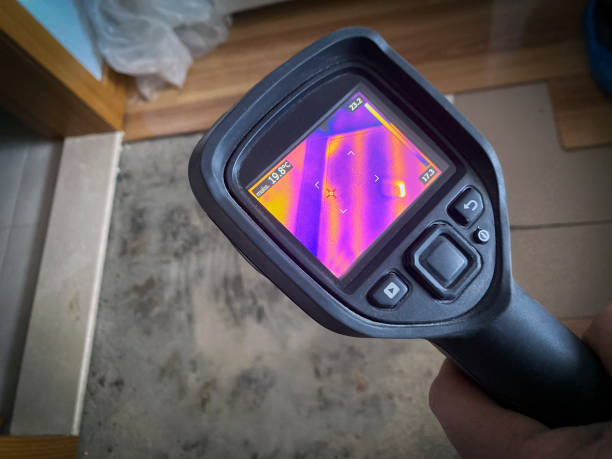
A lab result is only as useful as the context behind it. PuroClean of Santa Rosa Beach provides mold spore detection alongside full moisture assessments for homeowners across Santa Rosa Beach, the 30A corridor, Dothan, and Enterprise, AL, backed by IICRC-certified technicians and 24/7 emergency availability.
Contact PuroClean of Santa Rosa Beach today to schedule mold spore detection, or call for 24/7 emergency response.
Available 24/7/365 | Contact Us Online | Google Business Profile | IICRC Certified | Insurance Preferred | Complete Mold Remediation Solutions