


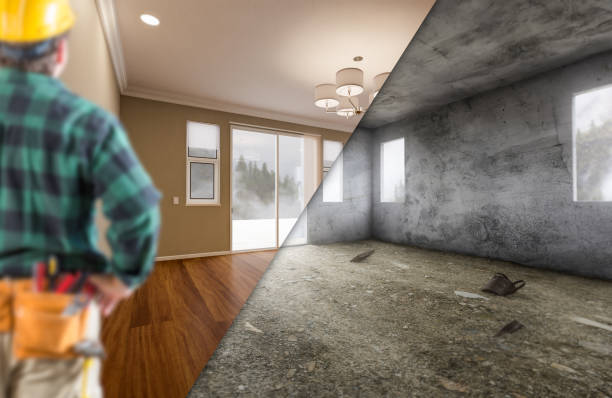
Is Mold Under Flooring Dangerous in New Construction? Yes — Here’s Why
New doesn’t mean immune. Is mold under flooring dangerous in new construction? The answer is yes, and it happens more often than most new homeowners along 30A realize. The culprit usually isn’t the flooring material itself — it’s moisture that was already present in the slab or subfloor before the flooring was ever installed.
Because everything looks pristine on move-in day, mold under flooring in new construction can go unnoticed for months, surfacing only once cupping, bubbling, or a musty smell forces the issue. Here are the four blind spots that let this happen, even in homes built to code.
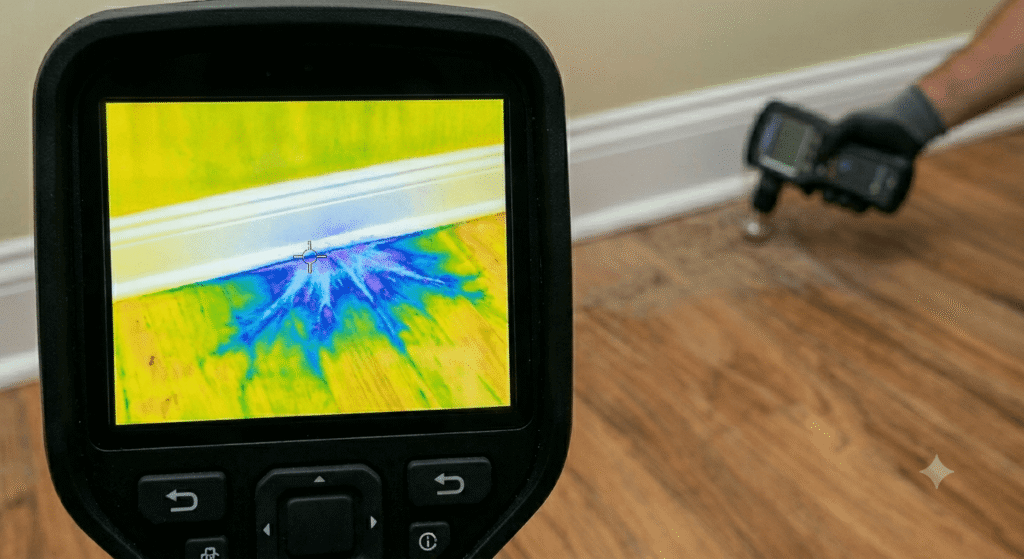
Blind Spot 1: Concrete Slabs Poured and Covered Before They’re Actually Dry
Concrete slabs can look and feel dry to the touch long before they’ve released enough internal moisture to safely accept flooring. The accepted method for confirming this is in-situ relative humidity testing under ASTM F2170, with most flooring manufacturers requiring readings at or below roughly 75% RH before installation (National Flooring Authority). On tight construction schedules, this test is sometimes skipped or rushed, setting up mold under flooring in new construction before a single family has moved in.
Blind Spot 2: The Warranty Gap Nobody Reads Until It’s Too Late
When flooring is installed over a slab that hasn’t met moisture thresholds, the failures aren’t hypothetical — they’re well documented. Installing over an out-of-range slab can produce hardwood cupping within three to six weeks, adhesive delamination within six to eighteen months, and mold colonization at the concrete-to-wood interface requiring $5,000 to $15,000 in remediation (Sensora Home). In nearly every case, none of these failures are covered by the flooring or adhesive manufacturer’s warranty if a compliant moisture test wasn’t documented beforehand — leaving new homeowners to discover mold under flooring in new construction with no manufacturer recourse.
Blind Spot 3: Vapor Barrier and Underlayment Shortcuts
Even when slab moisture is within range, improper installation — a missing vapor barrier, the wrong underlayment, or installing over a subfloor that’s damp for unrelated reasons — can trap moisture from day one (FloorCentral). This is a common source of mold under flooring in new construction that has nothing to do with the slab test at all, but rather with installation quality on the day flooring went down.
Blind Spot 4: Builder Warranty Doesn’t Always Mean Moisture Coverage
Many new homeowners assume a builder’s warranty covers any issue that shows up in the first year, including moisture problems. In practice, builder warranties often cover workmanship defects specifically, while material failures tied to pre-installation moisture conditions fall to the flooring manufacturer’s separate warranty — and that warranty typically requires the documented moisture test most builders never hand over. This gap is exactly where many homeowners with mold under flooring in new construction find themselves stuck between two warranties, with neither one covering the repair.

Why Pre-Closing Moisture Testing Matters More in Our Region
Ground-source vapor drive — moisture naturally pushing upward through a slab from the soil below — is more pronounced in humid, high-water-table regions like the Southeast and Gulf Coast, which is why relative humidity probe testing under ASTM F2170 is specifically recommended over surface-only methods in these climates (Sensora Home). For new construction along 30A, that means a documented F2170 test isn’t a formality — it’s a meaningfully different risk factor than the same test performed in a drier inland climate.
PuroClean of Santa Rosa Beach: Catching What Move-In Day Hides
PuroClean of Santa Rosa Beach treats new construction with the same scrutiny as an older home with a known leak, because mold under flooring in new construction is rarely visible at closing. Our technicians perform documented moisture assessments for new-build homeowners and builders across the 30A corridor and our Dothan, AL service area, giving both sides a clear record before flooring issues become disputes.
Frequently Asked Questions
Can a brand-new home have mold under the floor? Yes. If the concrete slab or subfloor wasn’t properly dried and tested before flooring installation, mold under flooring in new construction can develop even in homes built to current code.
Is builder-caused mold covered under warranty? It depends. Builder warranties typically cover workmanship, while moisture-related flooring failures often fall under the flooring manufacturer’s warranty, which usually requires documented pre-installation moisture testing to honor a claim.
How do I test slab moisture before closing on a new home? In-situ relative humidity testing under ASTM F2170, or calcium chloride testing under ASTM F1869, are the industry-standard methods; ask your builder for documented results before closing.
What’s the difference between ASTM F2170 and F1869? F2170 measures relative humidity inside the slab and better reflects long-term moisture conditions, while F1869 measures surface moisture vapor emission — many flooring manufacturers accept either, some require both.
Get a Documented Moisture Assessment From PuroClean of Santa Rosa Beach
Don’t wait for cupping or a musty smell to confirm what a moisture test could have caught before move-in. PuroClean of Santa Rosa Beach provides IICRC-certified moisture assessments for new construction and pre-closing inspections across Santa Rosa Beach, the 30A corridor, Dothan, and Enterprise, AL, with 24/7 emergency availability.
Contact PuroClean of Santa Rosa Beach today for a certified mold inspection, or call (850) 399-3380.
Available 24/7/365 | Contact Us Online | Google Business Profile | IICRC Certified | Insurance Preferred | Complete Mold Remediation Solutions