


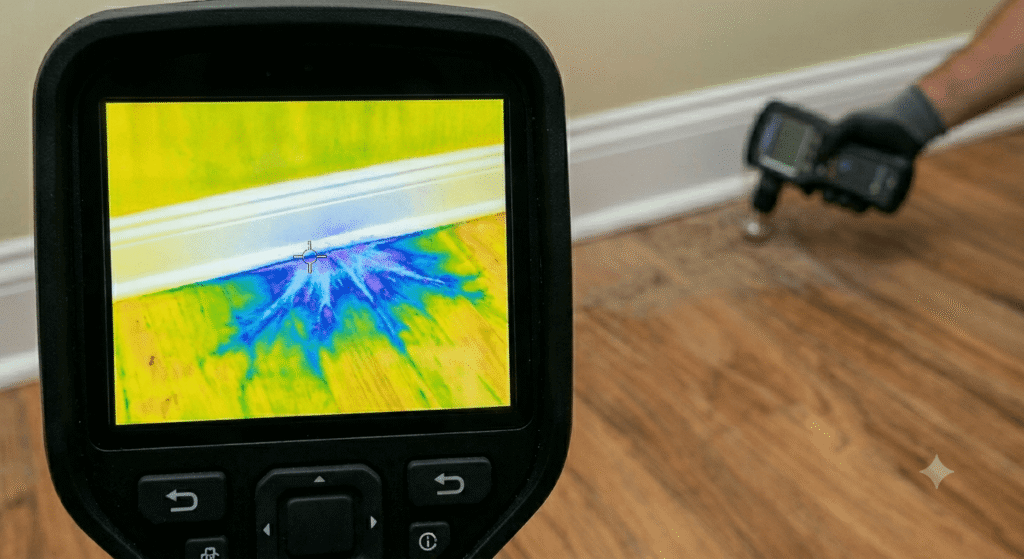
If you’re wondering whether mold under tile and vinyl flooring is dangerous, the answer is yes — and it’s often more dangerous precisely because these materials have a reputation for being “waterproof.” That reputation creates a false sense of security. Moisture still finds its way underneath through grout lines, seams, and glue-down edges, where it sits trapped against the subfloor with no way to evaporate.
Unlike hardwood, which visibly warps or cups when water gets underneath, tile and vinyl rarely show obvious signs until mold under tile and vinyl flooring has already spread across a wide area. That delay is exactly what makes this category of flooring uniquely risky along Florida’s Gulf Coast and Alabama’s Wiregrass region, where ambient humidity is already working against you before a single spill happens.
Below are the three hidden traps that make mold under tile and vinyl flooring harder to catch than mold under wood or laminate — and what to do before it becomes a much bigger problem.
Trap 1: Grout Is More Porous Than It Looks
Tile itself is genuinely water-resistant, but grout is a different story. Grout is highly porous and absorbs moisture readily, allowing water to seep through cracks and aged joints and reach the subfloor beneath (Bactronix). Once that moisture is trapped beneath the tile, it creates the same dark, warm, oxygen-starved environment that fuels mold under tile and vinyl flooring anywhere else in the home.
This is especially common in bathrooms and kitchens, where daily splashing, shower steam, and cleaning water repeatedly test the grout’s ability to hold moisture out.
Trap 2: Vinyl’s “Impenetrable Barrier” Works Against You
Vinyl plank flooring is often marketed as ideal for humid climates because it repels surface water. But that same non-breathable quality is what makes mold under tile and vinyl flooring so persistent once moisture gets underneath. Vinyl acts as a barrier that keeps trapped moisture in place rather than letting it evaporate, which is precisely why mold flourishes beneath it when the subfloor lacks a proper moisture barrier (Angi).
In other words, the very feature that makes vinyl attractive for coastal homes — resistance to surface water — can work in mold’s favor once water finds a seam, a damaged edge, or an improperly sealed transition strip.
Trap 3: You Can’t “Eyeball” It the Way You Can With Wood
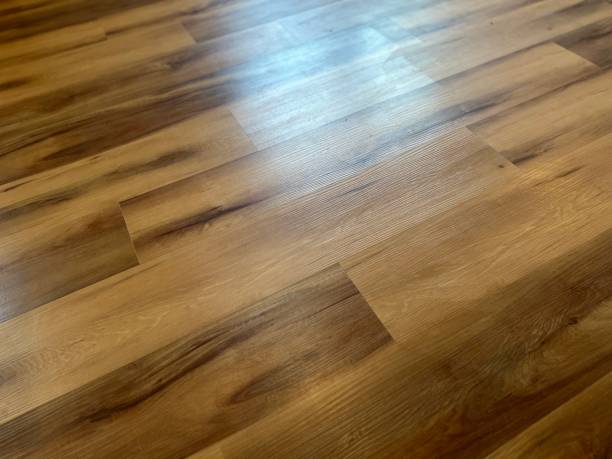
With hardwood or laminate, warping and cupping give you a visual warning. Tile and vinyl don’t offer that same courtesy. Instead, the signs are subtler: tiles loosening as adhesive breaks down, vinyl bubbling where water has pooled beneath it, or faint discoloration along grout lines and baseboards (Rainbow Restores). By the time any of these appear, mold under tile and vinyl flooring has often had days or weeks to establish itself, undetected.
Warning Signs Specific to Tile and Vinyl
- A musty odor, especially in bathrooms, kitchens, or laundry areas, that persists after cleaning
- Loose or shifting tiles that weren’t loose before
- Bubbling or lifting in vinyl plank sections
- Discoloration along grout lines or where flooring meets the wall
- A hollow or spongy sound when tapping suspect tiles
Any one of these can indicate that mold under tile and vinyl flooring is already active beneath the surface, even if nothing looks obviously wrong from above.
Why DIY Testing and Bleach Fall Short
Store-bought test kits and surface bleach treatments are tempting because they’re fast and inexpensive, but they don’t address what’s happening beneath sealed flooring. Professional detection typically relies on moisture meters and infrared imaging to identify elevated subfloor moisture before tiles are ever removed — the same approach recommended for verifying slab moisture levels before flooring installation, per industry testing standards like ASTM F2170 and F1869 (Howard Environmental).
Professional remediation of mold under tile and vinyl flooring follows the ANSI/IICRC S520 Standard for Professional Mold Remediation, the industry’s recognized standard of care, which centers on locating the moisture source, containing the area, and removing contaminated material rather than treating only the visible surface.
PuroClean of Santa Rosa Beach: Recognizing What Other Inspections Miss
Because tile and vinyl hide moisture so effectively, PuroClean of Santa Rosa Beach treats every bathroom, kitchen, and laundry-area inspection as a subfloor question first and a surface question second. Our technicians apply the same moisture-mapping discipline across both the humid 30A corridor and our Dothan, AL service area, recognizing that mold under tile and vinyl flooring often requires a different detection approach than the wood and laminate cases most homeowners are used to hearing about.
Frequently Asked Questions
Can mold grow under tile flooring if the tile itself is waterproof? Yes. While tile resists water, the grout between tiles is porous and can allow moisture through to the subfloor, where mold under tile and vinyl flooring can develop even though the tile surface stays dry.
Is mold under tile dangerous even if I can’t see any growth? Yes. Hidden mold still releases spores into the air, and by the time visible signs appear, growth has often been active for some time already.
How do I know if there’s mold under my vinyl plank flooring? Watch for a persistent musty odor, bubbling or lifting planks, and discoloration near seams or baseboards — these are the most common signs of mold under tile and vinyl flooring.
Can I test for mold under tile and vinyl flooring myself? Basic moisture meters can offer clues, but professional moisture mapping and thermal imaging provide a far more reliable picture without needing to remove flooring first.
Schedule a Certified Inspection With PuroClean of Santa Rosa Beach
If you suspect mold under tile and vinyl flooring in your home, don’t wait for tiles to loosen or vinyl to bubble before taking action. PuroClean of Santa Rosa Beach proudly serves homeowners across Santa Rosa Beach, the 30A corridor, Dothan, and Enterprise, AL, with IICRC-certified technicians following the ANSI/IICRC S520 standard on every mold job. Our team is available 24/7 for emergency response.
Contact PuroClean of Santa Rosa Beach today for a certified mold inspection, or call (850) 399-3380.
Available 24/7/365 | Contact Us Online | Google Business Profile | IICRC Certified | Insurance Preferred | Complete Mold Remediation Solutions