


Table of Contents
Preventing mold under hardwood floors in new construction is the most cost-effective investment Santa Rosa Beach builders and homeowners can make, because proper moisture management during construction costs $5,000-$12,000 in additional materials and labor but prevents the $25,000-$45,000 remediation expenses that 18-23% of new coastal homes face within 3-5 years when builders cut corners on vapor barriers, crawl space encapsulation, and moisture control systems.
The Davidson family commissioned their dream beach house in Watersound in 2022, working with a builder who promised “the finest materials and craftsmanship.” They invested $1.2 million in a 3,200 square foot elevated home featuring premium Brazilian cherry hardwood throughout the main living areas. The builder assured them all construction followed current codes and industry best practices.
Twenty-eight months after move-in, they noticed musty odors and minor hardwood cupping in their master bedroom and living room. Professional mold inspection revealed catastrophic news: extensive mold contamination on subflooring undersides affecting 520 square feet, crawl space relative humidity averaging 82-88% (target is below 60%), no vapor barrier on crawl space soil, inadequate subflooring vapor barrier installation with unsealed seams, and HVAC condensate drain line leaking into crawl space for unknown duration.
The mold inspector’s assessment devastated them: “Contamination resulted from multiple construction deficiencies related to preventing mold under hardwood floors in new construction. Lack of crawl space ground vapor barrier allowed continuous ground moisture evaporation. Inadequate subflooring vapor barrier installation (6-mil plastic with unsealed seams and gaps at penetrations) provided minimal moisture protection. HVAC condensate drain terminating into crawl space rather than exterior created continuous water source. These design and installation failures guaranteed mold development regardless of homeowner maintenance. Had proper preventing mold under hardwood floors in new construction protocols been followed, this contamination would never have occurred.”
The remediation and correction costs: $52,000 total including $38,000 for mold remediation (hardwood removal, complete subflooring replacement, crawl space encapsulation with dehumidification), $8,000 for HVAC condensate system correction, and $6,000 for additional moisture control improvements. The construction defect litigation against the builder took eighteen months, ultimately settling for $45,000 (builder’s insurance paid) after $12,000 in legal fees, leaving the Davidsons $19,000 out-of-pocket plus eighteen months of stress.
“We paid premium prices expecting premium construction,” Mr. Davidson told me during remediation. “The builder saved maybe $8,000-$10,000 by cutting corners on vapor barriers, crawl space work, and proper HVAC design. That savings cost us $52,000 in remediation, $12,000 in legal fees, massive stress, and knowledge our ‘dream home’ had serious defects from day one. If the builder had invested in properly preventing mold under hardwood floors in new construction, we’d all be better off. Instead, he saved pennies and created a disaster.”
As PuroClean of Santa Rosa Beach‘s new construction consultant with over a decade reviewing plans, conducting pre-installation inspections, and remediating construction-defect mold throughout the 30A corridor, I’ve seen preventing mold under hardwood floors in new construction overlooked or misunderstood by builders, subcontractors, and even some architects, creating preventable disasters costing homeowners $25,000-$65,000 in remediation within the first 3-5 years of ownership.
This comprehensive guide reveals the ten critical construction mistakes that prevent proper preventing mold under hardwood floors in new construction, explains the correct specifications and installation methods that actually work in Santa Rosa Beach’s coastal humidity, provides inspection checklists enabling homeowners to verify builders are implementing proper moisture management, and shows you exactly how $8,000-$12,000 invested in prevention during construction saves $25,000-$45,000 in remediation while protecting your family’s health and your home’s long-term value.
Understanding Why New Construction Fails at Preventing Mold Under Hardwood Floors
Before examining specific mistakes, understanding why preventing mold under hardwood floors in new construction fails so frequently despite modern building codes and industry knowledge helps homeowners and builders recognize systemic problems.
The cost-cutting pressure:
New construction operates on tight margins where small cost differences compound across multiple homes. Premium vapor barriers cost $0.50-$1.00 more per square foot than minimum-code materials. Crawl space encapsulation adds $4,000-$8,000 per home. Proper HVAC condensate management requires additional materials and labor. These costs total $8,000-$15,000 per home. Builders constructing 10-20 homes annually can “save” $80,000-$300,000 by using minimum specifications rather than best practices for preventing mold under hardwood floors in new construction.
The knowledge gap:
Many builders, framers, and HVAC contractors learned their trades in moderate climates where moisture management is less critical. Santa Rosa Beach’s 70-80% year-round humidity requires different approaches than Phoenix (25% humidity) or Denver (40% humidity). Techniques that work elsewhere fail catastrophically in coastal Florida. Without specific training in preventing mold under hardwood floors in new construction for humid coastal environments, well-intentioned contractors implement inadequate solutions believing they’re following best practices.
The delayed consequences:
Mold from construction defects typically appears 18-36 months after completion, after the builder’s 1-year warranty expires. Builders don’t experience direct consequences of inadequate preventing mold under hardwood floors in new construction because problems emerge after their responsibility ends. This delayed feedback prevents learning and perpetuates deficient practices across multiple projects.
The code compliance vs. best practice gap:
Florida Building Code establishes minimum requirements for construction. These minimums prevent catastrophic failures but don’t guarantee mold prevention in humid coastal environments. Code-compliant construction can still experience mold problems. True preventing mold under hardwood floors in new construction requires exceeding minimum codes with best practices specifically designed for coastal humidity. Few builders voluntarily exceed code requirements without specific client demands.
The subcontractor coordination failure:
New construction involves multiple subcontractors (foundation, framing, HVAC, plumbing, insulation, flooring) working independently. Effective preventing mold under hardwood floors in new construction requires coordinated moisture management across all trades. Failures occur at interfaces: HVAC contractor installs condensate drain, plumber rough-in creates penetrations, framer doesn’t coordinate vapor barrier sealing, insulator damages barriers, flooring contractor doesn’t verify subflooring moisture. Without single-source accountability for comprehensive moisture management, critical details slip through gaps between trades.
The Santa Rosa Beach specific challenges:
Gulf Coast humidity year-round (70-80% vs. 40-50% in moderate climates). Salt air creating hygroscopic conditions. Shallow water tables (3-5 feet below surface). Hurricane-resistant elevated construction creating crawl spaces. These factors make Santa Rosa Beach one of the most challenging environments in the U.S. for preventing mold under hardwood floors in new construction. Builders from other regions often underestimate difficulty, implementing moisture control adequate for their home markets but insufficient for coastal Florida.
Mistake #1: Inadequate or Improperly Installed Subflooring Vapor Barriers
The first and most critical error preventing proper preventing mold under hardwood floors in new construction is inadequate vapor barrier specification or installation beneath subflooring.
The minimum vs. optimal specification:
Code minimum: 6-mil polyethylene plastic beneath subflooring. Actual best practice for preventing mold under hardwood floors in new construction: 10-15 mil cross-laminated reinforced polyethylene with puncture resistance. The difference: 6-mil tears easily during installation, provides minimal long-term durability, and offers limited moisture resistance. 10-15 mil cross-laminated material resists construction damage, provides superior moisture barrier, and lasts decades. Cost difference: $0.40-$0.70 per square foot ($800-$1,400 for 2,000 square foot home). This modest investment dramatically improves preventing mold under hardwood floors in new construction effectiveness.
The installation errors that negate barriers:
Unsealed seams: Vapor barrier overlaps without tape create moisture pathways. Best practice: minimum 12-inch overlaps with all seams sealed with 3-inch vapor barrier tape. Gaps at penetrations: Plumbing, electrical, HVAC penetrations create holes in vapor barrier. Best practice: seal all penetrations with vapor barrier boots, tape, or acoustical sealant. Tears from construction traffic: Workers walking on barriers create tears and holes. Best practice: install protection board over vapor barrier before foot traffic, repair any tears immediately with vapor barrier patches and tape. Edge sealing omissions: Vapor barrier must seal to foundation walls or piers. Best practice: extend barrier minimum 6 inches up walls/piers and seal with tape or adhesive.
The verification requirement:
Most builders install vapor barriers but few verify installation quality. Recommendation: require pre-subflooring inspection photographically documenting: complete vapor barrier coverage with no gaps, all seams overlapped minimum 12 inches and sealed with tape, all penetrations sealed, barrier extended and sealed to foundation, and no tears or damage visible. This inspection adds $200-$400 to construction cost but ensures preventing mold under hardwood floors in new construction isn’t compromised by installation errors.
Slab-on-grade considerations:
Homes on slab foundations (less common in coastal Santa Rosa Beach but present) require vapor barrier beneath concrete. Code minimum: 6-mil polyethylene beneath slab. Best practice: 10-15 mil vapor barrier beneath slab plus vapor-retardant coating on slab surface before hardwood installation. This dual-layer approach provides redundancy ensuring preventing mold under hardwood floors in new construction on slab foundations.
The long-term cost equation:
Upgrading from 6-mil to 15-mil vapor barrier with proper installation: $1,200-$2,000 additional cost for typical home. Mold remediation from vapor barrier failure: $25,000-$45,000 average. Return on investment: 1,250-3,750% through avoided remediation. This dramatic ROI makes superior vapor barriers the most cost-effective investment in preventing mold under hardwood floors in new construction.
Mistake #2: Crawl Space Moisture Control Failures
The second critical error in preventing mold under hardwood floors in new construction is inadequate crawl space moisture management in pier-and-beam homes (60-70% of Santa Rosa Beach new construction).
Traditional vented crawl space problems:
Old building practices required crawl space vents bringing outdoor air underneath homes. Theory: ventilation prevents moisture. Reality in humid climates: vented crawl spaces introduce 75-85% humidity outdoor air into cool crawl space (typically 10-15°F cooler than outside). This humid air condenses on subflooring, joists, and all surfaces creating continuous moisture. Vented crawl spaces in Santa Rosa Beach maintain 75-90% humidity year-round, guaranteeing eventual mold regardless of other preventing mold under hardwood floors in new construction efforts.
Modern sealed crawl space approach:
Completely seal crawl space vents (from inside, not just close them). Install continuous vapor barrier on 100% of crawl space soil (minimum 10-mil polyethylene, 15-mil preferred). Extend vapor barrier 6-12 inches up foundation walls and seal edges. Insulate foundation walls with closed-cell spray foam or rigid foam board. Install crawl space dehumidifier maintaining below 55% relative humidity. This sealed, conditioned crawl space approach is essential for preventing mold under hardwood floors in new construction in humid climates.
The ground vapor barrier critical importance:
Crawl space soil continuously evaporates moisture into crawl space air. Without ground vapor barrier, this evaporation maintains 80-95% humidity regardless of ventilation. Ground vapor barrier installation best practices: Use minimum 10-mil polyethylene (15-mil preferred), overlap all seams minimum 12 inches and seal with vapor barrier tape, extend barrier up foundation walls 6-12 inches minimum and seal to wall surface, seal around all piers and penetrations, and weight or secure barrier preventing displacement. Proper ground barrier installation costs $1.50-$3.00 per square foot of crawl space ($1,200-$2,400 for 800 square foot crawl space).
Crawl space dehumidification requirement:
Even sealed crawl spaces require active dehumidification in Santa Rosa Beach humidity. Passive sealing reduces humidity but rarely achieves target below 60%. Active dehumidification: Install dedicated crawl space dehumidifier (not portable units designed for living spaces), size for crawl space volume (typically 70-135 pint capacity), ensure automatic operation with condensate drainage, and set to maintain 50-55% relative humidity. Cost: $1,200-$2,500 installed. Operating cost: $30-$60 monthly. This investment is non-negotiable for preventing mold under hardwood floors in new construction in coastal environments.
The builder resistance and solutions:
Builders often resist crawl space encapsulation citing costs ($5,000-$10,000 per home). Solutions: Specify crawl space encapsulation in construction contract, obtain multiple quotes demonstrating competitive pricing, point to manufacturers’ warranties requiring encapsulation for hardwood floor installations in humid climates, reference this guide and industry research, or consider partial encapsulation as minimum (ground barrier plus dehumidification without wall insulation, costing $3,000-$5,000). Accepting vented crawl spaces with minimal moisture control guarantees failure at preventing mold under hardwood floors in new construction in Santa Rosa Beach.
Verification and testing:
Require humidity monitoring during and after construction. Install data-logging humidity sensor in crawl space. Review humidity logs quarterly for first year. Target: sustained readings below 60%, ideally 50-55%. Readings consistently above 65% indicate encapsulation failure requiring correction. This monitoring costs $100-$200 (sensor) plus periodic review but verifies preventing mold under hardwood floors in new construction systems function as designed.
Mistake #3: HVAC Condensate Management Errors
The third significant failure in preventing mold under hardwood floors in new construction involves HVAC system condensate drainage creating hidden water damage.
The condensate production reality:
HVAC systems in Santa Rosa Beach produce 10-20 gallons daily during summer months. Even winter operation produces 3-5 gallons daily. This enormous water volume requires proper management. Condensate line failures are leading cause of water damage in new construction, directly threatening preventing mold under hardwood floors in new construction effectiveness.
Common condensate design errors:
Condensate drains terminating into crawl spaces (adding moisture to exactly the space that must stay dry). Primary drain lines without secondary backup drains (code violations but still occur). Drain lines improperly sloped creating low spots where water pools and backs up. Drain terminations near foundations allowing water to seep back beneath homes. Lack of float switches shutting off HVAC if primary drain clogs. Each error creates water damage risk undermining preventing mold under hardwood floors in new construction.
Proper condensate management specifications:
Primary drain line continuously sloped to termination minimum 1/4 inch per foot. Secondary drain line (backup) required by code, also properly sloped. Primary termination minimum 10 feet from foundation, over landscaping or impervious surface. Secondary termination to conspicuous location (over window, exterior wall) making leaks immediately visible. Float switches in air handler drain pans shutting off HVAC if primary drain clogs. Clean-out access at strategic locations for maintenance. These specifications ensure condensate doesn’t undermine preventing mold under hardwood floors in new construction.
The condensate pump alternative:
When gravity drainage is inadequate (air handler location doesn’t allow downward slope), condensate pumps actively remove water. Pump specifications: Adequate capacity for HVAC system size, alarm system indicating pump failure, backup pump or high-water alarm, and regular maintenance access. Cost: $300-$600 for quality condensate pump system. This investment prevents the $15,000-$35,000 damage that condensate failures cause.
Installation verification requirements:
Pre-drywall inspection verifying: primary and secondary drain lines installed and properly sloped, drain lines terminate at appropriate locations away from foundation, float switches installed and functional, and clean-outs accessible. Post-completion testing: run HVAC in cooling mode, verify condensate drains freely, block primary drain and confirm secondary operates, and confirm float switch stops HVAC when activated. This verification (cost: $150-$300) ensures condensate management supports preventing mold under hardwood floors in new construction.
The crawl space prohibition:
Never allow HVAC condensate termination into crawl spaces. This directly contradicts sealed crawl space moisture control. Even in encapsulated crawl spaces, condensate should terminate outside. Any contract language allowing crawl space condensate termination must be rejected or modified. This is non-negotiable for preventing mold under hardwood floors in new construction in pier-and-beam homes.
Mistake #4: Improper Hardwood Acclimation and Moisture Content
The fourth critical error preventing preventing mold under hardwood floors in new construction is inadequate hardwood acclimation to local humidity before installation.
Why acclimation matters:
Hardwood is hygroscopic (absorbs and releases moisture seeking equilibrium with ambient humidity). Wood shipped from different climates has moisture content reflecting origin environment. Santa Rosa Beach’s 70-80% humidity creates equilibrium moisture content of 12-14% for hardwood. Wood delivered at 6-8% moisture (from dry climate or kiln-drying) will absorb moisture post-installation, expanding and potentially cupping. Wood delivered at 16-18% moisture (from humid storage) will release moisture, contracting and gapping. Proper acclimation before installation is essential for preventing mold under hardwood floors in new construction.
Acclimation specifications:
Deliver hardwood to job site minimum 7-14 days before installation. Store hardwood in area where it will be installed (or in climate-controlled space matching installation area). Maintain space at temperature and humidity matching occupancy conditions (68-72°F, 40-55% relative humidity ideally). Remove plastic wrapping allowing air circulation around wood. Stack with spacers between layers enabling air circulation. Test moisture content before installation confirming wood has reached equilibrium. These practices ensure wood stability post-installation supporting preventing mold under hardwood floors in new construction.
Moisture content testing requirement:
Test hardwood moisture before installation using pin-type moisture meter. Test multiple boards from different bundles. Acceptable moisture content: 10-13% for Santa Rosa Beach climate (matching 50-60% relative humidity). Within 2% of subflooring moisture content. Reject installation if hardwood moisture exceeds 14% or falls below 9%. This testing costs minimal ($100-$200 in contractor time) but prevents the $8,000-$25,000 expense of removing and replacing improperly acclimated hardwood that cups or gaps post-installation.
Subflooring moisture verification:
Before hardwood installation, verify subflooring moisture content below 14% (ideal below 12%). Test multiple locations across subflooring. Elevated subflooring moisture (above 14%) indicates construction moisture hasn’t dried or moisture intrusion exists. Installing hardwood over wet subflooring guarantees problems. Delay installation until subflooring reaches appropriate moisture levels. This delay (potentially 1-4 weeks in humid construction) is essential for preventing mold under hardwood floors in new construction.
The builder schedule pressure:
Builders operate on tight construction schedules. Delays cost money. Pressure exists to install flooring as soon as framing and subflooring complete. This pressure leads to skipping acclimation periods or installing over wet subflooring. Homeowners must explicitly require: minimum 10-day acclimation period specified in contract, moisture content testing before installation (with testing results documented), and installation refusal if moisture exceeds specified levels. These contractual requirements prevent schedule pressure from undermining preventing mold under hardwood floors in new construction.
The humidity control during construction:
Ideally, maintain construction site at normal occupancy conditions (40-55% humidity) during hardwood acclimation and installation. This requires: temporary HVAC operation or portable dehumidifiers during construction, and windows/doors closed during acclimation period. Cost: $500-$1,500 for temporary climate control during critical flooring period. Benefit: ensures proper acclimation and prevents construction moisture affecting hardwood. This investment supports preventing mold under hardwood floors in new construction through optimal installation conditions.
Mistake #5: Inadequate Site Drainage and Grading
The fifth error in preventing mold under hardwood floors in new construction is poor site drainage allowing water accumulation near foundations.
The grading requirement:
Code requires 6 inches fall over first 10 feet from foundation. Best practice for coastal humid environments: 8-12 inches fall over first 10 feet providing aggressive water diversion. Reality: many builders achieve only 4-5 inches fall, barely meeting code, inadequate for Santa Rosa Beach rainfall. Proper grading costs $800-$2,000 additional but prevents the foundation moisture that undermines preventing mold under hardwood floors in new construction.
Swale and drainage system requirements:
Swales (shallow drainage channels) directing water away from home. Catch basins collecting water from downspouts and surface drainage. Underground drainage pipes carrying water to discharge points distant from home. These systems prevent water pooling near foundations. Cost: $2,000-$5,000 for comprehensive drainage system. Without proper drainage, even excellent vapor barriers and crawl space encapsulation eventually fail as persistent water saturates soil beneath homes.
The French drain consideration:
French drains (perforated pipe in gravel trench) along foundations collect and redirect water. Particularly important for: homes in low-lying areas, properties with high water tables (common in Santa Rosa Beach), and sites with poor natural drainage. French drain installation: $25-$50 per linear foot ($2,000-$4,000 for typical home perimeter). This investment prevents foundation moisture critical to preventing mold under hardwood floors in new construction in challenging sites.
Downspout extension requirements:
Gutters and downspouts collect roof runoff but must discharge water minimum 10 feet from foundation. Common errors: downspouts terminating at foundation (allowing water to pool), splash blocks insufficient (water still too close to foundation), and underground drainage pipes terminating too close to home. Proper downspout extensions (rigid or flexible extending 10+ feet) cost $150-$400 but prevent the hundreds or thousands of gallons of roof water from saturating foundation areas.
Construction phase drainage:
During construction before final grading, temporary drainage prevents water accumulation. Requirements: rough grading directing water away from foundation during construction, sump pumps or drainage pumps removing standing water from excavations, and protection of crawl space areas from rain intrusion. Construction phase water management prevents moisture saturation affecting preventing mold under hardwood floors in new construction before occupancy.
Post-completion verification:
Observe drainage during heavy rain. Water should flow away from foundation without pooling. Gutters should discharge freely away from home. No standing water should persist more than 24 hours after rain. Any drainage deficiencies must be corrected before considering construction complete. This verification ensures site drainage supports long-term preventing mold under hardwood floors in new construction goals.
Mistake #6: Ventilation System Design Failures
The sixth error preventing preventing mold under hardwood floors in new construction involves inadequate or improperly designed ventilation systems.
The bathroom exhaust ventilation requirement:
Bathrooms are major moisture sources. Inadequate bathroom ventilation allows humid air spreading throughout home affecting hardwood floors. Code minimum: 50 CFM exhaust fan or operable window. Best practice for preventing mold under hardwood floors in new construction: 80-110 CFM fans vented to exterior (not to attic or crawl space), automatic operation via humidity sensor or timer, and ducted with rigid metal pipe (not flexible duct which restricts airflow and accumulates condensation). Cost difference: $150-$300 per bathroom for upgraded fan and proper ducting.
Kitchen exhaust ventilation:
Cooking produces significant moisture and humidity. Range hood requirements: minimum 100 CFM for electric ranges, 150+ CFM for gas ranges, vented to exterior (not recirculating), and ducted with minimum restrictions. Proper kitchen ventilation costs $400-$1,200 (hood plus ducting) but prevents kitchen moisture affecting hardwood in open-concept homes common in coastal construction.
Whole-house ventilation consideration:
Modern tight construction requires mechanical ventilation maintaining air quality while controlling humidity. Options: heat recovery ventilator (HRV), energy recovery ventilator (ERV), or exhaust-only ventilation with makeup air. For Santa Rosa Beach: ERV preferred (recovers both heat and moisture, appropriate for hot humid climates). Cost: $1,500-$4,000 installed. Benefit: maintains air quality while preventing excess humidity that threatens preventing mold under hardwood floors in new construction.
The duct leakage problem:
HVAC ductwork leaks allow humid unconditioned air entering ducts or conditioned air leaking into attics/crawl spaces creating condensation. Duct leakage specifications: maximum 6% leakage at 25 Pascals pressure (tested using blower door and duct testing), sealed with mastic (not tape which degrades), and insulated ducts in unconditioned spaces. Proper duct sealing costs $800-$2,000 additional but prevents moisture problems supporting preventing mold under hardwood floors in new construction.
HVAC sizing importance:
Oversized HVAC systems short-cycle (run briefly, shut off, repeat) failing to dehumidify adequately. Proper HVAC sizing using Manual J calculations ensures appropriate runtime dehumidifying air effectively. Oversized systems (common contractor practice for “customer satisfaction”) create humidity problems. Specify: HVAC sized per Manual J calculations, no oversizing beyond 15% of calculated load, and variable-speed or multi-stage equipment for better dehumidification. Proper sizing costs nothing additional but requires contractor discipline following engineering calculations rather than rules of thumb.
Dehumidification enhancement:
Consider whole-house dehumidification separate from HVAC cooling. Options: standalone dehumidifiers ducted into HVAC system, ultra-efficient dehumidifiers maintaining 40-50% humidity, or HVAC systems with enhanced dehumidification modes. Cost: $1,500-$3,500 for whole-house dehumidification. For serious preventing mold under hardwood floors in new construction in coastal environments, dedicated dehumidification is valuable investment maintaining optimal humidity regardless of cooling needs.
Mistake #7: Plumbing Penetration and Installation Errors
The seventh critical failure in preventing mold under hardwood floors in new construction involves plumbing installations creating moisture risks.
Floor penetration sealing:
Every pipe penetrating subflooring creates vapor barrier hole and potential leak location. Best practices: seal penetrations with vapor barrier boots or tape, maintain minimum clearance between pipes and wood (prevent contact moisture transfer), insulate cold water pipes preventing condensation, and ensure shutoff valves accessible for maintenance. Cost: $30-$80 per penetration for proper sealing and insulation. Small investment preventing leaks undermining preventing mold under hardwood floors in new construction.
Under-floor plumbing routing:
Minimize under-floor plumbing when possible. Plumbing in conditioned spaces (walls, ceilings) preferable to crawl space routing. When under-floor routing necessary: use continuous pipe runs without joints beneath floors (joints are leak points), insulate pipes preventing condensation and freeze damage, and provide access for inspection and repair. These practices reduce leak probability critical to preventing mold under hardwood floors in new construction.
Water heater location and drain pan:
Water heaters in elevated locations (attics, upper floors) above hardwood create catastrophic leak risk. Best practice: locate water heaters in garages, utility rooms, or locations where leaks don’t affect hardwood. When elevated location unavoidable: install drain pan with drain line to conspicuous termination (over window, exterior wall), install water detection alarm, and use automatic shutoff valve closing upon leak detection. These protections cost $300-$800 but prevent $25,000-$45,000 damage from water heater failures.
Washing machine supply line requirements:
Washing machines are leading appliance leak source. Protection systems: install washing machine drain pan with drain line to exterior or floor drain, use braided stainless steel supply lines (not rubber), replace supply lines every 5-7 years (preventive), and install automatic shutoff valves closing when washer not in use. Cost: $200-$500 for comprehensive protection. Critical when washers on upper floors or over hardwood areas.
Plumbing pressure testing:
Before covering plumbing and before installing finish flooring, pressure test all water supply lines verifying no leaks. Testing procedure: pressurize system to 100 PSI for minimum 2 hours, inspect all joints and fittings for leaks, and repair any identified leaks before proceeding. Cost: $150-$300 for comprehensive testing. This verification prevents hidden leaks emerging post-construction undermining preventing mold under hardwood floors in new construction.
The fixture installation inspection:
Inspect all plumbing fixture installations (sinks, toilets, tubs, showers) for proper sealing. Verify: tailpiece connections secure and not leaking, shutoff valve connections tight, toilet wax rings properly seated (test by rocking toilet checking for movement), and no moisture visible beneath fixtures. This inspection during construction prevents fixtures leaks affecting nearby hardwood areas.
Mistake #8: Insulation Installation Errors
The eighth mistake preventing preventing mold under hardwood floors in new construction involves improperly installed or specified insulation.
The floor insulation debate:
Traditional practice: insulate between floor joists beneath subflooring (in crawl space construction). Modern sealed crawl space practice: insulate foundation walls, not floors. Rationale: sealed conditioned crawl spaces don’t require floor insulation (crawl space maintained at similar temperature to living space). Floor insulation in sealed crawl spaces can trap moisture against subflooring undersides if vapor barriers damaged. Recommendation for preventing mold under hardwood floors in new construction: foundation wall insulation only in sealed crawl spaces, avoid floor insulation when crawl space is conditioned.
Foundation wall insulation specifications:
Closed-cell spray foam (2-3 inches minimum) providing moisture barrier and insulation simultaneously. Rigid foam board (XPS or polyiso, R-value minimum R-10) sealed at seams. Avoid: fiberglass batts (moisture-sensitive, degraded by humidity). Cost: $3-$7 per square foot for spray foam or rigid foam ($2,400-$5,600 for 800 square foot crawl space). Superior moisture control compared to floor insulation supporting preventing mold under hardwood floors in new construction.
The attic insulation and ventilation:
While not directly under hardwood, attic moisture affects whole-home humidity and can create ceiling leaks damaging upper-floor hardwood. Requirements: proper attic ventilation (1 square foot net free area per 150 square feet attic floor), insulation properly installed without blocking ventilation, and vapor barriers on warm side of insulation. Improper attic installation creates moisture problems cascading to living spaces and hardwood floors.
Vapor barrier orientation:
In warm humid climates like Santa Rosa Beach, vapor barriers belong on warm (exterior) side of insulation. This prevents humid outdoor air condensing within wall or floor assemblies. Traditional cold climate practice (vapor barrier on interior) is incorrect for coastal Florida and contributes to moisture problems. Ensure contractor understands climate-appropriate vapor barrier placement supporting preventing mold under hardwood floors in new construction.
Insulation damage prevention:
Construction workers walking on vapor barriers, moving materials, and installing utilities create tears and gaps in barriers. Protection strategies: install protection board over barriers before heavy traffic, repair any damage immediately upon discovery, and conduct pre-drywall inspection verifying barrier integrity. These practices cost minimal labor time but ensure insulation installation doesn’t compromise preventing mold under hardwood floors in new construction effectiveness.
Mistake #9: Hardwood Installation Method Selection Errors
The ninth critical mistake in preventing mold under hardwood floors in new construction involves choosing inappropriate hardwood installation methods for coastal environments.
Nail-down installation considerations:
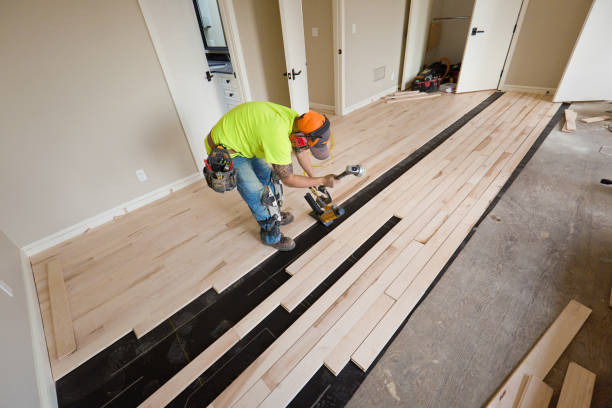
Traditional solid hardwood installed with pneumatic nailers. Advantages: proven method, allows future refinishing. Moisture considerations: thousands of nail penetrations through vapor barriers, requires proper subflooring moisture levels (below 14%), and wood must be acclimated appropriately. Best for: homes with excellent moisture control systems. Specification requirements: seal nail penetrations with appropriate sealant where nails penetrate vapor barriers, verify subflooring moisture before installation, and confirm hardwood properly acclimated.
Glue-down installation considerations:
Hardwood adhered to subflooring with mastic or urethane adhesives. Advantages: no nail penetrations through vapor barriers, better moisture barrier with proper adhesive selection. Moisture considerations: moisture-resistant adhesives required (urethane rather than water-based), subflooring must be extremely dry (below 12% moisture), and proper trowel notch size ensuring adequate coverage. Best for: homes on slabs or with superior vapor barrier systems. Specification: urethane adhesive with moisture resistance rating, 90%+ coverage (avoid skimpy adhesive application), and moisture testing before installation.
Floating floor installation considerations:
Engineered hardwood installed as floating floor (boards click together, not attached to subflooring). Advantages: allows seasonal movement, no subflooring penetrations. Moisture considerations: requires underlayment with vapor barrier properties, minimal moisture resistance from installation method itself (relies on subflooring vapor barrier), and limited refinishing capability with thin wear layers. Best for: homes with good subflooring moisture barriers, moderate moisture environments. Specification: premium vapor barrier underlayment (minimum 8-mil thickness with moisture transmission rating below 0.5 perms).
The vapor barrier integration requirement:
Regardless of installation method, hardwood installation must preserve or enhance vapor barrier integrity, not compromise it. Requirements: minimize penetrations through barriers when possible, seal penetrations that are necessary, verify barrier integrity after installation (visual inspection for damage), and maintain proper drainage at floor edges preventing moisture entry. These practices ensure installation method supports preventing mold under hardwood floors in new construction rather than undermining it.
Expansion gap requirements:
All installation methods require expansion gaps at walls, transitions, and penetrations allowing seasonal wood movement. Inadequate gaps: cause buckling when wood expands. Excessive gaps: create unsealed openings allowing moisture entry. Proper specification: 1/2 inch gaps at walls (covered by baseboards), 1/4 inch gaps at transitions (covered by transitions), and flexible sealant at penetrations allowing movement while maintaining moisture barrier. These details cost nothing additional in materials but require installer attention to detail critical for preventing mold under hardwood floors in new construction.
Manufacturer warranty requirements:
Most premium hardwood manufacturers require specific installation methods and moisture control systems for warranties to remain valid in humid climates. Review warranty requirements specifying: maximum subflooring moisture content at installation, required vapor barriers (often 10-15 mil rather than code-minimum 6-mil), acclimation period specifications, and humidity control requirements during occupancy. Ensure construction specifications meet warranty requirements. Manufacturer warranties become invalid if preventing mold under hardwood floors in new construction protocols aren’t followed, leaving homeowners without recourse for defects.
Mistake #10: Post-Construction Humidity Control and Monitoring Failures
The tenth and final critical error in preventing mold under hardwood floors in new construction is inadequate humidity control and monitoring systems for long-term protection.
Whole-house dehumidification systems:
In Santa Rosa Beach’s 70-80% outdoor humidity, maintaining indoor 40-55% humidity requires active dehumidification beyond air conditioning alone. Options: standalone whole-house dehumidifiers (70-135 pint capacity), HVAC-integrated dehumidification systems, or ultra-efficient dehumidifiers with variable capacity. Cost: $1,500-$4,000 installed. Operating cost: $400-$800 annually. This investment is essential for preventing mold under hardwood floors in new construction in coastal environments where passive humidity control is insufficient.
Humidity monitoring and control systems:
Smart home humidity monitoring provides real-time humidity tracking and alerts. Systems: smartphone-connected humidity sensors in multiple rooms ($30-$80 each), whole-home building automation systems with humidity monitoring ($500-$2,000), or data-logging humidity meters recording readings over time ($100-$300). Benefits: identify humidity problems before mold develops, verify dehumidification systems functioning properly, and document conditions for warranty claims if problems occur. Essential tool for preventing mold under hardwood floors in new construction through ongoing vigilance.
HVAC maintenance and filter systems:
Regular HVAC maintenance maintains dehumidification efficiency. Minimum requirements: quarterly filter changes (monthly in high-use seasons), annual professional HVAC service, and condensate drain line cleaning semi-annually. Enhanced filtration: MERV 11-13 filters capturing mold spores, UV lights in air handlers killing mold and bacteria, or whole-house air purifiers improving air quality. Investment in HVAC maintenance and enhancement supports preventing mold under hardwood floors in new construction through optimal system performance.
Crawl space and attic monitoring:
Install humidity sensors in crawl spaces and attics monitoring conditions in problem-prone areas. Target readings: crawl space below 60%, attic below 70%. Readings consistently exceeding targets indicate system failures requiring correction. Remote monitoring ($100-$300 for connected sensors) enables detection without physical inspection. Quarterly review of readings identifies developing problems early supporting preventing mold under hardwood floors in new construction through proactive intervention.
The homeowner education requirement:
Builders should educate homeowners on: humidity control system operation and maintenance, target indoor humidity ranges (40-55% ideal), signs of moisture problems requiring attention (musty odors, hardwood cupping, condensation), maintenance schedules for dehumidifiers and HVAC systems, and who to call for moisture problems (restoration professionals, HVAC contractors). This education empowers homeowners maintaining systems critical to preventing mold under hardwood floors in new construction success.
Warranty and documentation:
Provide homeowners with: complete documentation of moisture control systems installed, operating manuals for dehumidifiers and humidity controls, maintenance schedules and requirements, warranty information for all moisture control components, and professional contact information for system service and support. This documentation enables homeowners maintaining systems ensuring long-term success at preventing mold under hardwood floors in new construction.
Frequently Asked Questions
What’s the most important investment in preventing mold under hardwood floors in new construction?
The single most important investment in preventing mold under hardwood floors in new construction is comprehensive crawl space encapsulation (for pier-and-beam homes) or superior vapor barriers (for slab homes), costing $5,000-$12,000 but preventing 70-80% of mold risk according to restoration industry data. Crawl space encapsulation includes ground vapor barrier (minimum 10-15 mil polyethylene covering 100% of soil), sealed foundation vents, insulated foundation walls, and crawl space dehumidification maintaining below 55% humidity. Slab homes require premium subflooring vapor barrier (10-15 mil rather than code-minimum 6-mil) with all seams sealed and penetrations properly sealed. This foundation moisture control prevents the ground moisture and atmospheric humidity that cause most subflooring mold in coastal construction. Without proper foundation moisture control, all other prevention efforts eventually fail.
How much more does proper mold prevention cost in new construction?
Comprehensive preventing mold under hardwood floors in new construction specifications add $8,000-$15,000 to typical home construction costs (on $400,000-$800,000 new homes, representing 1-3% additional cost). Itemized costs: superior vapor barriers $1,200-$2,000, crawl space encapsulation $5,000-$10,000 (or slab vapor barrier upgrades $800-$1,500), proper HVAC condensate management $500-$1,000, dehumidification systems $1,500-$4,000, enhanced drainage and grading $1,000-$2,500, and proper installation verification $500-$1,000. Total investment: $10,000-$20,500 for comprehensive approach. Remediation costs when prevention is inadequate: $25,000-$65,000 average. Return on investment: 125-650% through avoided remediation. This dramatic ROI makes prevention investments financially compelling beyond the health and quality-of-life benefits.
Should I hire independent inspectors to verify mold prevention during construction?
Yes, hiring independent building science consultants or mold prevention specialists to verify preventing mold under hardwood floors in new construction implementation provides valuable quality assurance costing $800-$2,500 for multi-phase inspections but ensuring $8,000-$15,000 prevention investments are properly executed. Recommended inspection phases: pre-foundation (verify site drainage and grading plans), pre-subflooring (verify vapor barrier installation quality before covering), pre-drywall (verify HVAC condensate management, plumbing sealing, crawl space encapsulation), and pre-flooring (verify subflooring moisture content and acclimation compliance). Each inspection costs $200-$600 but catches errors while correction is inexpensive (before covering with drywall or flooring). Independent inspectors have no financial incentive to overlook deficiencies unlike builder-employed inspectors, providing objective verification of quality supporting preventing mold under hardwood floors in new construction.
Can builders guarantee mold won’t develop under hardwood floors?
No builder can guarantee absolute mold prevention, but implementing comprehensive preventing mold under hardwood floors in new construction protocols reduces risk from 18-23% baseline (inadequate prevention) to 2-5% (comprehensive prevention) according to restoration industry data from coastal humid climates. Realistic builder commitments: specify and install all moisture control systems per industry best practices for humid coastal environments, provide written documentation of systems installed and verification testing results, educate homeowners on system operation and maintenance requirements, and provide extended warranties (2-5 years rather than standard 1 year) on moisture control systems. Builders offering these commitments demonstrate seriousness about preventing mold under hardwood floors in new construction versus those making vague promises without specific system specifications or verification protocols.
What should I include in my construction contract about mold prevention?
Construction contracts should explicitly specify preventing mold under hardwood floors in new construction requirements including: vapor barrier specifications (minimum 10-15 mil polyethylene with sealed seams and penetrations), crawl space encapsulation complete with ground barrier, wall insulation, sealed vents, and dehumidification system, HVAC condensate management with primary and secondary drains to exterior locations minimum 10 feet from foundation, site drainage with minimum 8-inch fall over first 10 feet from foundation, hardwood acclimation period minimum 10 days with moisture testing before installation, subflooring moisture content verification below 14% before hardwood installation, dehumidification system installation and commissioning, pre-installation inspection rights at multiple construction phases with right to stop work pending correction of deficiencies, documentation delivery including all moisture control system specifications and test results, and extended warranty (minimum 2 years) specifically covering moisture control system performance. Without explicit contract language, verbal builder promises are unenforceable when problems develop.
Should I choose different hardwood or flooring for Santa Rosa Beach coastal construction?
Flooring material selection significantly impacts preventing mold under hardwood floors in new construction success. Hardwood remains viable in Santa Rosa Beach with proper moisture control but requires diligent maintenance. Considerations: engineered hardwood (cross-grain construction) more dimensionally stable than solid hardwood in humid climates, certain species (teak, Brazilian cherry, white oak) more moisture-resistant than others (pine, bamboo), tile or luxury vinyl plank eliminate organic material reducing mold food source (though subflooring still vulnerable without moisture control), or combination approach using tile in high-moisture areas (kitchens, bathrooms, entries) and hardwood in lower-risk areas (bedrooms, living rooms). Flooring choice doesn’t eliminate need for moisture control (even tile homes need vapor barriers preventing subflooring mold) but can reduce overall risk. Discuss flooring options with builder and restoration professionals familiar with coastal construction determining optimal balance of aesthetics, performance, and moisture resistance for your specific home design and moisture control budget.
PuroClean of Santa Rosa Beach: New Construction Consulting and Verification
Understanding the ten mistakes preventing preventing mold under hardwood floors in new construction helps homeowners specify proper systems, but professional consultation and verification ensures builders actually implement these systems correctly.
PuroClean of Santa Rosa Beach provides comprehensive new construction mold prevention services throughout the 30A corridor.
Our new construction services:
Pre-construction plan review: Review architectural plans and specifications identifying moisture control deficiencies. Recommend system upgrades supporting preventing mold under hardwood floors in new construction. Provide written recommendations for inclusion in construction contracts. Cost: $400-$800 for comprehensive plan review.
Multi-phase construction inspections: Pre-foundation drainage and grading verification. Pre-subflooring vapor barrier installation inspection. Pre-drywall HVAC, plumbing, and crawl space verification. Pre-flooring moisture content testing and acclimation verification. Post-completion humidity monitoring system installation and commissioning. Cost: $200-$600 per inspection phase ($800-$2,500 total for comprehensive multi-phase program).
Builder education and training: Training sessions for builders, framers, and HVAC contractors on preventing mold under hardwood floors in new construction in coastal environments. Specification development assistance creating moisture control specifications appropriate for Santa Rosa Beach conditions. Ongoing consultation during construction answering questions and resolving issues.
Homeowner education: New home orientation explaining moisture control systems installed. Operating instructions for dehumidifiers, humidity monitoring, and HVAC systems. Maintenance schedules and requirements. Signs of moisture problems requiring attention. Professional contact information for ongoing support.
Post-construction monitoring: Installation of humidity monitoring systems tracking conditions in living spaces, crawl spaces, and attics. Quarterly review of humidity data identifying developing problems. Annual comprehensive moisture assessment and system performance verification. Proactive intervention preventing problems before damage occurs.
Why choose PuroClean for new construction consulting:
Building science expertise: Deep understanding of moisture dynamics in coastal construction. Knowledge of what works and what fails in Santa Rosa Beach’s specific conditions. Experience with hundreds of homes identifying patterns of success and failure.
Independence: No financial stake in construction costs. Recommendations based solely on technical merit and homeowner best interests. Objective third-party verification builders cannot provide themselves.
Comprehensive approach: We consider entire building envelope (foundation, walls, roof, HVAC, plumbing) rather than isolated systems. Understanding how components interact preventing moisture problems.
Long-term focus: Our reputation depends on homes remaining mold-free for decades, not just passing initial inspections. This creates incentive for thoroughness preventing future problems.
Industry relationships: Relationships with quality builders, contractors, and suppliers who understand coastal moisture control. Can recommend professionals committed to preventing mold under hardwood floors in new construction when homeowners need contractor referrals.
Don’t trust your $500,000-$2,000,000 investment to verbal builder promises.
If you’re planning new construction, currently building, or in early construction phases, professional consultation ensures proper preventing mold under hardwood floors in new construction implementation protecting your investment and family’s health.
Call PuroClean of Santa Rosa Beach at (850) 399-3380 for new construction mold prevention consulting. We’ll review your plans, inspect construction phases, and verify builders implement systems correctly. Invest $800-$2,500 in professional oversight preventing $25,000-$65,000 remediation expenses.
The ten mistakes preventing preventing mold under hardwood floors in new construction prove that building correctly from the start costs 60-80% less than fixing problems later, while providing peace of mind that your dream home won’t become a mold nightmare.
Let PuroClean of Santa Rosa Beach provide the expertise ensuring your new construction investment includes the moisture control systems that actually work in coastal environments, protecting your family and your investment for decades.
Call (850) 399-3380 today. Build it right the first time with professional guidance on preventing mold under hardwood floors in new construction.
Available 24/7/365 | Contact Us Online | Google Business Profile | IICRC Certified | Insurance Preferred | Complete Mold Remediation Solutions