


Santa Rosa Beach home insurance can provide critical financial protection when a sudden plumbing failure or severe weather event causes hardwood floor water damage. However, many homeowners along the Scenic Highway 30A corridor mistakenly assume that carrying a premium insurance policy guarantees full coverage for all resulting damage, including fungal growth. In reality, the difference between covered and uncovered losses can determine whether your insurance carrier pays $10,000 to $50,000+ toward restoration costs or denies the claim altogether, potentially leaving you responsible for $40,000 to $85,000 or more in out-of-pocket expenses.
To protect your real estate investment and maximize your insurance recovery, you must understand the rigorous documentation standards and rapid mitigation timelines required by modern insurance adjusters.
1. The Critical Link Between Hardwood Floor Water Damage and Homeowners Insurance
Understanding how insurance companies evaluate hardwood floor water damage is essential for any coastal homeowner. Standard homeowner policies are fundamentally designed to address water losses that are sudden and accidental, rather than gradual or maintenance-related.
According to the National Association of Insurance Commissioners (NAIC, https://content.naic.org), standard property policies explicitly exclude coverage for structural losses resulting from long-term wear and tear, neglect, or ambient humidity. If water sits beneath your flooring planks for weeks before discovery, an insurer will classify the resulting wood decay as a maintenance failure rather than an unpreventable accident. This structural reality makes immediate, professionally documented water extraction a non-negotiable prerequisite for securing coverage.
2. A Costly Lesson in Seacrest Beach: A Real-World Case Study
A painful lesson from a Seacrest Beach homeowner highlights how easily an insurance claim for hardwood floor water damage can fall apart without strict procedural compliance. Her home suffered a major plumbing failure when a supply line burst inside a master bathroom wall cavity at 2:00 AM. While an emergency plumber shut off the water within 30 minutes and a water extraction company removed standing surface water that afternoon, she skipped several critical administrative steps. She failed to physically document the initial standing water with photos, omitted a certified moisture mapping report, and delayed filing a formal claim with her carrier.
Four months later, a heavy, musty odor emerged. Our professional inspection revealed extensive, hidden fungal colonization spreading across 1,200 square feet of subflooring. The mold had been multiplying steadily on moisture trapped beneath the floorboards since the burst pipe incident.
The carrier officially denied the entire claim, stating that the homeowner’s failure to execute proper sub-surface drying directly allowed the mold to develop. Below is the breakdown of her uncompensated expenses following the unmitigated hardwood floor water damage:
| Restoration Component | Technical Scope of Work Required | Cost |
| Mold Remediation | HEPA vacuuming and sanitization under full containment | $18,000 |
| Structural Repairs | Replacing rotted joists and framing elements | $24,000 |
| Flooring Replacement | Tearing out and replacing custom hardwood planks | $15,000 |
| Moisture Control | Installing a dedicated crawl space stabilization system | $10,000 |
| TOTAL OUT-OF-POCKET LOSS | Uncompensated Property Damage Costs | $67,000 |
As insurance mitigation specialists with over a decade of experience navigating the 30A corridor, we see insurance companies deny over 40% of mold-related claims due to inadequate initial documentation, delayed professional response times, or basic misunderstandings of policy framework.
3. What Homeowners Insurance Actually Covers
To secure your property investment, you must understand what standard property insurance policies actually cover. Most policies contain a strict mold sublimit—frequently capped between $10,000 and $25,000. This cap means that even during a fully covered water loss, the insurer will only pay up to that sublimit for the mold remediation portion of the project, leaving the homeowner responsible for any costs that exceed that amount.
According to the Institute of Inspection, Cleaning and Restoration Certification (IICRC, https://www.iicrc.org), policies cover sudden incidents but strictly exclude gradual hardwood floor water damage caused by long-term leaks or unmanaged coastal humidity. If a property owner delays professional intervention beyond a 24-to-48-hour window, insurance adjusters frequently deny the claim based on a failure to mitigate damage.
4. Analysis of Covered vs. Denied Property Scenarios
The operational difference between a fully covered claim and an immediate denial comes down to immediate professional intervention and clear verification data.
Covered Perils (Insurance Will Likely Pay)
- Sudden Indoor Plumbing Failures: A pipe ruptures inside a wall cavity. The homeowner immediately stops the water flow and contacts a professional restoration team to prevent long-term hardwood floor water damage.
- Sudden Appliance Malfunctions: A washing machine supply hose or a water heater tank ruptures, releasing hundreds of gallons of water across a living space. The owner documents the standing water immediately with video and relies on a certified extraction team to dry out the structural envelope.
Excluded Perils (Insurance Will Likely Deny)
- Slow, Hidden Leaks: A minor pinhole leak slowly drips behind a kitchen cabinet for six months, causing extensive rot and mold before discovery. Insurance companies categorize this type of continuous hardwood floor water damage as a maintenance failure.
- Unmanaged Crawl Space Humidity: A homeowner neglects foundation maintenance, leaving a pier-and-beam crawl space open to intense coastal humidity without a vapor barrier or dehumidifier. The constant vapor drive causes mold to rot the subfloor.

5. The Step-by-Step Protocol to Maximize Your Insurance Recovery
If your home suffers a major water loss, following a strict protocol during the first 48 hours is essential for ensuring your property claim is approved rather than denied.
1.Immediate Source Control and Visual Documentation:
Shut off the main water valve immediately. Before moving items, capture comprehensive photos of the initial hardwood floor water damage to preserve evidence for the adjuster.
2.Deploy Professional Emergency Extraction Within 2 Hours:
Contact a certified restoration company to handle structural water removal. Avoid trying to dry out deep building materials with retail box fans, as this can inadvertently spread dormant fungal spores throughout your home’s HVAC system.
3.Formal Insurance Notification Within 24 Hours:
Call your property insurance company to open an official claim file. Provide the adjuster with the exact time of discovery, the specific source of the water, a detailed overview of the damage, and the name of your professional restoration contractor.
4.Certified Fungal Assessment Within 48 Hours:
Have a certified specialist complete a professional mold inspection to verify that proper drying protocols have successfully prevented mold growth.
Frequently Asked Questions (FAQ)
How quickly should you address hardwood floor water damage?
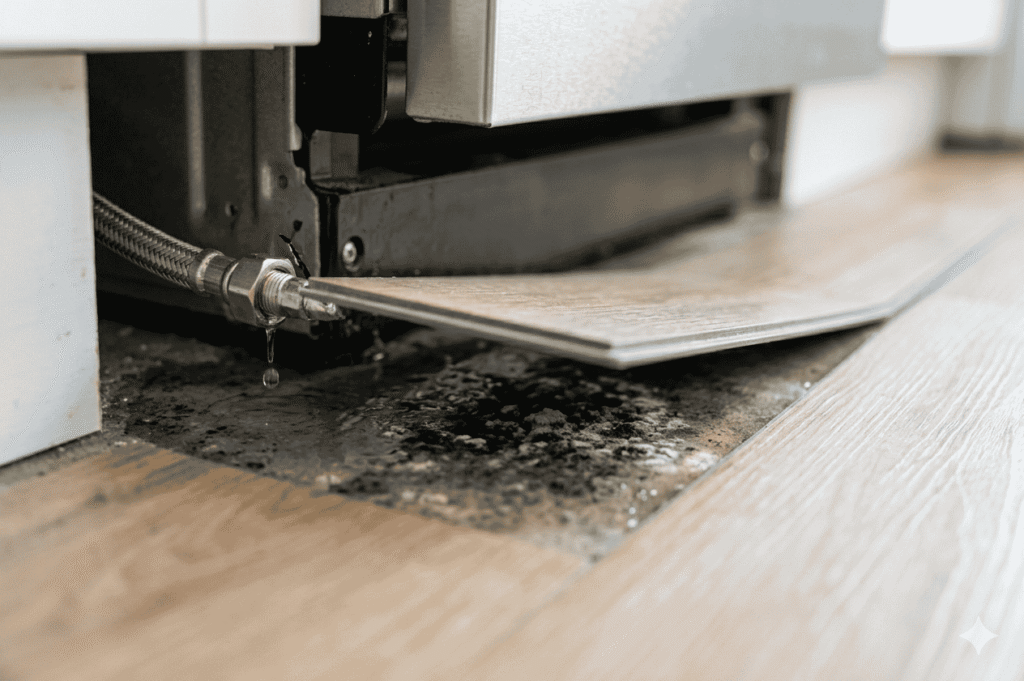
You must address hardwood floor water damage within 24 to 48 hours to prevent mold growth and permanent warping. Immediate sub-surface extraction is critical to avoiding total floor replacement.
Why do insurance companies deny mold claims so frequently?
Insurers frequently deny mold claims due to a lack of initial photographic evidence, delayed professional intervention beyond the standard 24-to-48-hour window, or trying to dry out structural water as a DIY project. Adjusters also check for signs of long-term exposure, such as advanced wood rot or rusted fasteners, which indicate a gradual problem rather than a sudden covered loss.
Will hardwood floors dry on their own?
No. While surface moisture can evaporate, deep hardwood floor water damage traps water in subfloors, meaning the planks will continue to cup, buckle, and rot without professional desiccant drying.
How much mold coverage does a typical homeowner policy include?
Most standard homeowners insurance policies feature a capped mold sublimit ranging from $10,000 to $25,000. This cap means your insurance provider will pay up to that specific limit for mold cleanup and disposal from a covered water loss, but any expenses beyond that cap must be covered out of pocket by the property owner.
Santa Rosa Beach Home Insurance & Mold: Partner with the Emerald Coast’s Trusted Insurance Documentation Specialists
When dealing with a sudden property disaster, a delayed or poorly documented response can easily lead to a claim denial, leaving you facing an expensive out-of-pocket restoration project. Protecting your property investment requires technical precision and data-backed proof to satisfy insurance requirements.
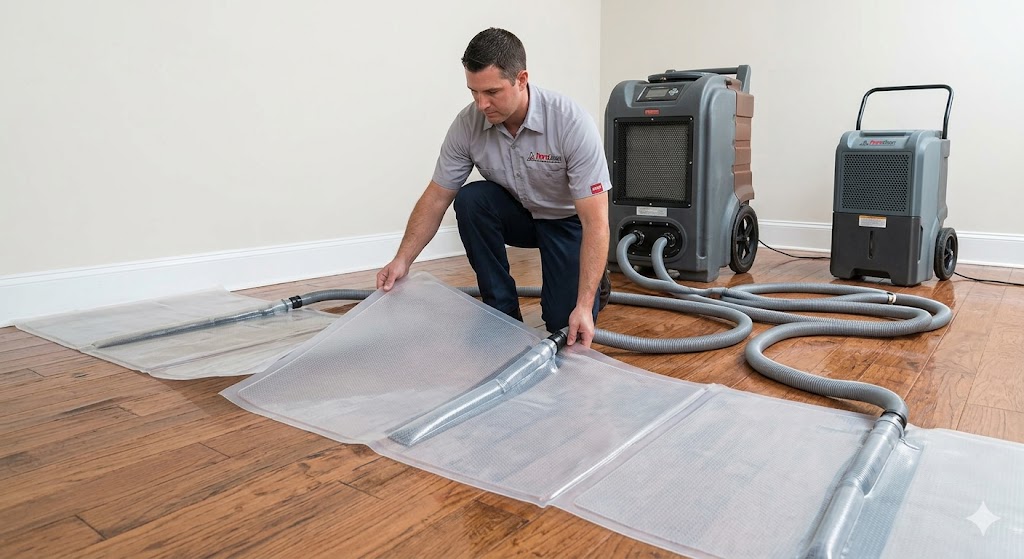
Our experienced local team specializes in IICRC-certified structural drying, precision moisture mapping, and comprehensive insurance data logging. We work directly with all major insurance carriers, providing the detailed infrared scans, moisture readings, and daily drying logs needed to ensure your claim is processed smoothly and successfully.
Don’t let an accidental plumbing failure turn into a denied claim and a major financial loss; contact PuroClean of Santa Rosa Beach today at puroclean.com or call our local dispatch team at (850) 399-3380 to resolve your hardwood floor water damage before it’s too late.
Available 24/7/365 | Contact Us Online | Google Business Profile | IICRC Certified | Insurance Preferred | Complete Mold Remediation Solutions