


Table of Contents
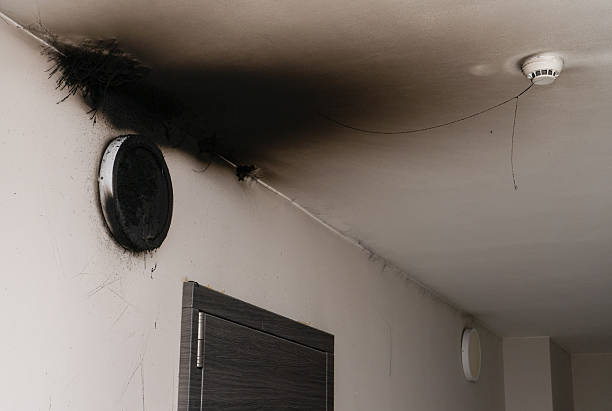
You’re standing in your kitchen after a small grease fire. The flames are out, the smoke has cleared, and aside from some black smudges on the walls, everything seems manageable. You grab some paper towels and cleaning spray, thinking you’ll just wipe things down.
This is the moment when most Santa Rosa Beach homeowners make a catastrophic mistake.
Understanding what soot is changes everything. It’s not just harmless black dust you can wipe away. It’s a complex mixture of toxic chemicals, acidic compounds, and microscopic particles that begins destroying your home, belongings, and potentially your health the moment it settles on surfaces.
That “simple cleanup” you’re planning? It won’t work. In fact, it will likely make the problem worse, spread contamination to previously unaffected areas, and cost you thousands more in the long run.
Let me explain exactly why understanding what soot is matters so critically to your home’s safety, your family’s health, and your financial wellbeing.
The Chemical Reality: Understanding What Soot Is Actually Made Of
Most people think soot is just burnt material, essentially carbon ash. Understanding what soot is from a chemical perspective reveals a far more dangerous reality.
Soot is a heterogeneous mixture containing:
Carbon particles ranging from visible specks to submicroscopic particles smaller than 2.5 microns (PM2.5)—small enough to penetrate deep into lung tissue and even enter your bloodstream.
Polycyclic aromatic hydrocarbons (PAHs)—known carcinogens that form when organic materials burn incompletely. These are the same toxic compounds found in cigarette smoke and are linked to various cancers.
Sulfur compounds that become sulfuric acid when combined with moisture in the air, actively corroding metal surfaces, electronics, and fixtures throughout your home.
Nitrogen oxides that form nitric acid under similar conditions, creating additional corrosive damage to materials and surfaces.
Heavy metals including lead, cadmium, and mercury if certain materials burned—particularly older paint, electronics, or treated wood.
Volatile organic compounds (VOCs) that continue off-gassing for weeks or months after initial deposition, creating toxic indoor air.
Formaldehyde and benzene—both known carcinogens that persist in soot residue and create ongoing health exposure.
The Environmental Protection Agency confirms that soot particles contain numerous toxic compounds posing serious health risks, particularly during prolonged exposure.
Understanding what soot is means recognizing this isn’t a cleaning problem—it’s a complex chemical contamination requiring specialized knowledge, equipment, and techniques to safely remediate.
Shocking Reality #1: Understanding What Soot Is Reveals Immediate Corrosive Damage
Understanding what soot is from a material damage perspective shows why timing is so critical.
Soot damage begins immediately upon deposition and accelerates rapidly. Within 24-48 hours of soot settling on surfaces, acidic compounds begin actively corroding metals throughout your home:
Stainless steel appliances develop permanent discoloration, etching, and pitting that cannot be reversed through any cleaning method.
Electronics experience circuit board corrosion, solder joint weakening, and component failures that manifest days or weeks later.
Plumbing fixtures including faucets, showerheads, and hardware develop corrosion that weakens structural integrity and creates leaks.
HVAC components suffer efficiency losses and premature failure as heat exchangers, coils, and fan motors corrode.
Jewelry and decorative metals tarnish permanently, often beyond restoration.
I’ve responded to homes where homeowners spent the weekend attempting DIY cleanup. By Monday morning when we arrived, their stainless steel appliances already showed permanent etching and discoloration. What could have been saved with immediate professional cleaning now required replacement—adding $8,000-$12,000 to their insurance claim.
Understanding what soot is teaches us that every minute soot remains on surfaces, chemical reactions continue destroying materials. The corrosive timeline operates in hours, not days.
Shocking Reality #2: Understanding What Soot Is Means Recognizing Its Penetrative Nature
One of the most insidious characteristics revealed by understanding what soot is: its ability to infiltrate seemingly protected areas.
Soot particles are incredibly fine. The smallest particles—those under 1 micron in diameter—can:
Penetrate through drywall settling inside wall cavities where you’ll never see them but will smell them forever.
Enter closed drawers and cabinets through microscopic gaps around doors and joints, contaminating clothing, linens, and stored items.
Infiltrate HVAC ductwork through return vents, then distribute throughout your entire home every time the system runs.
Settle into carpet fibers and padding where standard cleaning methods cannot reach, requiring complete carpet replacement.
Absorb into porous materials like upholstered furniture, mattresses, and draperies, making them permanent odor sources.
Contaminate attic insulation which then off-gasses odors into living spaces for years.
I’ve seen homes where small candle fires in living rooms created soot contamination in bedrooms on opposite sides of houses—in closets that were closed during fires. The homeowners couldn’t understand how soot reached these areas. The answer: microscopic particles traveled through HVAC returns, wall cavities, and even electrical outlets.
Understanding what soot is reveals why DIY cleaning is fundamentally inadequate. You might clean every visible surface, but contamination in hidden areas continues causing odors and health effects indefinitely.
Shocking Reality #3: Understanding What Soot Is Explains Permanent Odor Problems
That acrid, burnt smell lingering after fires? Understanding what soot is explains why it’s not just unpleasant—it’s evidence of ongoing chemical contamination.
Soot odor is volatile organic compounds (VOCs) continuously off-gassing from contaminated surfaces. These VOCs include formaldehyde, benzene, toluene, xylene, styrene, and hundreds of other compounds—many of which are toxic.
Why standard approaches fail:
Air fresheners merely mask odors temporarily without addressing contamination sources.
Ozone generators used by some homeowners can damage materials and create additional harmful compounds.
Opening windows provides temporary relief but doesn’t remove embedded contamination.
Painting over soot traps odors temporarily but they eventually bleed through, and acids in soot cause paint to bubble and peel.
Standard cleaning products don’t neutralize the chemical compounds causing odors.
Understanding what soot is reveals why professional remediation uses specialized approaches: thermal fogging introducing deodorizing particles that neutralize odor compounds at molecular levels, hydroxyl generators breaking down odor molecules through advanced oxidation, sealing primers specifically formulated to encapsulate soot residue, and complete removal of contaminated porous materials that cannot be effectively cleaned.
Homeowners who attempt DIY cleanup often live with persistent odors for years. The smell becomes “normal” to them through olfactory adaptation, but visitors immediately notice it—creating serious problems when trying to sell properties.
Now that you’re understanding what soot is, don’t risk your Santa Rosa Beach home with incomplete cleanup. Call PuroClean of Santa Rosa Beach at (850) 399-3380 for professional soot remediation. Available 24/7 for emergency response.
Shocking Reality #4: Understanding What Soot Is Protects Your Electronics
Understanding what soot is from an electronics perspective reveals why seemingly functional devices face delayed destruction.
Electronic components are particularly vulnerable because microscopic soot particles settle on circuit boards creating conductive bridges between components that cause short circuits, acidic compounds corrode delicate solder joints and connections, heat from normal operation accelerates corrosion processes, and fans and ventilation in devices actively draw soot particles into internal components.
Common electronic casualties: computers and laptops, smart TVs, gaming consoles, home automation systems, kitchen appliances with electronic controls, garage door openers, security systems, and networking equipment.
The particularly frustrating aspect: electronic damage often doesn’t manifest immediately. A computer might work fine for weeks after fire exposure, then suddenly fail as corrosion reaches critical points. By then, insurance claim periods may have closed, leaving you responsible for replacement costs.
Understanding what soot is means recognizing that professional fire restoration must include electronic inventory documenting all devices in affected areas, specialized cleaning using techniques designed for sensitive electronics, testing and certification verifying devices remain functional, and proper documentation for insurance claims if replacement is necessary.
I’ve seen homeowners lose $15,000+ in electronics because they didn’t realize soot exposure required professional evaluation and cleaning. They assumed devices were fine because they still worked immediately after fires, only to experience cascading failures over subsequent months.
Shocking Reality #5: Understanding What Soot Is Reveals HVAC Distribution Dangers
Understanding what soot is and how it interacts with HVAC systems is critical because your comfort system can become a contamination distribution network.
During fires: Smoke and soot particles are drawn into HVAC return vents, coating ductwork interiors, settling on blower components, and embedding in filters.
After fires: When you resume HVAC operation, contaminated components distribute particles throughout your entire home—including rooms that weren’t affected by the original fire.
This creates several cascading problems: expanded contamination from kitchen fires becoming whole-house contamination through HVAC distribution, persistent odors as contaminated ductwork releases smoke smells every time systems run, reduced efficiency with soot-coated coils and components reducing heating/cooling efficiency by 20-40%, continuous health exposure as circulated soot particles expose family members to toxic compounds, and accelerated component damage as acidic soot speeds wear on motors, heat exchangers, and other components.
Understanding what soot is means recognizing that professional remediation requires complete duct cleaning using specialized equipment, HVAC component inspection identifying damaged parts requiring replacement, filter replacement with high-efficiency filters during remediation, coil cleaning using appropriate chemicals that don’t damage components, and system sanitization eliminating residual odors and contamination.
Many homeowners simply change filters and assume systems are fine. Then they wonder why smoke odors persist and energy bills increase. The hidden HVAC contamination continues causing problems indefinitely until professionally addressed.
Shocking Reality #6: Understanding What Soot Is Protects Children’s Health
Understanding what soot is from a health perspective is especially critical for families with children.
The health implications of soot exposure extend far beyond immediate smoke inhalation during fires. Short-term exposure causes respiratory irritation including coughing and wheezing, eye and skin irritation from contact, headaches and dizziness from VOC exposure, and nausea particularly in enclosed spaces.
Long-term exposure to uncleaned soot creates more serious concerns: increased cancer risk from carcinogenic PAHs and other compounds, chronic respiratory conditions including asthma development or exacerbation, cardiovascular effects from fine particle inhalation entering bloodstream, and neurological impacts particularly in children from toxic compound exposure.
Children are especially vulnerable because: faster breathing rates mean higher exposure per body weight, more time on floors where heavier particles settle, developing systems are more susceptible to toxic effects, and hand-to-mouth behavior increases ingestion risk from contaminated surfaces.
The American Lung Association emphasizes that smoke and soot residue create ongoing air quality problems requiring professional remediation to protect health.
I’ve worked with families who developed persistent respiratory issues after attempting DIY fire cleanup. They cleaned visible surfaces but left contamination in carpets, ductwork, and hidden areas. Six months later, children were using inhalers, adults had chronic coughs, and medical bills exceeded what professional remediation would have cost.
Shocking Reality #7: Understanding What Soot Is Protects Property Values
From a financial perspective, understanding what soot is reveals its devastating impact on home values and salability.
Florida’s real estate disclosure laws require sellers to reveal known defects, including fire history. Even after professional remediation, fire history affects buyer perception, appraisal values, insurance costs, financing challenges, and inspection scrutiny.
If fire damage isn’t properly remediated, problems multiply: failed inspections when buyers detect lingering odors or visible damage, mandatory disclosure of incomplete remediation giving buyers massive negotiating leverage, repair requirements demanded by buyers before closing, and deal cancellations when remediation costs exceed buyer willingness to proceed.
I’ve seen Santa Rosa Beach homes sit on markets for 6-12 months after incomplete fire cleanup, ultimately selling for $30,000-$60,000 below market value. The homeowners tried saving money with DIY cleanup but lost far more in property value than professional remediation would have cost.
Understanding what soot is means recognizing that proper professional remediation with complete documentation actually protects value by demonstrating responsible ownership through quality restoration, providing certifications proving successful remediation, creating warranty records transferable to buyers, and eliminating odors and visible damage that would otherwise tank buyer interest.
The Santa Rosa Beach Factor: Understanding What Soot Is Here
Understanding what soot is in Santa Rosa Beach’s coastal environment reveals unique challenges.
High humidity accelerates acid formation from soot compounds—atmospheric moisture combines with sulfur and nitrogen to actively form acids within hours. Salt air compounds corrosion problems as coastal air already contains salt that accelerates metal corrosion; combined with acidic soot, rates increase dramatically. Warm temperatures accelerate chemical reactions year-round, and HVAC dependency means systems run almost constantly, distributing contamination more rapidly.
These factors mean soot damage that might take weeks to become severe in other locations can become catastrophic in days here. The window for preventing permanent damage is even shorter for Santa Rosa Beach homeowners.
Professional Remediation: Understanding What Soot Is Demands Expert Response
Understanding what soot is reveals why professional remediation following systematic protocols is essential: assessment and documentation inspecting all affected areas and photographing damage, containment of affected areas preventing contamination spread, air filtration operating HEPA scrubbers throughout processes, content removal for off-site cleaning and storage, surface cleaning using specialized chemical cleaners formulated for soot’s acidic compounds, HVAC remediation including complete duct cleaning and system sanitization, deodorization through thermal fogging and hydroxyl treatment, disposal of contaminated materials that cannot be salvaged, sealing and priming with specialized primers encapsulating residual contamination, reconstruction including new insulation and finishes, and clearance testing confirming successful remediation.
This process typically takes 3-10 days depending on fire extent, involves specialized equipment worth tens of thousands of dollars, and requires certified technicians with extensive training.
Frequently Asked Questions
Why is understanding what soot is so important? Because most homeowners catastrophically underestimate soot, treating it like ordinary dirt rather than toxic chemical contamination. This misunderstanding leads to inadequate DIY cleanup attempts that worsen problems, spread contamination, create permanent damage, and cost tens of thousands more than immediate professional intervention would have.
Can I just paint over soot stains after understanding what soot is? No. Understanding what soot is reveals why painting over it guarantees failure. Soot’s acidic compounds bleed through standard paint within weeks or months, creating discoloration and odors. Professional remediation requires chemical cleaning followed by specialized sealing primers designed specifically for fire damage before finish painting.
How does understanding what soot is change my approach to fires? It transforms fire cleanup from a DIY cleaning project to a professional remediation requirement. Understanding what soot is means recognizing that even small fires create serious toxic contamination requiring specialized equipment, chemicals, and expertise to address properly.
Does understanding what soot is explain why odors persist? Absolutely. Understanding what soot is reveals that persistent odors are VOCs continuously off-gassing from contaminated surfaces—evidence of ongoing toxic chemical presence. Air fresheners and painting don’t eliminate soot; they just temporarily mask evidence of contamination that continues damaging your home and health.
How quickly does soot damage begin after understanding what soot is? Immediately. Understanding what soot is shows that acidic compound formation begins within hours of deposition. Metal corrosion becomes visible within 24-48 hours. The critical intervention window is 24-48 hours—after that, permanent damage requiring replacement rather than cleaning becomes increasingly likely.
Will insurance cover professional remediation after understanding what soot is? Usually, if you have fire coverage and follow proper procedures. Understanding what soot is helps you recognize why professional documentation and remediation are necessary for insurance claims. DIY cleanup before professional assessment can void coverage or result in severely reduced claim payments.
Understanding what soot is changes everything. Don’t risk incomplete cleanup. PuroClean of Santa Rosa Beach provides comprehensive fire damage restoration with complete soot remediation. Call (850) 399-3380 now for 24/7 emergency response and free insurance claim assistance.
PuroClean of Santa Rosa Beach: Experts in Understanding What Soot Is
When fire damage affects your Santa Rosa Beach home, understanding what soot is is the first critical step. Professional remediation by certified experts who truly understand soot actually protects your home, health, and investment.
PuroClean of Santa Rosa Beach provides 24/7 emergency response minimizing damage through immediate intervention, complete damage assessment identifying all contamination including hidden areas, advanced cleaning techniques using specialized chemicals designed for soot’s toxic compounds, HVAC decontamination ensuring systems don’t redistribute contamination, content restoration saving your belongings through proven professional techniques, odor elimination using advanced technologies that neutralize rather than mask, insurance coordination including detailed documentation maximizing your claim, and final verification through air quality testing confirming safe reoccupancy.
We deeply understand soot chemistry, the urgency of rapid response, and the comprehensive approach required for complete remediation. We’re not just cleaning companies—we’re certified fire restoration specialists using industry-best-practices developed through decades of research and real-world experience.
Most importantly, we’re local. We live and work in Santa Rosa Beach, and our reputation depends on protecting our neighbors’ homes and families. Understanding what soot is drives everything we do—and we’re committed to helping homeowners understand why professional remediation matters so critically.
Don’t let lack of understanding what soot is cost you your health, your home’s value, or tens of thousands in preventable damage. When fire strikes, immediate professional response makes all the difference.
Fire damage in your Santa Rosa Beach home? Now that you’re understanding what soot is, call PuroClean of Santa Rosa Beach at (850) 399-3380 immediately for emergency soot remediation. We work with all insurance companies and provide 24/7 response. Don’t wait—every hour counts. Call now.
Your home is your sanctuary and largest investment. Protect both with professional fire damage restoration guided by deep understanding of what soot is and what it does to homes, health, and property values.
Available 24/7/365 | Contact Us Online | Google Business Profile | IICRC Certified | Insurance Preferred | Complete Water Damage Remediation Solutions