 PuroClean of Santa Rosa Beach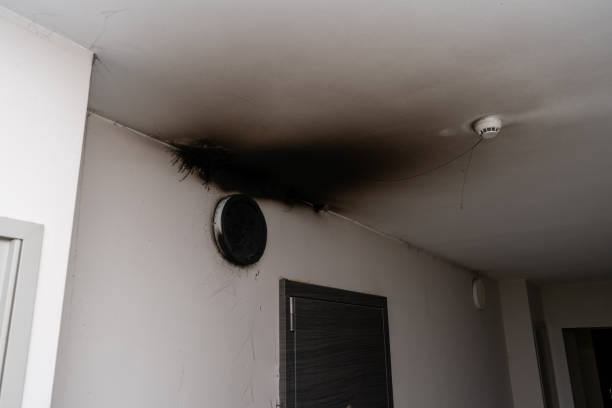
Table of Contents
A family thought they’d dodged a bullet. Their small electrical fire was contained to one wall outlet. Flames out within minutes. No major damage. Everything seemed manageable.
Three months later, their six-year-old developed persistent asthma. Their $4,000 TV died suddenly. Black streaks appeared despite multiple cleanings. A musty smell permeated their home. Energy bills increased 40%.
Professional assessment revealed extensive soot contamination throughout their 2,400-square-foot house. That “small” electrical fire had produced toxic residue infiltrating their HVAC system, wall cavities, electronics, and every room. Restoration cost: $28,000. Their DIY cleanup had made the contamination worse.
What is soot contamination? It’s far more than visible black residue on walls. It’s a complex, toxic chemical infiltration that penetrates every surface, hidden space, and material in your home—destroying your property, threatening your health, and decimating your home’s value while you remain completely unaware.
Understanding What Is Soot Contamination: The Chemical Reality
Most homeowners think soot contamination is just dirt you can wipe away. The reality is catastrophically different.
What is soot contamination from a scientific perspective? It’s the widespread distribution and deposition of toxic particulate matter and chemical compounds produced during incomplete combustion. This contamination includes:
Visible surface deposits—the black smudges you can see on walls, ceilings, and fixtures.
Invisible microscopic particles—submicroscopic particles smaller than 2.5 microns that penetrate deep into porous materials and remain airborne for days.
Chemical vapors—volatile organic compounds (VOCs) that off-gas continuously from contaminated surfaces.
Acidic compounds—sulfuric and nitric acid forming when soot reacts with atmospheric moisture.
Carcinogenic residues—polycyclic aromatic hydrocarbons (PAHs) and other cancer-causing substances embedded in every contaminated surface.
According to the National Fire Protection Association, modern soot contamination is exponentially more toxic than historical fire residue due to the prevalence of synthetic materials in contemporary homes.
The Small Fire Myth: Why Contamination Extent Doesn’t Match Fire Size
Homeowners make a fatal assumption: small fires create small contamination problems. What is soot contamination teaching us? Fire size is irrelevant—what burned determines toxicity and spread.
A massive wood fire in a fireplace produces relatively benign carbon-based contamination. A “small” electrical fire affecting one wall outlet produces contamination containing burning plastic releasing dioxins, copper wire creating toxic metal fumes, flame retardants releasing brominated compounds, PVC conduit producing hydrochloric acid, electronic components releasing heavy metals including lead and cadmium, and synthetic insulation off-gassing complex chemical mixtures.
This toxic cocktail spreads throughout entire homes regardless of the original fire’s small footprint. I’ve seen candle fires smaller than wastebaskets produce worse contamination than hours-long fireplace incidents. The fire size myth costs homeowners tens of thousands in underestimated remediation needs.
How Soot Contamination Spreads Through Your Entire Home
Understanding what is soot contamination requires recognizing how it migrates from fire locations to every corner of your property.
Hour 0-4 Post-Fire: Airborne particles settle on every exposed surface in affected rooms. Finer particles remain suspended for hours, migrating via natural air currents and HVAC circulation throughout the entire house—including rooms far from the original fire.
Hour 4-24: Settled contamination begins chemical reactions with atmospheric moisture. Acidic compounds form, beginning corrosive damage to metals. VOCs off-gas from deposits, creating toxic air quality throughout the home.
Day 1-3: Microscopic particles penetrate into porous materials: carpets, upholstery, draperies, mattresses, clothing in closets. Contamination enters wall cavities through electrical outlets, light fixtures, and construction gaps. HVAC operation pulls particles into ductwork where they coat interior surfaces.
Day 3-7: The contamination is now systemic. Every room shows deposits. HVAC distribution ensures even “clean” areas are affected. Acidic corrosion becomes visible on appliances and electronics. Cross-contamination from foot traffic spreads particles continuously.
Week 2-4: What homeowners perceive as a “cleaned up” fire scene is actually a fully contaminated property. Electronics begin failing from corrosion. HVAC efficiency drops from coated coils. Persistent odors pervade despite repeated DIY cleaning attempts.
This progression demonstrates that what is soot contamination isn’t a localized problem; it’s a whole-house crisis requiring comprehensive professional intervention.
The HVAC System: Soot Contamination’s Distribution Network
What is soot contamination‘s most dangerous characteristic? Its ability to weaponize your HVAC system into a contamination distribution network.
Modern HVAC systems circulate your home’s entire air volume 2-3 times per hour. During and immediately after fires, this circulation draws smoke and particles into return vents, deposits contamination onto ductwork interiors coating every surface, embeds particles in coils and blower components, saturates filters which then become secondary contamination sources, and distributes contamination to every room connected to the system, often the entire house.
After fires, every time your HVAC operates, it dislodges settled particles making them airborne again, heats contaminated components accelerating VOC off-gassing, circulates toxic air throughout your home, and recontaminates surfaces you’ve cleaned.
I’ve investigated homes where kitchen fires affected single rooms but HVAC operation contaminated every space in 3,000+ square feet. Homeowners spent weeks cleaning kitchens thoroughly but couldn’t understand why smoke odors persisted in bedrooms, bathrooms, and living areas on opposite sides of their houses. Their HVAC systems had become active contamination distribution networks.
Professional soot contamination remediation requires complete HVAC decontamination: specialized duct cleaning removing all deposited material, coil and heat exchanger cleaning with appropriate chemicals, blower and fan assembly decontamination, plenum and air handler cleaning addressing overlooked areas, filter replacement with high-efficiency options, and complete system sanitization neutralizing odors and residual toxins.
This HVAC remediation costs $2,000-$5,000 depending on system size but is absolutely essential. Homeowners attempting DIY cleanup typically just change filters and wonder why contamination problems persist indefinitely.
Content Contamination: What Is Soot Contamination Doing to Your Belongings
What is soot contamination doing beyond your home’s structure? Destroying virtually everything you own.
Electronics: Corrosion causing delayed failures weeks or months after fires. Computers, TVs, gaming consoles, smart home devices; all affected. Losses: $5,000-$15,000 typically.
Clothing and textiles: Absorbing odors and chemicals that standard washing cannot remove. Contaminated fabrics continue off-gassing VOCs indefinitely.
Upholstered furniture: Becoming permanent odor sources as contamination penetrates foam padding beyond cleaning reach. Most requires replacement.
Books and papers: Absorbing contamination permanently through porous paper. Family photos, important documents, collections—often total losses.
Children’s toys: Creating chronic exposure risks, especially porous materials like stuffed animals and wooden toys.
Mattresses and bedding: Cannot be effectively cleaned once contaminated. Direct replacement required.
Food items: Even in closed containers can absorb contamination, becoming unsafe for consumption.
Artwork and collectibles: Damaged by both direct contamination and acidic vapors.
Professional content restoration involves detailed inventory documentation, removal to clean off-site facilities, specialized cleaning using appropriate techniques for different materials, ozone or hydroxyl treatment for odor removal, secure storage during home restoration, and appropriate return or replacement of items.
Many items cannot be salvaged. Content losses from “small” residential fires frequently reach $15,000-$40,000, far exceeding homeowners’ expectations based on the fire’s apparent minor nature.
Experiencing soot contamination in your 30A home? Don’t risk incomplete cleanup. Call PuroClean of Santa Rosa Beach at (850) 399-3380 for comprehensive contamination remediation including content restoration. Available 24/7 for emergency response.
The Health Impact Timeline of Soot Contamination
Understanding what is soot contamination from a health perspective reveals escalating dangers over time.
Immediate Effects (Hours-Days): Eye irritation and redness, throat irritation and coughing, skin irritation from contact, headaches from VOC exposure, nausea in heavily contaminated spaces.
Short-Term Effects (Days-Weeks): Persistent respiratory symptoms including cough and wheezing, asthma or COPD exacerbation in affected individuals, allergic reactions including rashes and respiratory distress, chronic fatigue and difficulty concentrating, sleep disruption from odors and irritation.
Long-Term Effects (Weeks-Months): Development of new asthma in previously healthy individuals, chronic sinus infections resistant to antibiotic treatment, permanent allergic sensitization, potential increased cancer risk from carcinogenic PAH exposure, neurological effects including cognitive difficulties, cardiovascular impacts from fine particle inhalation entering bloodstream.
Children face disproportionate risks due to higher breathing rates per body weight, more time on floors where heavier particles settle, hand-to-mouth behavior increasing ingestion risk, and developing respiratory and immune systems more susceptible to permanent damage.
The Agency for Toxic Substances and Disease Registry confirms that prolonged soot contamination exposure creates serious chronic health risks requiring immediate professional remediation.
Santa Rosa Beach’s Unique Soot Contamination Challenges
What is soot contamination like in Santa Rosa Beach’s coastal environment? Exponentially worse than inland locations.
High humidity accelerates chemical reactions. Atmospheric moisture combines with sulfur and nitrogen compounds in contamination to rapidly form corrosive acids—processes taking weeks elsewhere occur in days here.
Salt air compounds corrosion problems. Coastal air already contains salt promoting metal corrosion; combined with acidic soot contamination, damage rates multiply dramatically.
Year-round warmth means chemical reactions never slow. Cooler climates experience seasonal temperature drops slowing contamination damage progression. Here, warm temperatures maintain constant reaction rates year-round.
HVAC dependency means near-constant system operation. Homes in regions with seasonal HVAC use experience limited contamination distribution periods. Santa Rosa Beach homes run systems almost continuously, distributing contamination relentlessly.
These factors create dramatically shorter intervention windows. Contamination damage taking two weeks to become severe elsewhere manifests in mere days here. Santa Rosa Beach homeowners cannot afford the delays common in other regions.
Insurance Coverage for Soot Contamination Remediation
Most homeowners policies cover fire damage including necessary cleaning and contamination remediation. However, coverage depends on proper documentation before cleanup begins, using approved restoration vendors, prompt notification within 24-48 hours typically, and reasonable mitigation efforts to prevent additional damage.
Common coverage disputes involve contamination extent with insurers claiming certain areas weren’t affected, cleaning versus replacement with insurers wanting to clean items professionals say require replacement, content loss underestimation, hidden damage in HVAC and wall cavities, and loss of use/temporary housing coverage.
Maximizing coverage requires documenting everything photographically before any cleanup, obtaining professional estimates from certified restoration companies, not accepting inadequate initial settlement offers, challenging denials with professional documentation supporting necessity, and understanding your specific policy’s limits and exclusions.
Many homeowners lose tens of thousands in valid coverage simply by not understanding claim processes or accepting lowball initial offers without professional advocacy.
Why the First 48 Hours Are Critical for Soot Contamination
What is soot contamination doing during the first two days that makes timing so critical?
0-24 Hours—Prevention Window: Immediate professional intervention can prevent most permanent damage through emergency water extraction if firefighting created moisture, surface cleaning before acidic compounds fully form, air filtration capturing airborne particles, HVAC system shutdown preventing distribution, and content removal protecting valuable belongings.
24-48 Hours—Mitigation Window: Damage processes have started but aggressive intervention still minimizes problems through surface cleaning preventing deeper material penetration, acid neutralization stopping corrosion progression, deodorization addressing forming odors, and HVAC cleaning preventing long-term distribution cycles.
48+ Hours—Escalation Phase: Permanent damage becomes increasingly likely with each passing hour. Acid corrosion permanently etches surfaces. Odors embed in materials beyond remediation. Electronics sustain irreversible corrosion damage. Content contamination becomes ineradicable. Remediation costs multiply exponentially.
Professional restoration companies operate 24/7 specifically because this timeframe matters critically to successful outcomes and cost control.
Common Mistakes That Worsen Soot Contamination
Well-intentioned homeowners inadvertently compound contamination through using wrong household cleaners that set stains permanently instead of removing them, improper wiping techniques spreading contamination rather than lifting it, operating HVAC systems before duct cleaning distributing particles throughout homes, cleaning without proper respiratory protection creating serious health exposure, addressing only visible contamination while ignoring hidden deposits, delaying professional intervention while damage accelerates, attempting electronics cleaning with improper techniques causing additional damage, keeping contaminated items that continuously recontaminate cleaned areas, and premature painting that traps contamination beneath new finishes.
Each mistake transforms manageable contamination into catastrophic damage requiring exponentially more expensive intervention later.
Frequently Asked Questions
How do I know if my fire created serious soot contamination? Any fire producing visible soot deposits, persistent smoke odors, or smoke that filled any room has created contamination requiring professional assessment. Fire size doesn’t determine contamination severity—material type and distribution patterns do.
Can air purifiers remove soot contamination? No. Air purifiers capture some airborne particles but don’t remove deposited contamination on surfaces, embedded in materials, or accumulated in HVAC ductwork. They’re helpful supplements during remediation but cannot replace professional cleaning.
How long do health effects from soot contamination last? Acute effects resolve within days of exposure ending. Chronic effects from prolonged exposure persist months or years. Respiratory sensitization causing asthma can be permanent—once developed from contamination exposure, it may persist indefinitely.
What should I do immediately after discovering fire damage? Evacuate if unsafe, call 911 if needed. After fire department clearance, photograph all damage from doorways for documentation. Contact your insurance company immediately. Call professional restoration services. DO NOT attempt cleanup yourself. DO NOT operate HVAC systems. Prevent additional damage by covering broken windows or openings.
Will homeowner’s insurance cover professional contamination remediation? Usually yes, if you have fire coverage and follow proper claim procedures. Document damage before any cleanup, notify insurers promptly within required timeframes, and coordinate through approved restoration vendors. DIY cleanup before professional assessment can void coverage.
How can I tell if soot contamination is affecting my family’s health? Common indicators include respiratory symptoms that worsen at home and improve when away, persistent unexplained headaches or fatigue, new allergies or asthma development after fire exposure, skin irritation or rashes, multiple family members experiencing similar symptoms simultaneously, and children having more severe symptoms than adults.
Don’t underestimate soot contamination from any fire. PuroClean of Santa Rosa Beach provides free assessments determining contamination extent and necessary remediation. Call (850) 399-3380 for expert evaluation, protect your family’s health and home’s value.
PuroClean of Santa Rosa Beach: Your Soot Contamination Remediation Specialists
When fire affects your home, understanding what is soot contamination is only the beginning. Professional remediation by certified experts actually eliminates the danger and protects your investment.
PuroClean of Santa Rosa Beach specializes in comprehensive soot contamination remediation including 24/7/365 emergency response minimizing damage through immediate intervention, thorough assessment using advanced detection identifying all contamination including hidden deposits, advanced cleaning with specialized chemicals and techniques designed for toxic contamination, complete HVAC decontamination eliminating distribution networks, professional content restoration saving belongings whenever possible, odor elimination using advanced technologies that neutralize rather than mask, insurance coordination including detailed documentation and adjuster communication, and final verification through air quality testing confirming safe reoccupancy.
We understand even “small” fires create serious whole-house contamination requiring professional expertise. Our certified technicians follow IICRC standards—the industry gold standard—using specialized equipment unavailable to consumers.
We’re local Santa Rosa Beach professionals understanding our unique coastal climate’s impact on contamination and the shortened intervention windows our environment creates. We’re your neighbors, and your family’s safety and your home’s complete restoration are our priorities, not just completing jobs quickly.
Don’t let soot contamination create long-term health consequences, property damage, or value destruction. When fire strikes, immediate professional response eliminates contamination before it compounds into catastrophic problems.
Soot contamination from fire damage? Even “small” fires create serious whole-house contamination. Call PuroClean of Santa Rosa Beach at (850) 399-3380 immediately for emergency remediation. We respond 24/7, work with all insurance companies, and guarantee complete contamination elimination. Protect your family and investment, call now.
Your home should be your safe haven, not a source of toxic contamination. Professional remediation ensures complete elimination of soot contamination, protecting both your family’s health and your property’s value for years to come.
Available 24/7/365 | Contact Us Online | Google Business Profile | IICRC Certified | Insurance Preferred | Complete Water Damage Remediation Solutions


 PuroClean of Santa Rosa Beach