


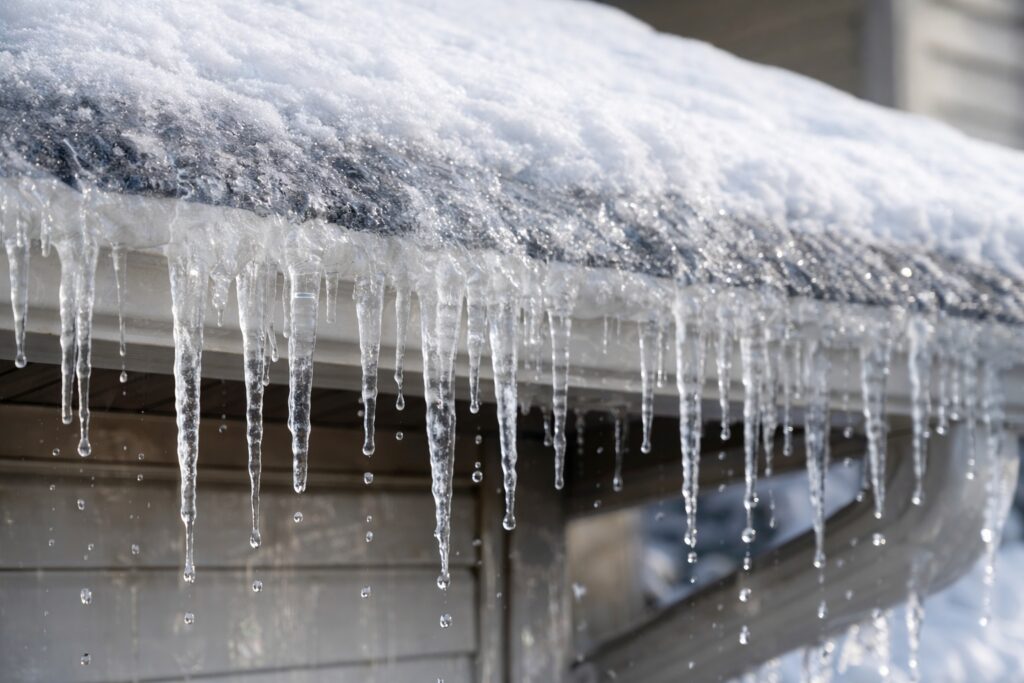
When winter arrives in Indiana, homeowners have more than icy driveways and snow-covered sidewalks to worry about. Repeated freezing and thawing can create conditions that allow water to enter a home through winter roof leaks.
One potential cause are ice dams. These ridges of ice develop along roof edges and can prevent melting snow from draining properly. As water collects behind ice dams, it may find its way beneath roofing materials and into the structure below.
The tricky part is that a roof leak does not always appear immediately. Water can accumulate in attic insulation or travel along framing before a homeowner notices a stain on the ceiling. By then, the damage may extend beyond the original entry point.
Understanding how ice dams form, what warning signs to watch for, and when to seek professional help can make a difference in protecting your property throughout the winter.
What Causes Ice Dams and Winter Roof Leaks?
Ice dams typically develop when different parts of a roof are at different temperatures. Heat escaping from a poorly insulated or inadequately air-sealed attic can warm the upper portion of a roof, melting accumulated snow. The resulting water flows toward the colder roof edges, where it can freeze again.
As this process repeats, ice dams gradually build up along the eaves. Eventually, the ridge of ice can obstruct the flow of additional melting snow.
Water trapped behind ice dams may then work its way beneath shingles or other roofing materials. Once it passes through the roof assembly, it can wet insulation, damage ceiling materials, and affect walls and other building components.
Several conditions can contribute to ice dam formation:
- Uneven attic temperatures: Heat escaping from living spaces can warm sections of the roof and encourage snowmelt.
- Inadequate insulation or air sealing: Gaps around attic hatches, recessed lights, and other penetrations can allow warm air to escape.
- Blocked gutters: Debris and existing ice can interfere with drainage, although ice dams can form even when gutters are clean.
- Repeated freeze-thaw cycles: Fluctuating temperatures can cause snow to melt and refreeze, allowing ice to accumulate over time.
Schererville homeowners may encounter these conditions during periods of snowfall followed by milder daytime temperatures and colder nights. Paying attention to changing winter weather can help you recognize when your roof may be vulnerable.
Five Warning Signs of an Ice Dam or Winter Roof Leak
You do not need to climb onto your roof to look for potential problems. In fact, walking on an icy roof can be extremely dangerous. Instead, watch for changes inside your home and visible signs from the ground.
1. Thick Ice Along the Roof Edge
Large icicles and substantial ridges of ice along the eaves can indicate that melting water is repeatedly freezing near the edge of your roof. Icicles alone do not confirm an ice dam, but extensive ice buildup deserves attention, especially after snowfall.
2. Water Stains on Ceilings or Walls
Brown or yellow discoloration, bubbling paint, peeling wallpaper, and damp drywall can indicate water intrusion. Pay particular attention to ceilings on the upper floor and walls near the roofline.
Do not assume that a small stain is harmless. Water may have traveled from another part of the roof before becoming visible indoors.
3. Damp or Compressed Attic Insulation
If you can safely inspect your attic without disturbing wet materials or entering an unsafe space, look for damp insulation, water marks, or unusual moisture around roof decking and framing.
Wet insulation loses some of its effectiveness and can remain damp long enough to contribute to mold growth. If you notice moisture, arrange for the source to be investigated rather than simply replacing the insulation.
4. Peeling Paint or Bubbling Drywall
Water can move down rafters and wall cavities before appearing in a room. As moisture accumulates, painted surfaces may bubble, drywall may soften, and trim may begin to swell.
These symptoms are not exclusive to ice dams, but they are good reasons to investigate a possible roof leak or another source of water intrusion.
5. Musty Odors After a Thaw
A persistent musty smell in an upstairs bedroom, hallway, or attic may indicate that building materials have remained damp. The odor may become more noticeable after temperatures rise and moisture begins to spread.
Do not rely on smell alone to determine whether mold is present. A professional assessment can help identify moisture sources and determine whether further investigation is necessary.
How to Reduce the Risk of Winter Roof Damage
Although no homeowner can eliminate every risk associated with winter weather, several maintenance steps can help reduce the likelihood of ice dams and related leaks.
Inspect your roof before winter. Have a qualified roofing professional examine damaged shingles, flashing, roof penetrations, and other areas where water could enter. Addressing existing defects before snowfall can help prevent minor vulnerabilities from becoming larger problems.
Keep gutters and downspouts clear. Remove leaves and other debris before freezing temperatures arrive. Proper drainage helps rainwater and melting snow move away from the roof and foundation, although clean gutters alone will not prevent ice dams.
Check attic insulation and ventilation. Consistent roof temperatures can help reduce the conditions that contribute to ice dam formation. A qualified professional can assess insulation levels, air leakage, and ventilation to determine whether improvements are needed.
Watch for recurring ice buildup. If ice dams appear in the same location every winter, the underlying cause may involve heat loss, roof design, or drainage. Repeatedly removing visible ice without addressing the cause may not resolve the problem.
Avoid removing ice yourself. Chipping away at an ice dam can damage shingles and gutters. Climbing onto an icy roof also creates a serious fall hazard. Consult a qualified roofing professional about safe removal and prevention.
What Should You Do If a Winter Roof Leak Occurs?
If you discover water entering your home, act promptly. The first priority is protecting people from hazards and limiting additional damage.
- Protect yourself: If water is near light fixtures, outlets, or electrical equipment, avoid the area. Do not touch wet electrical components. If it is safe to do so, shut off power to the affected area; otherwise, contact a qualified electrician.
- Move belongings: Relocate furniture, electronics, and valuables away from the leak if you can do so safely.
- Collect dripping water: Place a container beneath a small, accessible leak if doing so presents no electrical or structural risk. Do not stand beneath a visibly sagging ceiling.
- Document the damage: Take photographs of visible water, damaged belongings, and affected rooms before cleanup, provided it is safe.
- Arrange for repairs and restoration: A roofing professional can address the roof defect, while a property restoration team can assess and mitigate the resulting interior damage.
Keep in mind that stopping the leak does not necessarily resolve the moisture already inside your home. Water can become trapped in insulation, drywall, flooring, and other materials, so affected areas may require professional drying and monitoring.
How PuroClean of Schererville Can Help After Water Damage
Even a relatively small winter roof leak can affect more than the surface where water first appears. Moisture may spread through ceiling materials, insulation, walls, and flooring, creating additional restoration needs if it is not addressed promptly.
PuroClean of Schererville can help property owners respond to water damage by assessing affected areas, identifying moisture that may not be immediately visible, and determining the appropriate mitigation and drying procedures.
If your home has developed ceiling stains, damp materials, or other signs of water intrusion following winter weather, do not wait for the damage to become more extensive. Contact PuroClean of Schererville to discuss your situation and determine if water damage restoration is needed.
Taking action early can help limit secondary damage and make the recovery process more manageable.
When winter weather threatens your property, prompt attention to leaks and moisture can help protect your home. If you suspect water damage, reach out to PuroClean of Schererville for professional IICRC certified restoration assistance.

