 PuroClean of Lansdale
Table of Contents
Water damage doesn’t wait for a convenient time. Whether it’s a burst pipe at 2 a.m., a basement flooded after a nor’easter, or a slow leak behind your drywall that’s been silently rotting your home for months, the aftermath can be overwhelming, expensive, and dangerous if not handled correctly.
In Montgomery County, PA, where older housing stock, clay-heavy soils, and harsh seasonal storms create a perfect storm of risk, water damage is one of the most common and most mishandled home disasters. This guide gives you everything you need to understand what water damage really is, why acting fast matters, and how to protect your home and family with the right steps.
1. What Is Water Damage? (And Why It’s More Than Just ‘Getting Wet’)
Water damage refers to any loss, destruction, or deterioration caused by water intruding where it shouldn’t be. This includes everything from obvious flooding to invisible moisture trapped inside walls. At a physical level, water migrates rapidly through porous materials (drywall, wood framing, insulation, and concrete) through capillary action, the same process that draws water up through a paper towel. Once absorbed, moisture creates the ideal environment for mold, bacteria, and structural rot.
To put the scale in perspective: a single gallon of water spread across a 100 square foot surface only needs 24 to 48 hours to penetrate wall cavities and begin microbial growth. Think of water like an uninvited houseguest who quietly moves in and starts redecorating. Instead of rearranging furniture, it’s decomposing your subfloor and triggering asthma attacks.
The EPA estimates that 10% of American homes have leaks that waste 90 gallons or more per day (EPA WaterSense Program). In many cases, homeowners don’t discover the problem until it’s already caused thousands of dollars in damage.

2. Common Sources of Water Damage in Montgomery County, PA
Montgomery County’s geography, climate, and housing age create a unique set of risks. Understanding where water damage comes from is the first step in preventing it.
Household Sources
The most common culprits are inside the home itself: burst or leaking pipes, failed water heaters, overflowing toilets, refrigerator ice maker lines, and dishwasher leaks. Older homes in townships like Norristown, Lansdale, and Pottstown often have aging galvanized steel pipes that corrode from the inside out, creating a hidden hazard that can fail suddenly.
Weather and Environmental Sources
Montgomery County averages over 47 inches of precipitation annually, which is above the national average, and sees significant snowmelt events each winter. Basement flooding from heavy rain is common, especially in low-lying areas near the Schuylkill River or Wissahickon Creek. Ice dams along rooflines in winter trap snowmelt and drive water under shingles, directly into attic spaces and ceilings.
Foundation seepage is another major issue. The region’s dense clay soils don’t drain well, so water pools against basement walls during storms and slowly infiltrates through cracks in block or poured-concrete foundations.
Industrial and Infrastructure Sources
Sewer backflow is an underappreciated and serious risk. When municipal systems in older parts of Montgomery County are overwhelmed during heavy rain events, sewage can reverse through floor drains, triggering a Category 3 black water contamination event that requires professional biohazard remediation. Neighborhood sewer line failures or nearby construction that disrupts underground drainage can also trigger unexpected flooding.
One Surprising Source Most Homeowners Miss
HVAC condensate lines. Your air conditioning system pulls moisture from the air and drains it through a small PVC line, often directly into a wall or toward a floor drain. When that line clogs with algae or debris (which happens frequently in the humid Montgomery County summers), water backs up and can quietly flood an air handler closet or drip into ceiling tiles for weeks before anyone notices.
3. Why Water Damage Is Dangerous: Health Risks & Property Destruction
Water damage is not a cosmetic problem. Left unaddressed or improperly dried, it becomes a serious health hazard and a structural liability.
Short-Term Health Effects
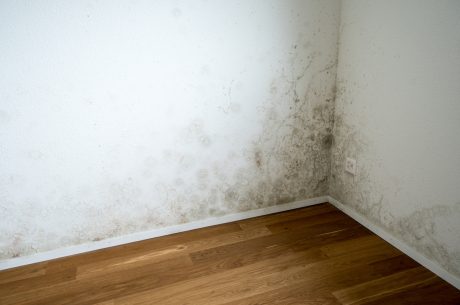
Within 24–48 hours of water intrusion, mold spores can begin to colonize wet materials. Common molds like Stachybotrys chartarum (black mold) and Aspergillus release mycotoxins that cause respiratory irritation, skin rashes, eye irritation, headaches, and in severe cases, neurological symptoms. Even without mold, standing water is a breeding ground for bacteria including E. coli and Salmonella if sewage is present.
Long-Term Chronic Conditions
Prolonged exposure to mold, particularly for those who don’t realize their home has a moisture problem, is linked to chronic sinusitis, asthma development in children, hypersensitivity pneumonitis, and compromised immune function. According to the CDC, indoor mold is linked to upper respiratory symptoms in otherwise healthy people and poses significantly higher risks for vulnerable groups.
Health Risks at a Glance
| Symptom / Condition | Cause | At-Risk Groups | Timeframe |
|---|---|---|---|
| Coughing, wheezing, runny nose | Mold spores, airborne bacteria | Children, elderly, asthma sufferers | Days to weeks |
| Skin rash or irritation | Contaminated floodwater contact | All ages | Hours to days |
| Headaches, fatigue | Mycotoxin exposure | Immunocompromised individuals | Weeks of exposure |
| Chronic sinusitis / asthma | Long-term mold presence | Children, elderly | Months of exposure |
| Gastrointestinal illness | Category 2–3 water (sewage) | All ages, especially children | Within 24–72 hours |
4. How Water Damage Destroys Your Property Over Time
A useful way to visualize the destruction is to imagine a timeline graph: on the horizontal axis is time (hours, days, weeks, months) and on the vertical axis is repair cost. The line curves sharply upward. The longer water damage goes unaddressed, the more exponentially expensive remediation becomes. What might cost $1,500 to dry and repair at 24 hours can easily become a $20,000 to $40,000 project at 30 days.
Here’s what water attacks in your home:
- Drywall and plaster: Absorbs water rapidly, swells, loses structural integrity, and becomes a mold substrate within 48 hours. Almost always requires replacement rather than drying.
- Wood framing and subfloors: Swells, warps, and eventually rots. Floor joists weakened by moisture can lead to sagging floors and, in severe cases, structural failure.
- Electrical systems: Water and electricity are a deadly combination. Wiring exposed to moisture corrodes, insulation degrades, and the risk of short circuits and house fires increases significantly.
- HVAC systems: Moisture in ductwork creates a highway for mold spores to distribute throughout every room in your home every time the system runs.
- Insulation: Fiberglass and cellulose insulation lose R-value when wet and become dense, moisture-trapping mold colonies that are invisible until you open a wall.
- Foundation and masonry: Repeated freeze-thaw cycles combined with water penetration accelerate cracking and spalling in concrete and block foundations, compromising the structural integrity of the entire home.
5. DIY vs. Professional Water Damage Restoration
Not every water event requires a professional crew. A small, isolated spill on a tile floor that’s wiped up immediately is a DIY job. But the line between manageable and serious is crossed faster than most homeowners expect.
DIY Steps for Minor Water Events
- Stop the water source immediately. Shut off the main water valve if necessary.
- Remove standing water using a wet/dry vacuum or mop.
- Move wet furniture, rugs, and belongings out of the affected area.
- Run fans and dehumidifiers to accelerate surface drying.
- Lift wet carpet from tack strips to allow airflow underneath.
- Open windows if outdoor humidity is lower than indoor levels.
- Monitor for any signs of discoloration, odor, or visible mold growth over the next 72 hours.
- Document everything with photos and video for insurance purposes.
When You Must Call a Professional
DIY is not appropriate when: the affected area exceeds 10 square feet, when water has penetrated walls or flooring, when the source is sewage or outdoor floodwater (contaminated), when the event has been ongoing for more than 24 hours, or when any mold is visible.
Professional restorers use industrial tools and techniques that simply aren’t available at a hardware store:
- Thermal imaging cameras detect moisture behind walls and under floors without destructive demolition, catching hidden damage that DIY methods miss entirely.
- Industrial-grade LGR dehumidifiers remove 10–20x more moisture per hour than consumer units, drying a structure in days rather than weeks.
- Air scrubbers with HEPA filtration capture airborne mold spores and contaminants during demolition, preventing cross-contamination to unaffected areas.
- Moisture meters and psychrometric monitoring track structural drying progress scientifically, ensuring materials reach safe moisture content levels before reconstruction begins.
- Antimicrobial fogging and application treat surfaces for microbial contamination that’s invisible to the naked eye.
- IICRC-certified protocols (Institute of Inspection, Cleaning and Restoration Certification) ensure work meets insurance and industry standards.
6. Real-World Case Study: Lansdale, PA Basement Flood
In February 2024, a homeowner in Lansdale discovered 4 inches of standing water in their finished basement after a rapid snowmelt event. They ran a consumer dehumidifier for three days before calling for professional help. By the time the restoration crew arrived, thermal imaging revealed moisture had wicked 18 inches up into the drywall, the carpet padding had become a mold colony, and two sections of wooden wall framing had moisture readings at 28%, far above the safe threshold of 16%.
Professional crews extracted the remaining moisture, removed and disposed of all affected drywall, framing, insulation, and flooring, applied HEPA air scrubbing for 72 hours, and completed the dry-out in five days. The homeowner’s three days of DIY drying had actually sealed in moisture by keeping windows closed, accelerating the mold growth. Total restoration cost was $14,200. Had they called within the first 12 hours, the estimate would likely have been under $4,000.
7. How to Prevent Water Damage in Your Montgomery County Home
Prevention is the most cost-effective strategy available. Most water damage events are preventable with routine maintenance and a few smart home upgrades.
| Prevention Method | What It Does | Estimated Cost | Key Benefit |
|---|---|---|---|
| Annual sump pump inspection & battery backup install | Ensures your primary flood defense works when power fails (e.g., during storms) | $150–$400 | Prevents basement flooding during outages |
| Gutter cleaning (twice yearly) | Prevents overflow that directs water toward the foundation | $100–$250/visit | Reduces foundation seepage risk |
| Regrade soil away from foundation | Directs surface water away from your home rather than toward it | $500–$2,000 DIY to pro | Eliminates the #1 cause of basement seepage |
| Water leak detection sensors | Alerts you immediately when water appears under appliances or in basements | $25–$150 per sensor | Catches leaks before they become floods |
| Annual HVAC condensate line flush | Prevents clogs that cause overflow and hidden ceiling/wall water damage | $75–$150 HVAC service call | Eliminates a commonly overlooked water source |
| Interior drain tile / French drain system | Manages groundwater that penetrates the foundation perimeter | $3,000–$10,000 | Long-term structural protection |
| Pipe insulation in unheated spaces | Prevents burst pipes during freezing temperatures | $50–$300 DIY | Eliminates freeze-burst risk |
| 📌 People Also Read: The Complete Montgomery County Basement Waterproofing Guide | How to Choose a Sump Pump System |
8. Frequently Asked Questions About Water Damage Restoration
How quickly does water damage become a mold problem?
Mold can begin growing within 24 to 48 hours of a water event under the right conditions: warmth, organic material (drywall, wood), and moisture. In a finished basement in a Montgomery County summer, where temperatures and humidity are already elevated, this timeline can be even shorter. This is why the first 24 hours are critical.
Does homeowner’s insurance cover water damage in PA?
Standard homeowner’s policies generally cover sudden and accidental water damage (such as a burst pipe) but typically exclude flooding from external sources (that requires separate flood insurance) and damage from long-term neglect or maintenance failures. Review your policy closely. A good restoration company can help document damage for claims and often works directly with adjusters.
How long does professional water damage restoration take?
Structural drying typically takes 3–5 days for most residential events with professional equipment. More extensive damage requiring demolition and reconstruction can take 2–6 weeks or longer, depending on scope. Your contractor should provide milestone-based timelines and document drying progress with daily moisture readings.
What is ‘Category 3’ water damage?
Water damage is classified in three categories. Category 1 is clean water (burst supply line), Category 2 is gray water (washing machine overflow, dishwasher leaks), and Category 3 is black water, which is highly contaminated water from sewage backups, flooding from rivers, or stormwater. Category 3 events require biohazard protocols, full PPE, and disposal of all porous materials that came into contact with the water. It cannot be safely handled as a DIY project.
Can I stay in my home during water damage restoration?
For minor events, yes. For Category 2 or 3 contamination, significant mold presence, or large-scale structural drying with air scrubbers and heavy equipment, it is advisable, and sometimes necessary, to temporarily relocate. Your restoration team and your insurance policy’s ‘additional living expenses’ coverage can help facilitate this if needed.
| Water Damage in Montgomery County? We’re Ready Right Now. The Paramedics of Property Damage® Water damage waits for no one, and neither do we. Our IICRC-certified team serves Montgomery County and the surrounding Pennsylvania communities 24 hours a day, 7 days a week, 365 days a year. From Norristown to Blue Bell, Lansdale to Jenkintown, we’re never more than a phone call away. ✔ Free damage assessment ✔ Direct insurance billing ✔ IICRC certified technicians ✔ 24/7 emergency response📞 Call Now: (267) 834-5900 Don’t let water win. Call us first. |
This article is intended for informational purposes. All restoration work should be evaluated by a licensed and certified professional. Results vary based on the extent and category of water damage.


 PuroClean of Lansdale