 PuroClean of Lansdale
Table of Contents
Water damage restoration Abington, PA requires seven essential steps: emergency safety assessment, rapid water extraction, structural drying with commercial equipment, mold prevention treatment, full sanitization and deodorization, detailed insurance documentation, and complete reconstruction. Abington Township’s older housing stock, clay-heavy soils, and proximity to Pennypack Creek create conditions where water damage escalates quickly; making professional response within the first few hours critical to a full, cost-effective recovery. PuroClean of Lansdale serves Abington residents 24/7 at (267) 834-5900.
You Noticed It on a Thursday. By Sunday, the Mold Had Already Started.
That is not a hypothetical. It is the actual sequence of events that a family in Abington’s Roslyn section described to a PuroClean technician on a Monday morning; four days after they noticed a soft spot developing beneath the bathroom floor upstairs. They assumed it was a minor issue. They planned to call a plumber later in the week. By the time the restoration team arrived, the subfloor was compromised, the insulation between the first and second floor had fully saturated, and the first traces of mold were visible on the bottom plate of the wall framing in the room below.
What started as a hairline crack in a wax toilet ring seal; a $15 part, a two-hour repair; had become a $22,000 restoration project over the course of four days. And the family had to stay elsewhere for two weeks while the work was completed.
Water damage restoration in Abington, PA is time-critical in a way that almost nothing else in homeownership is. This guide is going to explain exactly why, walk you through the seven steps that make the difference between a minor repair and a major reconstruction, and give you the information you need to make smart decisions if it ever happens to you.
Abington PA and Water Damage: Understanding the Local Risk
Abington Township is a densely populated community in the southeastern corner of Montgomery County, bordered by Philadelphia County to the south and Cheltenham Township to the west. It is home to roughly 60,000 residents in a relatively compact area; which means the housing stock is dense, diverse in age, and increasingly stressed by the kind of rainfall events that have become more frequent across southeastern Pennsylvania in recent years.
The single most important geographic factor is Pennypack Creek, which runs through the southern portion of the township before continuing into Northeast Philadelphia. Pennypack is classified as a regulated floodplain in several sections, and heavy rain events cause it to overtop its banks with regularity. In 2021, remnants of Hurricane Ida dropped over six inches of rain on Montgomery County in a matter of hours; Pennypack Creek exceeded its banks in multiple locations, sending water into basements and ground-floor units throughout Abington and adjacent communities.
Beyond flooding, Abington’s soil composition is a persistent challenge. The township sits on a heavy clay and schist geology that does not absorb rainfall quickly. During sustained rain events, ground saturation creates hydrostatic pressure against foundation walls that were never engineered to resist it indefinitely. Even homes without obvious crack points can experience what restoration professionals call “seepage intrusion”; moisture pushing through the pores of the foundation block or concrete itself.
The housing stock compounds this risk further. A significant percentage of Abington’s residential inventory was built between 1945 and 1970, during a post-war suburban development boom that prioritized speed and affordability over longevity of plumbing systems and waterproofing. Galvanized steel pipes from this era have a known engineering lifespan of 40 to 70 years. Many of those pipes are now beyond that threshold. For related reading on what water damage looks like in neighboring communities with similar housing profiles, see our posts on water damage restoration in Roslyn and water damage restoration in North Wales.
Warning Signs Abington Homeowners Should Never Ignore
Water damage in Abington homes rarely announces itself dramatically. More often, it reveals itself through subtle signals that are easy to rationalize or delay addressing. Here is what the professionals who do this every day actually watch for when they walk through a property.
Ceiling Stains That Seem to “Come and Go”
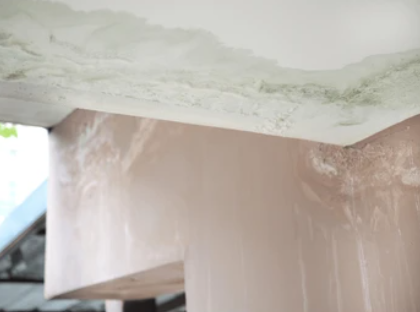
A water stain that appears after heavy rain and then fades as conditions dry out is not resolving itself; it is cycling. The moisture is still getting in. The stain is simply less visible when conditions are drier. Every cycle adds more damage to the drywall, insulation, and framing above it.
Floors That Feel “Soft” or Slightly Springy
Healthy hardwood or engineered wood flooring does not flex underfoot. A soft, springy sensation means the subfloor beneath the finished surface has absorbed moisture and the structural integrity of the panel or board joints is beginning to fail. This almost always indicates a long-running leak rather than a sudden one.
Musty Odor Without an Obvious Source
The earthy, damp smell associated with mold is one of the earliest signs of active colonization. Mold grows inside wall cavities and beneath flooring systems where it is not visible; the spores you smell are migrating into living space from a colony you cannot see. This odor should be treated as a declaration of a hidden moisture problem until a professional assessment proves otherwise.
Efflorescence on Basement or Foundation Walls
Those white, chalky deposits on your concrete block or poured basement walls are called efflorescence; mineral salts left behind when water moves through the masonry and then evaporates. They are harmless in themselves but are a clear and reliable indicator of ongoing moisture migration through your foundation walls.
Running Water Sounds When No Fixture Is On
If you hear water movement; dripping, flowing, or gurgling; when every tap in the house is closed, there is active water movement somewhere in your plumbing or building envelope. Do not wait for a visible wet spot to confirm it. Call (267) 834-5900 for an emergency assessment, or read our guide to sink overflow causes and prevention to understand what may be happening inside your walls.
7 Essential Steps of Water Damage Restoration in Abington PA
When a certified restoration team responds to a water damage event in Abington, they follow a structured protocol rooted in IICRC standards. Understanding each step helps homeowners set realistic expectations about timelines, what the crew will need access to, and why certain materials may need to be removed before the property can be declared safe and dry.
Step 1: Safety Assessment and Source Control
Before a single piece of equipment is placed, the restoration team does a full safety evaluation. This means assessing the electrical system for water contact, identifying any structural areas that may be compromised, checking for gas line involvement, and determining whether the water source is active or has been shut off. If the water source is still active, the team will coordinate with the homeowner to shut off the main supply or isolate the affected plumbing branch before extraction begins.
This step is often rushed by less experienced contractors, who begin equipment deployment before fully understanding what they are walking into. It is never rushed by a certified team, because working in a water-damaged environment without a proper safety evaluation creates risks that far outweigh the minutes saved.
Step 2: Water Extraction
Once safety is confirmed, extraction begins immediately. PuroClean of Lansdale uses truck-mounted extraction units capable of moving thousands of gallons of water rapidly, supplemented by portable extractors for areas the truck unit cannot directly access. Special attention goes to carpet and padding (which hold enormous quantities of water relative to their apparent saturation), wall cavities, and crawl spaces.
It is important to understand that extraction addresses standing water and surface-level saturation. It does not address the moisture that has been absorbed into building materials. That is a separate phase. For more on what this looks like in practice in a basement flooding context specifically, see our basement flooding cleanup guide.
Step 3: Controlled Demolition of Unsalvageable Materials
This is the step that surprises many homeowners who have never been through a professional restoration before. Before structural drying can be effective, materials that are too saturated or contaminated to be restored must be removed. This includes drywall that has been wetted above the waterline for more than 24 to 48 hours, carpet and pad in contact with gray or black water, insulation that has absorbed moisture (since saturated insulation loses all thermal and moisture-barrier value and becomes a mold substrate), and flooring systems where the subfloor has failed.
This controlled demolition is documented photographically throughout. Every piece of material removed is photographed in place before removal, logged by type and square footage, and recorded as part of the insurance documentation package.
Step 4: Structural Drying
With wet materials removed and the space opened up for airflow, commercial-grade drying begins. High-capacity air movers are positioned to create a vortex of dry air across affected surfaces. Commercial refrigerant dehumidifiers remove the water vapor from that air before it can resettle on building materials. The drying plan is calculated using psychrometric science; a formal process that accounts for the volume of the space, the temperature, the existing humidity, and the target moisture levels for different building materials.
Daily moisture readings document the progress of the drying phase and guide adjustments to equipment placement. The goal is to bring all affected structural materials to within manufacturer-specified moisture content levels before any reconstruction begins. Rebuilding on insufficiently dried framing or subfloor is one of the most common causes of recurring mold problems after a restoration project.
Step 5: Antimicrobial Treatment and Sanitization
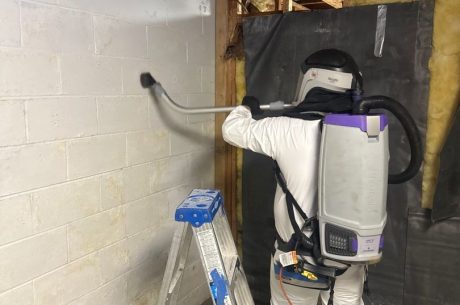
During and after the drying phase, all surfaces that were contacted by water receive EPA-registered antimicrobial treatment. In Abington’s climate; warm summers, humid shoulder seasons; this step is essential to prevent the rapid colonization that the naturally present mold spores in any indoor environment are capable of under moist conditions. All surfaces are then cleaned, deodorized, and sanitized according to IICRC protocols.
Step 6: Insurance Documentation and Scope Approval
The documentation package assembled throughout the project; thermal imaging scans, moisture readings, material removal logs, equipment placement records, and photographs; is formatted and submitted to support your water damage restoration insurance claim. PuroClean’s team works directly with your adjuster and communicates in the documentation language and scope-of-work format that insurance carriers expect. The Certified Priority Response (CPR) Program formalizes this relationship, establishing pre-agreed protocols that reduce the back-and-forth that typically slows claims down. For more on the claims process in the Abington area specifically, see our insurance claim restoration guide for Abington.
Step 7: Complete Reconstruction
Once structural materials are confirmed dry and all documentation is in order, reconstruction begins. PuroClean handles the complete rebuild; new drywall, insulation, flooring, paint, trim, cabinetry; whatever the scope requires. Using the same company for mitigation and reconstruction eliminates the handoff problems that arise when homeowners try to coordinate two separate contractors after a water event. Everything is under one roof, one scope of work, and one warranty.
The Real Cost of Waiting: A Timeline That Changes Everything
Homeowners often ask: “How long can I wait before calling someone?” The honest answer is uncomfortable, but it is the most useful thing to hear: the answer is hours, not days.
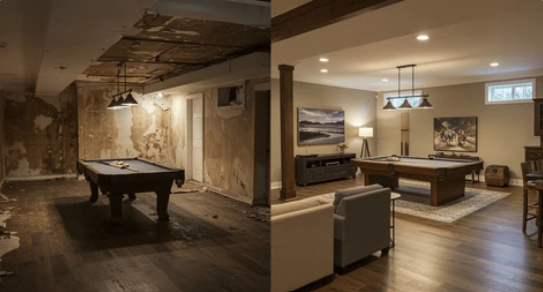
Here is what the data and field experience both confirm. In the first two to four hours after a water intrusion event, the damage is generally contained and the potential for a full material recovery is high. The moisture has not yet migrated deeply into adjacent materials. Drywall in contact with water may still be salvageable if extraction and drying begin immediately. Subfloor systems may be recoverable. The job is manageable.
At twelve to twenty-four hours, the picture changes significantly. Water has migrated further. Insulation is likely saturated. Drywall paper has begun to break down. The conditions necessary for mold germination are in place. The scope of material removal required before drying can be effective has grown, and so has the cost.
At forty-eight to seventy-two hours, mold is often already present; not always visible on surfaces, but present in the wall cavities and beneath flooring. The subfloor system in a multi-level home may be showing structural failure. Reconstruction costs have escalated substantially, and insurance adjusters will scrutinize the delay when reviewing the claim.
Time-Cost Reality Check
A water event responded to within 2 hours: estimated restoration cost $3,500 to $7,000. The same event responded to after 72 hours: estimated restoration cost $15,000 to $40,000 or more, depending on mold extent and structural damage. This gap is well-documented in IICRC field data and reflected in the claims experience of every major insurance carrier in Pennsylvania.
If you are in Abington and you are reading this because you are currently dealing with an active water situation or have discovered damage and are unsure what to do next: stop, call (267) 834-5900, and have a certified technician evaluate the situation before you make any decisions about scope or approach. You can also contact PuroClean of Lansdale online for an immediate response.
How Your Water Damage Restoration Insurance Claim Actually Works
The insurance claims process for water damage in Pennsylvania involves several steps that most homeowners have never encountered before. Understanding the process before you are in the middle of a claim makes every conversation with your adjuster more productive and helps ensure you receive the coverage you are entitled to.

Step One: Report the Loss Immediately
The moment you discover water damage, call your insurance company to report the loss. Do not wait until you have assessed the full extent, spoken with a contractor, or done any cleanup. Most policies require “prompt notification” as a condition of coverage, and delays in reporting can give an adjuster grounds to challenge the claim.
Step Two: Document Everything Before Anything Is Moved
Take photographs and video of the damage as you found it. Open closet doors. Photograph furniture legs, baseboards, and flooring in all affected rooms. Do not throw anything away before an adjuster or restoration professional has documented it. Even items that seem obviously unsalvageable need to be documented and included in the scope of loss.
Step Three: Mitigate Further Damage
Your policy likely contains a requirement that you take “reasonable steps to prevent further damage” after a loss event. This means calling a certified restoration company to begin mitigation; it does not mean attempting a full DIY cleanup. The professional mitigation process is what protects both your property and your claim. Failing to begin mitigation promptly; and being able to document that you did so; is one of the ways homeowners inadvertently weaken their own claims.
What PuroClean Handles on Your Behalf
PuroClean’s CPR Program means the company’s teams are already familiar with the scope documentation formats, rate schedules, and protocols of the major insurance carriers they work with regularly, including Nationwide, Encompass, Crawford Contractor Connection, Alacrity Services, and others. This familiarity shortens the cycle time on claims and reduces the likelihood of coverage disputes. See how this plays out in real scenarios through our posts on insurance claim restoration in Center Square and insurance claim restoration in Ambler.
Why Local Knowledge Changes the Outcome
There is a meaningful difference between a national franchise that dispatches a crew from a distant market and a locally rooted company that has been operating in Abington’s neighborhoods for years. That difference shows up in the details: knowing which blocks near Pennypack Creek sit in a designated floodplain, knowing that certain building materials used in Montgomery County’s post-war construction respond differently to drying protocols than newer materials, knowing the response time expectations of local building inspectors when permitted reconstruction work is required.
PuroClean of Lansdale is based at 2033 Lucon Rd, Bldg. Rear, Schwenksville, PA 19473; a short drive from Abington. The team serves Abington residents alongside neighbors in Ambler, Blue Bell, Fort Washington, Horsham, Lansdale, North Wales, Willow Grove, and throughout the county. The team members live in these communities. They know the streets, the housing types, and the seasonal weather patterns that create the specific water damage challenges this area faces.
You can see the company’s current work and community engagement on Facebook, Instagram, LinkedIn, and X (Twitter). Verified reviews from Abington and surrounding community homeowners are available on Google Maps.
Beyond water damage, PuroClean of Lansdale also handles fire and smoke damage restoration, storm damage remediation, commercial mold remediation, environmental hazard remediation including asbestos abatement, and full reconstruction services. For Abington homeowners dealing with property damage during winter months specifically, the team also has deep experience with frozen pipe events and ice dam damage.
Conclusion
Water damage restoration in Abington, PA is not the kind of problem that rewards patience. Every hour that passes between the moment water enters your home and the moment a certified restoration team begins extracting it represents compounding damage; to the structure, to the contents, and almost certainly to the cost of getting back to normal.
But here is the other side of that reality: when you do call fast, when you have a certified team on-site with the right equipment and the right documentation protocol, the outcomes are remarkably good. Homes that look like they should be gutted can often be saved. Materials that seem destroyed can sometimes be restored. Insurance claims that feel overwhelming can be navigated cleanly with the right partner in your corner.
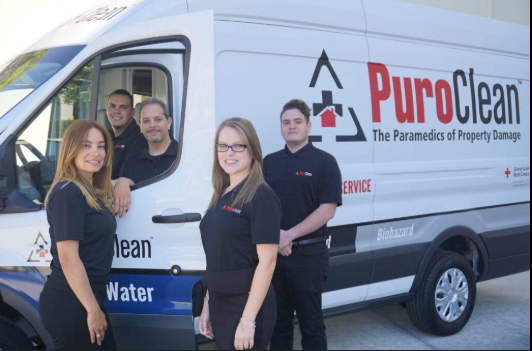
PuroClean of Lansdale is that partner for Abington homeowners. Available 24 hours a day, 7 days a week, every day of the year. Certified, locally rooted, and fully equipped for every phase of the restoration process from the first emergency call to the final coat of paint. Do not wait for a small problem to become a catastrophic one.
Pick up the phone. Call (267) 834-5900 right now; because the restoration crews who show up first are the ones who save you the most. Not tomorrow. Not after the weekend. Contact PuroClean of Lansdale today and protect everything you have worked for.

 PuroClean of Lansdale