 PuroClean of Lansdale
Table of Contents
A Professional Water Damage Restoration Case Study – Water damage can strike any home without warning, turning a peaceful day into a stressful emergency. Recently, our team at PuroClean handled a complex water damage restoration project that perfectly illustrates the meticulous process and industry standards that govern professional water damage restoration. Here’s an inside look at how we navigate the challenges and ensure quality results.
The Initial Emergency Response
When water damage occurs, time is absolutely critical. In this particular case, our team received the emergency call and immediately sprang into action. Following industry standards, we contacted the homeowner within the required timeframe and arranged for an immediate site inspection. The two-hour response window isn’t just a company policy it’s an industry standard designed to minimize damage and prevent secondary issues like mold growth.
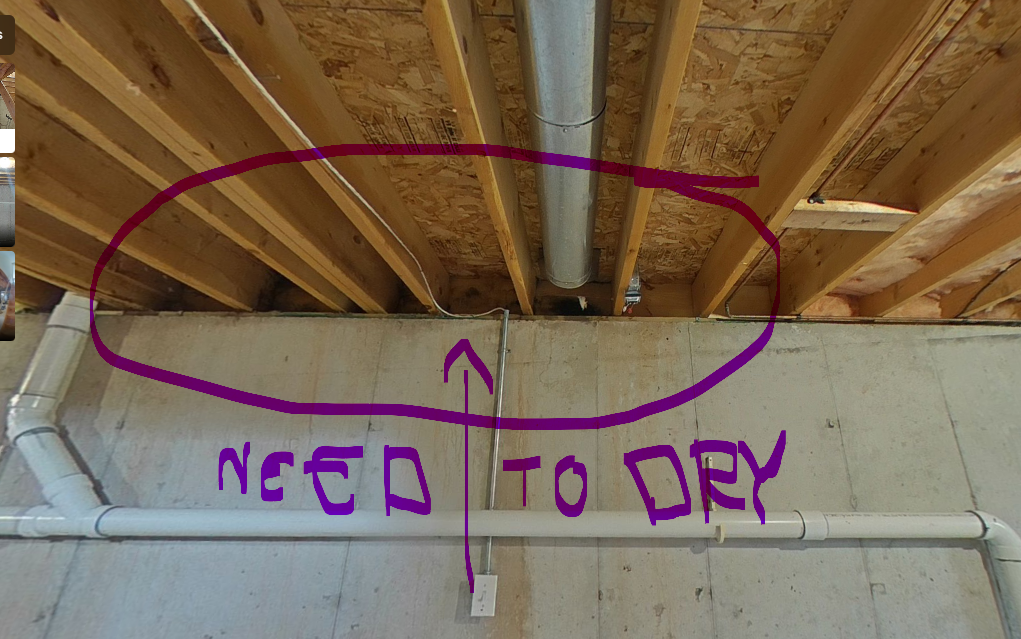
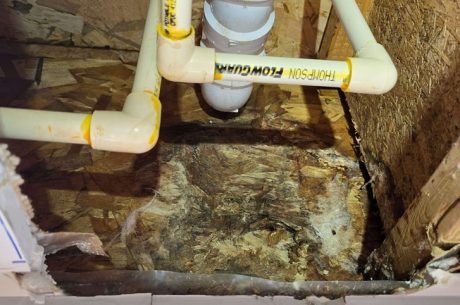
During our initial inspection, we discovered water damage affecting multiple areas of the home, including hardwood flooring in the foyer and moisture infiltration in the basement affecting the rim joist and subfloor.
Our moisture readings showed significantly elevated levels, with some areas reading 999 compared to dry standards of 207 a clear indication of extensive water saturation.
The Importance of Proper Documentation
One aspect that homeowners rarely see is the extensive documentation required for every water damage restoration project.
Professional restoration companies must follow strict guidelines established by the Institute of Inspection, Cleaning and Restoration Certification (IICRC). This includes detailed scope notes covering:
- Precise timing of the initial inspection
- Determining the category and class of water loss
- Identifying all affected rooms and materials
- Establishing the cause of loss
- Documenting the estimated duration for mitigation services
- Assessing potential mold presence
- Recording what type of flooring is affected
This documentation isn’t just paperwork it ensures that every aspect of the restoration is properly planned, executed, and quality controlled.
Equipment Setup and Monitoring Protocol
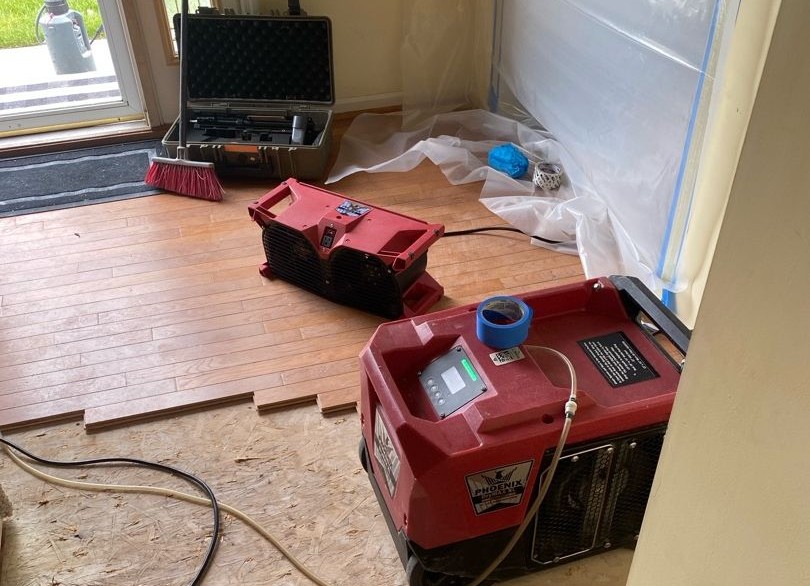
Professional water damage restoration relies heavily on specialized equipment, and there are specific industry standards governing its use. In this case, we deployed:
- Air movers for promoting evaporation and air circulation
- Dehumidifiers for removing moisture from the air
- Containment systems to isolate affected areas
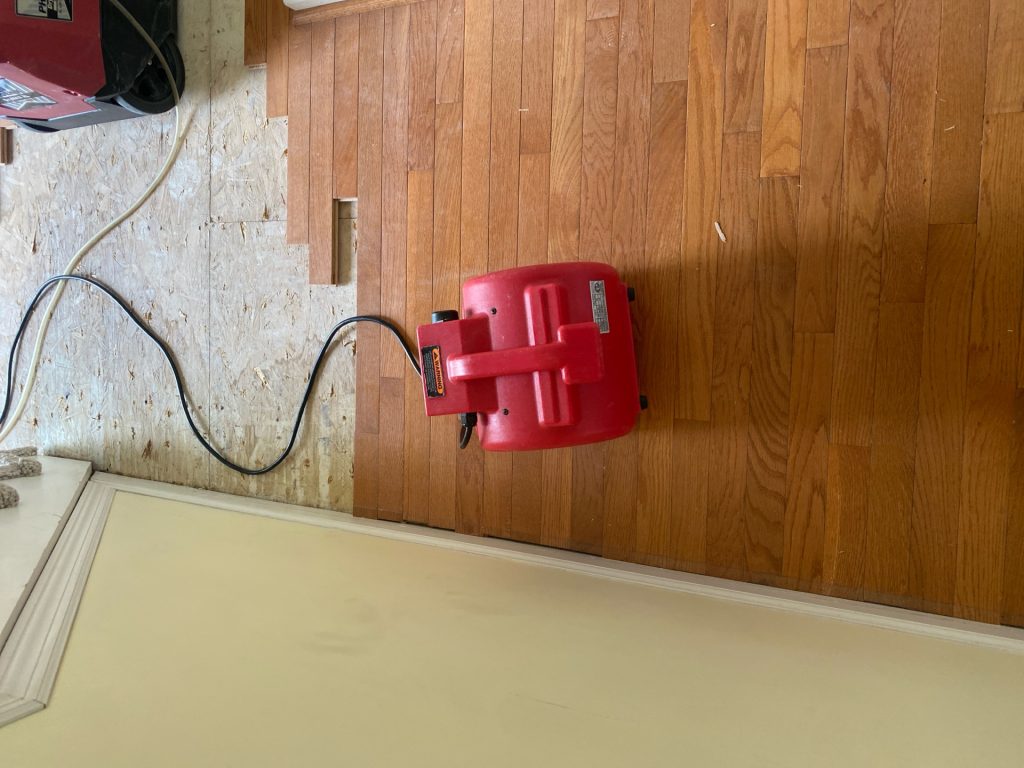
The placement and quantity of equipment isn’t arbitrary. Industry guidelines specify exact ratios—for example, 2 air movers per system recommendation for optimal drying. Setup time is carefully calculated, with 5 minutes allocated per air mover and air scrubber, and 15 minutes per dehumidifier and drying mat system.
Daily monitoring is crucial throughout the drying process. For areas over 1,000 square feet, monitoring requirements are calculated using specific formulas based on the affected floor space. Each day’s readings must be documented in a MICA (Moisture Intrusion Characterization and Assessment) report, ensuring that drying progress is scientifically tracked rather than estimated.
The Challenge of Flooring Removal
One of the most complex aspects of this restoration involved hardwood flooring removal. When hardwood becomes water-damaged, it often requires complete removal to prevent long-term issues like warping, cupping, or mold growth beneath the surface.
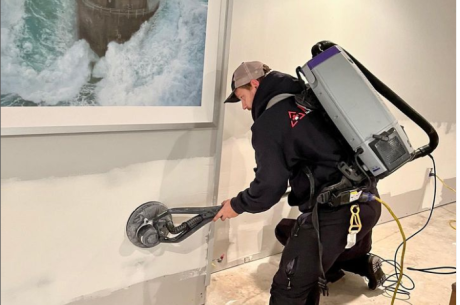
Our team carefully removed all affected hardwood flooring in the foyer, including the painstaking process of pulling individual staples. The area was then treated with antimicrobial solutions and thoroughly cleaned. This level of detail ensures that when new flooring is eventually installed, it will have a clean, stable foundation.
Basement Moisture Challenges
Basements present unique challenges in water damage restoration. In this case, moisture had penetrated the rim joist and subfloor—critical structural elements that require careful attention. We established containment in the basement and deployed specialized drying equipment to address the moisture in these hard-to-reach areas.
The concrete areas also showed significant water saturation, requiring extended drying time and careful monitoring to ensure complete moisture removal.
Quality Control and Industry Standards
Throughout the restoration process, our work was subject to rigorous quality control reviews. Independent auditors evaluate every aspect of the restoration against IICRC guidelines and best practices. This includes:
- Verifying that equipment quantities match system recommendations
- Ensuring proper documentation of all procedures
- Confirming that drying times are justified and appropriate
- Validating that all necessary approvals are obtained for extended drying periods
When revisions are required, they must be addressed promptly—typically within 24 hours—to maintain project timelines and ensure the best possible outcome for the homeowner.
The Multi-Stage Process
This restoration project demonstrates that professional water damage restoration is a multi-stage process:
- Emergency Response and Assessment (Day 1)
- Equipment Deployment and Initial Mitigation (Days 1-2)
- Active Drying and Daily Monitoring (Days 3-6)
- Material Removal and Treatment (As needed)
- Final Monitoring and Equipment Removal (Final days)
- Documentation and Quality Review (Throughout and after)
Why Professional Standards Matter
The detailed requirements and quality control measures might seem excessive, but they serve important purposes:
- Insurance Compliance: Proper documentation ensures smooth insurance claim processing
- Health and Safety: Following IICRC guidelines prevents mold growth and other health hazards
- Long-term Results: Thorough drying prevents future problems that could cost thousands more
- Legal Protection: Proper procedures protect both homeowners and restoration companies
The Human Element
While the technical aspects are crucial, successful water damage restoration also requires understanding the human impact. Homeowners facing water damage are often stressed, displaced, and concerned about their belongings and their home’s future. Professional restoration companies must balance technical precision with empathy and clear communication.
Throughout this project, our team maintained regular contact with the homeowner, providing updates on progress and coordinating access times that minimized disruption to their daily routine.
Conclusion
Water damage restoration is far more complex than many people realize. It’s a science-based process governed by strict industry standards and requiring specialized knowledge, equipment, and documentation. While homeowners see the visible work the equipment, the material removal, the drying process there’s an entire framework of quality control, monitoring, and documentation happening behind the scenes.
When water damage strikes your home, choosing a certified restoration company that follows IICRC guidelines isn’t just about getting the job done it’s about ensuring it’s done right the first time, protecting your health, your home, and your investment for years to come.
If you’re facing water damage in your home, don’t wait. Contact a certified restoration professional immediately. Every hour counts in preventing secondary damage and ensuring the best possible outcome for your restoration project.
Protect Your Investment & Restore Your Peace of Mind
Don’t let water damage and potential mold growth overwhelm you. Contact PuroClean of Lansdale today at (267) 834-5900 for a free consultation. We’ll be there to guide you through the restoration process and ensure your property is restored quickly, safely, and efficiently.

 PuroClean of Lansdale