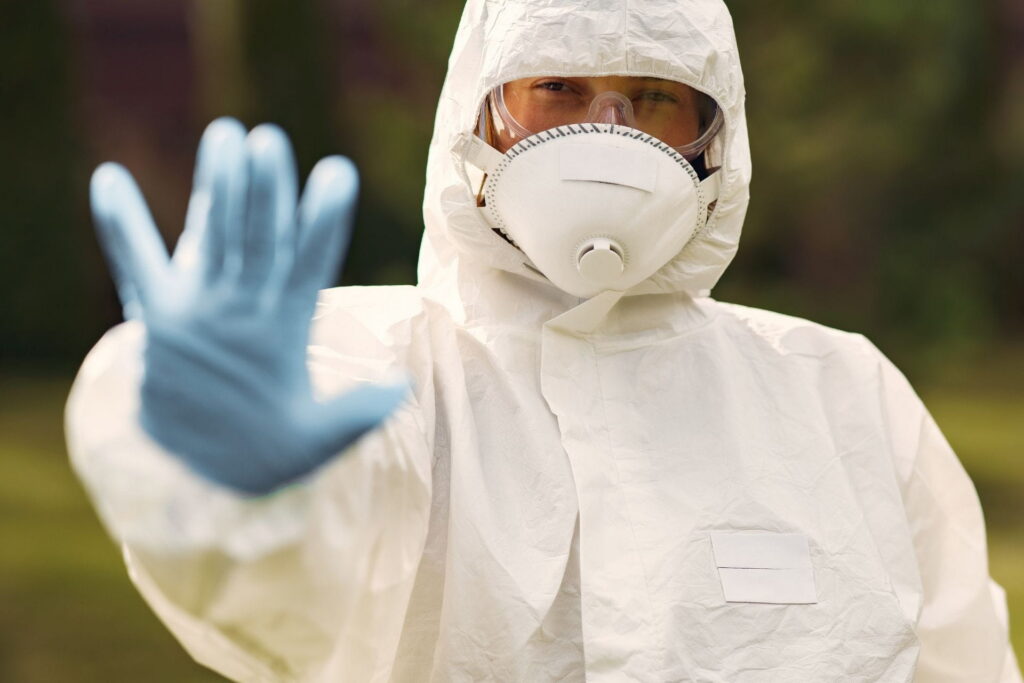
No, you shouldn’t clean up a blood or bodily fluid spill yourself, at least not beyond a very small, isolated spot. Blood and bodily fluids are classified as biohazards for a reason, and what looks like a straightforward cleaning job carries health risks that aren’t visible to the naked eye. When something like this happens in your own home, the instinct is usually to grab gloves, a roll of paper towels, and some disinfectant spray and get it over with. We get that instinct completely; nobody wants a mess like this sitting around any longer than it has to, but the risk underneath it is real.
Why These Spills Aren’t Like Other Messes
Regulators treat blood and certain bodily fluids differently than an everyday spill because of something called universal precautions, which is the standard practice of treating all blood and certain fluids as if they’re carrying an infectious disease, even when there’s no way to know for sure. That’s not an overly cautious approach on paper; it’s the baseline every trained cleanup crew works from.
Once a spill dries, it doesn’t become safer. Dried blood can still carry infectious material, and simply wiping it up with a paper towel and household cleaner does not neutralize what’s inside it. The materials used to clean it, along with anything the fluid touched, are considered regulated waste and have to be handled and disposed of a specific way, not just bagged up with the regular trash.
What Bloodborne Pathogens Are You Dealing With?
Hepatitis B, hepatitis C, and HIV are the three pathogens most closely tied to blood exposure, and hepatitis B in particular is a lot hardier than people expect. The CDC notes that the hepatitis B virus remains infectious on surfaces for at least seven days after exposure, which means a spill that looks fully cleaned and dried out can still pose a risk well over a week later if it wasn’t properly disinfected in the first place.
Do You Have the Right Equipment for This?
Most households have gloves and maybe a bottle of bleach, and that’s about where the supply list ends. Professional biohazard cleanup requires an EPA-registered, hospital-grade disinfectant proven effective against bloodborne pathogens, along with proper containment bags, protective coveralls, and eye protection, not just a spray bottle from under the sink. Without the right products and gear, there’s a real chance of pushing contaminants around instead of eliminating them, and a real chance of exposing yourself in the process.
How Should Contaminated Materials Be Thrown Out?
This is where a lot of well-meaning cleanup attempts go wrong. Rags, gloves, and any other materials that touched the spill can’t just go in a kitchen trash bag; they’re classified as regulated waste and need to be bagged, labeled, and disposed of according to specific protocols. Tossing contaminated items in with household trash can create exposure risk for anyone who handles that bag afterward, including sanitation workers who have no idea what they’re touching.
There’s also a documentation piece that’s easy to overlook. If the situation is connected to an injury, illness, or an insurance claim, having a professional handle and document the cleanup gives you a paper trail that a homeowner’s own cleanup effort simply can’t provide.
When Is It Safe to Handle a Small Spill Yourself?
We don’t want to make every scraped knee sound like a hazmat situation, because it isn’t. A small amount of blood from a minor cut, cleaned up promptly with gloves, an EPA-registered disinfectant, and proper handwashing afterward, is generally fine for a homeowner to manage on their own. Where it shifts is scale and context: larger spills, dried or older blood, anything involving illness, injury, or an unknown source, or situations tied to a death or crime scene should always go to a professional team instead of being handled at home.
The Bottom Line on DIY Cleanup
The health risk is only part of the picture. According to the CDC, roughly 18 million healthcare and related workers face potential occupational exposure to bloodborne pathogens, and that estimate exists precisely because contact with blood carries a real, well-documented risk even for people trained to handle it safely. That’s worth sitting with the next time a spill seems small enough to just wipe up and move on from.
Beyond the health side, there’s real peace of mind in knowing a spill was handled completely, not just visibly. A professional cleanup means nothing gets missed in a seam, a crack in the flooring, or a spot that looked clean but wasn’t fully disinfected.
Let PuroClean of South Onslow Handle the Cleanup Safely
At PuroClean of South Onslow, we handle blood and bodily fluid cleanup for homes across Jacksonville, Hampstead, Surf City, and the surrounding communities with the training, equipment, and disposal protocols this kind of situation requires. If you’re dealing with a spill you’re not sure how to safely handle, reach out to our team or give us a call, and we’ll take it from there.
Frequently Asked Questions
Is it illegal to clean up blood spills yourself?
Generally, no, cleaning your own home isn’t illegal, but there are regulations around how contaminated materials get disposed of, and certain situations like crime scenes or unattended deaths often legally require a licensed professional team.
What should I use to disinfect a blood spill?
An EPA-registered disinfectant labeled effective against bloodborne pathogens is what’s needed, not a general all-purpose cleaner. Household products like standard glass or countertop cleaners aren’t formulated to neutralize infectious materials.
How long can blood stay infectious on a surface?
Hepatitis B can remain infectious on surfaces for at least seven days, and other pathogens can survive for varying lengths of time depending on the surface and conditions. This is part of why a spill that looks clean isn’t necessarily safe.
Does homeowners insurance cover biohazard cleanup?
Many homeowners policies do cover biohazard and crime scene cleanup, though coverage details vary by provider and policy. Checking directly with your insurance company clarifies what applies to your specific situation.
What’s the difference between cleaning and disinfecting a spill?
Cleaning removes visible mess, while disinfecting kills the pathogens that may still be present even after the area looks clean. A spill can appear fully cleaned and still be infectious if it wasn’t properly disinfected afterward.