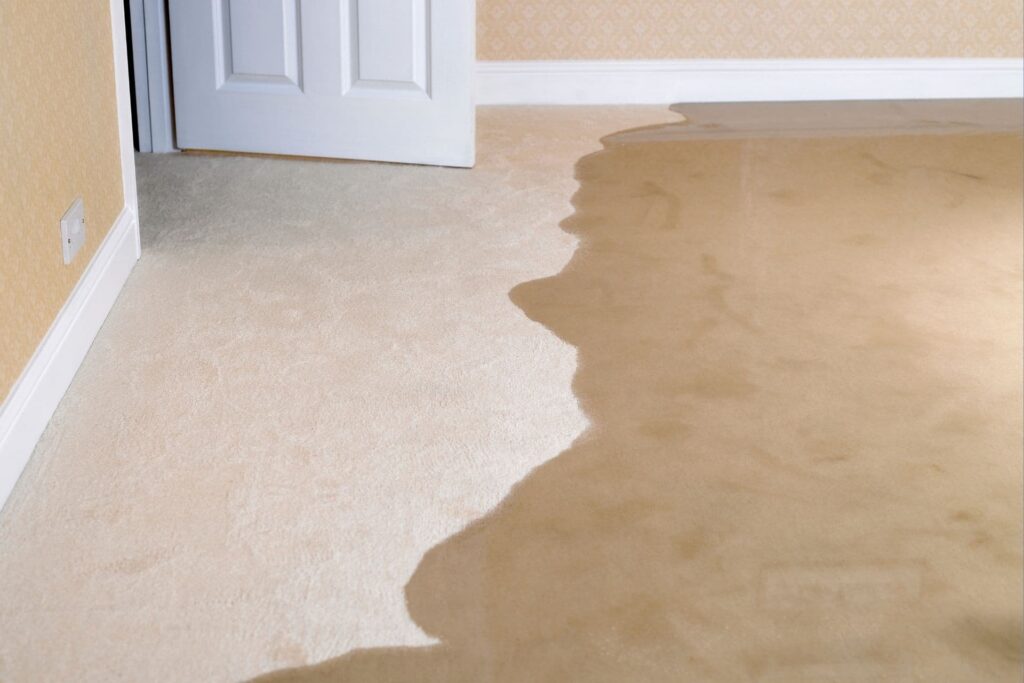
Your floors are not necessarily ruined after a water leak, but the answer depends heavily on how long the water sat, what type of flooring you have, and whether the subfloor underneath was affected. Visible warping, cupping, soft spots, buckling, persistent discoloration, and a musty smell are all signs that damage has gone beyond the surface. Floors that dried out quickly after a contained leak may be salvageable. Floors that stayed wet for more than 24 to 48 hours, or that had water wick into the subfloor, are far more likely to need replacement. The only way to know for certain is a professional moisture assessment, because what you can see on the surface often tells only part of the story.
Why Time Is the Most Critical Factor
Within the first 24 hours of water exposure, moisture penetrates deeper into flooring materials, causing swelling, staining, and structural changes that become progressively harder to reverse. The U.S. Environmental Protection Agency notes that wet building materials should be dried within 24 to 48 hours to prevent mold growth, and that same window is the turning point for whether floors can be saved or need to be replaced. A leak that gets addressed within the first few hours has a realistic shot at a clean recovery. A leak that went unnoticed for a day or two, the kind that happens behind a refrigerator or under a bathroom vanity, is a different situation entirely.
According to IICRC research, every 12-hour delay after the first day adds roughly 7% to the final restoration invoice. That is not just a cost issue. It is also a structural one. The longer water sits in flooring, the more deeply it penetrates the subfloor and framing below, and the more likely secondary problems like mold become.
What to Look For: Signs Your Floors Have Water Damage
The most reliable way to assess floor damage is to look, feel, and smell systematically rather than just glancing at the surface. Here is what each flooring type tends to show.
Hardwood floors are the most expressive when it comes to water damage. Cupping, where the edges of each plank rise higher than the center, is one of the earliest signs. Crowning, the opposite effect where the center of the plank rises, can develop after improper drying. Buckling, where planks lift completely off the subfloor, indicates severe or prolonged exposure. Dark staining along the grain or between planks signals deep moisture absorption that may not dry out on its own.
Laminate flooring shows damage differently. Because laminate is a pressed composite core rather than solid wood, it tends to swell and separate at the seams rather than warp as a single plank. Bubbling or peeling at the surface, swollen edges, and a spongy feel underfoot are all signs the core has absorbed water and begun to delaminate. Once the laminate swells, it cannot be dried and restored. It needs to be replaced.
Vinyl plank and luxury vinyl tile are more water-resistant than wood or laminate, but they are not immune. Water that gets under vinyl through seams, edges, or gaps can sit against the subfloor for a long time before showing any surface signs. If you notice vinyl lifting at the edges, a soft or springy feel in spots, or a musty smell with no visible source, water under the floor is a likely culprit.
Carpet and pad are the most deceptive. The surface can feel dry within hours of drying out the top layer, while the pad underneath remains saturated. A wet carpet pad is one of the fastest environments for mold growth in a home, particularly in the humid coastal climate between Jacksonville and Hampstead. If the carpet got wet and was not professionally extracted and dried with commercial equipment within 24 to 48 hours, the pad almost certainly needs to come out.
The Part Most Homeowners Miss: The Subfloor
Surface flooring gets all the attention, but the subfloor is where the most serious water damage often lives. The subfloor is typically plywood or OSB, both of which absorb water readily and hold it long after the surface above appears dry. A subfloor that has been wet long enough will begin to delaminate, soften, and develop mold. In severe cases, it can compromise the structural integrity of the floor system itself.
The way to check the subfloor is with a moisture meter, a tool that measures the moisture content of the material at depth rather than just at the surface. A reading above 19% in wood subflooring indicates a moisture problem that needs to be addressed before any flooring replacement takes place. Installing new flooring over a wet or compromised subfloor is one of the most expensive mistakes a homeowner can make, because the new floor will begin showing damage almost immediately, and the mold problem underneath will continue to grow.
Can Water-Damaged Floors Be Saved?
The answer depends on the flooring type and the extent of the damage. Solid hardwood floors that cupped due to moisture can sometimes be dried out with professional equipment, allowed to stabilize, and then sanded flat and refinished. This works when the damage was caught relatively quickly, the cupping is moderate rather than severe, and the subfloor is intact. It is a realistic option that experienced water damage restoration professionals can assess on-site.
Engineered hardwood is less forgiving because the layered construction can delaminate when wet. Laminate almost always needs replacement once it has absorbed water. Vinyl plank can often be reinstalled if it is dried quickly and the subfloor is unaffected. Carpet is usually replaceable at the pad level, with the carpet itself potentially salvageable if it was dried professionally and quickly.
The honest answer for most homeowners dealing with a significant leak is that some flooring will be saved and some will not, and the only way to know which is which is to have a professional assess it with the right equipment rather than making a judgment call based on how it looks to the naked eye.
Mold: The Hidden Risk You Cannot Ignore
In the South Onslow area, where summer humidity stays high for months on end, water-damaged floors carry a higher mold risk than in drier climates. Mold can begin developing within 24 to 48 hours in wet building materials, and it typically starts in the places you cannot see, under the flooring, inside the subfloor, and in the wall cavities adjacent to the wet area.
A musty smell after a water leak is not just unpleasant. It is a warning sign that mold has already started to grow somewhere in the building envelope. If you are noticing that smell days or weeks after a leak that seemed to dry out on its own, a professional assessment is not optional. Mold that gets established in a floor system spreads, and addressing it later is always more expensive and disruptive than addressing it early.
What to Do If You Have Floor Damage From a Water Leak
Stop the source if it is still active. Remove standing water as quickly as possible. Do not place fans over visibly damaged hardwood and walk away, as uncontrolled drying can cause additional warping. Do not pull up flooring on your own before documenting the damage thoroughly for insurance purposes. And call a professional restoration company that can bring moisture meters, thermal imaging, and commercial drying equipment to get a real picture of what is happening inside the floor system, not just on top of it.
PuroClean of South Onslow Is Always On Call
At PuroClean of South Onslow, we handle water damage restoration throughout the area from Hampstead to Jacksonville and Clinton to Wallace. We use professional-grade moisture assessment tools to tell you exactly what is damaged, what can be saved, and what needs to go, and we work fast to stop the damage from spreading further. If you have a water leak and are not sure what you are dealing with, reach out to our team and let us take a look before it gets worse.
Frequently Asked Questions
How do I know if my floors are ruined after a water leak?
Your floors are not necessarily ruined, but it depends on how long the water sat, what type of flooring you have, and whether the subfloor was affected. Signs that damage has gone beyond the surface include visible warping, cupping, soft spots, buckling, persistent discoloration, and a musty smell. Floors that dried quickly after a contained leak may be salvageable, while floors that stayed wet for more than 24 to 48 hours, or had water reach the subfloor, are far more likely to need replacement. A professional moisture assessment is the only way to know for certain.
How long does it take for water to ruin a floor?
Time is the most critical factor. Within the first 24 hours of exposure, moisture penetrates deeper into the flooring, causing swelling, staining, and structural changes that get harder to reverse. The 24-to-48-hour window is the turning point for whether floors can be saved, and it is also when mold can begin to grow in wet materials. A leak addressed within the first few hours has a realistic shot at clean recovery, while one that went unnoticed for a day or two is a far more serious situation.
What are the signs of water damage in different floor types?
Each flooring type shows damage differently. Hardwood cups, crowns, buckles, or develops dark staining along the grain. Laminate swells and separates at the seams, bubbles or peels at the surface, and feels spongy underfoot once the core delaminates. Vinyl plank may lift at the edges or feel soft, often with a musty smell from water trapped underneath. Carpet is the most deceptive, since the surface can feel dry while the pad underneath stays saturated, creating a fast environment for mold.
Why does the subfloor matter after a water leak?
The subfloor is where the most serious water damage often lives. It is typically plywood or OSB, both of which absorb water readily and hold it long after the surface appears dry. A subfloor that stays wet will delaminate, soften, and develop mold, and in severe cases can compromise the structural integrity of the floor system. A moisture meter reading above 19% in wood subflooring indicates a problem that must be addressed before any flooring replacement, since installing new flooring over a wet subfloor is a costly mistake.
Can water-damaged floors be saved?
It depends on the flooring type and the extent of the damage. Solid hardwood that cupped can sometimes be dried, stabilized, sanded flat, and refinished if caught quickly, and the subfloor is intact. Engineered hardwood is less forgiving because its layers can delaminate. Laminate almost always needs replacement once it absorbs water. Vinyl plank can often be reinstalled if dried quickly, and the subfloor is unaffected. Carpet is usually replaceable at the pad level. A professional assessment with proper equipment is the only reliable way to know what can be saved.