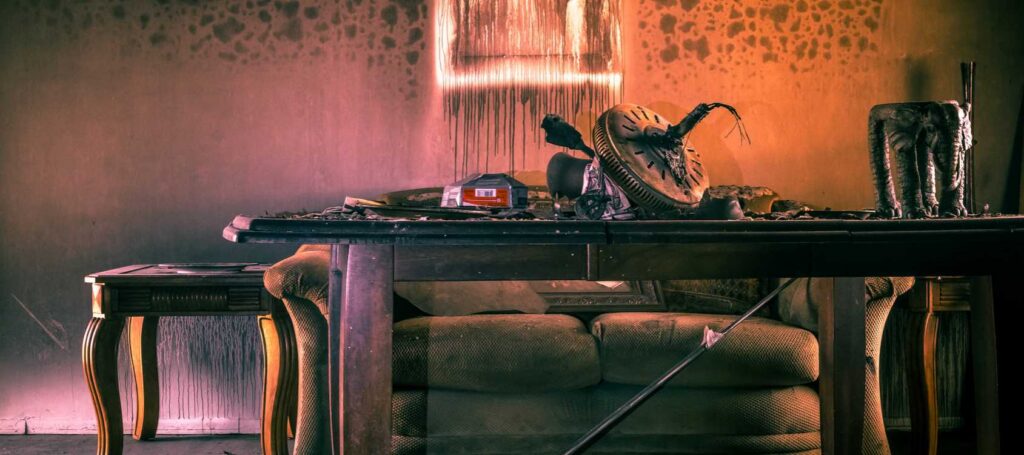
Cleaning up after a house fire involves much more than removing burned materials and repairing visible damage. At PuroClean Certified Restoration, our professional fire damage restoration services help homeowners address smoke, soot, water damage, and other problems left behind after a fire.
Here are the main steps involved in the fire damage cleanup and restoration process:
- Assessing the Damage: Restoration professionals evaluate fire, smoke, soot, and water damage to determine what can be cleaned, restored, or replaced.
- Protecting Your Property: Emergency board-up services and roof tarping help secure the home and prevent additional damage.
- Restoring Personal Belongings: Furniture, clothing, and other possessions are evaluated to determine which items can be salvaged through professional cleaning and restoration.
- Removing Water and Moisture: Water used to extinguish the fire must be extracted, and affected areas properly dried to help prevent further damage and mold growth.
- Cleaning Smoke and Soot: Specialized cleaning techniques remove harmful residues from walls, ceilings, floors, and other affected surfaces.
- Eliminating Smoke Odors: Professional deodorization methods address lingering smoke odors that can penetrate building materials and personal belongings.
- Cleaning and Preparing for Repairs: Remaining debris and contamination are removed, and affected areas are prepared for necessary repairs or reconstruction.
- Understanding the Timeline: The restoration process varies depending on the severity of the fire, the extent of the damage, and required inspections.
- Coordinating with Insurance: Professional documentation and communication with insurance representatives can help homeowners navigate the claims process.
Let’s take a closer look at each of these important steps in the fire damage restoration process and how PuroClean Certified Restoration can help you recover after a house fire.
Cleaning Up After a House Fire
Experiencing a house fire can be one of the most frightening and overwhelming events a homeowner will ever face. Even after the flames are extinguished and everyone is safe, there’s often significant damage left behind.
Beyond the areas directly affected by fire, smoke, soot, and water used to extinguish the flames can cause extensive damage throughout your home.
At PuroClean Certified Restoration, we understand how stressful the aftermath of a fire can be. Our goal is to make the cleanup and restoration process as smooth as possible while helping homeowners recover their property and return to their normal routines.
Understanding what happens during the fire damage restoration process can help you feel more prepared during an otherwise difficult time.
Assessing the Extent of Fire, Water, and Smoke Damage
Before restoration work begins, it’s important to understand the full extent of the damage. While some areas of a home may have been directly affected by flames, other rooms can suffer significant damage from smoke, soot, and the water used by firefighters.
Smoke can travel through doorways, ventilation systems, and small openings, leaving behind residue and unpleasant odors in rooms far from the original fire. Soot can settle on walls, ceilings, furniture, and personal belongings, sometimes causing permanent discoloration or deterioration if left untreated.
Our PuroClean Certified Restoration technicians will assess the affected areas and develop a restoration plan based on the type and severity of the damage. This initial assessment helps determine which materials and belongings can be cleaned and restored and which may need to be replaced.
Protecting Your Property from Additional Damage
Depending on the severity of the fire, your home may have sustained damage to its roof, windows, doors, or exterior walls. These openings can leave your property vulnerable to rain, wind, animals, and unauthorized entry.
One of the first priorities following a significant fire is securing the property against further damage. This may involve boarding up damaged windows and doors or installing temporary roof tarps to prevent additional water intrusion.
Taking these protective measures can help minimize secondary damage while the restoration process is underway.
What Happens to Your Furniture and Personal Belongings?
One of the biggest concerns homeowners have after a fire is what will happen to their personal belongings. Furniture, clothing, photographs, electronics, and other household items may have survived the flames but still be covered in soot or affected by smoke and water.
Fortunately, not everything exposed to a house fire needs to be thrown away.
Depending on the type and extent of the damage, many belongings can be professionally cleaned and restored. Our technicians will evaluate affected items to determine which can potentially be salvaged and which have suffered damage beyond repair.
Some belongings may be cleaned and restored at your home, while others may need to be carefully packed and transported to an off-site restoration facility. Items that cannot be restored will need to be documented and removed.
We understand that many personal belongings have sentimental value that goes far beyond their replacement cost. That’s why determining what can be saved is an important part of the fire damage restoration process.
Removing Water and Drying the Property
Although fire damage is the primary concern after a house fire, water damage is often another significant issue.
Firefighters may use large amounts of water to extinguish the flames, leaving flooring, carpeting, insulation, drywall, and other building materials saturated. If that moisture isn’t addressed promptly, it can lead to additional structural damage and create conditions that encourage mold growth.
Before certain cleaning and restoration activities can begin, standing water may need to be extracted and affected materials thoroughly dried.
Our restoration professionals use specialized water removal equipment, air movers, and dehumidifiers when necessary to help dry affected areas. Addressing this moisture is an important step toward preventing additional problems and preparing the property for further restoration.
Removing Smoke and Soot Residue
Soot and smoke damage can be more widespread than homeowners initially realize. Even rooms that appear relatively untouched by the fire may contain residue on walls, ceilings, floors, furniture, and other surfaces.
Different types of fires produce different types of soot, and each may require a specific cleaning approach. For example, the residue left behind by a kitchen grease fire can be very different from the soot produced when wood, plastics, or synthetic materials burn.
Improper cleaning methods can actually make soot damage worse by spreading residue or pushing it deeper into porous materials.
Our fire and smoke damage restoration specialists use professional cleaning techniques and specialized equipment to remove soot and smoke residue from affected surfaces.
Depending on the materials involved, this may include HEPA vacuuming, dry cleaning methods, and carefully selected cleaning products designed for fire damage restoration.
The objective is to remove as much of the damaging residue as possible while preserving materials that can be safely restored.
Eliminating Lingering Smoke Odors
Even after visible soot and debris have been removed, the smell of smoke can remain inside a home.
Smoke particles can penetrate carpeting, upholstery, insulation, wood, and other porous materials. These trapped particles may continue releasing unpleasant odors long after the fire has been extinguished.
Simply opening the windows or using air fresheners usually isn’t enough to eliminate these odors.
Professional smoke odor removal focuses on identifying and addressing the sources of the smell rather than simply covering them up. Depending on the circumstances, restoration technicians may use specialized cleaning solutions, air filtration, and professional deodorization equipment such as hydroxyl generators or thermal fogging systems.
Some heavily affected materials may need to be removed and replaced if the smoke contamination cannot be adequately eliminated through cleaning.
Cleaning, Sanitizing, and Preparing for Repairs
Once the property has been dried and the majority of smoke and soot residue has been removed, additional cleaning can take place.
This stage involves addressing remaining dust, debris, and contamination on affected surfaces and belongings. Depending on the conditions, appropriate sanitizing treatments may also be necessary.
Some areas of the home may require repairs or reconstruction before they can be used again. Damaged drywall, insulation, flooring, cabinets, and other building materials may need to be replaced.
The amount of repair work required depends on the severity of the fire and whether the affected materials can be safely cleaned and restored.
Our goal at PuroClean Certified Restoration is to help homeowners move through the cleanup and mitigation process efficiently so their property can be prepared for the necessary repairs and eventual return to normal use.
How Long Does Fire Damage Restoration Take?
One of the first questions homeowners ask after a fire is how long it will take before they can return to their homes.
Unfortunately, there isn’t a single answer that applies to every situation.
A relatively small kitchen fire with limited smoke damage may require considerably less restoration work than a fire that spreads into multiple rooms or causes significant structural damage.
The amount of water damage, the number of affected belongings, and the extent of smoke contamination can also influence the restoration timeline.
Additionally, fire investigators, local authorities, and insurance representatives may need to inspect the property before certain restoration activities can begin.
Once the damage has been evaluated and the necessary approvals have been obtained, our team can help explain the anticipated cleanup process and what needs to happen next.
Working with Your Insurance Company After a Fire
Another important part of recovering from a house fire is navigating the insurance claims process.
Your insurance company will typically need documentation of the damage, along with information about the cleanup and restoration work that needs to be performed. Depending on your policy, certain expenses related to emergency mitigation, damaged belongings, and property repairs may be covered.
Professional fire damage restoration companies understand the importance of documenting damage and can help provide information needed by insurance adjusters.
At PuroClean Certified Restoration, we can work with homeowners and their insurance representatives to help keep the restoration process organized and moving forward. Ultimately, coverage decisions depend on the terms of your individual insurance policy.
Trust PuroClean Certified Restoration for Fire Damage Cleanup
Nobody expects to experience a house fire, and dealing with the aftermath can feel overwhelming. Between worrying about your family’s safety, protecting your belongings, and figuring out what needs to happen next, there’s a lot to manage.
You shouldn’t have to navigate the cleanup process alone.
At PuroClean Certified Restoration, our experienced restoration professionals understand the challenges that come with fire, smoke, soot, and water damage. We have the training, specialized equipment, and experience to help homeowners and business owners recover from unexpected property damage.
We hope you never need our fire damage restoration services. But if you do, we’re here to help.
Contact PuroClean Certified Restoration for 24/7 emergency fire and smoke damage cleanup services in Springfield, Missouri, and the surrounding communities. The sooner the restoration process can safely begin, the sooner you can start putting your home and your life back together.