


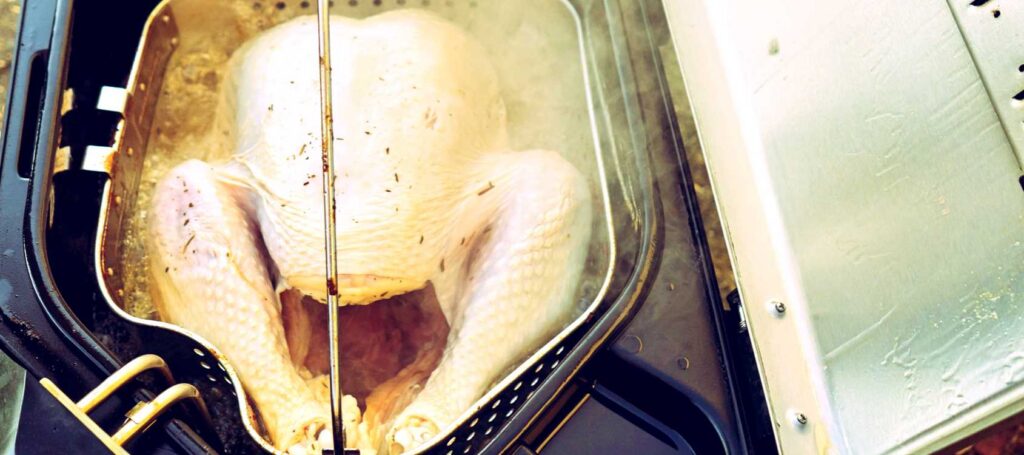
Deep-fried turkey is a popular holiday tradition, but improper turkey frying techniques can lead to serious injuries, devastating house fires, and extensive fire and smoke damage. Understanding the dangers associated with turkey fryers and following these important safety precautions can help protect your family and your home this holiday season.
- Never fry your turkey indoors or too close to your home. Position your turkey fryer outdoors on a flat, stable, noncombustible surface at least 10 feet away from your home and other structures.
- Never leave your turkey fryer unattended. Continuously monitor the temperature of the cooking oil to prevent overheating, and keep children and pets a safe distance away.
- Never overfill your turkey fryer with cooking oil. Carefully measure the amount of oil needed beforehand to prevent it from overflowing and coming into contact with the burner.
- Never attempt to fry a frozen or partially frozen turkey. Completely thaw your turkey and remove excess moisture to prevent a dangerous reaction between water and hot cooking oil.
- Never throw water on a grease fire. Water can cause burning oil to splatter and dramatically increase the size of the fire. If a turkey fryer fire occurs, move everyone to safety and call 911.
- Don’t underestimate the extent of fire and smoke damage. Even a relatively small turkey fryer fire can damage your home’s exterior and allow smoke and soot to infiltrate your living spaces.
- Contact a professional fire damage restoration company if an accident occurs. PuroClean Certified Restoration provides professional fire, smoke, and water damage restoration services in Springfield, Missouri, and the surrounding communities.
Let’s take a closer look at each of these main points in more detail so you can enjoy a delicious holiday meal without putting your family or your home at risk.
Turkey Frying Safety Tips to Prevent Holiday Fire and Smoke Damage
For many families throughout the Ozarks, a deep-fried turkey is a holiday tradition. It’s hard to beat the combination of crispy skin, juicy meat, and delicious flavor that comes from frying a turkey in peanut oil.
But preparing your turkey this way comes with some significant risks that homeowners should be aware of before firing up the fryer.
The combination of an open flame, several gallons of extremely hot cooking oil, and a large turkey can create a dangerous situation in a matter of seconds.
What begins as an enjoyable family gathering can quickly turn into a devastating event resulting in serious injuries and extensive fire and smoke damage to your home.
The National Fire Protection Association (NFPA) discourages the residential use of traditional propane-powered turkey fryers and recommends safer alternatives, such as oil-free turkey fryers or purchasing a professionally fried turkey.
If you do decide to deep-fry your turkey this holiday season, here are five important turkey frying safety tips to help protect your family and your home.
Never Fry Your Turkey Indoors or Too Close to Your Home
With the unpredictable temperatures we experience during the holidays in southwest Missouri, it can be tempting to set up your turkey fryer inside your garage or underneath a covered patio. However, doing so puts your entire home at risk.
The U.S. Fire Administration recommends positioning your outdoor turkey fryer at least 10 feet away from your home. Avoid placing it near wooden fences, vehicles, sheds, decks, overhanging tree branches, or other combustible materials.
Your fryer should also be positioned on a flat, stable, noncombustible surface to reduce the likelihood of it tipping over.
You should also avoid using an outdoor turkey fryer when it’s raining or snowing. Even small amounts of precipitation coming into contact with hot cooking oil can create a dangerous reaction.
Taking a few extra minutes to find a safe location for your turkey fryer could mean the difference between a memorable holiday meal and a major home restoration project.
Never Leave Your Turkey Fryer Unattended
We realize that frying a turkey takes time, and it can be tempting to head back inside to visit with family, watch a football game, or help prepare the rest of the holiday meal. However, you should never leave an operating turkey fryer unattended, even for a few minutes.
Cooking oil can quickly overheat and reach a temperature at which it spontaneously ignites. While some turkey fryers have built-in temperature controls, you should never rely entirely on these features to prevent a fire.
Follow the manufacturer’s instructions and use an appropriate cooking thermometer to monitor the temperature of the oil throughout the cooking process.
If you notice smoke coming from the cooking oil, turn off the burner immediately if it is safe to do so. Smoking oil is a warning sign that the oil is overheating.
It’s also important to keep children and pets away from the turkey fryer, even after you’ve finished cooking. The cooking oil and equipment can remain dangerously hot for several hours.
Never Overfill Your Turkey Fryer With Cooking Oil
One of the biggest mistakes people make when frying a turkey is failing to account for how much oil will be displaced when the turkey is lowered into the fryer.
If the fryer contains too much oil, the hot oil can overflow and come into direct contact with the propane burner underneath. This can produce a sudden fireball that puts anyone standing nearby in immediate danger.
Before heating any cooking oil, follow the manufacturer’s instructions to determine how much oil your fryer requires. You can also measure the necessary amount in advance by placing your turkey in the unheated frying pot and using water to determine the appropriate fill level.
Afterward, remove the turkey, mark the water level, empty the pot, and thoroughly dry both the pot and the turkey before proceeding.
Never exceed the manufacturer’s maximum fill line. You should also wear heat-resistant gloves and protective clothing when carefully lowering or removing the turkey to protect yourself from splattering oil.
Never Attempt to Fry a Frozen or Partially Frozen Turkey
Putting a frozen or partially frozen turkey into hot cooking oil is one of the most dangerous mistakes you can make when preparing your holiday meal.
When ice or water comes into contact with extremely hot oil, it rapidly turns into steam and expands. This reaction can force large quantities of hot oil out of the fryer, potentially causing severe burns and an uncontrolled fire.
According to the USDA, you should allow approximately 24 hours of refrigerator thawing time for every four to five pounds of turkey. That means a 15-pound turkey may require three to four days to thaw completely.
Even after your turkey has fully thawed, take the time to pat it dry with paper towels, removing excess moisture from both the outside and inside of the bird.
If you discover on the morning of your holiday gathering that your turkey hasn’t completely thawed, don’t take any chances by attempting to fry it anyway. It’s much better to change your cooking plans than risk a serious fire or injury.
Never Throw Water on a Grease Fire
If a fire breaks out, your natural instinct might be to grab a garden hose or a bucket of water. But water is one of the worst things you can use to extinguish a grease fire.
When water comes into contact with burning cooking oil, it rapidly vaporizes, sending burning oil into the surrounding area. This can dramatically increase the size of the fire and cause it to spread to nearby structures.
Keep a fire extinguisher rated for cooking oil fires readily accessible and familiarize yourself with how to use it before you begin cooking. But never put yourself in danger attempting to extinguish a turkey fryer fire.
If a fire breaks out, move everyone a safe distance away and call 911 immediately. Never attempt to move a burning turkey fryer or approach it to shut off the propane if doing so would put you at risk.
Your family’s safety should always take priority over protecting your property.
Even a Small Turkey Fryer Fire Can Cause Significant Damage
Even if a turkey fryer fire is extinguished relatively quickly, the resulting damage can be more extensive than homeowners initially realize.
Extreme heat can damage siding, windows, roofing materials, and other building components without flames ever entering your home. Smoke can also find its way indoors through open doors, windows, soffits, and other openings, leaving behind unpleasant odors and potentially damaging soot residue.
If firefighters use water to extinguish a fire that has spread to your home, you may also find yourself dealing with water damage in addition to fire and smoke damage.
Having a professional restoration company assess the affected areas can help identify the full extent of the damage and prevent additional problems from developing.
PuroClean Certified Restoration Is Here When the Unexpected Happens
At PuroClean Certified Restoration, we hope your holiday season is filled with delicious food, quality time with family and friends, and plenty of happy memories. Taking the proper precautions when frying your turkey can help ensure that a favorite holiday tradition doesn’t turn into a disaster.
Unfortunately, accidents can happen even when you’re being careful. And there’s never a convenient time to experience a fire in your home, especially during the holidays.
If your home suffers fire, smoke, or water damage, the experienced team at PuroClean Certified Restoration is here to help. From assessing the damage and removing soot residue to eliminating lingering smoke odors and restoring affected areas of your home, we can help you navigate the recovery process.
If you need professional fire and smoke damage restoration in Springfield, Missouri, contact PuroClean Certified Restoration. We’re here to help you restore your home and get your life back to normal as quickly as possible.