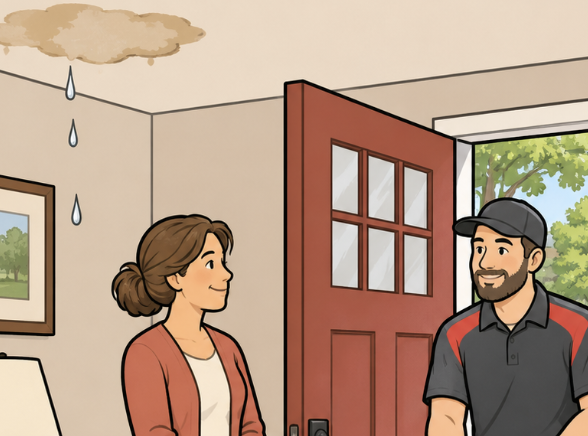
Before a water damage restoration company arrives, protect people first, stop the water only if it is safe, avoid wet electrical areas, photograph the loss, and move dry belongings away from the water’s edge. Do not use a household vacuum, enter a room with a sagging ceiling, or handle sewage-contaminated water. When you call, describe the source, rooms affected, electrical concerns, and whether water is still flowing.
The right first steps can limit damage without putting you in danger. This checklist applies to many pipe, appliance, roof, and supply-line losses in Springfield and Delaware County, but fire, structural, electrical, chemical, and sewage hazards require extra caution.
1. Make Sure Everyone Is Safe
Keep children, pets, customers, tenants, and employees away from the affected area. Do not step into standing water if outlets, extension cords, appliances, the electrical panel, or light fixtures may be energized. If you smell gas, see sparks, hear arcing, or suspect a structural problem, leave the property and contact emergency services or the appropriate utility.
Stay out of rooms with bulging or sagging ceilings. Wet drywall and plaster can fall without warning. If water is coming through a ceiling fixture, do not touch the switch or fixture.
2. Stop the Water Only If You Can Do It Safely
For a supply-line, appliance, or plumbing loss, close the nearest working shutoff valve. If that does not stop the water, use the home’s main valve. Do not force a corroded valve, reach behind energized equipment, or walk through a hazardous area.
A plumber, appliance technician, roofer, or utility professional may be needed to correct the source. The restoration company removes water and dries the property; it does not replace every trade needed to repair the original failure.
3. Identify the Water Source
Tell the restoration company whether the water came from:
- A broken supply pipe or appliance line
- A dishwasher, washing machine, water heater, or air conditioner
- A toilet, drain, sewer, or sump system
- Rain entering through the roof, wall, window, or foundation
- Outside flooding or groundwater
- An unknown or concealed source
Source matters because water that began in a clean supply pipe requires a different response from sewage, used appliance water, groundwater, or water that has remained in contact with dirty materials.
4. Photograph the Loss Before Moving Things
If it is safe, take wide photos of every affected room and close-ups of the source, water line, flooring, walls, ceiling, cabinets, and damaged belongings. Record video that shows how rooms connect. Photograph appliance model and serial numbers and any failed hose or fitting.
Do not delay emergency safety actions solely to take pictures. Once conditions are stable, keep damaged components and belongings until they are documented and the insurer provides instructions. Pennsylvania recovery guidance recommends reporting the loss promptly, documenting damage, and retaining receipts.[1]
5. Protect Unaffected Belongings
Move dry furniture, electronics, rugs, boxes, and valuables away from the edge of the water. Place dry items in an unaffected room. Avoid carrying wet, dirty material through the property.
If furniture legs are on damp carpet and the area is safe, you may place clean foil or plastic beneath the legs to reduce staining. Do not lift heavy furniture alone. Leave wet carpet, flooring, cabinets, and building materials in place until they are photographed and evaluated unless they create an immediate hazard.
6. Do Not Try These Cleanup Shortcuts
- Do not use a household vacuum. It is not designed for water and can create an electrical hazard.
- Do not turn on ceiling fans or appliances in a wet area. Electrical components may have been affected.
- Do not mix bleach with other cleaners. Dangerous fumes can result.
- Do not enter sewage or groundwater. Avoid contact and keep the area isolated.
- Do not paint or seal wet materials. That can trap moisture.
- Do not assume the area is dry because the surface is dry. Water may be beneath flooring or inside walls.
7. Call Your Insurance Company
Report the loss promptly and ask what immediate actions, photos, inventories, and estimates are required. Write down the claim number, adjuster’s name, and a summary of each conversation. Coverage depends on the cause and policy, and the insurer makes that decision.
Do not wait for a final coverage decision while water continues to damage the building. Ask what emergency mitigation is authorized and keep records of reasonable steps taken to prevent further damage.
8. Prepare Helpful Information for the Restoration Team
When calling PuroClean of Springfield, be ready to share:
- The property address and best entrance
- When the water was discovered and whether it is still flowing
- The suspected source
- Which rooms and floors appear affected
- Any sewage, chemicals, odors, or visible mold
- Electrical, ceiling, or structural concerns
- Whether a plumber, roofer, fire department, or insurer has been contacted
This information helps the team prepare, but the full scope is determined on site.
What Happens When the Restoration Team Arrives?
The first visit typically begins with safety and source confirmation, followed by inspection and moisture mapping. Technicians determine how far water traveled, identify affected materials, and explain the immediate plan.
Depending on the loss, work may include emergency water removal, cleaning, selective material removal, air movement, dehumidification, and moisture monitoring. Drying is documented with repeat readings. If repairs are required after mitigation, reconstruction services may follow.
The EPA recommends drying water-damaged areas and items within 24 to 48 hours when possible.[2] A rapid response helps, but safety and proper source control come first.
Special Situations
Sewage Backup
Keep everyone out, avoid direct contact, and do not use fans that could spread contaminated material. Professional cleaning and removal decisions are based on what the water contacted.
Roof Leak During a Storm
Do not climb onto a wet or damaged roof. Move people away from sagging ceilings and electrical fixtures. A roofer may be needed to stop the entry once conditions are safe.
Frozen or Burst Pipe
Shut off the main water valve if safe. Do not use an open flame to thaw a pipe. A plumber repairs the pipe; restoration addresses the water-damaged materials.
Commercial Property
Protect occupants, restrict access, notify the building contact, and preserve security and operational records. Do not allow staff to enter electrical rooms, elevator pits, healthcare areas, or contaminated zones without proper authority.
Emergency Water Removal in Springfield and Delaware County
PuroClean of Springfield provides water extraction, moisture detection, structural drying, cleaning, and restoration documentation in Springfield, Wallingford, Swarthmore, Media, Drexel Hill, Havertown, Broomall, Newtown Square, Ridley Park, Folsom, Morton, Prospect Park, Chester, and surrounding Delaware County communities.
Related help includes water damage restoration, mold remediation, and reconstruction.
Frequently Asked Questions
Should I open windows before help arrives?
Not automatically. Outdoor humidity, temperature, contamination, and the drying plan matter. Ask the restoration team before changing airflow, especially when sewage, mold, or dirty water is present.
Should I remove wet carpet?
Document it first and wait for evaluation unless it creates an immediate safety concern. The water source, carpet condition, padding, subfloor, and insurer’s instructions affect the decision.
How fast should I call?
Call as soon as people are safe and the source is controlled or professional source control is underway. Water can continue moving through porous materials after the visible flow stops.
Can I stay in the house?
That depends on electrical safety, water source, affected rooms, structural conditions, and whether essential utilities remain usable. Follow directions from emergency officials and qualified professionals.
Call for Water Damage Help
When water is spreading through your Springfield-area property, the safest useful action is a prompt call. PuroClean of Springfield can assess the water path, extract standing water, establish controlled drying, and document progress.