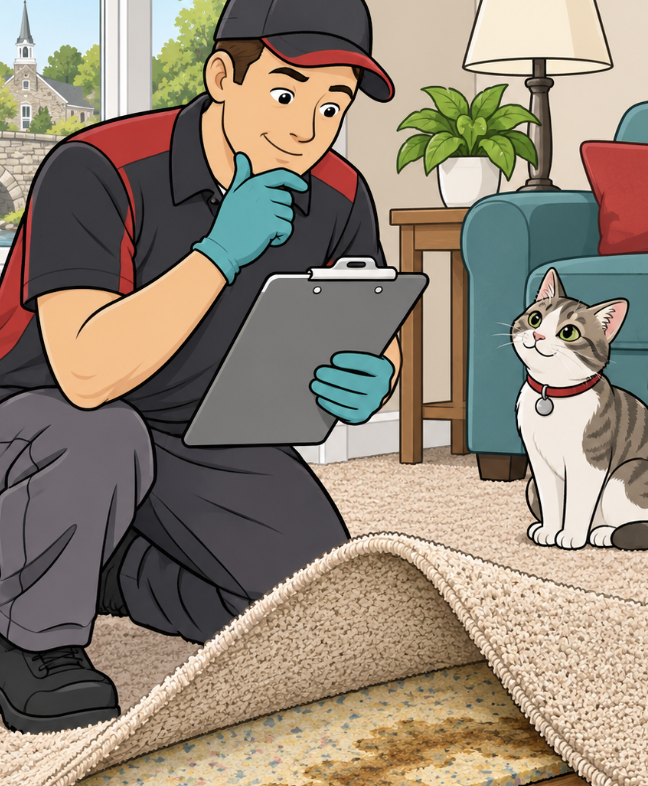
DIY cleaning is reasonable for a fresh, isolated pet accident on a compatible surface when you can blot it quickly and follow the surface and cleaning-product instructions. Professional pet odor removal is a better fit when odor returns, multiple rooms are affected, urine reached carpet padding or subfloor, the source is uncertain, or the property must be prepared for sale, rental, or occupancy.
The key difference is depth. DIY work often treats the visible spot. Professional work maps affected materials and makes a clean-or-replace decision at each layer.
When DIY Cleaning May Be Enough
A homeowner may be able to handle a single recent accident when:
- The location is known and the area is small
- The liquid has not reached padding, seams, walls, or furniture interiors
- The surface manufacturer permits the selected cleaner
- The material is colorfast and structurally sound
- Odor does not remain after complete drying
Blot rather than scrub so the liquid does not spread. Follow the product label for dilution, dwell time, extraction, ventilation, and pet re-entry. Do not mix cleaning products.
When to Call a Professional
- Odor returns after shampooing or deodorizing
- There are repeated accidents or many unknown spots
- Carpet padding, tack strip, subfloor, baseboards, or drywall may be affected
- Urine reached hardwood seams, laminate, concrete, upholstery, or a mattress
- The property has been vacant or the timeline is unknown
- A tenant turnover, estate, sale, or commercial occupancy requires a documented scope
- A person or animal may have an infection associated with urine exposure
DIY vs. Professional: What Changes?
| DIY Cleaning | Professional Odor Removal |
|---|---|
| Usually starts with the visible stain | Maps known and suspected source areas |
| Uses retail tools and products | Uses material-specific inspection, treatment, extraction, and drying methods |
| May not reach padding or subfloor | Evaluates hidden layers and opens them when necessary |
| Often focuses on odor masking | Focuses on source removal or treatment |
| Homeowner judges completion | Area is reinspected after treatment and drying |
Common DIY Mistakes
Using Too Much Liquid
More solution is not always more effective. Over-wetting can push contamination deeper, spread it, leave residue, and slow drying.
Scrubbing the Spot
Scrubbing can spread the affected area and damage carpet fibers. Blotting and controlled extraction are safer for many fresh spills.
Adding Fragrance
A strong scent may temporarily cover odor without changing the source. EPA indoor-air guidance identifies source control as usually the most effective strategy.[1]
Mixing Cleaners
Never mix bleach, ammonia, acids, or other household cleaners. Follow the label. Chemical mixtures can create dangerous fumes and may damage surfaces.
Replacing Carpet but Ignoring the Subfloor
New carpet can absorb odor from contaminated padding, tack strip, floor, walls, or trim. Inspect before installing new finishes.
What Professional Treatment Includes
- Interview the owner about pets, locations, timeline, and prior cleaning.
- Inspect carpet, padding, flooring, subfloor, walls, furniture, and adjacent rooms.
- Test cleaning compatibility and colorfastness.
- Apply treatment at the depth of contamination.
- Extract residue and dry the materials.
- Remove porous materials that cannot be effectively restored.
- Reassess odor after the area is dry.
Are Enzyme Cleaners Better?
Enzyme or bio-based products can be useful for some organic residues, but the label, surface, temperature, contact time, prior cleaners, and contamination depth all matter. A good product used only on the carpet face cannot treat urine in the subfloor. Test an inconspicuous area and never assume one chemistry is safe for every fiber, wood finish, stone, or upholstery fabric.
Health and Safety Considerations
Wear gloves and wash hands after handling animal waste. If a pet has a suspected infection, consult the veterinarian about safe cleanup. CDC guidance notes that leptospirosis can spread through infected animal urine and advises avoiding contact or using protective clothing when contact is unavoidable.[2]
Keep pets and children away until cleaning products have been used and the area has dried according to the label. Do not use ozone-generating equipment in occupied spaces or improvise chemical fogging.
Professional Pet Odor Removal in Delaware County
PuroClean of Springfield provides professional pet odor removal through its biohazard cleanup services. The team serves Springfield, Wallingford, Swarthmore, Media, Drexel Hill, Havertown, Broomall, Newtown Square, Ridley Park, Folsom, Morton, Prospect Park, Chester, and surrounding Delaware County communities.
Frequently Asked Questions
Can professional cleaning guarantee that every odor will disappear?
No responsible company can guarantee a result before inspecting the materials. A clear scope should explain what can be treated, what may require replacement, and how results will be reassessed.
Will professional carpet cleaning reach the padding?
Routine carpet cleaning may not. Pet urine work must be designed around the contamination depth and may require lifting carpet or replacing pad.
Should I clean before the inspection?
Remove fresh surface liquid safely, but avoid saturating the area or applying multiple products. Tell the technician exactly what was used.
Can pet odor affect home value?
Persistent odor can concern buyers, tenants, and inspectors. Addressing the source and documenting the work is more credible than masking it before a showing.
Know When DIY Has Reached Its Limit
If pet urine odor remains or returns after home cleaning, call PuroClean of Springfield at (610) 541-8606 for an inspection and material-specific plan.